
in the intricate tapestry of Oscar Wilde’s works, A Woman of No Importance stands out as a piercing examination of social mores and hidden hypocrisies. Unveiling Society’s Masks: A Thoughtful Look at Wilde’s A Woman of No Importance invites readers to delve beneath the glittering surface of Victorian high society, revealing the complex interplay between appearance and reality. This review explores how Wilde’s sharp wit and subtle critique continue to resonate, prompting reflection on the roles we play and the truths we conceal.
Exploring the Themes of Social Hypocrisy and Gender Roles in wilde’s A woman of No Importance Through a Contemporary Lens
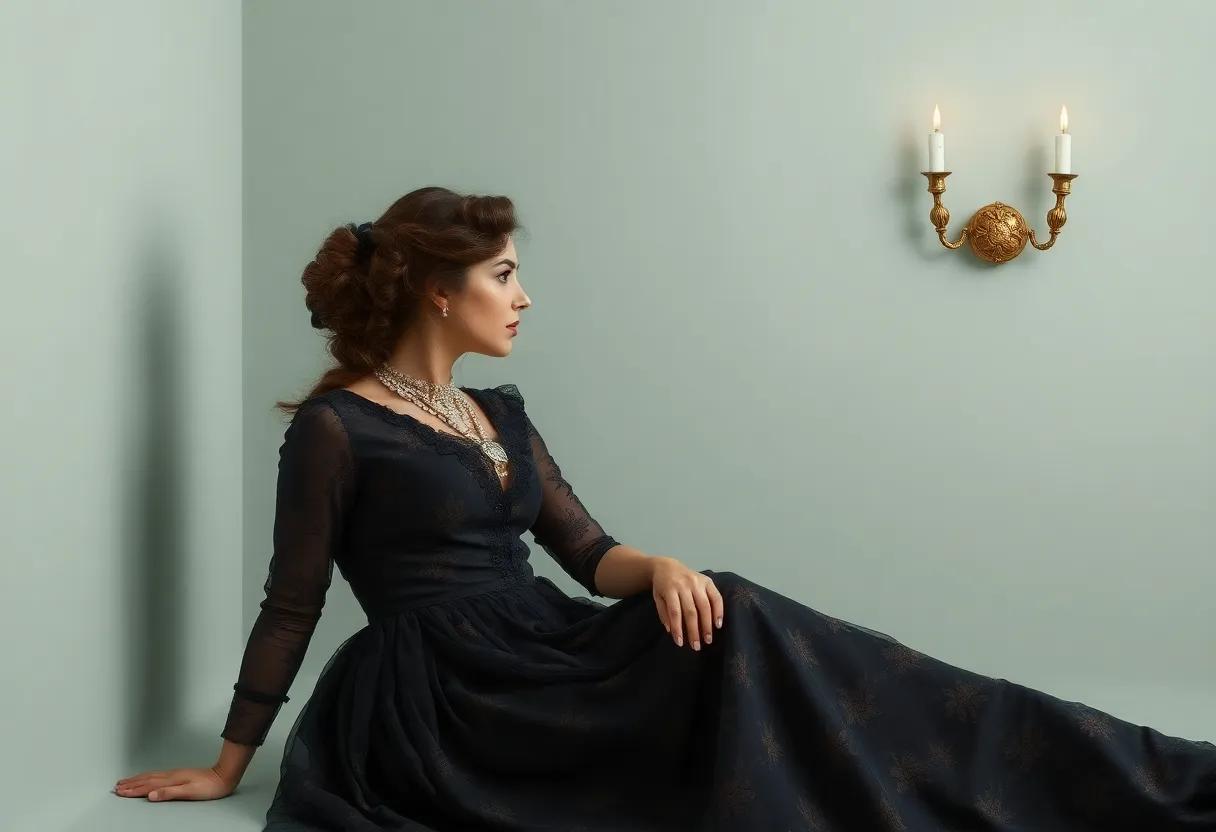
Oscar Wilde masterfully peels back the veneer of Victorian society, exposing the intricate web of social hypocrisy that governs behavior and perception. In A Woman of no importance, characters navigate a labyrinth of pretense where appearances overshadow authenticity, and social standing dictates moral judgment more than true virtue. This exploration resonates deeply today as modern audiences confront their own societal facades. Wilde’s critique urges us to question how much of our daily interactions are scripted performances designed to maintain acceptance within established hierarchies. By reflecting on the playwright’s sharp wit, we see the timeless tension between personal truth and societal expectation, especially as it relates to who holds power and who is silenced behind the masks of respectability.
gender roles in the play serve as a pivotal lens for understanding the systemic constraints placed on women,both historically and in contemporary contexts. The expectation for women to embody purity, sacrifice, and invisibility uncovers a reductive framework that limits identity and agency.Wilde’s female characters, especially those deemed to have “no importance,” symbolize the consequences of these rigid norms. Key themes emerging from this analysis include:
Best-Selling Books in This Category



- Double standards: The diffrent moral codes applied to men versus women.
- Female agency: The struggle to assert individuality within oppressive social constructs.
- Public versus private identity: How societal pressures shape and sometiems distort personal narratives.
| theme | Victorian Context | Contemporary Reflection |
|---|---|---|
| Social Hypocrisy | Upholding appearances and suppressing dissent | Influence of social media and curated personas |
| Gender Roles | Strict moral codes for women’s behavior | Ongoing debates around gender identity and equality |
| Public vs. Private | Repressed desires and secrets concealed | challenges of authenticity in public life |
Analyzing Character Dynamics and the Intricacies of Class Distinctions Portrayed in the Play’s Narrative Structure

Within the intricate tapestry of Wilde’s play, the characters serve not merely as individuals but as embodiments of societal roles and tensions.The deliberate contrasts between figures such as the aristocratic Lord Illingworth and the morally conflicted Mrs. Arbuthnot highlight the rigid expectations and hypocrisies embedded in upper-class Victorian society. Wilde skillfully uses dialog and staged interactions to reveal hidden motivations, social pretenses, and the complex power play that governs relationships. Here, class distinctions are not merely background details but active forces shaping identity and destiny, where personal virtue often succumbs to social expediency.
- Lord Illingworth: A charismatic yet morally ambiguous aristocrat, embodying privilege and duplicity.
- Mrs. Arbuthnot: A woman caught between societal judgment and personal integrity.
- Hester Worsley: The innocent outsider whose presence unsettles established hierarchies.
To better understand these dynamics, consider this simplified comparison of character traits and societal positioning:
| Character | Class Standing | Moral Alignment | Role in Class Critique |
|---|---|---|---|
| Lord Illingworth | Aristocracy | questionable | Symbolizes privilege and corruption |
| Mrs. Arbuthnot | Upper Middle Class | Virtuous | Represents sacrifice and societal judgment |
| Hester Worsley | Lower Middle Class | Innocent | Challenges class prejudices |
The Role of Wit and Satire as Vehicles for Critiquing Victorian Morality and exposing Societal Contradictions in Wilde’s Work

in Wilde’s A Woman of No Importance, wit and satire are not mere flourishes of style but potent tools that peel back the polished veneer of Victorian morality. His sharp dialogue and ironic situations dissect the era’s rigid social codes,revealing the hypocrisy festering beneath the surface. Through caustic humor,Wilde invites readers to question the sanctity of the so-called “moral” standards upheld by society’s elite. The play’s biting remarks, delivered with dazzling cleverness, expose paradoxes where virtue and vice interlace, highlighting how societal judgments are frequently enough skewed by class, gender, and reputation rather than genuine ethics.
Consider how Wilde’s characters often function as mirrors reflecting societal contradictions. For example:
- Lady hunstanton champions morality yet conceals scandalous family secrets.
- Gerald Arbuthnot embodies innocence, yet his lineage embodies the very hypocrisy he decries.
- Mrs. Arbuthnot, labeled “a woman of no importance,” subverts expectations by upholding true integrity amidst judgment.
These contradictions create a vibrant tableau where satire exposes not only individual flaws but systemic double standards. Wilde’s clever narrative strategy forces audiences to reconcile the dissonance between public virtue and private vice, using humor as a reflective lens to challenge complacency and spark introspection.
A Close Examination of Female Empowerment and Subtle Defiance against Patriarchal Norms within the Play’s Key Characters
In Wilde’s nuanced exploration of social dynamics, the female protagonists deftly navigate the rigid expectations imposed by Victorian patriarchy. Characters like Mrs. Arbuthnot and Hester Worsley embody a quiet yet potent form of resistance, demonstrating that empowerment need not always be loud or confrontational. Their subtle acts-ranging from articulating sharp truths to choosing personal integrity over societal approval-pierce the facade of conventional femininity. Through their layered portrayals, wilde invites audiences to reconsider the power embedded in grace and dignity under pressure, highlighting how women reclaim agency even when constrained by deeply entrenched norms.
Below is an outline of the key manifestations of this defiance within the play’s female characters, revealing the spectrum of their rebellion:
- Selective Disclosure: Leveraging personal stories to expose hypocrisy while safeguarding privacy and social standing.
- Strategic Silence: Choosing when to speak and when to withhold, thereby controlling the flow of power.
- Subversive Loyalty: Aligning with other women in moments of solidarity against male judgement.
- Rejection of scorn: Refusing to conform to the shame that society attempts to impose.
| Character | Mode of Subtle Defiance | Impact |
|---|---|---|
| Mrs. Arbuthnot | Guarded honesty and moral steadfastness | Challenges male duplicity, commands respect |
| Hester Worsley | Awakening to social injustice & direct confrontation | Represents youthful idealism clashing with societal decay |
| Lady Hunstanton | Passive complicity with subtle critique | Shows internal conflict between tradition and conscience |
How Symbolism and Setting Enhance the Dramatic Impact and Underscore the Play’s Central Messages on Reputation and Identity
In Wilde’s nuanced exploration of societal facades, symbolism acts as a mirror reflecting the fragile construct of reputation. Take, for example, the recurring motif of the mask-an emblem not just of concealment but of the personas characters adopt to navigate the intricacies of Victorian social mores. These masks, both literal and figurative, emphasize the dichotomy between appearance and reality, revealing how identity is often shackled by external judgment. The interplay between light and shadow throughout the play further accentuates this tension, with darkened settings portraying the hidden stresses of characters’ inner lives and carefully lit spaces symbolizing societal scrutiny. This elegant symbolism deepens our understanding of how Wilde critiques the performative nature of identity in a rigid class system.
Setting, too, wields powerful influence on the drama’s emotional weight, serving as more than a mere backdrop but an active participant in the storytelling. The London drawing rooms, lush yet suffocating, articulate the claustrophobic pressures weighing on the characters, where whispers about reputation reverberate like relentless echoes. Meanwhile, open spaces or transitions to less formal settings momentarily strip away social pretense, offering glimpses of authentic selves beneath the crafted veneers. Consider this brief outline of key settings and their symbolic resonance:
| Setting | symbolic Meaning |
|---|---|
| Drawing Room | Social theater of facades and concealed truths |
| Garden/Outdoors | Momentary freedom and authentic expression |
| Private Chambers | Intimate confrontation with true identity |
Throughout the play, these symbols and settings intertwine to highlight the tension between societal expectations and personal truth. Wilde masterfully uses them to expose the sometimes tragic consequences of living behind imposed masks,prompting reflection on how reputation can both define and confine one’s very sense of self.
Evaluating the Play’s Dialogue for its sharpness, Irony, and the Underlying Emotional Currents That Shape Audience Perception
Wilde’s dialogue cuts through societal pretense with a wit so incisive it borders on surgical. Every line drips with irony, revealing not just the facade maintained by the characters, but also the hypocrisies embedded within the social fabric of the time.Conversations frequently enough mimic the polished surface of polite society, yet beneath this sheen lies a sharp edge that questions morality, gender roles, and class distinctions.The language dances effortlessly between charm and critique, inviting audiences to laugh while simultaneously reflecting on uncomfortable truths. This duality imbues the play with a layered texture,ensuring that each exchange resonates far beyond mere surface banter.
- Sharpness: The rapid repartee reveals character intentions and societal contradictions with clarity.
- Irony: Statements often betray the true attitudes of both speaker and listener, deepening the dramatic tension.
- Emotional undertones: Subtext and pauses hint at unspoken fears, desires, and regrets, particularly in pivotal scenes.
The emotional currents flowing beneath Wilde’s sparkling dialogue are subtle yet potent, guiding the audience’s perception like an undercurrent pulling at a deceptively calm surface.Moments of wit are frequently juxtaposed with reveals of vulnerability or bitterness, reflecting the characters’ inner turmoil and societal constraints. By intertwining humor with pathos, Wilde crafts a conversational tapestry where laughter and melancholy coexist. It is this blend that shapes how viewers engage with the narrative-sometimes alienated by the harsh truths, other times empathetic towards the flawed humanity each character exudes.
| Dialogue Element | Effect on Audience |
|---|---|
| Rapid-fire wit | Enhances engagement, highlights social satire |
| Loaded silences | Creates tension, reveals emotional layers |
| Double entendres | Invokes humor while critiquing societal norms |
Comparing Wilde’s Social Commentary in the Play to Modern Debates on Gender Equality and social Justice Issues
Oscar Wilde’s witty and sharp portrayal of Victorian society in A Woman of No Importance strikingly echoes themes we continue to wrestle with today.His critique transcends time, exposing the rigid hierarchies and gendered double standards that govern behavior and dictate worth.Whereas Victorian norms boxed women into roles defined by appearance and reputation, modern conversations demand a dismantling of these old frameworks, advocating for authentic equality rather than superficial compliance. Wilde’s characters, with their hypocrisies and struggles, act as mirrors reflecting our ongoing battle with societal expectations, revealing how much-and how little-has changed in the realm of gender dynamics and social justice.
- Hypocrisy around morality: Wilde skewers the veneer of respectability that suppresses individual freedom, much like today’s calls for transparency and accountability in social institutions.
- Gendered double standards: The judgment placed on women’s behavior then parallels persistent biases shaping contemporary gender debates.
- Class and privilege interplay: Just as Wilde critiques upper-class arrogance, modern discourse unpacks systemic inequalities tied to both class and gender.
| Wilde’s Social commentary | Modern Social Justice Parallel |
|---|---|
| Stifling of women’s autonomy | Empowerment through gender equality movements |
| Critique of social hypocrisy | Calls for systemic transparency and reform |
| Class distinctions determining worth | Intersectional approach addressing class and gender |
Recommendations for Readers: Approaching the Text with an Appreciation for Historical Context and Timeless social critique
To fully immerse yourself in Wilde’s A Woman of no Importance, it’s crucial to embrace the historical backdrop of late Victorian society-a world rigidly defined by class distinctions, gender roles, and social expectations. Understanding these constraints enriches your reading experience, allowing you to see beneath the polished veneer of aristocratic life to the subtle ironies and scathing critiques Wilde masterfully weaves. Consider the play not merely as a period piece but as a mirror reflecting the intricacies of social etiquette, morality, and hypocrisy that where prevalent then-and, in many ways, persist today.
Keep in mind the timeless nature of Wilde’s social commentary by exploring themes such as gender inequality,class prejudice,and public versus private personas. Approach the characters as symbols rather than individuals, noticing how their interactions expose the masks society compels people to wear. To guide your reflection, here’s a quick reference to some key themes and their modern parallels:
| Theme | Victorian Context | Modern Reflection |
|---|---|---|
| Gender Roles | Rigid expectations of women | Ongoing debates about equality |
| Social Class | Inherited status and exclusion | Economic divides and mobility |
| Hypocrisy | Public morality vs. private actions | Social media facades and image curation |
- Pause and question: What does each character’s facade say about society’s demands?
- Note recurring motifs: How do symbols like “importance” and “womanhood” evolve throughout the play?
- Relate to today: Where do you see traces of Wilde’s critique in our modern social fabric?
Suggestions for theatrical Adaptations: Balancing Period Authenticity with contemporary Relevance in Performance Interpretation
When approaching “A Woman of No Importance” for the stage, directors and performers face the challenge of honoring Oscar Wilde’s sharp wit and Victorian social nuances while ensuring the narrative resonates with modern audiences. to strike this delicate balance, one might consider preserving the core dialogue and societal critiques, yet employing contemporary staging techniques or subtle modern-day references that illuminate the enduring relevance of gender politics, hypocrisy, and class divisions. This blend invites audiences not just to witness a period piece, but to engage with the timeless masks society wears-prompting reflection on how much, or how little, has changed.
Creative choices in costume, set design, and character portrayal can further bridge temporal divides. As an example, layering traditional Victorian attire with unexpected color palettes or minimalist elements can symbolize the tension between surface appearances and hidden truths-a central theme in Wilde’s work. Consider this table as a quick reference for balancing authenticity with innovation:
| Element | Period Authenticity | Contemporary Interpretation |
|---|---|---|
| Dialogue | Original witty epigrams | Selective emphasis on social criticism |
| costumes | Victorian silhouettes | Modern fabrics or accessories |
| Set Design | Elegant, detailed drawing-rooms | Minimalist or symbolic spaces |
| Characterization | Strict social manners | Layered emotional depth |
- Highlight the universality of Wilde’s social satire through nuanced performances
- Use lighting and sound to create mood shifts that underscore thematic contrasts
- Encourage audience reflection by breaking the fourth wall or incorporating modern media elements
The Enduring Legacy of A Woman of No Importance in Literature and Its Influence on Subsequent Social and Feminist Drama
Oscar Wilde’s sharp wit and keen social observation in A woman of No Importance cast a long shadow over the theatre world, influencing generations of playwrights who explored gender, class, and morality with renewed vigor. Its portrayal of a woman wronged by societal double standards has served as a foundational narrative for feminist drama, laying bare the hypocrisy embedded in Victorian society and beyond.The play’s unflinching examination of the *public* versus *private* self continues to resonate, inspiring works that challenge the masks we wear and expose the fractures beneath polished social façades.
Over time, this legacy has found expression in various forms, highlighted in plays and literature that seek to dismantle traditional gender roles and question societal expectations. The ripple effect can be seen in bold plays that emphasize:
- The critique of patriarchal authority and its impact on women’s autonomy
- The complexity of female identity beyond reductive moral labels
- The interrogation of societal hypocrisy through layered character studies
- The use of satire as a tool to provoke social change
| Influence on Later Works | Key themes Adopted |
|---|---|
| Mary Shelley’s frankenstein | Social alienation, ethical duty |
| Henrik Ibsen’s A Doll’s House | Women’s freedom, societal constraints |
| August Strindberg’s Miss Julie | class tension, gender conflict |
| Contemporary Feminist Plays | Intersectionality, empowerment |
Insights into Oscar Wilde’s Life and Career that Illuminate His Perspective and Intent Behind Writing A Woman of No Importance
Oscar Wilde’s sharp wit and astute social observations stem from a life immersed in the contradictions of Victorian society.His experiences as a flamboyant figure frequently enough at odds with rigid social norms gave him a unique vantage point to dissect the hypocrisies of the aristocracy. Wilde’s personal conflicts between appearance and reality reveal themselves in the layered characters of A Woman of No Importance, where facades mask moral ambiguity, and the veneer of respectability thinly disguises scandal and injustice. His intimate grasp of social pretenses invites the audience to question the often arbitrary standards governing gender roles and class distinctions.
Through this play, Wilde not only entertains but also exposes the limitations imposed on women and the double standards prevalent in his era. The narrative complexity and biting dialogue underscore his intent to challenge the status quo, encouraging empathy for characters often dismissed as inconsequential or flawed. by peeling back society’s masks, Wilde reveals the power dynamics operating beneath polite conversation, as summarized in the table below:
| Theme | Wilde’s Commentary |
|---|---|
| Gender Inequality | Women punished for societal roles they did not choose |
| Class Hypocrisy | Upper class pretends virtue while nurturing scandal |
| Morality vs. Appearance | Superficial respectability overshadows true character |
- Art as Social Critique: Wilde uses wit to challenge and expose cultural contradictions.
- Character Complexity: None are purely villainous or virtuous, reflecting real societal nuance.
- Timeless Relevance: Themes still resonate, urging a reconsideration of inherited prejudices.
In peeling back the layers of Oscar Wilde’s “A Woman of No Importance,” this exploration has shed light not only on the sharp wit and social critique emblematic of his work but also on the enduring questions about identity, gender, and hypocrisy that continue to resonate today. Wilde’s delicate balance of satire and sentiment invites readers to look beyond society’s polished facades and consider the complex humanity beneath. As the final curtain falls on this review,one is reminded that beneath every mask lies a story worth telling-and a truth worth unveiling.