
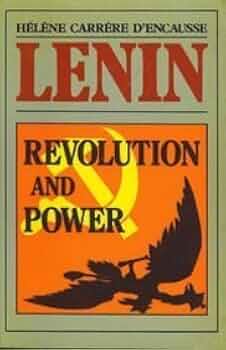
In the shifting tides of political thought, few works have sparked as enduring a debate as Vladimir Lenin’s The State and Revolution. A bold manifesto penned amidst revolution’s roar,it challenges readers to reconsider the nature of power,governance,and social transformation. Unveiling power: A Thoughtful Review of Lenin’s seminal text embarks on a journey through its dense arguments and revolutionary fervor, offering a balanced exploration that neither lionizes nor dismisses its profound impact. This review invites you to peel back the layers of ideology and history, seeking to understand the complexity and contradictions that continue to shape discussions about the state’s role in society.
Exploring Lenin’s Vision of the State and Its Role in Revolutionary Transformation
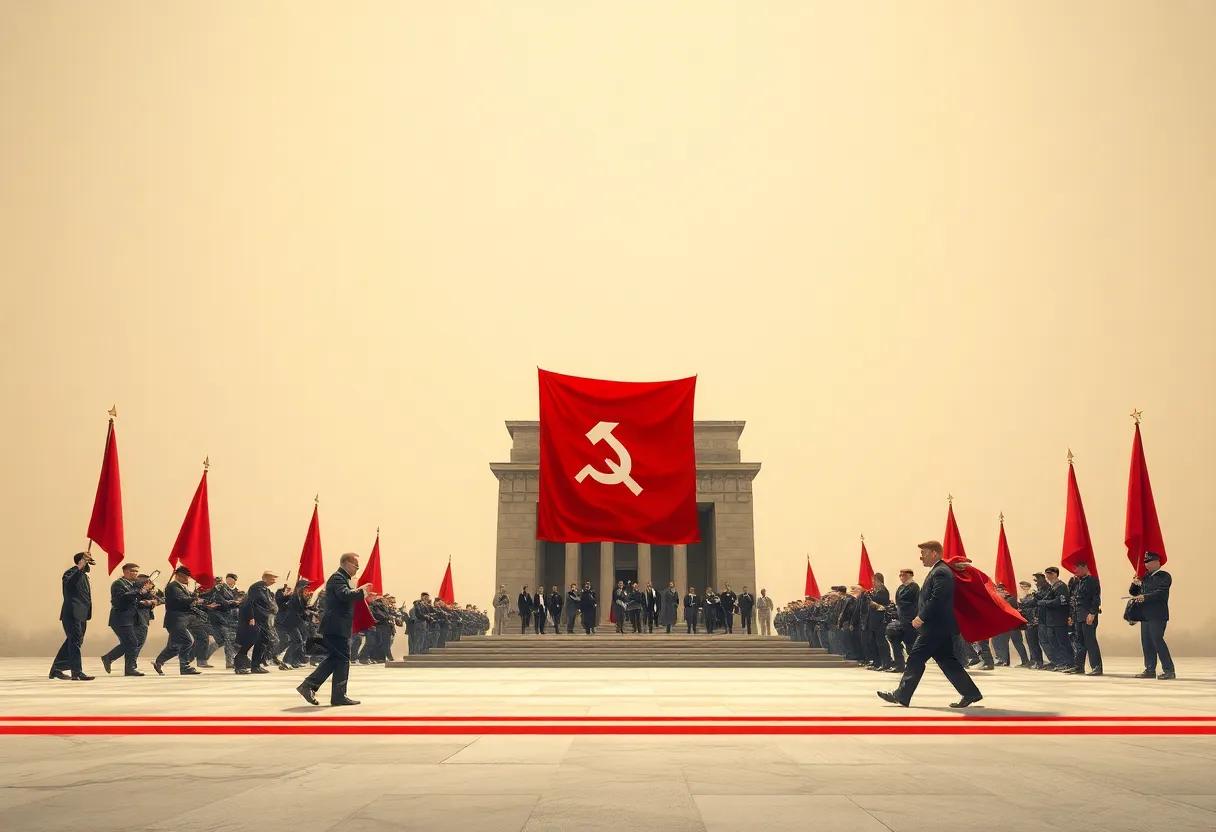
Lenin’s analysis emphasizes that the state is not a neutral entity but rather a tool of class domination. He argued that the existing bourgeois state functions primarily to uphold capitalist interests, suppressing the proletariat through mechanisms of coercion and law enforcement. This critical insight redefines the state as an instrument of class struggle rather than an impartial arbiter. Lenin’s conception envisions the proletarian revolution dismantling the capitalist state apparatus and replacing it with a ”dictatorship of the proletariat” – a transitional form that both suppresses the remnants of the old ruling class and facilitates the construction of a classless society.
Crucially, Lenin highlighted that this transformation is not an automatic process but requires the conscious, organized effort of the working class. Key elements include:
Best-Selling Books in This Category

- Destruction of existing state institutions that serve capitalist interests
- establishment of workers’ councils (soviets) as new organs of power
- Use of revolutionary violence to disarm the bourgeoisie
- Implementation of policies aimed at dismantling class structures
| Aspect | Capitalist State | Proletarian State |
|---|---|---|
| Purpose | Protect bourgeois interests | Suppress bourgeois resistance, serve proletariat |
| Power Source | Capital ownership | Working-class councils |
| Use of Violence | Police, army to maintain order | Revolutionary force against counter-revolution |
| End Goal | Perpetuate capitalist system | Transition to stateless, classless society |
Analyzing the Intersection of marxist Theory and Practical political Strategy in the Text

Lenin’s work transcends mere theoretical framework by intertwining Marxist ideology with tangible political action.At the core lies the argument that the state is not a neutral arbiter but an instrument of class oppression, which must be dismantled through revolutionary means. This perspective challenges customary governance models by emphasizing that a proletarian revolution is not solely ideological but necessitates an active seizure and restructuring of state power. The linkage between theory and praxis is apparent as lenin outlines the necessity of a vanguard party to lead the working class-illustrating the practical choreography between revolutionary ideas and their execution in political strategy.
To better understand this dynamic, consider the following elements lenin addresses:
- Withering Away of the State: The transitional period where proletarian dictatorship suppresses bourgeois resistance before true communism emerges.
- Role of the Vanguard Party: Centralized leadership as the catalyst for revolutionary momentum and state power takeover.
- Destruction of bureaucratic Apparatus: Removing State mechanisms that perpetuate capitalist oppression.
| Marxist Concept | Lenin’s practical Application |
|---|---|
| Class Struggle | Organized Revolution via Bolshevik Party |
| The State as a Tool | Proletariat Dictatorship to Control Means of Production |
| Revolutionary Violence | Necessary for Dismantling Old Power Structures |
By grounding Marx’s abstract theories in concrete strategies, Lenin crafts a roadmap for revolutionary praxis that neither romanticizes revolution nor relegates it to ideological dogma. Instead, it emerges as an orchestrated struggle demanding both intellectual clarity and decisive political will, reflecting the complex intersection where philosophical constructs meet actionable tactics.
dissecting the Critique of Bourgeois Democracy and Implications for Modern Governance

Lenin’s dissection of bourgeois democracy reveals a system fundamentally designed to maintain the dominance of capitalist interests under the guise of popular representation.He argues that what appears as “freedom” in bourgeois democracies primarily serves the ruling class, enabling them to perpetuate economic inequalities while suppressing genuine proletarian power. This critique challenges the notion of democracy as inherently egalitarian, shedding light on how political participation is often limited to choices that do not threaten the existing social order. By exposing these contradictions, Lenin urges a rethinking of governance structures that transcend mere electoral processes and confront entrenched class hierarchies directly.
The implications for modern governance are profound. Contemporary democracies still grapple with similar tensions where socioeconomic power translates into disproportionate political influence, highlighting the ongoing relevance of Lenin’s observations. Governments aiming to address systemic inequality might consider incorporating more participatory and radical reforms-such as worker councils or decentralized decision-making bodies-that disrupt traditional power dynamics. The following table summarizes key contrasts between bourgeois democracy and Lenin’s envisioned proletarian governance:
| Aspect | Bourgeois Democracy | Proletarian Governance |
|---|---|---|
| Political Participation | Limited to electoral voting within capitalist framework | Direct involvement through councils and masses |
| Power base | Economic elite and property owners | Working class and marginalized groups |
| Role of State | Instrument for preserving capitalist interests | tool for dismantling class exploitation |
| Freedom | Formal, often constrained by systemic limits | Substantive and tied to social equality |
- critical Awareness: Recognizing the limits of formal political equality.
- Structural Change: Prioritizing systemic reforms over surface-level liberal policies.
- Empowerment: Centering marginalized voices in decision-making.
Unpacking the Concept of the Dictatorship of the Proletariat Within Lenin’s Framework
Lenin’s vision of the dictatorship of the proletariat represents more than a mere transitional state; it is a radical reimagining of power’s very structure. In his framework,this “dictatorship” is not defined by repression alone but rather as the instrument of the working class to dismantle bourgeois dominance and pave the way for a classless society. Unlike traditional authoritarian regimes, it is characterized by a democratic foundation that empowers the previously exploited. The proletariat seizes political authority to suppress counter-revolutionary forces, fundamentally transforming state apparatuses that once served capitalist interests.
Central to this transformation is the role of revolutionary organs such as the soviets – workers’ councils operating as grassroots democratic entities. Lenin emphasized that these councils would catalyze the abolition of capitalist institutions,consolidating workers’ control over production and governance. To visualize the contrasting characteristics of power before and after proletarian takeover, consider the following:
| Feature | Bourgeois State | Dictatorship of the Proletariat |
|---|---|---|
| Political Power | Oligarchic dominance | Workers’ majority control |
| Use of Force | repression of working class | suppression of capitalist resistance |
| State Goal | Preservation of private property | Abolition of class distinctions |
| Citizen Participation | Limited, mediated through elites | Direct democratic engagement |
- Revolutionary leadership: Proletariat as custodian of historical progress.
- Transitional nature: A distinct phase leading toward stateless communism.
- Emancipatory force: Overthrowing exploitation to ensure social justice.
Examining the Historical Context That Shapes Lenin’s Arguments and Calls for Action
At the dawn of the 20th century, Russia was a country teetering on the edge of transformation. Widespread economic disparity, coupled with the decaying autocracy of the Tsarist regime, created fertile ground for revolutionary thought. Lenin’s arguments emerge from this turbulent backdrop,where the ideals of socialism clashed with entrenched feudal structures. His calls for a proletarian revolution were not mere ideology but urgent prescriptions born from witnessing the brutal suppression of worker uprisings and the failure of bourgeois democratic reforms.The urgency to dismantle the state apparatus, as Lenin saw it, echoed the frustrations of an oppressed majority yearning for systemic change.
Understanding Lenin’s framework involves recognizing the following key historical elements that shaped his rhetoric:
- Rise of industrial capitalism creating a polarized society
- The 1905 Russian Revolution highlighting the limits of reformism
- The influence of Marxist theory contextualized for Russian conditions
- Repression by Tsarist secret police and legacy of violence
Each factor feeds into Lenin’s vision of a “dictatorship of the proletariat” as both a tactical necessity and a visionary break from past failures. The revolutionary fervor of the time, paired with palpable social unrest, steered Lenin’s critique against mere parliamentary democracy, advocating rather for direct working-class control. This vivid historical context unlocks a deeper recognition for the urgency and radicalism embedded in The State and Revolution.
| Historical Element | Impact on Lenin’s Argument |
|---|---|
| Rapid Industrialization | Exposed class struggle, deepening workers’ exploitation |
| Failed 1905 Revolution | Discredited reformism, enhanced calls for revolution |
| Marxist Theory Adaptation | Justified the overthrow of the bourgeois state |
| State Repression | Highlighted necessity of dismantling existing power |
Understanding the Role of Class Struggle as Described in The State and Revolution
At the heart of Lenin’s analysis lies the undeniable tension between opposing classes – a dynamic engine propelling history forward. He portrays history as a relentless contest, where the state is not a neutral arbiter but a mechanism that enforces the dominance of the ruling class. This paradigm compels readers to see class struggle as the essential prism through which political power and social order must be understood. Lenin argues that the working class can never gain true emancipation without dismantling this oppressive state apparatus, as it inherently serves the interests of the bourgeoisie.
Crucially, Lenin’s work proposes that the path to a new society is not passive but involves an active, revolutionary upheaval, where the proletariat takes control by creating a dictatorship of the proletariat. This concept challenges traditional liberal views by suggesting:
- State power is inherently coercive; it cannot be reformed into a genuinely neutral institution.
- Class struggle is ongoing; the proletariat must continually defend its power against counter-revolutionary forces.
- Revolution is necessary; not only to seize power but to reshape society’s foundation.
Insights into the Dismantling of the Capitalist State and Building a Socialist Alternative
lenin’s analysis delves deeply into the inherent contradictions of the capitalist state, painting it as an instrument designed primarily to uphold the power of the bourgeoisie. He emphasizes that the state is not a neutral arbiter but a complex apparatus of domination that must be actively dismantled rather than reformed. The revolutionary path requires the smashing of existing state mechanisms and the establishment of proletarian power through a proletarian dictatorship, which acts as a transitional tool to suppress counterrevolutionary forces and pave the way for a classless society.
Building a socialist alternative demands more than just seizing power; it involves radical transformations in political structures and social relations.Lenin’s vision includes:
- Superseding the bourgeois parliament with workers’ councils (soviets) that embody direct proletarian democracy
- Replacing capitalist legal frameworks with new revolutionary laws reflecting the interests of the working class
- Mobilizing the masses to actively participate in governance and safeguard the revolution
| Stage | Function | Key Feature |
|---|---|---|
| Capitalist State | Oppression | Protects bourgeois interests |
| Proletarian Dictatorship | Suppression | Disbands the old ruling class |
| Socialist State | Construction | Builds classless society |
Assessing the Relevance of Lenin’s Ideas in Contemporary political Movements and Theory
In the ever-evolving landscape of politics, Lenin’s vision continues to spark debate and reflection. His conceptualization of the state as an instrument of class oppression remains a potent lens through which many contemporary movements analyze power dynamics. From grassroots organizations to radical leftist parties, there is a clear thread of Leninist influence that shapes calls for systemic change. Though, the application of his ideas demands adaptation; modern activists frequently enough wrestle with balancing *the necessity of organized revolutionary force* against the risks of authoritarianism. This tension highlights the enduring complexity of Lenin’s legacy as both a blueprint for emancipation and a cautionary tale.
Contemporary political theorists and movements frequently draw upon Lenin’s core premises to critique neoliberal governance and capitalist stratification. Yet, many also challenge or reinterpret his methods in light of today’s digital connectivity and globalized economies. Consider these facets where lenin’s thought remains pivotal:
- State Power as class Control: A framework to understand institutional biases and systemic inequality.
- Role of Vanguard parties: Debated in the context of decentralized, horizontal activism.
- Revolutionary Violence: Re-examined amid nonviolent resistance and civil disobedience strategies.
| Aspect | Lenin’s View | Contemporary Interpretation |
|---|---|---|
| State | Tool of proletarian rule post-revolution | Complex bureaucracy needing democratization |
| Party | Central leadership to guide revolution | Loose coalitions fostering participatory politics |
| Revolution | Immediate overthrow through force | Gradual transformation via systemic reform |
Evaluating the Clarity, Structure, and Accessibility of Lenin’s Writing Style for Today’s Readers
Lenin’s prose speaks with measured intensity, weaving complex Marxist theories into a tapestry that demands careful attention. While his writing is undoubtedly rich in ideological fervor, the clarity often oscillates between meticulous explanation and dense, jargon-heavy passages. Modern readers may find themselves captivated by his conceptual depth yet challenged by the layered rhetoric and historical context required to fully grasp his arguments. key elements contributing to the accessibility of his work include:
- Frequent use of illustrative examples drawn from contemporary revolutionary struggles
- A strong argumentative flow that underpins each section with philosophical rigor
- Occasional footnotes and references that contextualize his critiques and assertions
Structurally, The State and Revolution maintains a intentional progression, guiding readers through foundational concepts before advancing to radical propositions. This systematic framework enhances comprehension but can feel arduous without background knowledge in political theory. To better visualize the balance of clarity and density, consider the following breakdown:
| Aspect | Strength | Challenge for today’s readers |
|---|---|---|
| Clarity | Explicit definitions of key concepts | Lengthy sentences packed with ideology |
| Structure | Logical progression of chapters | Dense philosophical underpinnings may deter casual reading |
| Accessibility | engages through historical examples | Obsolete references requiring external research |
Recommendations for Readers Seeking to Engage Deeply with Revolutionary Political Philosophy
For those ready to delve beyond surface-level understanding, engaging deeply with revolutionary political philosophy demands more than just reading-it requires active questioning and contextual immersion. Start by cross-referencing The State and Revolution with seminal works such as Marx’s Capital or Gramsci’s Prison Notebooks. This comparative approach enriches your grasp of the ideological tapestry and highlights the dynamic evolution of revolutionary thought. Consider forming or joining study groups where diverse perspectives can challenge and refine your interpretations, fostering a vibrant intellectual community rather than solitary reflection.
To aid in structuring your deep-dive study sessions, the following table suggests a balanced mix of theoretical tools and practical exercises often overlooked yet crucial for internalizing tension points within the text:
| Method | Purpose | Example Activity |
|---|---|---|
| Dialectical Journaling | Unpack contradictions | Note opposing arguments within chapters |
| Contextual Mapping | Connect historical context | Create timelines juxtaposing events with content |
| Thought Experimentation | Apply theories to modern scenarios | Draft essays on state relevance today |
| Peer Debates | Test ideas under scrutiny | Organize moderated discussions |
Reflections on How The State and Revolution influences Modern Debates on Power and Authority
Lenin’s The State and Revolution remains a pivotal reference point in contemporary discussions surrounding power structures and legitimacy. His insistence that the state is not a neutral arbiter but rather an apparatus of class oppression challenges prevailing notions that authority naturally aligns with societal good. This reframing invites modern debates to critically assess who wields power and for whose benefit. The idea that the state must be actively dismantled and replaced by a “dictatorship of the proletariat” reshapes conversations on governance, especially in contexts where calls for systemic reform and revolution arise. Political movements today often grapple with the tension between preserving institutional stability and pushing for transformative change,a dialectic deeply imbued with Lenin’s revolutionary theory.
The influence of Lenin’s work extends beyond political philosophy into practical critiques of contemporary power dynamics. When analyzing the legitimacy of authority,several questions emerge that resonate strongly with his thesis:
- Is authority inherently oppressive or is it a necessary structure for social order?
- How can revolutionary intentions be reconciled with the dangers of authoritarianism?
- What role does the state play in either perpetuating inequality or facilitating justice?
These inquiries have birthed new frameworks for evaluating governance models. The following table encapsulates how Lenin’s concepts intersect with modern power debates:
| Aspect | Lenin’s Perspective | Modern debate |
|---|---|---|
| Nature of the State | Class oppression tool | Institution for public service or control |
| Role of Revolution | Essential for dismantling old order | Risky but sometimes necessary upheaval |
| Power Legitimacy | Rooted in class interests | Based on legal-rational authority or consent |
The Enduring Legacy of Lenin as a Political Theorist and Revolutionary Leader Explored
Lenin’s intellectual rigor and revolutionary zeal have etched an indelible mark on modern political thought.His analysis in the State and Revolution eloquently dismantles bourgeois conceptions of the state, presenting it as a tool of class oppression rather than a neutral arbiter.This perspective not only reshaped Marxist theory but also provided a blueprint for revolutionary praxis that transcended time and geography. Lenin’s envisioning of a state that would ”wither away” after a proletarian revolution challenges prior notions of governance, emphasizing the temporary but decisive role of the dictatorship of the proletariat in dismantling capitalist structures. From this lens, his legacy extends beyond historical events, influencing contemporary debates about power, governance, and social justice.
Exploring the continuing relevance of Lenin’s work reveals key thematic pillars that remain central to political discourse today:
- Class struggle dynamics: unmasking the state as an arena of conflict, not consensus;
- Revolutionary strategy: advocating for organized, conscious action instead of spontaneous uprising;
- Democratic centralism: balancing centralized leadership with grassroots participation;
- State transition: envisioning a phased move from dictatorship to genuine socialism.
| Concept | Traditional View | Lenin’s Perspective |
|---|---|---|
| The State | Neutral governance body | Instrument of class oppression |
| Revolution | Spontaneous event | Planned, disciplined process |
| Power | End goal | Means to abolish class society |
The State and Revolution remains as provocative and challenging as ever-a text that compels readers to wrestle with the complexities of power, authority, and the possibility of radical change. Lenin’s work does not offer easy answers, but rather opens a door to critical reflection on the role of the state in society’s transformation. Whether one approaches it as an ideological blueprint or a historical artifact,this seminal text invites us to reconsider the delicate balance between revolution and governance. As the pages close, what lingers is not a conclusion, but an invitation: to continue questioning, debating, and unveiling the many layers of power that shape our world.







