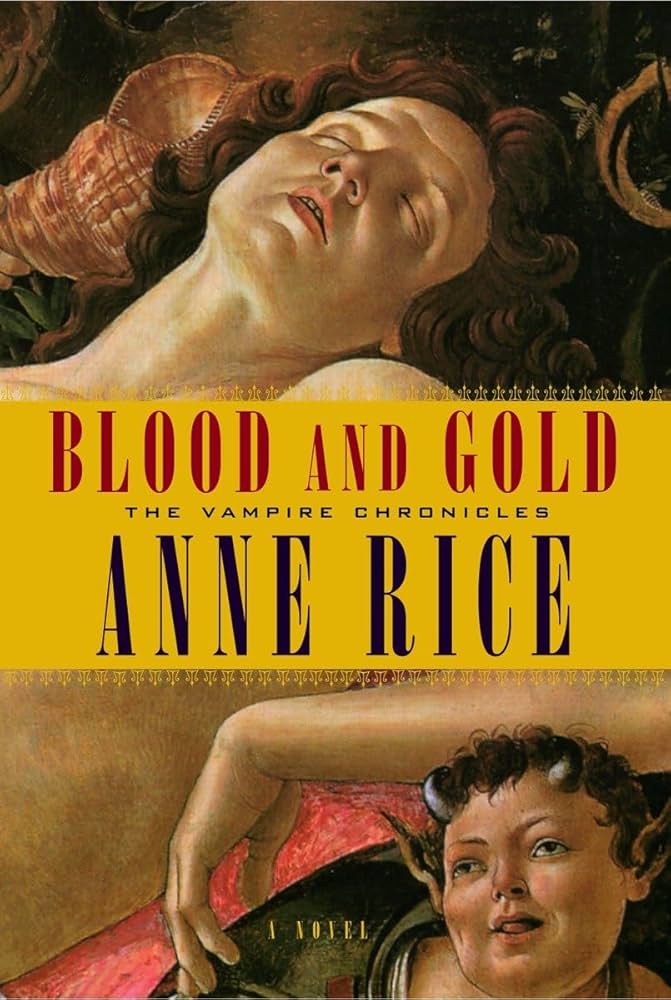
In teh vast landscape of vampire literature, few names resonate as profoundly as Anne Rice’s. With ”Blood and Gold,” Rice invites readers once again into the shadowed realms of immortality, weaving a tale that blends historical depth with supernatural intrigue. This review delves beneath the surface of her luminous prose and complex characters to explore the themes and storytelling techniques that define her work. Join us as we unravel the layers of “Blood and Gold,” seeking to understand how Rice’s vision of eternal life continues to captivate and challenge readers around the world.
The Intriguing Blend of history and Supernatural Elements in Blood and Gold Explored

Anne Rice’s Blood and Gold masterfully interweaves a rich tapestry of historical epochs with a captivating supernatural narrative,allowing readers to traverse time and space through the eyes of the immortal vampire,Marius. This blend isn’t simply a backdrop; it acts as a compelling catalyst that elevates the story’s depth, bringing to life vivid portraits of ancient Rome, renaissance Italy, and even modern eras. The meticulous research evident in historical details-such as cultural customs, architectural marvels, and societal norms-frames the supernatural elements, imposing a believable realism onto fantastical immortality. It’s this elegant fusion that invites readers to ponder the lingering impact of history upon both mortal and immortal worlds alike.
What truly sets this novel apart is the way supernatural motifs reinforce and mirror the historical themes. The eternal nature of vampires reflects humanity’s own obsession with legacy, mortality, and the passage of time, resonating through vivid scenes laden with symbolism like:
Best-Selling Books in This Category


- Ancient rituals echoing the timeless rites of passage and transformation.
- Immortal love stories spanning centuries, highlighting enduring human emotions.
- philosophical quests that challenge the meaning of existence amid shifting historical tides.
| Historical Era | Supernatural Themes |
|---|---|
| Ancient Rome | Immortality’s origin & divine intervention |
| Renaissance Italy | Art, beauty, and the curse of eternal youth |
| Modern Times | Isolation, identity, and eternal reflection |
How Anne Rice captures the Eternal Struggles and Desires of Vampires in Her Narrative
anne Rice delves deep into the psyche of her immortal characters, revealing a complex tapestry of loneliness, desire, and moral ambiguity that transcends customary vampire lore. Through her vivid, poetic prose, she captures the essence of eternal life not as a mere curse, but as a continuous struggle between the thirst for blood and the yearning for meaning. Her vampires are neither purely monstrous nor purely tragic; they embody a delicate balance of power and vulnerability, wrestling with questions of identity and purpose across centuries.
Rice’s narrative carefully explores these tensions by weaving in themes of:
- Existential Angst: The vampires’ confrontation with time and an immutable fate.
- Passionate Yearning: The paradox of craving human connection despite their predatory nature.
- Ethical Dilemmas: The complex morality of immortality and the consequences of eternal choices.
| Element | Depiction |
|---|---|
| Blood | Life force and endless craving |
| Darkness | Both refuge and prison |
| Time | Unrelenting and isolating |
| Love | Fleeting, yet deeply transformative |
A Deep Dive into the Complex Character Development of Memnoch the Devil and marius

Anne rice masterfully crafts two of her most enigmatic figures, Memnoch the Devil and Marius, not merely as archetypes but as vessels of existential exploration.Memnoch embodies a cosmic paradox-both the tempter and the enlightened seeker-challenging conventional depictions of evil by weaving philosophical and theological depth into his persona.His dialogues transcend villainy, provoking readers to question the nature of divinity, morality, and eternal damnation. Simultaneously occurring, Marius serves as a reflective lens, a mentor shaped by centuries of loss and revelation, whose own journey through immortality balances wisdom with profound vulnerability.
What makes their characters compelling is the intricate interplay between their beliefs and experiences, encapsulated in the following core facets:
- Contrasting philosophies: Memnoch’s celestial cynicism versus Marius’s humanistic nostalgia.
- Immortality’s burden: The weight of eternal existence manifests differently but equally powerfully in both.
- Mentorship and rebellion: Marius’s patience challenges Memnoch’s radical ideology.
| Character | Key Trait | Symbolism |
|---|---|---|
| Memnoch the Devil | Philosophical tormentor | Divine rebellion |
| Marius | Sage survivor | Enduring humanity |
The Richly Detailed Settings That Transport Readers Through Centuries and Continents
Anne Rice’s masterful storytelling shines brightest when she paints her worlds with lush, intricate brushstrokes. From the gleaming courts of Renaissance Venice to the shadowy streets of 18th-century Paris, each setting is brought vividly to life, inviting readers to wander through historical tapestry that feels as tangible as the turning pages. The evocative details-the scent of aged parchment, the clatter of horse-drawn carriages, and the flicker of candlelight in cavernous mansions-do more than provide backdrop; they become immersive portals into epochs steeped in mystery and allure. It’s this unparalleled attention to habitat that transforms her narratives into living, breathing experiences, where the past whispers and the present resonates across continents.
- venice: The labyrinthine canals weave tales of intrigue and eternal love.
- Paris: Gritty alleyways echo with whispered secrets and revolutionary fervor.
- New Orleans: A sultry blend of opulence and decay pulses beneath Spanish moss.
Rice’s genius also lies in how these diverse landscapes shape her characters’ immortal journeys, each locale adding depth and nuance to their timeless struggles with power, desire, and identity. She deftly captures the complexities of social hierarchies and cultural atmospheres, illustrating how time and place forge destinies. Below is a brief look at how key settings influence mood and character development throughout the novel:
| Setting | atmospheric Mood | Character Reflection |
|---|---|---|
| venice,Renaissance | Opulent yet shadowed | Duality of beauty and danger |
| Paris,18th Century | Turbulent and revolutionary | Conflict between freedom and control |
| New Orleans,Gothic Era | haunted elegance | Embracing past and eternal sorrow |
Examining the Philosophical Themes of Immortality and Moral Ambiguity Within the Story
Immortality in Blood and Gold transcends the mere cessation of death; it becomes a complex exploration of eternal existence weighed down by the burden of endless choice. Anne Rice masterfully delves into the paradox of living forever, illustrating how immortality challenges the vampire’s connection to humanity, memory, and the very essence of identity. The protagonist’s endless lifespan serves not as a gift but as a continuous struggle, forcing readers to contemplate the profound loneliness and the erosion of moral certainty that accompany an unyielding existence.
The narrative intricately weaves moral ambiguity throughout, refusing to present clear dichotomies of good versus evil. Characters are painted in shades of gray, embodying a spectrum of ethical complexities that provoke deep philosophical questions. Consider the ways in which loyalty,betrayal,love,and cruelty intermingle,revealing that:
- Choices are seldom purely right or wrong;
- Adherence to personal codes of honor can conflict with survival instincts;
- Immortality twists traditional notions of justice and obligation.
this intricate moral canvas encourages readers to reflect on how the characters’ eternal lives reshape their understanding of morality, blurring lines and intensifying the tension between desire and result.
The Role of Art and Beauty as Symbols Throughout the Lifespan of Blood and Gold’s Characters
Throughout Blood and Gold, art and beauty transcend mere aesthetics, becoming profound symbols that mirror the eternal struggles and desires of anne Rice’s immortal characters. Art surfaces as a refuge, a language through which vampires express their complex humanity amid supernatural existence. Whether through intricate portraits, haunting music, or the allure of a perfect golden object, these creations embody frozen moments of passion and sorrow, preserving fragments of fleeting mortality. The vibrancy of beauty in the narrative reflects a paradox: it is both a balm and a torment, illuminating what is lost to time yet eternally yearned for. Such symbols act as silent witnesses to the characters’ evolving identities, linking their past suffering with present consciousness and unspoken hopes for redemption.
The novel also uses art as an anchor for continuity across centuries,emphasizing how each character’s encounter with beauty shapes their personal mythology. Below is a concise overview of key characters and the artistic muse they gravitate towards:
- Mona: The painter’s touch in portraits that capture her youthful soul, frozen yet alive.
- Mael: Music as a tempest of memories from his mortal vulnerability to supernatural strength.
- Akasha: Gold artifacts symbolizing dominion, desire, and the gilded cage of immortality.
| Character | Artistic Connection | Symbolic Meaning |
|---|---|---|
| Mona | Portrait Painting | Preservation of fleeting humanity |
| Mael | Music | Emotional catharsis and memory |
| Akasha | Gold Artifacts | Power, desire, and eternal entrapment |
These artistic motifs not only deepen the narrative’s emotional resonance but also challenge readers to reflect on the essence of beauty itself-a fleeting, enigmatic force that can illuminate the immortal condition yet also underline its inevitable solitude.
How Anne Rice’s Prose Balances Gothic Atmosphere with poetic elegance and Emotional Depth
Anne Rice’s prose waltzes through the shadowy corridors of Gothic tradition, infusing her narrative with a haunting elegance that captivates readers. The atmospheric tension is palpable-mystery lingers in the air like a dense fog, each sentence carefully crafted to evoke the richness of a bygone era steeped in decadence and despair. Yet, amidst this Gothic tapestry, Rice’s language transcends mere description; it flows with a poetic grandeur that borders on the lyrical. Her words don’t just paint the night-they make you feel the chill biting at the skin, hear whispers of ancient secrets, and witness the eternal dance between beauty and darkness.
Beyond the atmospheric depth, her prose is laden with emotional complexity that gives her immortal characters profound humanity. The weight of centuries of existence, longing, and loss is conveyed through subtle introspection and vivid imagery. This balance is reflected in her stylistic approach, which combines:
- Evocative metaphors that awaken the senses
- Rich, descriptive passages that build immersive settings
- Raw emotional reflections that anchor the supernatural in human experience
| Element | Effect |
|---|---|
| Gothic Imagery | Creates immersive,moody backdrops |
| Poetic Syntax | Enhances rhythm and lyrical beauty |
| Emotional nuance | Adds depth and relatability to immortals |
Assessing the Pacing and Structure That Make Blood and Gold Both Engaging and Thought-Provoking
Anne Rice masterfully orchestrates Blood and Gold with a rhythm that mimics the eternal heartbeat of her immortal characters – a blend of deliberate pacing and bursts of intense action. The narrative unfolds through David Talbot’s reflections, carefully balancing epochs of vampire existence with moments of raw, visceral immediacy. This ebb and flow doesn’t rush readers; instead, it invites them to linger on rich descriptions, philosophical musings, and personal transformations, creating an experience that is both immersive and meditative. Each chapter feels like a blood pulse-sometimes slow and brood-filled,at other times quickening with revelations and confrontations.
Structurally,Rice employs a subtle layering that alternates between the personal and the cosmic,using a non-linear approach that challenges readers to piece together histories without losing sight of the present journey. Elements that reinforce this compelling design include:
- Interwoven timelines that reveal character evolution and thematic depth
- Philosophical dialogues that explore immortality’s existential burdens
- Vivid sensory moments that tether the supernatural to the tangibility of human experience
This architecture invites readers into a contemplative space where the boundaries between time, memory, and identity blur, enhancing the book’s thought-provoking nature without sacrificing narrative momentum.
| Narrative element | Effect |
|---|---|
| Non-linear storytelling | Creates mystery and layered understanding |
| Philosophical reflections | Provokes deeper contemplation of immortality |
| Sensory-rich prose | Enhances connection to the supernatural world |
Why Blood and Gold Appeals to Both Longtime Vampire Enthusiasts and New Readers Alike
Anne Rice masterfully crafts a narrative that resonates with seasoned vampire aficionados through her intricate world-building and profound character depth. The novel delves into the eternal struggle between desire and damnation, a familiar theme that longtime readers cherish. Yet, Rice’s vivid prose and the richly layered exploration of immortality make the story accessible for newcomers, inviting them into a mesmerizing journey without the need for prior series knowledge.
Key elements that captivate both audiences include:
- Timeless themes of love, loss, and power that transcend genre expectations.
- Evocative descriptions that bring the opulence of Rice’s gothic universe to life.
- Complex characters whose struggles feel intensely human despite their supernatural existence.
| Aspect | Longtime Enthusiasts | New Readers |
|---|---|---|
| Connection to Series Lore | Deep thankfulness for ongoing mythos | Fresh introduction without overwhelm |
| Emotional Engagement | Rekindles nostalgia and intrigue | Compelling and relatable character arcs |
| Writing Style | Richly poetic and immersive | Accessible yet evocative language |
Suggestions for Readers Seeking Similar Immersive supernatural and Historical Fiction Adventures
For those captivated by Anne Rice’s lush blend of supernatural lore and sweeping historical settings, several authors offer similarly immersive journeys. Elizabeth Peters weaves archaeological intrigue with Victorian-era mysteries in her Amelia Peabody series, while Deborah Harkness explores a magical academic world with meticulous historical detail in her “All Souls Trilogy.” Fans seeking rich, atmospheric storytelling may also find themselves drawn to Guy Gavriel Kay, whose historical fantasy novels traverse real and imagined pasts with profound emotional depth.
To better chart these literary landscapes, consider this rapid guide highlighting authors who balance the eerie with the epoch:
| Author | Notable Work | Genre blend | Why Read |
|---|---|---|---|
| Elizabeth Peters | The Amelia Peabody Series | Mystery & Historical Fiction | Archaeology mixed with Victorian adventure |
| Deborah Harkness | All souls Trilogy | Supernatural & Historical Fantasy | Scholarly magic intertwined with real history |
| Guy Gavriel Kay | Several Standalones | Historical Fantasy | Poetic prose with evocative pasts |
| Charlaine Harris | Sookie Stackhouse Series | Urban Fantasy & Mystery | Southern Gothic meets supernatural intrigue |
Exploring these works can transport readers into worlds where the past is as alive and mysterious as any vampire’s immortal night. Taking a page from Rice’s elaborate character studies and richly rendered settings, these authors offer a blend of the unknown and familiar, inviting readers to question what lies just beneath the surface of history and myth.
The Impact of Blood and Gold on Modern Vampire Literature and Its Legacy in the Genre
Anne Rice’s Blood and Gold stands as a monumental chapter in the vampire literary tradition, weaving a rich tapestry that blends historical elegance with the raw, eternal hunger defining vampire lore. Unlike many contemporary narratives that often strip vampires down to mere monsters or romanticized figures, Rice’s portrayal resurrects the complexity and depth of the immortal experience. Through the eyes of Marius,the novel explores themes of memory,loss,art,and existential dread,which have profoundly influenced modern vampire protagonists beyond superficial immortality.
The novel’s legacy is evident in how it reshaped key genre elements, notably by:
- Humanizing the Vampire: Vampires as beings capable of deep philosophical thought and emotions, rather than just predators.
- Historical Layers: Integrating richly detailed past eras, lending authenticity and breadth to vampire stories.
- Artistic Immortality: Connecting vampirism with the preservation of culture,knowledge,and beauty.
| Aspect | Blood and Gold | Modern Vampire Literature |
|---|---|---|
| Character Depth | Multifaceted, philosophical | Varies, increasingly complex |
| Setting | Historical and cosmopolitan | Often urban or contemporary |
| Themes | Immortality, art, identity | Love, morality, survival |
| Tone | lush, meditative | Diverse, from dark to light-hearted |
Exploring the Themes of Loneliness and Connection in Anne Rice’s Vampire Mythos
Anne Rice’s vampire mythos masterfully delves into the paradox of eternal existence-where immortality is both a gift and a curse. The creatures of the night, eternally bound by their predatory nature, are frequently enough portrayed as isolated figures navigating centuries of solitude. Yet, beneath their supernatural exterior lies an aching desire for human connection. This tension drives much of the emotional resonance in Blood and Gold, where the protagonist’s endless lifespan is punctuated by fleeting moments of intimacy that never fully quell his deep-seated loneliness. The narrative poignantly captures how eternal life amplifies the struggle to find meaningful bonds in a world that is constantly changing.
- Loneliness: An immortal’s burden of witnessing endless loss and change.
- Connection: The rare, transient encounters that give immortality a semblance of purpose.
- Memory: The haunting archive of lives loved and left behind.
| Aspect | Representation in the Novel |
|---|---|
| loneliness | Ravenous solitude intensified by unending years |
| Connection | Ephemeral relationships defying time |
| Immortality | A double-edged sword of eternal life and eternal pain |
About Anne Rice The Visionary Author Whose Imagination Redefined Gothic Fiction and Vampire Lore
Anne Rice’s work transcended the conventional boundaries of gothic fiction, weaving intricate tapestries of dark romance, existential musings, and the eternal struggle between light and shadow. With her vivid prose and complex characters,she breathed new life into vampire lore,transforming these mythical beings from mere monsters into tragic,eloquent immortals grappling with identity,morality,and desire. Her novels invite readers not only into otherworldly realms but also into the depths of the human soul, exploring themes of love, loss, and redemption beneath the velvet cloak of night.
Beyond her narrative genius,Rice’s creative influence can be distilled into key elements that set her apart from traditional gothic authors:
- revolutionizing vampire mythology: Introducing vampires who reflect humanity’s complexity rather than one-dimensional evil.
- Mythic storytelling: Blending history, fantasy, and spirituality into a lush, immersive experience.
- Rich psychological landscapes: Delving into immortality’s burden and desire’s paradox.
These hallmarks illustrate why Anne Rice remains a cornerstone of gothic fiction, her legacy forever entwined with the shadows she so masterfully illuminated.
| attribute | Anne Rice’s Interpretation |
|---|---|
| Vampire personality | Complex, conflicted, and sensuous |
| Setting | Gothic, historically rich, and atmospheric |
| Themes | Immortality, redemption, desire |
| Narrative Style | Lush, poetic, immersive |
In weaving together the threads of history, passion, and the eternal quest for meaning, Blood and Gold stands as a testament to Anne Rice’s enduring ability to breathe life into the myth of immortality. Whether you find yourself enchanted by the rich tapestry of Lestat’s past or contemplative about the burdens immortality bestows, this novel invites readers to ponder the timeless dance between darkness and light. As the final pages turn, Blood and Gold leaves us with more than a story-it offers a mirror reflecting our own desires, fears, and the ever-persistent human yearning to leave a mark beyond time.