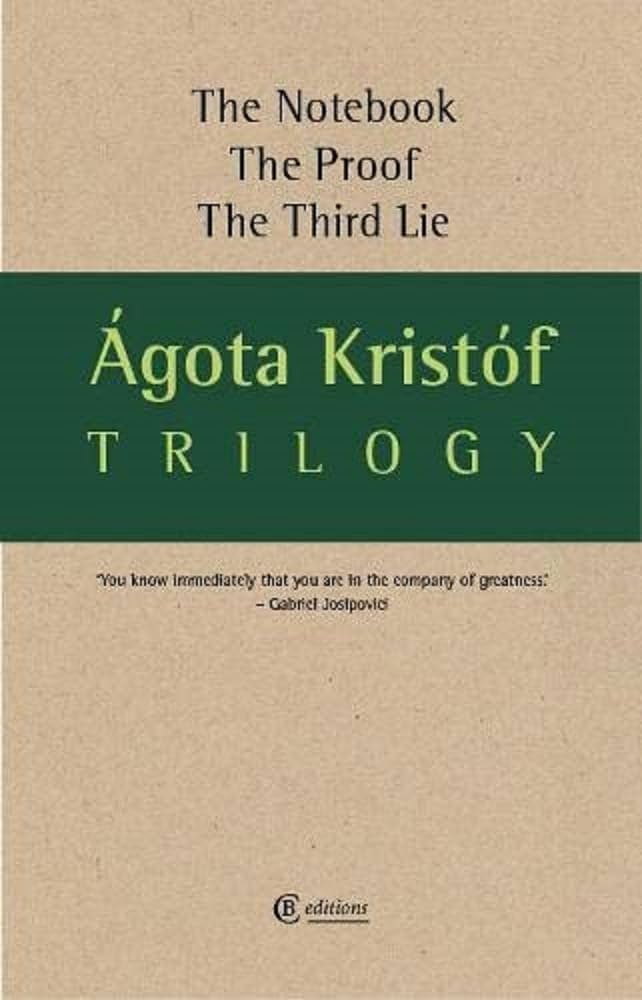
In the realm of contemporary literature, few works delve as profoundly into the fragile interplay between memory and reality as Ágota Kristóf’s acclaimed trilogy. invites readers to traverse the haunting landscapes of human experience shaped by war, displacement, and identity. This book review explores how Kristóf’s spare yet powerful prose crafts a narrative that challenges conventional storytelling, revealing the complexities of truth as both an elusive and deeply personal construct. Through this examination, we uncover the layers of meaning embedded within the trilogy’s stark pages and reflect on the enduring impact of memory in shaping our understanding of self and history.
Exploring the Themes of Identity and Memory in Ágota Kristóf’s Trilogy and Their Impact on Modern Literature
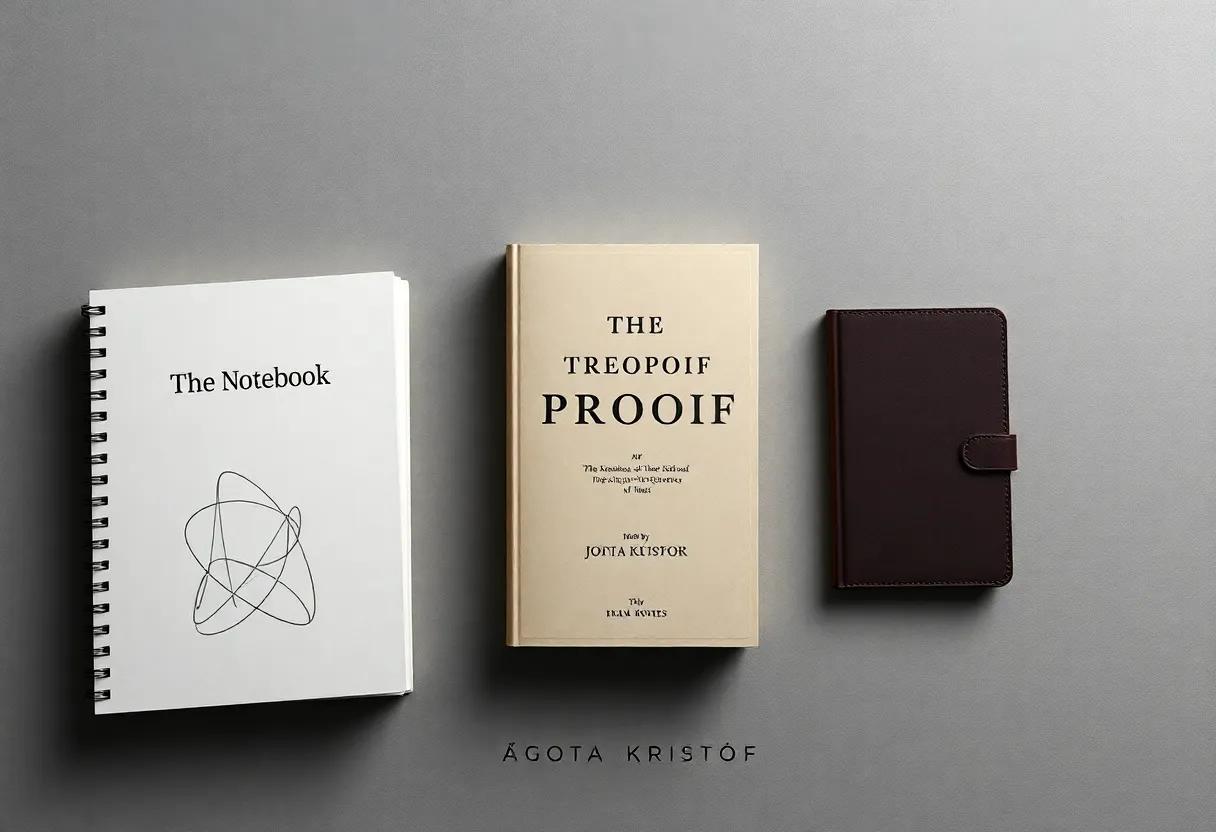
Ágota Kristóf’s trilogy stands as a haunting exploration of the fragmented self, where memory functions as both a prison and a sanctuary. Throughout the narrative, identity is not presented as a fixed essence but as an elusive construct, shaped and distorted by the harsh realities of war and displacement. The protagonists’ struggle to maintain a coherent sense of self amid chaos challenges readers to confront the instability of memory itself. Memory becomes a battlefield, not only preserving the past but also rewriting it, revealing how the act of remembering is inseparably tied to forgetting. This duality propels the trilogy beyond mere storytelling into a profound meditation on the nature of truth.
Modern literature has been deeply influenced by this unsettling interplay between identity and memory.Kristóf’s minimalist style, combined with her raw exposition of psychological trauma, opened pathways in narrative form and thematic depth. Writers today often echo her techniques, especially in exploring unreliable narrators and fragmented timelines. The table below outlines some key thematic resonances in contemporary works traceable to Kristóf’s legacy:
Best-Selling Books in This Category

- Curtius, Ernst Robert (Author)

| Theme | Kristóf’s Trilogy | Modern Literature Examples |
|---|---|---|
| Fragmented Identity | Twins’ split perspectives | Works by Rachel Cusk, Haruki Murakami |
| Memory as Narrative | Inconsistent recollections | Art Spiegelman’s graphic memoirs |
| Truth vs. Fiction | Blurred reality in storytelling | Julian Barnes’ meta-fictional narratives |
- Identity is shown not as a singular truth but as an ongoing negotiation between past and present.
- Memory acts simultaneously as evidence and enigma, creating rich narrative tension.
- The trilogy’s austerity sharpens these themes, influencing modern minimalist prose.
A Deep Dive into Narrative Structure and Stylistic Choices That Define the Trilogy’s Unique Voice and Mood

At the heart of Ágota Kristóf’s trilogy lies a meticulously crafted narrative structure, one that fractures time and memory to mirror the disorientation of war and trauma. The story unfolds through sparse, almost clinical prose that stands in stark contrast with the emotional devastation beneath the surface. This minimalist style strips away all superfluous detail, forcing readers into the raw immediacy of each moment.Repetition and parallelism throughout the text not only reinforce thematic elements but also create a hypnotic rhythm, pulling readers deeper into the psychological maze inhabited by the twins. the trilogy’s voice is deliberately detached, yet the tension it evokes is palpable, inviting a contemplation of truth that is as elusive as it is haunting.
The mood is further shaped by an interplay of bleak landscapes and intimate settings, where every detail is charged with symbolic weight.The trilogy invites readers to dwell in uncertainty, emphasizing the instability of memory and identity through disjointed timelines and unreliable narration. Below is a brief overview of key stylistic elements and their impact:
- Monochromatic imagery: evokes a sense of coldness and desolation throughout the narrative.
- Sparse dialogue: highlights isolation and the unspoken tensions between characters.
- Fragmented chronology: reflects fractured memories and challenges linear understanding.
- Detached tone: amplifies the surreal atmosphere, blurring lines between reality and perception.
| Stylistic choice | Effect on Voice | Contribution to Mood |
|---|---|---|
| Minimalist Prose | Detached, stark | Creates tension & unease |
| Repetitive Structures | Hypnotic, rhythmic | Echoes trauma & obsession |
| Nonlinear Timeline | Disorienting, fragmented | Emphasizes memory’s instability |
| Symbolic Imagery | evocative, sparse | Enhances bleak, haunting tone |
The Role of War and Displacement as Underlying Forces Shaping the Characters’ Journeys and Emotional Landscapes

War and displacement act as silent architects, molding the inner and outer worlds of Kristóf’s characters with relentless precision. The trilogy portrays these forces not merely as backdrops but as visceral experiences that fracture identities and reshape destinies. The characters traverse physical and emotional wastelands – where borders blur and trust fractures – reflecting the chaos born from national upheaval. This upheaval seeds a complex emotional landscape, one in which survival is entangled with memory’s elusive flickers, creating tension between forgetting and the haunting persistence of loss.
Key impacts of war and displacement on characters include:
- Fragmentation of identity: Characters grapple with disconnection from their past selves and communities.
- Emotional numbness: A necessary armor against trauma, often leading to isolation.
- Search for truth: Navigating the blurred lines of memory and reality in a fractured world.
| Aspect | Character Experience | Emotional Response |
|---|---|---|
| War’s violence | Witnessing brutality firsthand | Apathy & heightened alertness |
| Displacement | Losing home and community | Alienation & longing |
| Memory | Fragmented recollections | Confusion & determination |
Unpacking the symbolism and Metaphors That Enhance the Text’s Philosophical and psychological Depth
Ágota Kristóf’s trilogy delves deeply into the labyrinth of human consciousness, where symbolism across her narrative threads acts as both beacon and shadow. The persistent motif of mirrors, for instance, operates not merely as a reflection device but as a portal to fragmented identities, challenging the reader to question the authenticity of the self and the mutability of memory. These mirrors encapsulate the dualities within the protagonists-truth versus illusion, past versus present-transforming the text into a psychological landscape where memory is as unreliable as it is indeed essential. Similarly, the recurrent imagery of water-from stagnant pools to flowing rivers-symbolizes the fluidity of truth and the erosion of certainty, inviting readers to wade through subjective experiences that blur the lines between reality and perception.
The trilogy’s metaphors extend beyond natural symbols to evocative objects and actions, shaping its philosophical inquiry into existence and morality. Take, such as, the motif of the notebook, a seemingly innocuous vessel that transcends its physical role to embody the precariousness of recorded history and the act of storytelling itself. Through this, Kristóf suggests that our grasp of the past is mediated and distorted by selective recollection, underscoring how memory is both a weapon and a refuge. Below is a brief overview of some core metaphors and their thematic resonance:
| Symbol | representation | Philosophical/Psychological Meaning |
|---|---|---|
| Mirrors | Fragmented self | Exploration of identity and subjective truth |
| Water | Flux and change | Impermanence of memory and reality |
| Notebook | Memory/record | Reliability of history and narration |
| labyrinth | Confusion and entrapment | Internal psychological turmoil and search for meaning |
How the Trilogy Challenges Traditional Storytelling Through Fragmented Perspectives and Unreliable Narrators
Ágota kristóf’s trilogy dismantles the conventional linear narrative by presenting >events through a kaleidoscope of fractured memories and disparate voices. each volume weaves the story with layers of fragmented perspectives, forcing readers to question the reliability of the narrators. This deliberate technique blurs the boundary between reality and perception, making truth a fluid, often elusive concept.The protagonists’ conflicting accounts and gaps in memory create an atmosphere of ambiguity where meaning is not handed to the reader but must be actively reconstructed from scattered clues.
Through the use of unreliable narrators, Kristóf challenges the idea of an objective truth in storytelling. Rather than a single authoritative voice, the trilogy embraces multiplicity, allowing contradictions and uncertainties to coexist. This polyphonic approach invites readers to engage critically with the narrative, examining motives behind selective storytelling and confronting the fragile nature of memory itself.
| Narrative Element | Effect on Reader | Example in Trilogy |
|---|---|---|
| Fragmented Viewpoint | Disrupts linear storytelling, deepens ambiguity | Shifting point of view between twins |
| Unreliable Narrators | Challenges authenticity, evokes skepticism | Conflicting memories of wartime events |
| Minimalist Language | Enhances starkness, underscores emotional void | Detached descriptions of trauma and violence |
The Emotional Resonance and Ethical Questions Raised by the Depiction of Childhood Trauma and Survival
Ágota Kristóf’s narrative plunges readers into the raw and unvarnished realities of childhood marked by war, displacement, and fragmentation. The trilogy masterfully captures the profound emotional turmoil of survival, illustrating how trauma seeps into the very fabric of memory and identity. Through stark, minimalist prose, Kristóf unearths the silent suffering beneath the surface, where the innocence of youth clashes harshly with the brutal demands of a fractured world. This portrayal invites readers not only to empathize with the characters’ resilience but also to question how trauma reshapes the boundaries between truth, fiction, and memory.
The ethical dilemmas embedded in the storytelling challenge conventional perceptions of morality and justice amidst chaos. By blurring the lines between victim and perpetrator, the trilogy forces a confrontation with difficult questions: Is survival alone a justification? what costs come with forging a new self out of the remnants of pain? The following table outlines key emotional and ethical tensions that permeate the narrative, enriching its complex tapestry:
| Emotional Resonance | ethical Questions |
|---|---|
| Detachment as a defense mechanism | Can numbness be morally justified? |
| Sibling bond amidst adversity | Where does loyalty cross into complicity? |
| Fragility of childhood innocence | Is reclaiming innocence possible after trauma? |
| Memory as an unreliable narrator | How do lies and truths coexist in survival? |
Comparative Insights: Situating Kristóf’s Trilogy Within Postwar European Literary movements and Influences
Ágota Kristóf’s trilogy emerges as a distinctive voice amid the vast landscape of postwar European literature, where themes of dislocation, identity, and trauma dominate. Her sparse, almost clinical prose resonates with the minimalist tendencies found in authors like Samuel Beckett and Marguerite Duras, while simultaneously engaging with the darker, existential explorations characteristic of Jean-Paul Sartre and Albert Camus. Unlike many contemporaries who delve into metafiction or overt surrealism, Kristóf grounds her narrative in raw, often brutal realism, accentuating how personal memory collides with historical catastrophe. This duality positions her work both within and apart from postwar literary movements, inviting readers to confront the fragmented nature of truth after collective upheaval.
In comparing literary influences, one can observe that Kristóf’s treatment of language itself shares kinship with the experimental playfulness of the European avant-garde, yet it remains deeply tethered to the stark realities of border-crossing and exile. Her trilogy’s thematic framework-rooted in the haunting persistence of childhood trauma and the search for identity amidst chaos-mirrors motifs prevalent across Central and eastern European writers wrestling with totalitarian legacies. The following table sheds light on how kristóf’s trilogy aligns and diverges from key postwar figures:
| Author/Movement | Stylistic Traits | Shared Themes with Kristóf | Distinctive Elements |
|---|---|---|---|
| Samuel Beckett | Minimalism, absurdism | Alienation, fragmented identity | Emphasis on existential absurdity |
| Marguerite Duras | Sparse prose, memory focus | Trauma, love, silence | Intimate narrative style |
| Central/Eastern European Postwar Writers | Realism blended with historical memory | Exile, totalitarian legacy, identity | Political engagement, collective trauma |
- Exploration of fragmented identity: A hallmark shared with various postwar writers who grapple with the self in post-conflict Europe.
- Stylistic austerity: A deliberate choice that aligns with minimalism yet serves a unique narrative function for Kristóf.
- Memory and trauma: A central motif that transcends borders, connecting Kristóf’s work to a broader dialogue on postwar suffering and resilience.
Practical Recommendations for Readers New to Ágota Kristóf’s Work and Tips for Engaging with Complex Themes
Embarking on Ágota kristóf’s trilogy can feel like stepping into a maze where reality fractures and memories slip through your fingers. for first-time readers, it’s beneficial to approach the narrative with patience and an open mind. Allow yourself to sit with discomfort, as her prose frequently enough weaves bleak and brutal snapshots that challenge conventional storytelling. It helps to read in small segments, giving yourself time to digest the layers of meaning hidden beneath sparse descriptions. Keeping a notebook handy to jot down recurring motifs or character shifts can deepen engagement, helping you trace the subtle evolution of themes like identity, truth, and the ambiguity of memory.
Engaging with the trilogy’s complex themes calls for an active and reflective reading posture. Try to resist the urge for immediate clarity; instead, let ambiguity be a companion. Discussing the books with others or joining a reading group can illuminate different perspectives and unlock nuances that might be missed alone. Consider this simple framework for interaction with kristóf’s work:
| Tip | Purpose |
|---|---|
| Annotate Key Passages | Track shifting realities and recurring symbols. |
| Pause to Reflect | Internalize emotional and philosophical depth. |
| Engage in Discussions | Expand interpretations and appreciate ambiguity. |
| Revisit Chapters | Uncover new layers with fresh perspectives. |
Visualizing the Trilogy: Imagery and Atmosphere That Could Inspire Artistic Interpretations and AI Visualizations
Ágota Kristóf’s trilogy unfolds in a world where every shadow and shimmer serves as a gateway into fractured memories and elusive truths. The imagery brims with stark contrasts-the cold,gray winters that blanket the narrative with a chilling stillness,against the fiery bursts of childhood innocence and brutal survival. Artists and AI creators alike might find themselves drawn to the bleak geometry of war-torn landscapes, the fragmented reflections in cracked mirrors, or the crumpled, handwritten notes that scatter like ghosts on torn paper.Such elements evoke a haunting atmosphere where the intangible weight of silence and the raw texture of human resilience converge, offering a fertile ground for evocative interpretations.
For visualization purposes, here’s a glimpse of core motifs and their potential artistic expressions:
- Winter’s Bleakness: muted blues and grays, icy reflections, barren trees
- Fragmented Memories: layered collages, fragmented glass, blurred faces
- Childhood and Innocence: soft light contrasts, warm yet fragile color palettes
- War and Survival: harsh textures, sharp angles, interplay of shadow and light
| element | Visual Cue | Atmospheric Effect |
|---|---|---|
| Cold Winters | Frosted windows, pale skin tones | Isolation and stasis |
| Handwritten Notes | Ink smudges, torn edges | Fleeting memories, vulnerability |
| Shadow Play | Deep contrasts, silhouettes | Uncertainty and menace |
| Childhood Toys | Faded colors, broken forms | Nostalgia tinged with loss |
Reflecting on the Legacy and Continued Relevance of Ágota Kristóf’s Trilogy in Contemporary Cultural Discourse
Ágota Kristóf’s trilogy continues to resonate deeply within contemporary cultural discussions as it deftly navigates the fragile intersections of memory, identity, and the elusive nature of truth. Her stark, minimalist prose strips away conventional narrative structures, allowing the reader to confront the raw and often unsettling realities of a war-ravaged world. This approach challenges us to reevaluate how histories are recorded and recalled, urging a dialogue about the malleability of personal and collective memories. In an era saturated with data and competing narratives, Kristóf’s work remains a powerful reminder that truth is not always absolute but often fractured and subjective.
Beyond literature, the trilogy’s influence permeates various art forms and critical theories, inspiring creators and thinkers to explore the complexities of trauma and resilience. Key themes echo through:
- Beliefs of memory: How does trauma reshape remembrance and identity?
- Postmodern narrative techniques: fragmentation as a bridge between experience and understanding.
- Political discourse: The role of silence and omission in shaping historical records.
These elements ensure that Kristóf’s trilogy is not a relic of the past but a living text continuously interrogated and reinterpreted. The table below outlines the trilogy’s core themes alongside their modern cultural counterparts:
| Core Theme | Contemporary Discourse |
|---|---|
| Memory as unreliable | Neuroscience & eyewitness testimony debates |
| Language as limitation | Poststructuralist critiques |
| War’s impact on innocence | Refugee narratives and trauma studies |
About the Author Behind Unraveling Truth and Memory: Academic Background and Motivations for Writing This Analysis
With a background deeply rooted in comparative literature and memory studies, the author brings a nuanced perspective to the exploration of Ágota Kristóf’s trilogy. Years of academic engagement with themes of trauma, narrative fragmentation, and historiography have cultivated a profound gratitude for how literature encapsulates collective and personal memory. This foundation enables an inquiry that not only decodes the textual layers of Kristóf’s work but also situates it within the broader context of post-war European consciousness.
Motivated by a passion for uncovering hidden narratives and examining the mechanics of memory, the author approaches this analysis with a blend of scholarly rigor and empathetic insight. Key influences include:
- Philosophical theories of memory and identity
- Historical context of Eastern europe’s mid-20th century upheavals
- Interdisciplinary approaches to trauma and storytelling
| Academic Focus | Relevance to Analysis |
|---|---|
| Comparative Literature | Deciphers narrative structures and themes |
| Memory Studies | explores memory as a central motif |
| Historical Trauma | Contextualizes characters’ experiences within history |
In weaving together the threads of truth and memory, Ágota Kristóf’s trilogy stands as both a mirror and a maze-reflecting the fragmented nature of human experience while challenging readers to navigate its complex corridors.”Unraveling truth and Memory” invites us to reconsider not just the stories we tell, but the very foundations upon which they rest. As the final page turns, the lingering questions remain-a testament to a work that refuses easy answers and instead embraces the elusive dance between reality and remembrance. In this journey through Kristóf’s haunting narrative landscape, we find that the exploration itself becomes the moast profound truth of all.