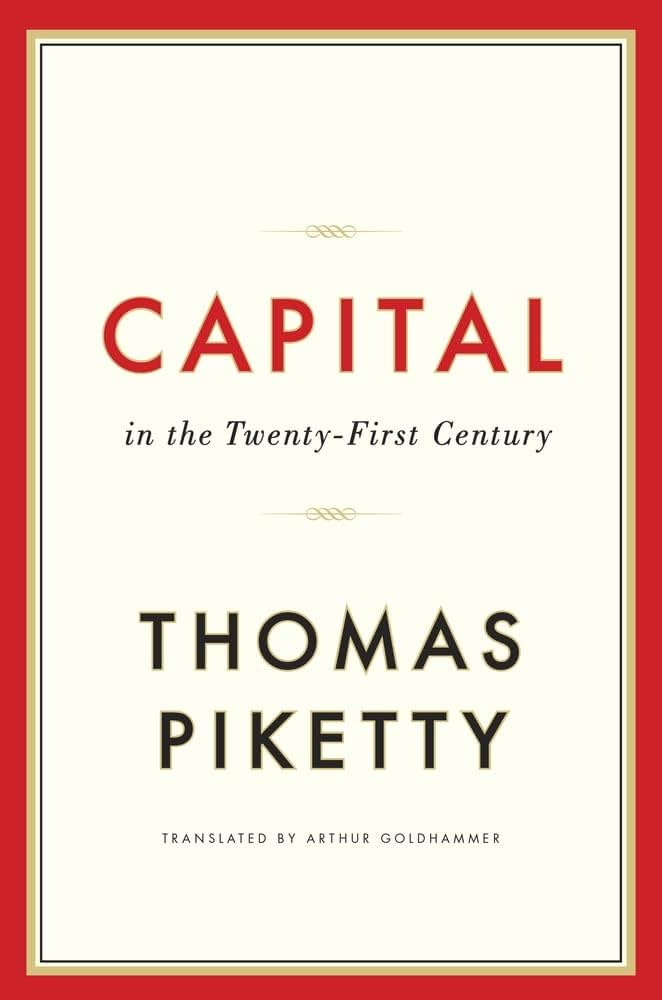
In the vast landscape of contemporary economic discourse, few works have sparked as much debate and introspection as Thomas Piketty’s Capital in the Twenty-First Century. embarks on a measured exploration of this landmark book, delving beneath the surface of its ambitious thesis on inequality, wealth, and capitalism. This review aims not only to summarize Piketty’s complex arguments but also to weigh their implications with a balanced eye-inviting readers to reconsider familiar notions of economic power and social structure in an age defined by rapid change and persistent disparity.
Unearthing Wealth Through the Ages A Close Look at Piketty’s Historical Data and Its Impact on Understanding Capital Accumulation

Piketty’s meticulous excavation of historical wealth data invites us to reconsider how capital has shaped societal structures over centuries. By weaving together an expansive dataset that spans from the 18th century to contemporary times, he exposes patterns that challenge conventional wisdom about wealth accumulation. What emerges is a narrative where the rate of return on capital consistently outpaces economic growth, driving persistent inequality. This analysis transcends anecdotal evidence, instead offering a robust empirical foundation that reveals how inherited wealth-not just individual talent or effort-has played a pivotal role in shaping economic landscapes. It’s a reminder that history’s silent currents often dictate the visible tides of prosperity and poverty today.
The implications of this historical lens ripple through policy discussions and economic theory alike, urging a fresh perspective on mechanisms to address inequality. Piketty’s work highlights key dynamics:
Best-Selling Books in This Category


- Capital’s long shadow: Wealth tends to concentrate as returns accumulate faster than income growth.
- Inheritance’s role: Family wealth fuels economic power far beyond a single generation.
- Societal inertia: Without intervention, existing disparities naturally reinforce themselves over time.
| Era | Average Return on Capital | Economic Growth Rate |
|---|---|---|
| 1700-1820 | 4.5% | 1.2% |
| 1820-1914 | 5.0% | 1.3% |
| 1914-1950 | 2.0% | 2.0% |
| 1950-2010 | 3.5% | 2.5% |
Through this historical data, the complex dance between capital and growth unfolds, making it clear why understanding past trends is crucial for shaping the economic policies of tomorrow.
Analyzing Income Inequality Patterns How Piketty Traces Wealth disparities and What It means for Modern Societies

Piketty’s exploration into the dynamics of wealth accumulation exposes a persistent and growing divide in modern economies. His meticulous examination reveals that when the rate of return on capital consistently outpaces economic growth, wealth tends to concentrate in the hands of a smaller elite. This phenomenon isn’t merely a contemporary oddity but a deep-rooted historical pattern resurrecting structural imbalances that predate the 20th century. The implications reach far beyond raw numbers – they cast long shadows on social mobility, democratic stability, and economic prospect worldwide.
Central to Piketty’s thesis is the idea that without active interventions, wealth tends to become self-replicating. To illustrate this cyclical accumulation, consider the following simplified breakdown:
| Factor | Effect on Wealth |
|---|---|
| High capital returns (r) | Increase in investor wealth |
| lower economic growth (g) | Slower income gains for workers |
| inheritance | Perpetuation of existing wealth disparities |
| Tax policies | Potential to redistribute or reinforce inequality |
This framework encourages us to reconsider how societies prioritize taxation, education, and labor rights. It becomes clear that without deliberate measures to counterbalance capital’s dominance, income inequality may deepen, undermining social cohesion. Thus, Piketty’s work offers a lens to diagnose not only the causes but also the potential levers that can guide more equitable futures.
The Role of Capital Returns Versus economic Growth Explored Within Piketty’s Central Thesis

At the heart of Thomas Piketty’s groundbreaking analysis lies a fundamental tension between the rates of return on capital (r) and the overall economic growth rate (g). This dynamic serves as a powerful lens to understand the deepening patterns of wealth concentration. When the return on capital consistently eclipses economic growth, inherited wealth accelerates faster than the economy, creating cycles where the rich disproportionately amass more assets.This imbalance effectively cements existing social hierarchies, making upward mobility increasingly elusive for the majority. The implications ripple beyond simple economics, reflecting in social stratification and political power consolidation.
Understanding this through Piketty’s framework invites us to consider key factors that influence these rates:
- Technological innovation: Can it spur growth sufficiently to outpace returns?
- Global capital mobility: How does the ease of moving capital affect return rates?
- Fiscal policies: What role do taxation and redistribution play in balancing this equation?
| Scenario | Return on Capital (r) | Economic Growth (g) | Wealth Concentration |
|---|---|---|---|
| balanced | 3% | 3% | Stable |
| Capital Dominant | 5% | 2% | Increasing |
| Growth Dominant | 2% | 4% | Decreasing |
policy prescriptions for Reducing Inequality Reviewing Piketty’s Proposed Solutions and Their Feasibility in Today’s Global Economy
Piketty’s vision for curbing economic inequality rests heavily on the reconfiguration of wealth taxation and increased transparency in capital flows. central to his framework is a progressive global wealth tax, designed to deter the excessive accumulation of capital by the ultra-wealthy. This proposal, while elegant in theory, contends with the inherently complex landscape of international tax jurisdiction and enforcement. Issues such as capital flight,the heterogeneity of national tax policies,and the political influence wielded by affluent groups create formidable barriers. Nevertheless, incremental efforts seen in the rise of unilateral wealth taxes, wealth reporting standards like CRS (Common Reporting Standard), and digital economy levies highlight the creeping feasibility of Piketty’s grand design.
Beyond taxation, Piketty advocates for robust investment in education and social infrastructures to level the opportunity playing field-a prescription resonating deeply in today’s interconnected world. Implementing high-quality worldwide education and health services can effectively reduce income disparities by empowering lower income groups to participate more fully in economic growth. Below is a simplified snapshot comparing key policy tools Piketty champions against contemporary challenges:
| Policy Prescription | Modern Challenge | potential adaptation |
|---|---|---|
| Global Wealth Tax | Tax Haven exploitation | International Tax Agreements & Enforcement |
| Education Investment | Unequal Access and Quality | Targeted Funding & digital Learning Platforms |
| Transparency Measures | Opaque Financial Systems | Enhanced Reporting & Blockchain Technologies |
- Adaptability: Policies must be dynamically designed to match the rapid shifts in global economic integration.
- Political Will: Success hinges on overcoming entrenched interests that resist redistribution mechanisms.
- Technological Innovation: Leveraging technology can both complicate and aid transparency and taxation efforts.
The Ethical Dimensions of Wealth Distribution Reflections on Justice and Fairness in Piketty’s Narrative
Piketty’s exploration of wealth distribution doesn’t merely stop at economic data; it delves deeply into the moral soil that nourishes societal structures. His narrative challenges us to rethink established notions of justice by spotlighting the persistent gap between capital returns and economic growth. What emerges is a nuanced canvas where fairness is no longer a universal given but an evolving debate shaped by historical context, policy choices, and ethical imperatives. In this landscape, wealth concentration becomes more than a statistic-it stands as a question about the obligations of the affluent towards the collective good and whether inherited privilege undermines meritocratic ideals.
The ethical discourse threaded through the analysis can be appreciated by pondering key reflections:
- The tension between equality of opportunity and equality of outcomes: How far should society go in correcting imbalances that arise naturally versus those entrenched by systemic advantages?
- The role of redistribution as a moral mechanism: Is taxing wealth a necessary rebalancing act or an impediment to economic innovation and personal freedom?
- The responsibilities tied to inherited wealth: Does ownership confer social duties that transcend individual claims?
| Principle | Ethical question |
|---|---|
| Meritocracy | How can wealth be legitimized in the face of inherited advantages? |
| Redistribution | What ethical limits exist on taxing wealth? |
| Social Contract | Does wealth accumulation demand reciprocal contributions to society? |
Critiques and Counterarguments A Balanced Look at the Strengths and Weaknesses of Capital in the 21st Century
While Piketty’s analysis has undoubtedly reshaped economic discourse, it has also sparked considerable debate among scholars and policymakers alike. Critics often argue that his emphasis on the concentration of wealth overlooks dynamic market mechanisms that can potentially dilute capital dominance over time. For instance, the assumption that the rate of return on capital consistently outpaces economic growth might not hold uniformly across different economies or eras. Additionally, some suggest that the data, primarily centered on Western countries, may not fully capture the complexity of global wealth trends, thus limiting the universality of his conclusions. These critiques highlight the importance of contextualizing the data and considering the transformative effects of technological progress, policy interventions, and cultural shifts.
Yet, despite these challenges, many acknowledge the book’s invaluable contribution to raising awareness about inequality’s structural roots. Its strengths lie in presenting a compelling framework that encourages a re-examination of fiscal policies and inheritance laws. To balance the discussion, here is a speedy overview of some core strengths and weaknesses:
- Strengths: Rich historical data, compelling narrative on wealth concentration, policy relevance
- Weaknesses: Potential Eurocentric bias, assumptions on capital returns, underestimation of economic shifts
| Aspect | Critique | Counterpoint |
|---|---|---|
| Data Scope | Focus on Western economies | Deep historical perspective in key markets |
| Capital Returns | assumes r > g consistently | Trend observable in many periods,influencing policy debates |
| Economic Evolution | Underestimates disruptive innovations | Highlights structural inequalities requiring intervention |
Visualizing Data for Complex Concepts How Graphs and tables Enhance Understanding of Economic Inequality in the Book
Piketty’s masterful use of graphs and tables serves as both a microscope and a map, turning intricate economic theories into accessible insights. Throughout the book, visual elements break down the abstract notion of inequality into tangible, relatable stories told through data. These visuals allow readers to witness how wealth accumulates, fluctuates, and concentrates over centuries, transforming dense statistical analysis into clear, compelling narratives. The interplay between lines, bars, and figures creates a rythm that guides the reader effortlessly through the complexities of capitalist dynamics.
Consider the following simplified table illustrating the evolution of wealth distribution in three key social groups over time, highlighting Piketty’s core argument on capital concentration:
| Social Group | Share of Total Wealth (1900) | Share of Total Wealth (1950) | Share of Total Wealth (2000) |
|---|---|---|---|
| Top 1% | 45% | 25% | 40% |
| Middle 40% | 30% | 40% | 35% |
| Bottom 59% | 25% | 35% | 25% |
Such clarity, achieved through well-curated visuals, empowers readers to internalize the persistent nature of inequality and its resurgence in modern times.Beyond just numbers, Piketty’s charts evoke the narrative of economic ebb and flow-reminding us that behind every data point lies a story of societal shifts. This meticulous visualization approach encourages engagement, provoking reflection and informed discussion among a wide audience:
- Contextual understanding: seeing trends over centuries rather than isolated moments.
- Comparative clarity: distinguishing between social groups’ evolving wealth shares.
- Analytical depth: connecting theoretical frameworks to empirical evidence.
Economic History Meets Modern Relevance Bridging past Trends with Future Challenges in Wealth and Capital
the intricate tapestry of economic history offers profound insights that resonate deeply with today’s wealth dynamics and capitalist structures. Tracing wealth accumulation patterns from the aristocratic holdings of the past to contemporary billionaire empires, we witness striking continuities as well as stark transformations. Piketty’s work compels us to reconsider conventional narratives, illustrating how the capital-to-income ratio, long thought a relic of bygone eras, is surging anew in many societies. This pattern not only challenges the sustainability of modern economies but also exposes cracks in social contracts, provoking debates about inequality’s roots and remedies across generations.
Understanding these trends requires a multidimensional approach, blending quantitative data with sociopolitical context.Consider the table below,which simplifies variations in capital concentration over three distinct periods:
| Period | Capital-to-Income Ratio | Dominant Wealth Source | Social Impact |
|---|---|---|---|
| 1800-1910 | 400-600% | Landed Aristocracy | Rigid Class Structures |
| 1950-1980 | 200-300% | Industrial Capital | Rising Middle Class |
| 2000-2020 | 400-500% | Financial & Tech Assets | Polarized Wealth Distribution |
- Policy implications emerge as governments grapple with taxation and redistribution mechanisms targeting inherited wealth.
- Technological innovation accelerates wealth concentration, reshaping the traditional capital landscape.
- Public discourse increasingly centers on balancing growth with equitable opportunity,drawing lessons from history’s echoes.
Recommendations for Readers and Policymakers Practical Takeaways from Piketty’s Work to Inform Decision-Making and Public Debate
engaging with Piketty’s insights offers readers and policymakers a powerful lens through which to understand the mechanics of inequality. For everyday readers, embracing this perspective means recognizing the historical patterns of wealth concentration and advocating for transparency in financial systems. Crucially,this awareness encourages informed discussions around taxation,inheritance laws,and social mobility-areas too often clouded by jargon or political bias. By appreciating the nuanced relationship between capital growth and economic disparity, individuals are better positioned to demand policies that foster inclusive prosperity rather than perpetuate entrenched privilege.
For decision-makers, Piketty’s work serves as a call to rethink traditional policy frameworks, urging a recalibration of fiscal tools to address imbalances effectively. Practical steps include:
- Implementing progressive wealth taxes designed not as punitive measures but as instruments to finance social infrastructure and reduce systemic inequality.
- Promoting updated inheritance regulations that prevent dynastic accumulation of wealth undermining meritocracy.
- Enhancing public investment in education and healthcare to ensure broad-based economic participation.
| Policy Focus | expected Impact | Time Horizon |
|---|---|---|
| Progressive Wealth Tax | Reduce ultra-wealth concentration | Medium-term (5-10 Years) |
| Inheritance Regulation Reform | Increase social mobility | Long-term (10-15 Years) |
| public Investment in Education | Strengthen workforce participation | Immediate to Medium-term (1-5 years) |
The Author Behind Unearthing Wealth A brief Profile of Thomas Piketty and His Contribution to Economic Thought
Thomas Piketty stands as a towering figure in contemporary economics, blending rigorous data analysis with a profound narrative on wealth and inequality. A professor at the Paris School of Economics, Piketty’s academic journey is marked by a dedication to understanding the dynamics of capital accumulation across centuries. His multidisciplinary approach draws from history, economics, and sociology, offering a rare glimpse into how wealth concentration shapes societies. Beyond academia, his work resonates widely, influencing policy debates and public discourse on economic justice worldwide.
Among his notable contributions, Piketty’s exploration of r > g (the rate of return on capital exceeding economic growth) has become a cornerstone in explaining the persistence of inequality. His methodological innovations rely heavily on assembling vast historical datasets, which brought to light patterns previously obscured by short-term analysis.Below is a brief overview of key elements that define his impact:
- Data-Driven – Piketty’s extensive use of historical tax records challenges traditional economic assumptions.
- Interdisciplinary – integrating history and economics to reveal long-term trends.
- Policy-Oriented – Advocates for progressive wealth taxation to curtail growing disparities.
- Public engagement - Translates complex topics into accessible discussions for the broader public.
| Aspect | Impact |
|---|---|
| Historical Capital Data | Reconstructed wealth patterns from 18th century to present |
| r > g Theory | Highlighted inequality’s self-reinforcing nature |
| Global reach | inspired research on capital in diverse economies |
| Public Policy | Fuelled debates on wealth taxes and redistribution |
In the final analysis, Capital in the Twenty-First Century stands as a monumental effort to map the contours of modern inequality, inviting readers to grapple with the forces shaping wealth and power across time. This review has uncovered both the brilliance and the complexities nestled within Piketty’s opus,offering a window into a narrative that is as much a historical excavation as it is a call to economic introspection. Whether one emerges convinced or critically pondering, the journey through these pages is undeniably thought-provoking-a reminder that the story of capital is far from settled, and that understanding its past may be key to shaping a more equitable future.