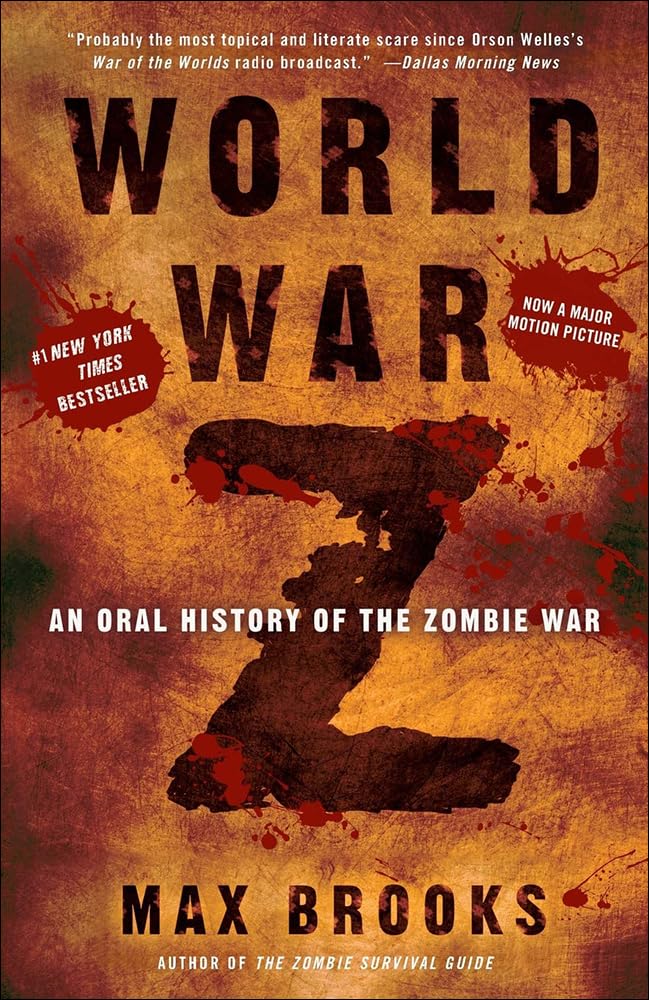
In the crowded realm of zombie literature, Max Brooks’ World War Z stands apart-not merely as a tale of survival against the undead, but as a complex tapestry of human resilience, global crisis, and social commentary. invites readers to delve beneath the surface of this modern classic, exploring the layers that transform a post-apocalyptic narrative into a profound examination of fear, community, and the fragility of civilization itself. This review embarks on a journey through Brooks’ meticulously crafted world, weighing its strengths and nuances with a measured and reflective lens.
Unearthing the Depths of World War Z’s Narrative Structure and Its Impact on Zombie Fiction Evolution
Beyond narrative innovation, World War Z influenced the evolution of zombie fiction by broadening thematic concerns and shifting the genre’s cultural lens. It explores societal resilience, governmental failures, and human adaptability, rather than just undead threats. This has encouraged creators to examine zombies as metaphors for larger human anxieties-pandemics, environmental collapse, social fragmentation. The table below highlights key elements introduced or redefined in Brooks’ work and their ripple effects on subsequent media:
| Element | Brooks’ Contribution | Impact on Zombie Fiction |
|---|---|---|
| structure | Oral history, fragmented accounts | Encouraged multi-perspective storytelling |
| Scope | Global, interconnected experiences | Expanded beyond localized outbreaks |
| Themes | Social-political critique and survival | Deepened narrative complexity |
| Character Focus | Ordinary people and institutions | Humanized the apocalypse genre |
- Humanity’s resilience is portrayed as the ultimate weapon, not firepower alone.
- Institutional response figures as a crucial determinant of survival, critiquing bureaucracy and strategy.
- Global interconnectedness emphasizes how the undead threat crosses borders, uniting and dividing nations.
Exploring the Sociopolitical Commentary Embedded within Max Brooks’ Post-Apocalyptic Scenarios
Best-Selling Books in This Category


Embedded in the chaos are themes that resonate far beyond the undead battles, such as:
- Systemic inequality: Access to aid and survival tools starkly contrasts across socioeconomic classes.
- Media influence: Sensationalism and propaganda exacerbate panic and hinder coordinated response.
- Nationalism vs.globalism: The crisis exposes the tension between isolationist policies and the need for international cooperation.
- Human resilience: Personal stories underscore adaptive strategies and moral ambiguity during conflict.
The following table summarizes these themes alongside their narrative manifestations and real-world parallels:
| Theme | Narrative Manifestation | Real-World Parallel |
|---|---|---|
| Systemic Inequality | Survivors in lower-income countries innovate amid neglect | Global disparities in healthcare access |
| Media Influence | News outlets amplify fear,disrupt communication | Role of media in shaping public crises |
| Nationalism vs. Globalism | Borders closed, collaboration stymied | Debates over immigration and international aid |
| Human Resilience | Individual courage and improvisation | Community responses to disasters |
The art of Oral History in World War Z: How testimonies Shape the Reader’s Experience and Emotional Investment
What truly sets this approach apart is how it fosters deeper emotional investment by emphasizing personalized trauma and heroism rather than a singular protagonist’s journey. Readers become witnesses to a global catastrophe through an intimate lens, seeing how culture, geography, and individual character shape survival experiences. The fragmented style also mirrors the chaos and disorientation of war, creating an immersive realism. To illustrate this dynamic, consider how different character archetypes contribute to the narrative:
- The Soldier: Provides tactical insight and raw frontline emotions.
- The Scientist: Explores the pathogen’s nature and the search for a cure.
- The Civilian: Shares the impact on everyday life and social collapse.
- The politician: Reveals decisions made under pressure and their consequences.
| Testimony Type | Emotional Impact | Storytelling Role |
|---|---|---|
| Firsthand Survival | High empathy and suspense | Anchors readers in immediate events |
| Reflective Analysis | Intellectual engagement | Provides context and meaning |
| Official Reports | Detached yet credible | Frames larger-scale impact |
Analyzing Global Perspectives in the Novel and Their Role in Depicting a Unified Human Response to Catastrophe
Max Brooks’ narrative strategy in World war Z effortlessly stitches together an intricate tapestry of experiences from every corner of the globe, illustrating a mosaic of humanity under siege. Each story, whether it unfolds in the bustling streets of Seoul or the remote villages of Argentina, transcends its geographical boundaries to echo a common emotional cadence-fear, resilience, and hope. This kaleidoscope of global perspectives does more than enrich the plot; it cements a shared human identity, paving the way for readers to perceive the zombie apocalypse not as isolated incidents but as a collective ordeal demanding unified responses and ethical reckoning.In harnessing diversity, Brooks captures the worldwide rhythms of human survival, weaving individual voices into a harmonious yet haunting chorus that underscores the primal need for cooperation amid chaos.
The novel’s structural brilliance lies in its ability to juxtapose disparate national reactions, offering a nuanced comparison that deepens our understanding of cultural endurance and strategic adaptability. Consider the succinct overview below outlining characteristic responses by region,which reveals underlying themes of governmental efficacy,civilian solidarity,and psychological fortitude:
| Region | Response Style | Key Traits |
|---|---|---|
| North America | military Mobilization | Strategic Defense,Innovation |
| Asia | rapid Containment | Discipline,Community Coordination |
| Europe | Evacuation & Reinforcement | Resourcefulness,International Cooperation |
| South America | Grassroots Resistance | Ingenuity,Localized Unity |
Through this global lens,the novel champions a vision where disparate cultures,despite their unique challenges and methods,ultimately align in a shared existential quest. This collective response not only heightens the narrative tension but also invites critical reflection on humanity’s potential for unity when faced with extinction, making the novel a profound meditation on survival and solidarity.
World War Z’s Blend of Realism and Horror: Crafting a Believable Yet Terrifying Zombie Pandemic
Brooks also excels in highlighting humanity’s resilience and shortcomings, emphasizing how societal structures fray under pressure.The infected are not portrayed as mere monsters but agents of systemic collapse, forcing survivors to confront ethical dilemmas and harsh realities. This balance of despair and hope creates a textured emotional experience, supported by key elements such as:
- Scientific accuracy: Detailed explanations of the zombie pathogen and infection vectors.
- Geopolitical insight: realistic depictions of international responses and failures.
- Personal narratives: Intimate stories that reveal psychological impacts of trauma.
| Element | Role | Effect |
|---|---|---|
| Viral Propagation | Scientific Basis | Heightens credibility |
| Military Strategies | Realism | Invokes strategic authenticity |
| Survivor Testimonies | Emotional Engagement | Creates personal connection |
The Role of Military strategy and Survival Tactics Highlighted Throughout the Storyline and Their Real-World Parallels
Survival tactics portrayed in the book extend beyond combat, emphasizing resilience, resourcefulness, and community cohesion. The narrative brings forward key practices that echo real-world disaster preparedness and crisis management,such as:
- Scavenging and sustainable resource usage to maintain supplies
- Information sharing and intelligence networks for anticipating threats
- Adaptive shelter design for protection against evolving dangers
- Psychological endurance to combat fear and maintain morale
These survival imperatives resonate with military field protocols and civilian emergency responses alike,showcasing how the story’s fictional instances hold valuable insights for real-life crises. The following table juxtaposes notable scripture tactics with their real-world counterparts, revealing Brooks’ commitment to authentic strategic portrayal:
| Fictional Strategy | Real-World Parallel | Purpose |
|---|---|---|
| “Redeker Plan” (zombie containment zones) | Quarantine zones in infectious disease outbreaks | Limit spread and protect population centers |
| Hit-and-run guerrilla tactics | Vietnam War jungle warfare | Wear down a stronger, conventional enemy |
| “Safe zones” fortified by civilian militias | Swiss Civil Defense bunkers | Ensure prolonged survival and societal continuity |
Character Perspectives as Windows into Society’s Fragility and Resilience Amidst an Unfolding Crisis
Max brooks masterfully uses a kaleidoscope of individual testimonies to reveal the delicate dance between society’s collapse and its unwavering spirit. Each character-from the hardened soldier to the grieving parent-acts as a prism refracting different facets of humanity under duress. These personal narratives humanize the disaster, illustrating how communities crack under pressure but often glue themselves together with newfound empathy and determination. It’s through these multifarious viewpoints that readers grasp the dual nature of crisis: suffering that devastates, and resilience that rebuilds.
What makes these perspectives especially compelling is their diversity, showing that survival isn’t uniform but rather a mosaic of responses shaped by culture, privilege, and circumstance. Brooks doesn’t just map out reactions; he dives into the psychology of survival – fear, guilt, hope, and defiance coexist in a delicate balance. The stories collectively unfold a tableau where vulnerability and strength are intertwined, inviting us to ponder how fragile social constructs are yet how fertile ground is for rebirth when tested.
- Military perspectives highlight discipline and strategy amid chaos.
- Civilian voices expose emotional turmoil and community bonds.
- Government officials reveal flaws of bureaucracy and forced adaptation.
- Medical responders illuminate human vulnerability and hope.
| Perspective | Impact on Society |
|---|---|
| Soldier | Military order weakens; survival relies on grit & adaptability. |
| Civilian Survivor | Social fabric strains but neighbors cultivate solidarity. |
| government Official | Institutional failures prompt radical policy shifts. |
| Medical Worker | Healthcare collapses yet spurs innovative resilience. |
Engagement and pacing in a Multiperspective Novel: How Brooks Balances Action with Reflective Moments
Brooks masterfully juggles the diverse voices in World War Z by blending adrenaline-fueled sequences with quieter, reflective passages. Each chapter acts as a pulse, either racing with urgent survival stories or slowing to allow readers to digest the broader implications of the zombie apocalypse. This rhythmic pacing prevents fatigue, ensuring the narrative remains compelling without becoming overwhelming. The interjections of personal testimonies add layers of emotional depth, giving substance to the chaos and emphasizing the human cost behind the global catastrophe.
To maintain engagement across a sprawling cast, Brooks employs a strategic toolkit:
- Contrast in tone: alternating between intense action and contemplative interviews
- Varied perspectives: from soldiers to scientists, each viewpoint adding fresh insight and ground-level urgency
- chronological fragmentation: weaving past reports with current developments to build suspense
| Element | Function | Effect on Reader |
|---|---|---|
| Fast-paced battle scenes | Drive tension | Heightened adrenaline |
| Personal testimonials | Humanize catastrophe | Emotional resonance |
| Global scope | Broaden perspective | sense of epic scale |
| Reflective passages | Encourage analysis | intellectual engagement |
The Influence of Max Brooks’ Background and Inspirations on the Themes and Style of World War Z
Max Brooks’ upbringing and personal experiences play a pivotal role in shaping both the narrative depth and unique documentary style of World War Z. Growing up as the son of Mel Brooks, a creative force known for satire and humor, Max developed an early gratitude for blending gravity with dark wit. This background lent itself to the novel’s subtle social commentary, transforming the typical zombie apocalypse tale into a profound examination of human resilience, political failures, and cultural disparities. Brooks’ experience as a screenwriter and his close study of oral histories influence the book’s structure – a kaleidoscope of interviews crafted with meticulous realism – allowing readers to traverse global perspectives on a singular catastrophic event.
Brooks’ inspirations, ranging from traditional zombie lore to contemporary geopolitical conflicts, manifest in the layered themes and stylistic choices that characterize World War Z. The novel’s episodic format echoes classic war journalism and survivor testimonies, presenting an intricate mirror to humanity’s capacity for both hope and despair. His interest with global preparedness and the fragility of societal infrastructures emerges vividly through cases of breakdown and adaptation. Below is a succinct overview of key influences that informed Brooks’ approach:
- Oral History Methods: Embed realism through personal accounts
- Cold War & post-9/11 Era: Reflection on global conflicts and governmental trust
- Military Strategy: Tactical resistance as narrative driving force
- Horror and satire: Balancing fear with subtle humor and irony
| Influence | Impact on Themes | Stylistic Expression |
|---|---|---|
| Oral History | Authenticity & multiple viewpoints | Interview-driven narrative |
| Political Climate | Crisis management & bureaucracy critique | Documentary tone |
| Military Experience | Survival tactics & global defense | Strategic descriptions |
| Horror Tradition | Fear & human psychology | Suspenseful, eerie mood |
recommendations for Readers Interested in Thought-Provoking Dystopian Narratives and Zombie Genre innovations
Innovations in the zombie genre don’t stop at just storytelling. Brooks introduces a realistic epidemiological framework and incorporates diverse cultural responses to the apocalypse, enhancing authenticity and broadening scope. If you’re looking to expand your reading list with works that thoughtfully reinterpret the undead mythos, consider exploring titles that embody these qualities:
- The Girl with All the Gifts by M.R. Carey - exploring empathy amid infection
- Zone One by Colson Whitehead - redefining post-apocalyptic urban decay
- Patient Zero by Jonathan Maberry – blending epidemiology with action-driven suspense
| Book | Key Theme | Innovation |
|---|---|---|
| World War Z | Global Collapse & Recovery | Oral History Format |
| The Girl with All the Gifts | Humanity & Mutation | Sympathetic ‘Zombies’ |
| Zone One | Post-Apocalyptic Society | Literary Style |
| Patient Zero | Infection & Survival | Scientific Detailing |
Critical Reception and Cultural Legacy: how World War Z Shaped Modern Zombie Literature and Media
Max Brooks’ World War Z redefined the zombie genre by weaving a rich tapestry of realism, political commentary, and human resilience that transcended typical horror narratives. Critics lauded the book for its innovative oral history format, which gave voices to a diverse cast of survivors, each recounting their personal battles against the undead menace. this narrative approach not only expanded the scope of zombie fiction but also created a template for character-driven storytelling within apocalyptic settings. The novel’s emphasis on global response, societal failure, and adaptation introduced a fresh, thought-provoking dimension that challenged both readers and creators to reconsider the genre’s potential beyond mindless gore and survival clichés.
The cultural impact of World War Z rippled across various media platforms, inspiring filmmakers, game developers, and writers to adopt a more nuanced portrayal of zombie outbreaks. Its influence is evident in the rise of zombie narratives that foreground epidemiology, political fallout, and moral ambiguity. The novel’s legacy is highlighted in the following key contributions:
- Multi-perspective storytelling: Paving the way for fragmented narratives that explore diverse experiences within catastrophic events.
- Global scope: Shifting the focus from isolated incidents to worldwide pandemics, reflecting real-world anxieties about global crises.
- Realism in horror: Integrating scientific plausibility and military strategy to heighten immersion and fear.
| Medium | Influence of World War Z | Exmaple |
|---|---|---|
| Film | Adopted large-scale outbreak and political tension | Train to Busan (2016) |
| Video Games | Incorporated survival tactics and global narrative | Days Gone (2019) |
| Literature | Inspired oral history and multi-character perspectives | The Girl with all the Gifts (2014) |
About Max Brooks: The Visionary Mind Behind World War Z and His Contributions to Speculative Fiction
His contributions extend far beyond World War Z, influencing a new generation of writers and creators in speculative fiction. brooks’ works are characterized by:
- Innovative narrative structures – especially his use of oral histories and fragmented testimonies.
- Deep research into military tactics, global politics, and social behavior.
- A unique blend of realism with speculative elements that challenge conventional genre boundaries.
| Work | Genre Influence | Notable Features |
|---|---|---|
| World War Z | zombie Apocalypse | Global oral history, socio-political insight |
| The Zombie Survival guide | Survival Manual | Practical, tactical, humor-laced |
| Devolution | Eco-horror | Nature’s revenge, psychological tension |
offers more than just commentary on a zombie apocalypse-it invites readers to examine the intricate tapestry of human resilience, fear, and cooperation in the face of unimaginable crisis. Whether you’re a devoted fan of the genre or a newcomer seeking depth beyond the typical undead romp, this exploration provides a measured, insightful perspective that lingers long after the final page.It reminds us that sometiems, the real horror lies not in the monsters themselves, but in the stories we tell about surviving them.