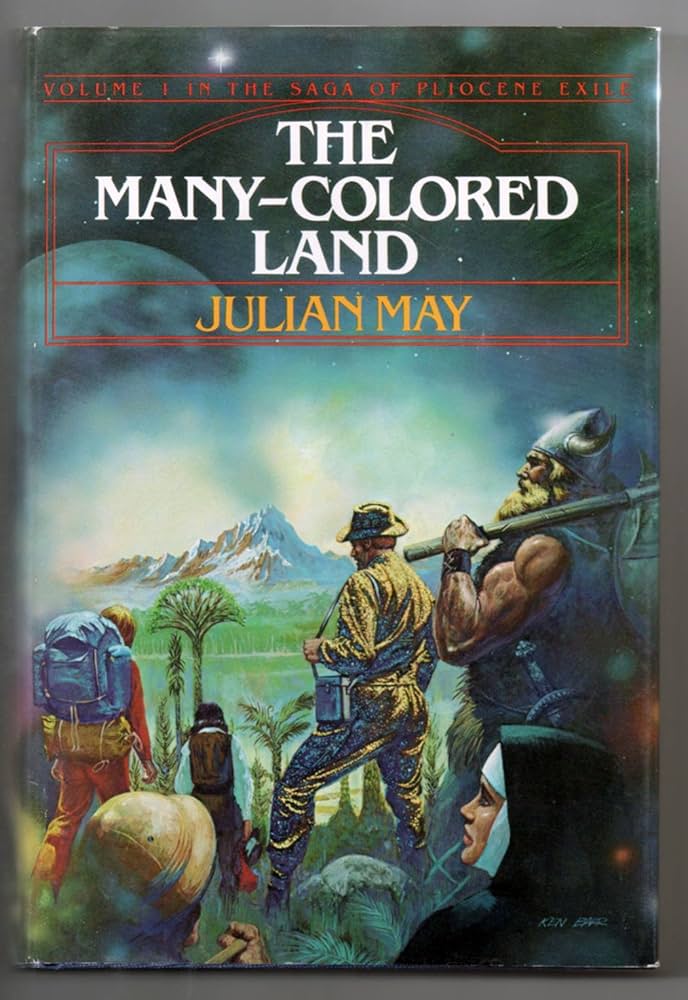
When I picked up Julian May’s The Many‑Coloured land again, I expected a comfortable blast of nostalgia. Instead I found a book that made me impatient in the best way — pulling me through long afternoons and late nights because I wanted to see how people I’d started to care about would deal with the strange, sometimes blunt turns the story took.
I read it more as a curious companion than as a polished classic: the prose can feel dated and the cast is large, but there are moments of real clarity and unexpected humor that kept me hooked. If you’re the sort of reader who enjoys wading into an older, energetic work and judging it on its own terms, this rediscovery felt worth the effort.
wild Pliocene landscapes painted in vivid color where ancient creatures roam freely

I kept picturing those Pliocene plains long after I put the book down — a palette of impossible greens and ochres, sky so sharp that even distant mountains seemed carved from glass. Julian may doesn’t just describe the landscape; she paints it alive, from the damp tang of fern groves to the low, rolling thunder of herds moving like living tides. The ancient creatures that roam these pages feel real in a way that made me forget the century separating me from them: awkward, dangerous, and oddly majestic, they turn every clearing into a small, uneasy miracle.
Best-Selling Books in This Category
- Vibrant Book Review Bookmarks: features 10 soft morandi colors, each includes 10 book markers; These elegant and friendly colors help you quickly locate pages and reduce visual strain, suitable for readers and as thoughtful gifts

- Colorful Design:Our reading markers set contains 8 different bright colors, with 15 bookmarks for each color. Bright but not dazzling colors can not only stand out between your pages, allowing you to quickly track the last reading section, but also relax your eyes and make you feel good

- Book Lovers Gift: Our book review notepad is designed with ample space for readers to jot down their thoughts, impressions, and critiques, making it the perfect companion for any book lover
the land often feels like another main character, forcing choices, offering refuge, or swallowing hope with equal indifference — and the people who live within it are constantly negotiating between wonder and survival. I loved how the surroundings shaped personalities and plot beats, though at times May lingers so lovingly over texture and color that the story’s momentum pauses; those lush stretches can be a little indulgent but rarely fail to repay the patience. Small flaws aside,the sense of being somewhere utterly different and vividly real stuck with me,long after the last page.
Tentacled city ruins and shimmering psychic nodes that hint at lost civilizations
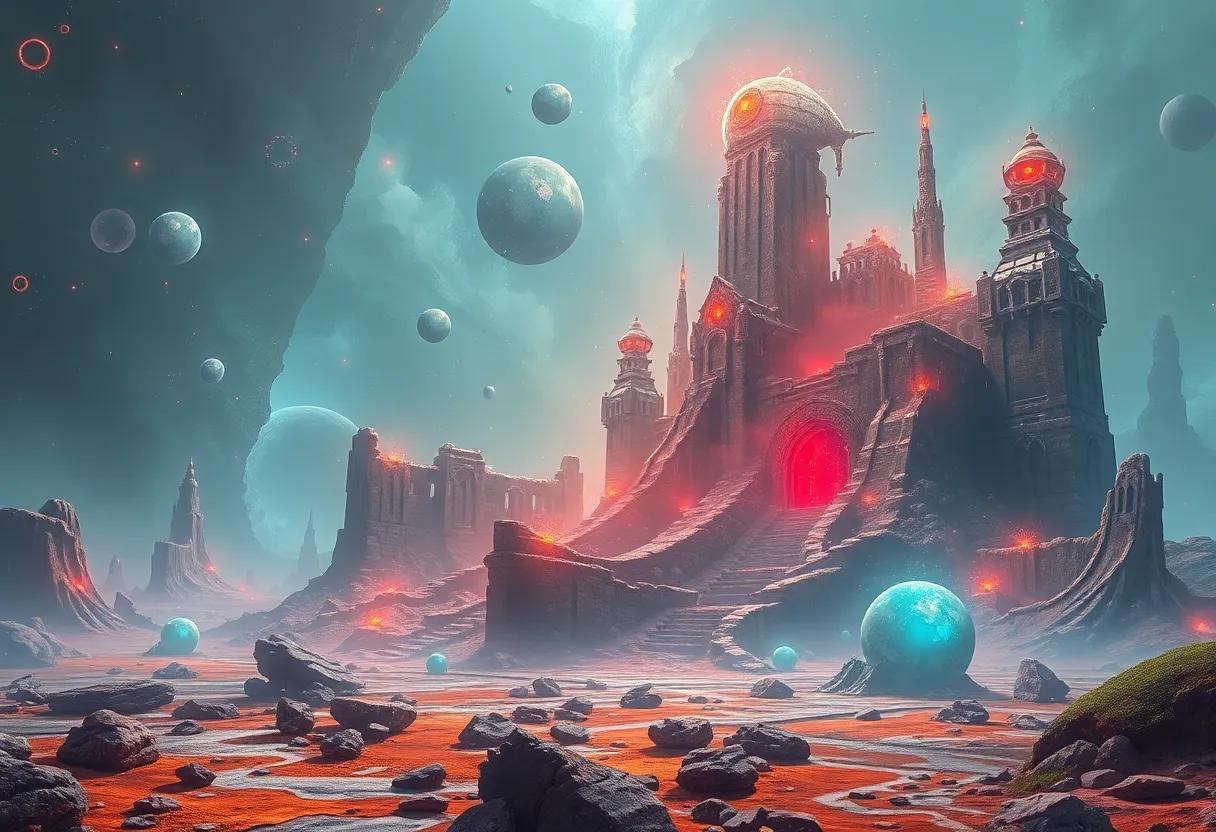
Stepping into those tentacled city-ruins felt like wandering into a coral cathedral half-swallowed by time — architecture that seems to have grown rather than been built. Julian may’s descriptions give the place a living quality: columns that writhe like sleeping beasts, stone surfaces threaded with bioluminescent veins, and psychic nodes that hang in the air like heat-hazed jewels.I kept feeling as if the ruins were holding their breath,offering up snatches of moods and images to anyone tuned to them. At moments the prose luxuriates in detail (which sometimes slowed my pace), but more often it left me with a lingering sense of wonder and a slight prickling unease, like the impression that I’d overheard someone’s memory half-remembered and dangerous.
The nodes themselves function as a kind of mute testimony — shimmering residues of minds long gone, capable of giving characters flashes of knowledge, comfort, or temptation. They make the past tangible and morally complicated: a resource to be plundered, a language to be deciphered, a temptation to believe in easy answers. I liked how those scenes forced the human characters to confront their smallness and their desires; the ruins don’t just impress, they provoke. A few stretches felt overwrought, but when may gets the atmosphere right — the hush, the faint hum, the sudden, intimate visions — the effect is unforgettable.
A ragtag band of exiles in rough garb with determined faces and clashing loyalties
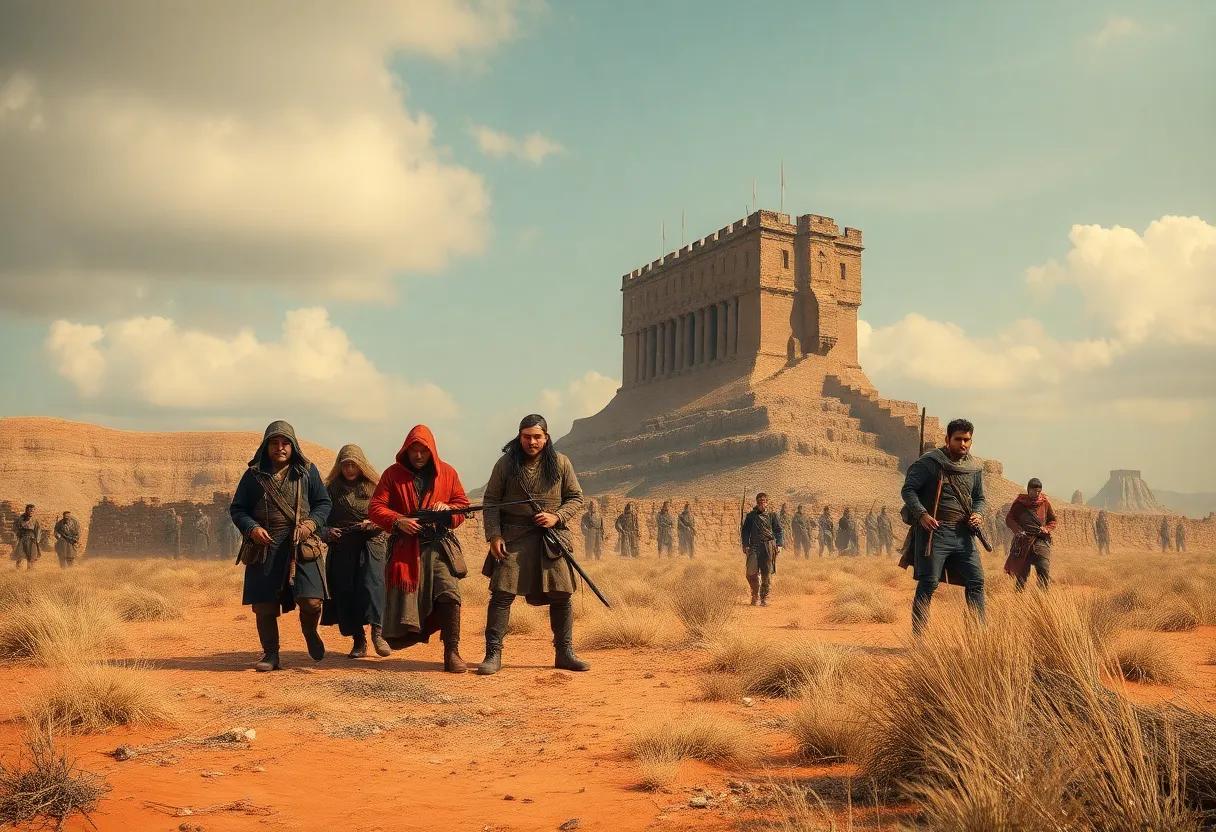
Reading the scenes with that motley crew felt like watching survivors stitch a life out of rubble — their clothes are rough, their faces set, and you can almost hear the scrape of boots and the low hum of argument. I loved how Julian May lets their imperfections sit on the page: bravado, fear, a too-rapid temper, and sudden tenderness. They don’t act like idealized heroes; they bicker, they make mistakes, and sometimes their loyalties splinter in ways that hurt. Those flaws made them feel real to me, more like a group you’d meet in a battered tavern than carved statues in a saga — and that made their small victories mean more, even when the pacing drags a little and subplots crowd the periphery.
The shifting alliances among them are the book’s quiet engine. Trust is earned in scraps of conversation and shared watches, not grand speeches, and betrayals land harder because of that. There are moments of surprising humor and sudden, disarming kindness that redeem otherwise grim choices. What kept me hooked was how the group served as a living experiment in survival and belonging: each member brings different skills and baggage, and watching those pieces collide and sometimes click felt oddly hopeful. A few things that stood out to me:
- Clashing loyalties that feel personal,not plot-driven
- Resourcefulness born of necessity,not glamour
- Quiet kindnesses that puncture the roughness
Tall pale Tanu nobles in ornate metalwork and small fierce Firvulag in leather and feathers

The contrast between the tall, pale nobles and the compact, feral folk is one of those images that keeps replaying in my head: Tanu in ornate metalwork that catches the light like living armor, Firvulag wrapped in leather and feathers that rustle with every quick movement. The descriptions are tactile — the soft clink of jewelry, the metallic scent of oils, the dry, dusty tang of feathers — and they make the two peoples feel like different climates you could step into. I found myself alternately admiring the Tanu’s ceremonious grandeur and admiring how untamed and immediate the Firvulag are; neither side is reduced to a stereotype, even when the prose luxuriates in their pageantry.
What stayed with me most was the tension between beauty and danger: the Tanu’s elegance can feel unsettlingly remote,while the Firvulag’s smallness seems to sharpen every movement into threat or loyalty. At times the book lingers so lovingly on ornament and ritual that the story’s pace slows, but for me those pauses often deepened the intimacy of the cultures. A few reactions the pairing left me with:
- Awe at the sheer inventiveness of the costumes and customs
- Unease when power plays hide behind polite smiles
- Curiosity about how two such different worlds survive together
Those conflicting feelings are exactly why the scenes between Tanu and firvulag still feel alive long after I turned the page.
Charged psychic duels with glowing auras and minds reaching across vast silent distances

Reading those charged psychic confrontations felt less like watching a fight and more like stepping into someone’s private storm. Minds stretch and lunge across vast, silent distances until thoughts collide with the force of an actual blow, and the glowing auras—described with that odd, luminous precision—turn what could have been clinical telepathy into something almost tactile. I loved how the scenes make you giddy and uneasy at once: they’re intimate, because you’re inside two heads at once, and brutal, because memory and shame become weapons. There’s an odd tenderness under the combat, too; you come away knowing why each person resists or yields.
Not every duel lands perfectly—sometimes the prose luxuriates in sensation and the pacing slows—but more frequently enough the delay is a gift, letting you feel the strain of telepathic reach.On the page those moments produce little, unforgettable impressions:
- a ringing in the skull like distant bells
- cold, shark-teeth clarity of a stolen memory
- a wash of impossible color that leaves you breathless
They’re the book’s heartbeat: dramatic, slightly messy at times, and impossible to forget once they’ve burned themselves into your imagination.
A mix of headlong adventure and slow mysterious unraveling under a hot alien sun

Once I started, the book swung me between two speeds: headlong bursts of action that push you through skirmishes, betrayals and desperate escapes, and long, slow scenes where the world seems to simmer under a hot alien sun. The contrast is oddly satisfying — one moment you’re racing through a chase, the next you’re left to sit with small, uncanny details that only grow stranger the longer you look. The heat isn’t just weather; it feels almost like pressure, pressing the characters together and making secrets sweat out of the landscape. Every sprint of plot is balanced by a patient unraveling of who these exiles are and what the old powers really mean,which kept me both hurried and curious in turns.
That balance makes the book feel alive rather than formulaic: adrenaline and atmosphere trade places so the stakes never go stale. Sometimes the slow stretches lingered a beat too long for my taste — a few expository passages pull at the pace — but those lulls also let the stranger elements settle and become ominous rather than merely exotic. I came away enjoying how the story holds you by the collar when it wants you to run and then makes you wait, under that relentless sun, for the next piece of the mystery to fall into place.
clear weathered prose with sharp dialogue that snaps like wind across rocks

Julian May writes with a kind of weathered clarity—sentences that have been outdoors a long time and know how to stand up to the elements. The prose doesn’t try to glitter; it names things plainly and lets the world feel lived-in: rock, wind, frost, the ache of a tired body. Occasionally she drifts into explanatory stretches that slow the march forward,and some phrases feel a touch of their era,but those moments never undo the steady,tactile rhythm that carries you through the long scenes of travel and survival.
The dialogue is where the book snaps to life—short, blunt, frequently enough funny, with a tenderness sneaking in when you least expect it. Characters trade barbs and confidences in a way that makes them sound real: guarded, impatient, quick to mock. A few conversations swell into long pieces of world-building,which can dim the spark,but more often the lines cut clean. The spare give-and-take is what stayed with me: the wry retorts, the sudden silences, and the way a single sharp exchange can do more world-building than a paragraph of description.
Old world technologies and ancient psychic hierarchies colliding in sunlit camps

I kept picturing those sunlit camps as little islands of the familiar dropped into a world that didn’t need them: patched tents, a stubborn little stove, and the odd old-world gadget ticking away while catlike, ancient minds watched from the trees. The everyday items—flashlights that sputtered, a pocket radio, a rifle cradled like a talisman—felt almost comic next to the Tanu and Firvulag ceremonies, where power moved without wires or gears.Watching modern skepticism and practical survival instincts bump up against ritual, rank, and raw metapsychic force made many moments crackle with both humour and a real sense of danger.
Some scenes slow to a crawl while the book lays out who controls whom, but the payoff is worth it: you get neat, oddly domestic moments next to scenes that genuinely unsettle. Small sensory details sell the collision every time—things like the smell of cooking in sunlight right before a mental skirmish breaks the peace. A few passages felt baggy with exposition,yet most of the time Julian May keeps the tension alive by showing how helpless gadgets are when faced with mind-made hierarchies,and how people improvise when both worlds refuse to fully understand one another.
- stuttering generators and patched clothes
- sunlight on a wristwatch that suddenly feels meaningless
- an almost polite hush as a psychic order rolls over the camp
Julian May herself as storyteller pictured in a quiet study surrounded by maps and manuscripts

Reading The Many-Coloured Land, I kept picturing Julian May in a quiet study, maps tacked to the walls and manuscripts stacked on a desk — a maker of places who also knows how to tell you about them over a cup of tea. That image explains why the book feels so tactile: cities have ridges and smells, alien landscapes have a texture you can almost touch, and the history of the Pliocene unfurls like a well-thumbed atlas. Her voice is both exacting and mischievous, the kind that delights in footnotes and sly asides; even when the worldbuilding grows dense, there’s comfort in the sense that someone is carefully guiding you through every valley and fold.
At times the novel races with a cast so large it can be dizzying, and there are stretches where description slows the plot — I admit I skimmed now and then — but those pauses also let character details land in a richer way. The people here feel like companions invited into that study: ragged, opinionated, sometimes infuriating, and often vividly alive. The flaws are real, yet they’re wrapped in a storyteller’s pleasure; you forgive the lurches as the narrative voice keeps pulling you back, whispering that there’s another revelation just beyond the next map fold.Her storytelling warmth makes the book feel like an old map brought to life, edges worn but full of promise.
Lingering Echoes of The Many-Coloured Land
Reading it feels like stepping into a vivid, crowded dream—full of eccentric characters, baroque set-pieces and moments of unexpected tenderness. The tempo shifts can surprise you,but those swings are part of its personality: sometimes breathless,sometimes quietly observant.
When you close the book you carry a curious mix of exhilaration and unease; the world keeps humming and certain people remain more like companions than inventions. Small details—phrases, images, a particular mood—resurface later and change the shape of ordinary memories.Rediscovering this novel is less about finishing a story than finding a doorway you want to walk back through. If you enjoy dense imagination,moral complexity and a touch of old-school ambition,its echo will likely stay with you.