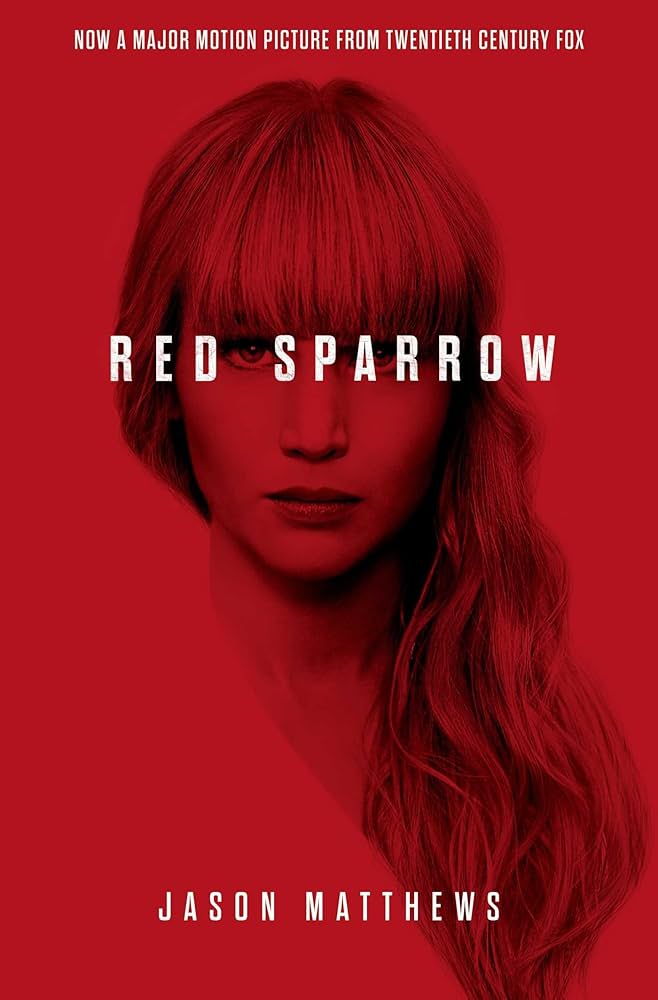
I picked up Red Sparrow one slow afternoon and didn’t notice the hours slipping by. Right away I could tell Jason Matthews draws on real experience — the tradecraft details and procedural scenes read like someone who has lived this world, which made the book feel quietly convincing rather than simply entertaining. That immediate sense of authenticity is what pulled me in.
My first impression was that Matthews prefers a steady, methodical pace: the tension comes from small decisions and bureaucratic pressure more than from grand set pieces. Reading it felt like piecing together a puzzle, and I kept turning pages to see which small move would tip the balance next.
Snow soaked Moscow arrivals that open the story with chill and suspicion

The opening scenes drop you into a moscow that feels like a living cold — not just weather but a mood. Snow blankets the streets and seems to absorb any warmth, while boots and coats create a rhythm of mute movement.jason Matthews lavishes small, exact details — fogged breath, the hiss of a tram, heat leaking from manhole covers — that make the place tactile. Those details do more than decorate; they put you on edge.everything in the city reads as a potential observation point, and I found myself reading ordinary gestures as if they might be coded messages.The result is a steady undercurrent of chill and suspicion that feels more like a presence than a description.
Best-Selling Books in This Category


- Haig, Matt (Author)
Into that frozen theatre of watchfulness arrive people who are already calculating how to survive. Dominika,the young ballerina whose life has just fractured,feels exposed in a way that mirrors the city’s own hard gaze; other characters move through the same streets with a practiced caution that hints at training and secret rules. I liked how the opening makes you notice small things — a coat collar turned up, a borrowed cigarette, a hand that lingers too long — and how those things quietly tell you who might be friend, foe, or pawn. The pace sometimes lingers on atmosphere a tad long, but that patience pays off: by the time the plot gears click, the setting has already primed you to mistrust almost everything.
- Steam from grates, not warmth
- Boots that arrive before voices
- Faces half-hidden by collars and purpose
Dominika’s training room where cold discipline turns into dangerous skill and allure

Reading those training-room scenes felt like watching a ballerina taught to weaponize every lesson she onc loved. The space is described so cold and clinical that the choreography of cruelty stands out—repetition, posture, pain—untill discipline stops being about art and becomes a craft of survival. jason matthews shows how tiny corrections—an angle of the chin, the set of a hand, a practiced pause—are taught with the same rigor as combat drills. There’s a strange beauty to it: the same precision that once produced applause now produces dangerous skill, and the book makes you understand how that rigor can turn into something quietly seductive.
Those chapters are the heart of Dominika’s transformation and,for me,the most engrossing part of the novel. They can feel clinical to the point of numbness at times—there are stretches where the pacing slows under procedure—but that almost works on purpose, making her eventual moves feel earned and inevitable. What stayed with me were the small sensory details that make the training feel lived-in:
- the echo of boots on tile,
- the cold snap of a command,
- a glance rehearsed to seem accidental.
They turn her into someone you both admire and fear,and it’s hard not to watch,fascinated and a little unsettled.
Tradecraft that reads like a how to manual yet still keeps the mystery alive

Matthews writes tradecraft with the spare precision of someone showing you how to lock a door, how to hold a gaze, how to vanish. It frequently enough reads like a how‑to manual—stepwise, exact, named tools and routines—yet it never loses a sense of danger. The procedural clarity actually deepens the mystery for me: as you see the mechanics up close, you also feel the human cost behind each step. Occasionally the detail slows the pace (a few scenes linger in instruction), but more frequently enough it made me lean in, fascinated by the competence and the cold logic that sits beside fear and desire.
What surprised me was how the practical and the intimate are braided together—makeup, posture, touch and silence become operational moves as much as radios and dead drops.Those ordinary habits gain menace and meaning in context, which keeps the book from turning clinical. A few bits that stuck with me:
- brush passes and hand signals that read like choreography
- dead drops and improvised countersurveillance
- the Sparrow program’s use of seduction as craft
Even when it feels instructional,it never feels sterile—the instructions carry the weight of choice,consequence and human vulnerability.
The tense cat and mouse of intelligence meetings in shadowy safe houses and cafes
Reading the scenes set in dingy safe houses and sunlit cafés felt like sitting on the edge of a table I wasn’t supposed to be at — aware of every scrape of a chair, every swallowed word. Matthews has a knack for making those small details matter: the way a napkin is folded, a coffee cup pushed aside, a cigarette stubbed out just so. the meetings are choreography, and the choreography is taught to make you nervous; I found myself holding my breath with the characters because one casual smile or a brief glance could change everything. Sometimes the procedural detail is so exacting it almost becomes its own character, adding a brittle realism that makes the stakes feel immediate and physical.
At times the catalog of tradecraft slowed me down — you can feel the author’s expertise in every planted story and dead drop — but that same precision also creates real suspense. The tension here isn’t loud; it’s a quiet squeeze, a tug at your nerves that builds between lines. What kept me turning pages was less the big revelations than those tiny moments when a lie almost slips or a hand trembles. A few things that made the meetings sing for me:
- the contrast between ordinary cafés and what they conceal
- the ritualized politeness that masks danger
- how ordinary objects become signals
They left me with the persistent feeling of being watched — in the best, most uncomfortable way.
Romantic tension that feels earned through small gestures and dangerous proximity

Reading the book, I kept noticing how the romance never arrives as a sudden declaration — it seeps in through the tiniest things. A shared cigarette, a jacket draped over a trembling shoulder, a look that lasts one heartbeat too long: those moments build up until you feel the weight of something more than manipulation. What makes it feel earned is that trust is measured in favors and small risks, not grand speeches. I found myself rooting for them not because the plot demanded it, but because those quiet exchanges made their connection feel painfully human.
The other side of that intimacy is the constant threat around them. Being physically close in Red Sparrow often means being one mistake away from ruin, and that dangerous proximity sharpens every touch into something electric. When they share a room or a whispered secret, the reader knows how much is at stake, which keeps the tension taut. Occasionally the book leans too hard into procedural detail and a few seduction scenes read clinical, but even then the slow accumulation of gestures and risk keeps the emotional payoff believable.
Cold war Moscow atmosphere painted with food details mood and gray winter light

I kept thinking of Moscow as a place of low light and long shadows long after I closed the book. The city is painted in small, exact details—the wet concrete, the sheen on a bus window, the way a doorman’s breath fogs the stairwell—and those images sit under a gray winter light that feels almost tactile. For me the atmosphere wasn’t just background; it shaped how the characters moved and spoke. Even moments of violence or cunning feel quieter and colder as they’re staged in that thin, colorless air, and reading it made me remember how small, ordinary things can make a political world feel personal.
What surprised me was how often food becomes the hinge of a scene: a hot spoonful of stew, a chipped cup of tea, a strip of black bread shared in silence. Those meals do more than fill pages—they reveal hierarchy, scarcity and who trusts whom. A few of the descriptions lingered a beat too long for my taste and sometimes slowed the momentum,but most of the time the plain,domestic details kept the Cold War from feeling abstract. Little sensory moments—tea, bread, a greasy canteen tray—made Moscow feel lived-in in a way that purely diplomatic or spycraft scenes never could.
Pacing that alternates between slow burning tradecraft scenes and sudden violent breaks
Matthews makes the slow bits feel purposeful rather than dull: long stretches of surveillance, training drills and the small, secretive rituals of tradecraft pull you into a world where patience is a weapon. I found myself leaning into the minutiae — the whispered instructions, the layered deceptions — because they create an intimacy with the characters’ work. At times the pace sags under the weight of detail,and a few sequences could have been tightened,but more often the accumulation of quiet,procedural scenes builds a pressure that feels satisfyingly authentic.
Then, when the quiet breaks, it really breaks. violence in this book is sudden and physical, jolting you out of the slow burn with a force that reminds you how vulnerable these people are. The contrast is almost cinematic: long, breathy setups followed by sharp, sometimes brutal payoffs. That swing between patient tradecraft and explosive action does a lot of heavy lifting — it keeps the tension taut, forces sympathy for the characters’ choices, and makes the darker moments land harder. A few strikes felt abrupt enough to pull me out for a second, but mostly the alternation kept me off-balance in a good way.
Moral ambiguity shown through characters choosing survival over clear black and white lines

What stayed with me most was how often the characters pick survival over tidy morals. Dominika’s choices—formed in a brutal training system and then sharpened in the field—never read as theatrical villainy; they feel like practical answers to impossible questions. I found myself quietly rooting for decisions that would have once seemed reprehensible, as Matthews makes survival feel like a living, breathing motive, not a plot device. the result is a world where loyalty, love and self-preservation overlap messily, and the easy lines between right and wrong keep sliding out of focus.
That blurring isn’t limited to the Russians. Even the American side has moments where duty mutates into compromise, and the sensible course is sometimes the ugliest one. I admired how the novel refused to hand out moral certainties, though at times the heavy procedural detail made some bargains feel a little transactional—less agonized choice, more inevitable step. Still, I closed the book with an uneasy respect for characters who do what they must, which is a rarer, stranger kind of sympathy than hero worship. Gray here feels truer than neat morality ever would.
Jason Matthews the former intelligence officer turned novelist who knows spycraft intimately

Reading Red Sparrow, I kept being pulled up short by how authentic the little details felt — not just gadgets and jargon but the small rituals that make espionage seem like a job rather than a movie. Matthews writes scenes of surveillance,dead drops,and operational planning with the calm,procedural eye of someone who’s done it,and that gives the book a steady,lived-in texture. At times those procedural stretches slowed the story for me, but more often they deepened the tension: you feel the patience, the boredom, and the sudden spikes of danger in a way that rings true.
What I liked most was how the tradecraft didn’t swallow the people. Dominika and Nate come through as fallible, complicated, and stubbornly human, so the technical bits sharpen character rather than replace it. A few chapters read like a manual, but they’re balanced by quieter, intimate moments that made me care. small touches — the comforts of a favorite drink,the mechanical rhythm of surveillance — stuck with me long after I closed the book.
When the Sparrow Lingers
Reading Red Sparrow is a slow, exacting experience; Matthews builds tension through detail, letting small gestures accumulate until the world feels palpably dangerous. The prose is clean and observant, the kind that rewards close attention more than breathless pacing.
What stays with you afterward is a cool, uneasy clarity — admiration for the craft tempered by moral fog. Scenes and decisions linger like cold footprints,vivid and a little unforgiving.
This book suits readers who relish methodical plotting, tradecraft minutiae, and characters who defy tidy moral labels. Long after the last page, its questions about loyalty, survival, and cost keep nudging at the mind.