
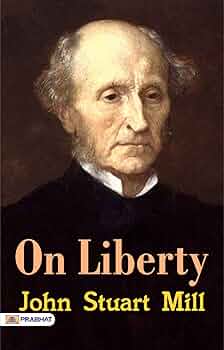
In the ever-evolving landscape of political ideology, few works continue to spark as much reflection and debate as John Stuart Mill’s On Liberty. This seminal essay, first published in 1859, probes the delicate tension between individual freedom and societal authority-an enduring concern that resonates deeply in today’s complex world. Exploring Freedom and Authority: A Thoughtful Review of John Stuart Mill’s On Liberty invites readers to revisit Mill’s profound arguments with fresh eyes, unpacking his insights while considering their relevance amid contemporary challenges. Through this exploration, readers are encouraged to reflect on the balance between liberty and regulation, autonomy and responsibility, that remains at the heart of democratic life.
The Nuanced balance Between Individual Liberty and Societal Authority in Mill’s Philosophical Framework

john stuart Mill masterfully navigates the delicate interplay between the primacy of individual liberty and the necessary reach of societal authority. At the heart of his philosophy lies the conviction that personal freedoms must be upheld unless they inflict harm upon others-a principle now famously known as the harm principle. This framework acknowledges that while society should generally respect the choices of its members, there remains a justified space for authority to intervene. Interestingly, Mill dose not paint authority as an adversary to freedom; rather, he envisions it as a guardian, tasked with balancing individual desires with collective wellbeing. This nuanced approach challenges simplistic dichotomies, urging a thoughtful calibration where freedom flourishes without descending into chaos or tyranny.
The tension between self-expression and social order can be further illustrated through Mill’s emphasis on diversity of opinion and lifestyle as vital to progress. The social contract, in Mill’s view, is continuously negotiated through dialog and restraint. Below is a concise overview of key factors that Mill considers in determining when authority should rightfully assert itself:
Best-Selling Books in This Category


- Extent of Harm: Is the individual’s action causing tangible harm to others?
- Voluntary Consent: Does the action respect the autonomy of all parties involved?
- Societal Benefit: Will intervention preserve or enhance societal well-being?
- Freedom’s Limits: is the restriction proportional and the least intrusive possible?
| Aspect | Individual Liberty | Societal authority |
|---|---|---|
| Primary Purpose | Self-expression & autonomy | Protection & order |
| Scope | Actions without harm | Intervention upon harm |
| Potential Risk | Personal mistakes | Overreach or oppression |
Analyzing the Harm Principle and Its Contemporary Relevance to Modern Democratic Societies

At the heart of Mill’s philosophy lies a delicate balancing act between individual liberty and societal control, masterfully articulated through the harm principle. This principle contends that personal freedom should be virtually limitless, provided one’s actions do not cause harm to others. In today’s pluralistic democracies, where diverse values and beliefs constantly intersect, this idea becomes both a guiding beacon and a point of contention. The harm principle challenges governments and citizens alike to delineate the fine line between rightful intervention and oppressive overreach, especially in realms like digital privacy, free speech, and public health. It invites an ongoing dialogue about the nature of harm, who defines it, and how much authority society should wield in its prevention.
Contemporary request of this principle reveals a complex mosaic of interpretations that often depend on cultural, legal, and ethical contexts. below is a summary table illustrating how various democratic societies navigate the harm principle in selected policy areas:
| Policy area | Interpretation of Harm | Typical Intervention Level |
|---|---|---|
| Free Speech | Preventing incitement to violence or hate speech | Moderate to High |
| Digital Privacy | Safeguarding personal data against misuse | High |
| Public health | Minimizing spread of contagious diseases | High |
- Societal Trust: Democracies thrive when individuals trust institutions to apply the harm principle fairly.
- Subjectivity of Harm: What constitutes “harm” remains fluid,necessitating dynamic and inclusive policy debates.
- Balancing Act: Excessive restriction risks stifling liberty, while insufficient intervention may imperil community well-being.
The Role of Free Speech in Advancing Progress Through Diverse and Unrestricted Dialogue

Central to Mill’s philosophy is the conviction that free speech acts as a catalyst for societal growth.By permitting diverse and often conflicting viewpoints to be aired without restraint, societies create a vibrant marketplace of ideas where truths can emerge through rigorous scrutiny. Rather than stifling dissent, the free flow of dialogue encourages innovation, challenges entrenched norms, and guards against the tyranny of the majority. in essence, it is indeed this unrestricted exchange that underpins the evolution of knowledge and ethical standards, allowing progress to flourish organically.
To appreciate this dynamic fully, consider the multifaceted benefits that unrestricted dialogue brings:
- Exposure to New Perspectives: Facilitates empathy and cultural understanding.
- Correction of Errors: Enables society to identify and rectify false beliefs.
- Intellectual Humility: Encourages individuals to question their assumptions and grow.
- Creative Problem-Solving: Diverse viewpoints inspire novel solutions.
| Benefit | Impact on Progress |
|---|---|
| Exposure to New Perspectives | Broadens worldview; inspires inclusivity |
| Correction of Errors | Strengthens societal knowledge base |
| Intellectual Humility | Fosters adaptability and learning |
| Creative Problem-Solving | Drives innovation and advancement |
Exploring Mill’s Arguments on Personal Autonomy Versus State Intervention in Everyday Life

John Stuart Mill’s perspective on the delicate balance between personal autonomy and state intervention hinges on his foundational principle: the harm principle. Mill argues that individual liberty should be paramount so long as one’s actions do not inflict harm upon others. This idea challenges the tendency of authority to impose restrictions under the guise of moral protection or public welfare, emphasizing that personal choices-even those deemed unconventional or unpopular-deserve respect. The essence of his argument is to protect the private sphere from unnecessary governmental intrusion, cultivating a society where individuality and self-expression are not stifled by overbearing control.
- Self-regarding actions: Decisions affecting only oneself, which should remain free from interference.
- other-regarding actions: Behaviors that have the potential to harm others, warranting possible intervention.
- The role of public opinion: Mill cautions against societal pressure becoming a form of coercion, subtly curbing autonomy.
However, Mill does not advocate for a laissez-faire approach to all aspects of life; rather, he acknowledges scenarios where state intervention becomes necessary to safeguard societal interests. This nuanced view recognizes the importance of structure and authority but insists that such power must be exercised with restraint and justification. The challenge lies in delineating clear boundaries,a complexity Mill addresses but leaves open for continuous societal debate. To illustrate his viewpoint, consider the following table summarizing the spectrum of intervention:
| Type of Action | State Intervention | Mill’s Perspective |
|---|---|---|
| Personal Lifestyle Choices | Minimal or None | Freedom maintained unless harm detected |
| Public Safety Regulations | Enforced | Justifiable intervention for common good |
| Moral Policing | Often Present | Viewed skeptically; risks overreach |
How Mill’s On Liberty Challenges and Supports Authority in Cultural and Moral Contexts

John Stuart mill’s On Liberty intricately navigates the delicate dance between individual freedom and societal authority, especially within cultural and moral frameworks. mill challenges authority by asserting that personal liberties should only be curtailed to prevent harm to others, not to enforce conformity or moral judgments dictated by the majority. this perspective disrupts traditional power structures that often use cultural norms as a tool for control, encouraging a more tolerant society where diversity of thought and lifestyle is protected. He emphasizes that moral authority loses its legitimacy when it suppresses individuality without just cause, advocating for a space where dissent and difference are not just tolerated but welcomed as vital to social progress.
Yet, Mill does not dismiss authority outright; instead, he acknowledges its essential role in upholding order and protecting citizens from genuine harm. His nuanced position supports authority when it acts as a guardian of rights rather than an enforcer of arbitrary moral standards. In this light, authority becomes a protective rather than oppressive force, fostering an habitat where individuals can freely explore and develop their personal and moral identities. The balance he proposes can be summarized as:
- Protective authority: safeguards individuals from harm without imposing unnecessary restrictions.
- individual sovereignty: champions personal autonomy in thought, expression, and lifestyle.
- Cultural pluralism: encourages coexistence of diverse moral perspectives.
| Aspect | Mill’s View |
|---|---|
| Authority | Justified only to prevent harm |
| Personal Liberty | Should be broadly protected |
| Cultural Norms | Not grounds for coercion |
| Morality | Subjective and diverse |
Detailed Exploration of Historical Context Influencing Mill’s Ideas on Liberty and Control
John Stuart Mill’s conceptions of liberty and control were deeply rooted in the intellectual and sociopolitical upheavals of the 19th century. Living through an era marked by the aftermath of the French Revolution, the rise of industrial capitalism, and expanding democratic movements, Mill grappled with balancing individual freedom against the encroaching power of the state and societal norms. These conditions challenged traditional authority while highlighting the need for a framework to protect personal autonomy without descending into chaos.His work reflects a response to the tension between the burgeoning demand for social progress and the preservation of individual rights-a dynamic that shaped not only political theory but also legislative practices during his lifetime.
Several historical forces directly influenced Mill’s philosophy:
- Industrial Revolution: Mass urbanization and the shift to factory labor raised questions about economic freedom, worker rights, and the role of government regulation.
- Political Reform Movements: The push for expanded suffrage and democratic portrayal informed Mill’s advocacy for individual participation alongside societal welfare.
- Utilitarian Thought: Building upon Bentham’s philosophy, Mill sought a nuanced approach that respected both collective happiness and the sanctity of personal freedom.
| Historical Aspect | Impact on mill’s Ideas |
|---|---|
| French Revolution | Highlighted dangers of tyranny and need for liberty safeguards |
| Industrial Capitalism | Raised questions on economic freedom vs. social justice |
| Democratic Expansion | Inspired emphasis on individual political rights |
| Utilitarianism | Encouraged balancing public good with personal liberty |
The Enduring Impact of On Liberty on Human Rights and Legal thought Across Generations
John Stuart Mill’s On Liberty has carved a timeless niche in the discourse of human rights and legal philosophy, influencing generations of thinkers, lawmakers, and activists alike. Its core principles champion the sanctity of individual autonomy against the encroachments of societal and governmental authority, laying a foundational ethos for modern liberal democracies. Mill’s elegant articulation of the “harm principle” remains a critical touchstone for evaluating the delicate balance between personal freedom and collective responsibility, inspiring ongoing debates about censorship, privacy, and the limits of state intervention.
Across diverse cultural and legal landscapes,Mill’s ideas have been embraced not only for their philosophical rigor but also for their practical implications.The impact can be seen in:
- Constitutional protections that safeguard freedom of speech and expression
- Judicial interpretations advocating individual rights in landmark cases
- International human rights frameworks emphasizing dignity and autonomy
| Generational Influence | Key Contribution | Modern Reflection |
|---|---|---|
| 19th Century | Philosophical foundation of liberalism | Emergence of free speech movements |
| 20th Century | Human rights legislation | Global Declaration of Human Rights |
| 21st Century | Digital privacy and autonomy | Debates on social media regulation |
Practical Recommendations for Applying Mill’s Philosophies in Today’s Political and Social Debates
To ground Mill’s ideals in contemporary discourse, one must first embrace his unwavering commitment to individual liberty while acknowledging the importance of responsible expression. In practice, this means fostering spaces for open dialogue where minority opinions are not just tolerated but genuinely considered. Encouraging a culture where dissent is viewed as a catalyst for progress rather than a threat can definitely help combat polarization and present a more nuanced understanding of societal challenges.This can be achieved by institutionalizing forums-both online and offline-that prioritize respectful debate and include diverse voices, ensuring that freedom of speech is coupled with critical thinking and empathy.
Moreover, applying Mill’s harm principle invites policymakers and citizens alike to critically evaluate when intervention is justified. We can implement this principle through detailed frameworks that distinguish between personal liberty and public interest, especially in areas like digital privacy, health mandates, and hate speech regulation. The table below offers a simplified guide to decision-making inspired by Mill’s philosophy,helping clarify when authority should assert itself and when liberty should be preserved:
| Scenario | Mill’s harm Principle Applied | Suggested Action |
|---|---|---|
| Personal lifestyle choices (e.g., diet, dress) | No direct harm to others | Protect individual freedom |
| Public misinformation causing health risks | Potential harm to community | Limit harmful speech with clarity |
| Private property use affecting neighbors | Possible indirect harm | Regulate to reduce impact |
| Political dissent | Does not cause harm | Ensure freedom of expression |
Critical Reflections on Limitations and Critiques Surrounding Mill’s Concept of Freedom
While Mill’s championing of individual autonomy remains influential, several critiques highlight inherent tensions and practical restrictions within his framework. One key concern revolves around the vagueness of harm, which Mill uses as a boundary to freedom. Critics argue that what constitutes “harm” is often subjective, culturally contingent, or politically manipulated, thereby opening doors to excessive paternalism or unjustified intervention. Furthermore, Mill’s ideal assumes a rational actor capable of self-governance, yet it can overlook socio-economic realities that hinder equal participation-such as systemic inequality, lack of education, or psychological manipulation.
- Ambiguity in harm principles leads to inconsistent applications of liberty.
- Unequal social conditions challenge the universality of freedom.
- Potential conflicts between individual freedoms and collective well-being remain underexplored.
| Critique | Implication | Mill’s Response |
|---|---|---|
| subjectivity of Harm | Limits consistent application of liberty | Harm must be tangible and direct |
| Socio-economic Inequality | Unequal freedom in practice | Emphasis on education and progress |
| Collective vs Individual | Clashes in public policies | Liberty protected unless harm is evident |
Despite these challenges, Mill’s work serves as a vital springboard for ongoing debates about freedom’s scope and limits. By recognizing its shortcomings,we can better appreciate the nuanced dynamics between personal autonomy and social responsibility. This critical engagement allows contemporary discourse to evolve beyond Mill’s 19th-century context,addressing modern complexities with a more robust,inclusive conception of liberty.
Interpreting Mill’s Views on Individual Responsibility Within the Framework of Collective Welfare
mill’s philosophy delicately balances the scale between individual autonomy and the obligations owed to society. While he ardently defends personal freedom,he simultaneously underscores that such liberty is not absolute but circumscribed by the potential harm one’s actions might inflict on others. This nuanced approach invites us to consider responsibility not as an isolated personal endeavor but as a thread woven into the fabric of collective welfare. Individuals must, therefore, exercise their freedoms with an acute awareness of their social repercussions, ensuring that their choices do not erode the common good.
To clarify Mill’s positioning, consider the following factors that mediate individual responsibility within a societal context:
- Harm principle: Actions are permissible until they cause harm to others.
- Social Utility: Individual actions are evaluated based on their contribution to overall societal wellbeing.
- Voluntary Morality: Responsibilities arise not only from laws but also from social expectations and personal ethics.
| Aspect | Individual Focus | Collective focus |
|---|---|---|
| Freedom | Self-expression | Respect for others’ rights |
| Responsibility | Personal accountability | minimizing harm to society |
| Authority | Limited intervention | Protecting common welfare |
The Stylistic and Rhetorical Techniques That Enhance the Persuasive Power of Mill’s Arguments
Mill’s mastery lies not only in the substance of his arguments but also in the way he crafts his prose to captivate and convince readers. His use of clarity and precision breaks down complex philosophical concepts into accessible, relatable ideas. Through carefully balanced sentences and a logical progression of thought, Mill guides his audience seamlessly from premise to conclusion. The strategic deployment of anaphora-repeating key phrases to underscore pivotal points-acts as a rhythmic pulse, reinforcing his message and making it memorable. Moreover, his adept use of rhetorical questions invites readers into an active dialogue, encouraging them to question societal norms and their own beliefs.
Stylistically, Mill often juxtaposes freedom and authority to highlight tensions inherent in liberal thought, using contrast as a persuasive device that sharpens the stakes of his argument. His eloquence is further enhanced by evocative metaphors that transform abstract principles into vivid imagery, making ideas like individual liberty feel tangible and urgent. Consider the following table, which outlines some key techniques and their effects:
| technique | Purpose | Effect on Reader |
|---|---|---|
| Anaphora | Emphasize central themes | Creates a memorable and rhythmic argument |
| Rhetorical Questions | Engage critical thinking | Promotes active reader involvement |
| Metaphor | Clarify abstract ideas | Enhances emotional resonance |
| Logical Progression | Structure complex reasoning | Ensures clarity and persuasiveness |
How Mill’s Personal Experiences and Intellectual Influences Shaped His Vision in On Liberty
John Stuart Mill’s vision in On Liberty is deeply rooted in a tapestry of personal trials and rich intellectual currents that shaped his understanding of freedom and authority. From an early age, Mill was thrust into rigorous education under the stern guidance of his father, James Mill, who exposed him to the philosophies of Bentham and the utilitarians. This intense upbringing instilled in Mill a profound appreciation for rational thought, yet it also sparked in him an awareness of the dangers of overbearing control-not only by the state but by society itself. A poignant episode was Mill’s own battle with mental health during his youth, which transformed his intellectual introspection. This period of crisis led him to recognize the necessity of individuality and personal liberty as essential components of human well-being.
Beyond personal experiences, Mill was profoundly influenced by contemporary thinkers and cultural shifts. His engagement with the works of Alexis de Tocqueville and Harriet Taylor, whom he later married, expanded his notions of justice, equality, and liberty. The dynamic interplay of these influences is evident in the balance Mill strikes between individual freedom and social responsibility. Consider the following elements that shaped his vision:
- Utilitarianism: The drive to maximize happiness tempered by respect for individual rights.
- Romanticism and Individualism: Emphasis on emotional depth and the uniqueness of the self.
- Political Liberalism: Advocating limited government intervention.
- Feminist Thought: Pioneering ideas on gender equality inspired by Harriet taylor.
| Influence | Impact on Mill’s Thought |
|---|---|
| James Mill & Bentham | Rationalism, utilitarian ethics, early education |
| Harriet Taylor | equality, feminism, social progress |
| Personal Health Crisis | Valuing individuality and mental autonomy |
| Contemporary Liberalism | Balancing authority with freedom |
In the final pages of On Liberty, John Stuart Mill invites us not merely to ponder the balance between freedom and authority but to engage in an ongoing dialogue about the values that shape society. This exploration reveals a work as relevant today as it was in the 19th century-provoking reflection without prescribing absolute answers. Whether you come away inspired, challenged, or contemplative, Mill’s timeless meditation encourages readers to navigate the delicate dance between individuality and the collective good with both caution and courage. As this review closes,the conversation begins anew,reminding us that liberty,in all its complexity,remains a vital and ever-evolving pursuit.








