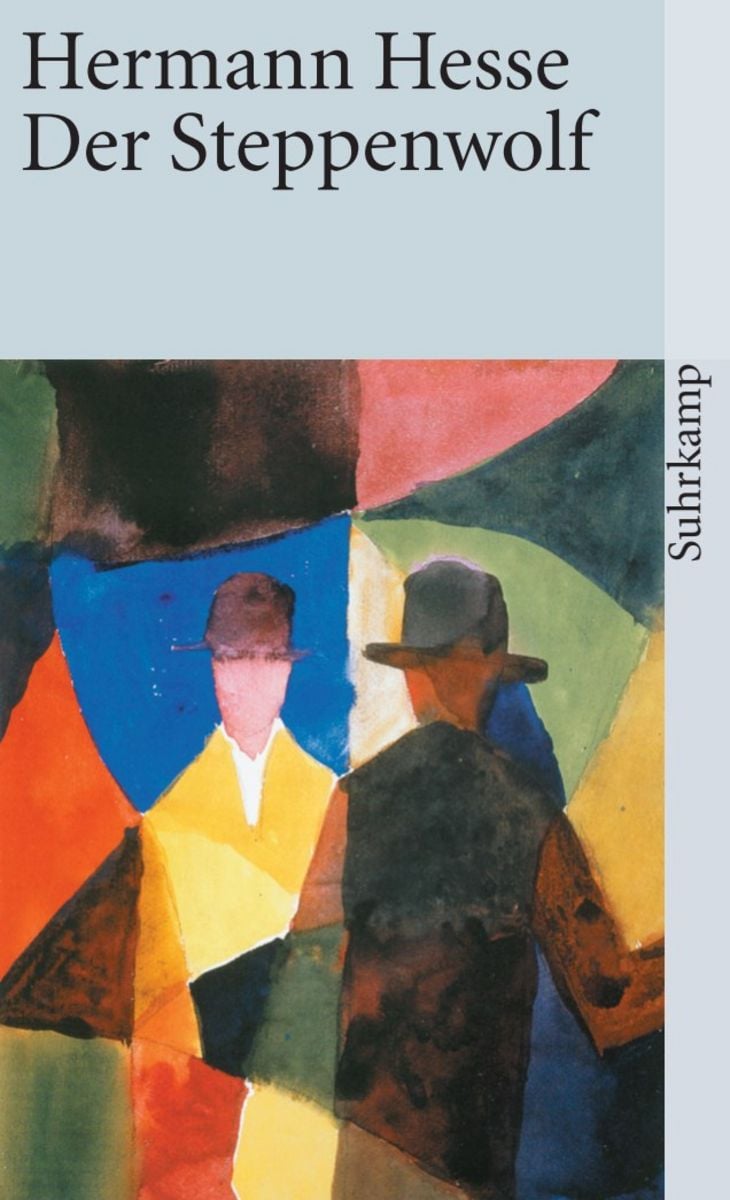
In Hermann Hesse’s Der Steppenwolf, the boundaries between self and society blur into a compelling landscape of duality and introspection. This novel, a profound meditation on identity, invites readers to navigate the labyrinthine depths of the human psyche where contradictions coexist and inner conflicts unfold. As a literary exploration of alienation and self-discovery,Der Steppenwolf challenges conventional notions of identity,presenting a protagonist caught between civilization and primal instinct,isolation and connection.In this review, we delve into how Hesse weaves these themes together, crafting a narrative that remains as relevant and provocative today as when it first captivated readers nearly a century ago.
Unraveling the Complex Duality of Harry haller and His Struggle with Inner Conflict and Social Alienation
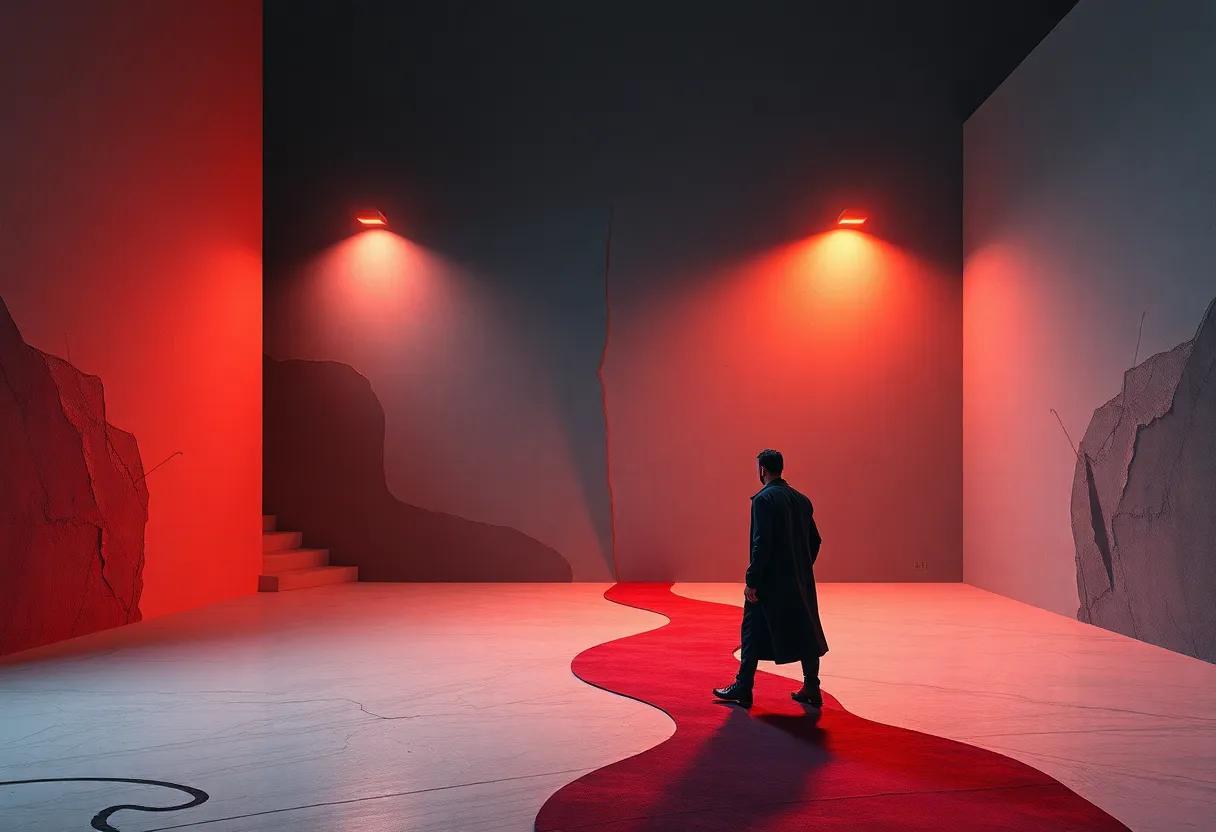
Harry Haller embodies a paradoxical existence, living caught between two opposing realms of the self.On one hand, he personifies the refined intellectual, a man immersed in art, beliefs, and introspection. On the other, he represents the untamed “wolf,” a primal force brimming with untethered passions and instincts. This stark duality permeates his psyche, constantly plunging him into waves of inner turmoil. The struggle is not merely a personal battle; it is a reflection of the universal human experience grappling with the need for societal acceptance while simultaneously yearning for an authentic,unrestrained identity. Harry’s alienation from the conventional world exposes the fragility of social constructs, revealing how societal norms can suffocate individuality.
Key facets of Harry’s internal conflict include:
Best-Selling Books in This Category


- English (Publication Language)

- Isolation vs. Belonging: harry’s withdrawal from society is both a protective shield and a prison, highlighting the tension between solitude and the human craving for connection.
- Reason vs. Instinct: His intellectual rationality is challenged by raw impulses,creating a battleground where logic and emotion vie for supremacy.
- Despair vs. Hope: The oscillation between existential despair and the potential for transcendence fuels much of his psychological drama.
| Aspect | harry Haller’s Expression | Social context |
|---|---|---|
| Duality | Man vs. Wolf | Conformity vs. Rebellion |
| alienation | Self-imposed isolation | Disenchantment with bourgeois values |
| Conflict | Inner psychological chaos | Fragmented modern society |
A Deep Dive into the Symbolism of the Steppenwolf as a Metaphor for Fragmented Human Identity
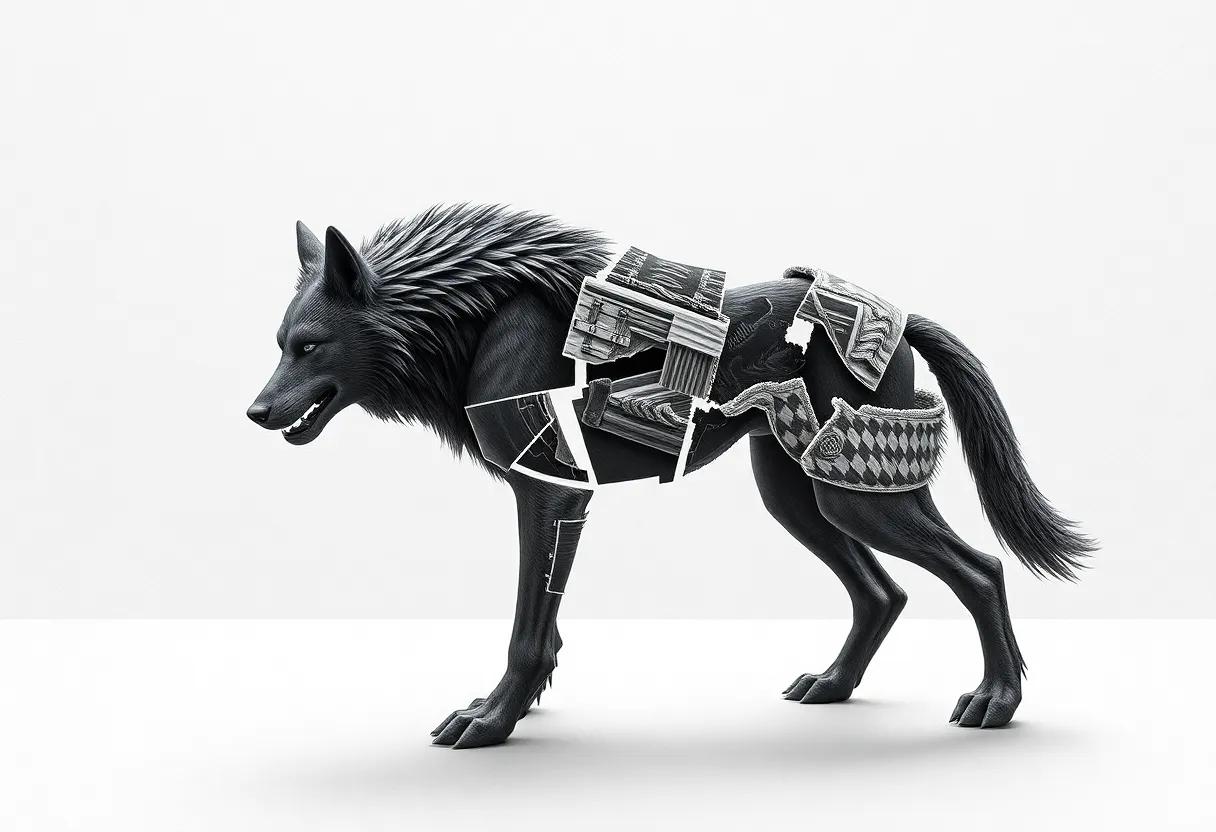
At the heart of Hesse’s narrative lies a powerful metaphor embodied by the steppenwolf: a creature torn between the wild instinctual self and the civilized individual. This duality vividly captures the pulsating tension within the fragmented human psyche, where conflicting desires, morals, and identities constantly vie for dominance. The steppenwolf is not just an external beast but a mirror reflecting our psychological struggle-caught between societal expectations and primal urges. It highlights the complexity of human nature as an amalgam of contrasting forces rather than a singular,harmonized entity,urging readers to reconcile the seemingly incompatible facets within themselves.
- Instinct vs.Reason: The steppenwolf symbolizes the innate, almost animalistic impulses that disrupt orderly rationality.
- Isolation vs. Belonging: As a creature both part of and apart from society, it embodies the personal alienation many experience in modern life.
- Internal Conflict: It personifies the intrapersonal battle of accepting fragmented identities without succumbing to despair.
| Aspect | Steppenwolf Symbolism | Human Identity Parallel |
|---|---|---|
| Nature | Wild, untamed, instinct-driven | Primal urges and subconscious desires |
| Conformity | Isolated, misunderstood outsider | Societal expectations and alienation |
| Duality | Wolf and man in one being | Fragmented self and inner contradictions |
Exploring the Role of Music, Art, and Literature in Shaping the Protagonist’s Perception of Self

Within Der Steppenwolf, music, art, and literature serve as more than mere aesthetic backdrops-they act as catalysts for the protagonist’s internal exploration and fragmentation.Hesse employs these creative mediums as mirrors reflecting the protagonist’s oscillation between his human and wolfish selves.Jazz melodies swirl through the narrative, representing chaos and freedom, while classical compositions symbolize order and the yearning for transcendence. The protagonist’s encounters with various works of art reveal his struggle to reconcile opposing extremes, deepening his understanding of the multiplicity inherent in his identity.
This dynamic is encapsulated in the following ways:
- Music: A language beyond words, it evokes unspoken emotions and awakens dormant aspects of the self.
- art: Visual stimuli challenge his perception, frequently enough blurring the lines between reality and imagination.
- Literature: Functions as both guide and confessional, offering philosophical frameworks and emotional solace.
| Medium | Symbolism | Effect on Protagonist |
|---|---|---|
| Jazz music | Chaos, freedom | Ignites wild impulses |
| classical Music | Order, transcendence | Calls for inner harmony |
| Visual Art | Illusion, duality | Disrupts perception of self |
| Philosophical Texts | Reflection, identity | Frames existential questions |
The Influence of Eastern Philosophy and Western Thought in Constructing the Novel’s Themes of Self-Discovery
Hermann Hesse masterfully weaves Eastern philosophy’s emphasis on the fluid nature of self with Western existentialism’s struggle for individual meaning, crafting a narrative that explores the complexity of identity. The novel’s protagonist embodies this duality,his journey reflecting ancient Eastern ideas such as yin-yang balance,mindfulness,and transcendence,juxtaposed with Western themes of alienation and self-assertion. This fusion challenges readers to reconsider rigid definitions of self, urging a harmonious integration of opposing forces within the psyche. Concepts like the Middle Way from Buddhism resonate with the protagonist’s attempt to reconcile his wolfish instincts and human sensibilities.
- Eastern Influences: Emphasis on spiritual awakening, detachment from ego, cyclical understanding of life and self
- Western Thought: Focus on individual agency, existential crisis, the fragmentation of identity in modernity
- Common Ground: Pursuit of authenticity through confronting inner contradictions and embracing paradox
| Philosophical Element | Eastern Perspective | Western Perspective |
|---|---|---|
| Self | Impermanent, interconnected | Autonomous, fragmented |
| Identity | Fluid, collective | Fixed, individual |
| Purpose | Harmony, enlightenment | Meaning-making, freedom |
The interplay of these traditions manifests most profoundly in the novel’s exploration of self-discovery as both a personal and universal endeavor. Rather than depicting a linear journey towards a singular truth, Hesse presents the search for identity as an oscillation between opposing forces-order and chaos, spirit and flesh, solitude and connection. This dialectic reveals that selfhood in Der steppenwolf is not a static achievement but a dynamic process, echoing Eastern philosophies where enlightenment is continuous and Western notions where the self must constantly redefine itself amidst modern life’s uncertainties. Through this synthesis, the novel serves as a powerful meditation on the multidimensionality of human existence and the eternal quest to reconcile the many faces within.
Analyzing the Magic Theater as a Surreal Space for Exploring Multiple Facets of Consciousness and Reality
The Magic Theater in Der Steppenwolf unfolds as an remarkable surreal realm where the boundaries between reality,identity,and the subconscious blur,inviting the protagonist-and the reader-into a labyrinth of psychological and existential exploration. This space acts like a kaleidoscope,breaking down conventional notions of selfhood and multiplicity,revealing the coexistence of contradictory facets within one individual. The theater’s aphorism, “For madmen only-price of admission: your mind.”, underlines its role as a portal accessible only to those willing to confront and embrace their fragmented consciousness. Here, dreams, memories, and alternate personas converge in a fluid narrative, challenging linear perception and exposing the mutable nature of reality.
Within this enigmatic setting, various elements symbolize distinct layers of consciousness and philosophical paradigms, forming a complex interplay that characterizes the protagonist’s inner conflict and quest for unity.Key features include:
- Manic episodes reflecting intense emotional turmoil and transcendental experiences.
- Multiple identities dramatizing the duality of human nature and societal masks.
- Temporal disjunctions highlighting the disruption of chronological time, mirroring the psyche’s nonlinear process.
- Surreal performances acting as metaphors for stages of self-realization and existential angst.
| aspect | Symbolism | Psychological Effect |
|---|---|---|
| Hall of Mirrors | Multiplicity of selves | Confusion, revelation of inner diversity |
| The Phantom Ballet | Fluidity of identity | Embracing ambiguity and change |
| Room of Silence | Inner solitude and reflection | Acceptance and confrontation |
How Hermann Hesse Uses Psychological and Existential Motifs to Challenge Conventional Notions of Normality
Hermann Hesse expertly melds the psychological with the existential to deconstruct society’s rigid labels of “normality.” Through Harry Haller’s fractured psyche, he exposes the duality within the human soul, presenting the conflict between the civilized self and the primal ”Steppenwolf.” This dual existence reflects the struggle between conforming to social expectations and embracing the chaotic, frequently enough suppressed, elements of individuality. Hesse’s narrative techniques-melding surrealism with philosophical introspection-invite readers to question not just what it means to be sane, but also what it means to be free. The novel’s motifs challenge the reader to accept that normality is not a fixed state, but rather a fluid spectrum shaped by inner contradictions.
- Psychological motifs: split identity, internal conflict, alienation
- Existential themes: search for meaning, self-acceptance, rebellion against societal norms
- Symbolism: the mask as facade, the magic theater as subconscious exploration
Hesse’s use of these motifs culminates in a vivid tableau illustrating the fragility and multiplicity of identity. The novel implies that conventional concepts of normality often suppress vital aspects of the self, creating both despair and transformation.To elucidate this, consider the following comparison:
| Conventional Normality | Hesse’s Psychological/Existential View |
|---|---|
| Social conformity and predictability | Embrace of inner chaos and duality |
| Fixed identity categories | Fluid, multifaceted self |
| Fear of the subconscious | Exploration of subconscious as gateway to authenticity |
The Portrayal of Isolation and the Search for Belonging in a World Divided Between Civilized and Wild Impulses
harry Haller’s existence is a poignant dance on the razor’s edge between refinement and savagery, belonging and alienation. Trapped within societal norms yet driven by primal urges, he embodies a fractured spirit searching for unity amidst division. His isolation is not merely physical but existential; a chasm carved by the tensions between his cultivated intellect and untamed instincts. This internal struggle represents a universal human conflict-the yearning to reconcile the civilized facade with the wild core beneath. The novel paints this duality with striking clarity, revealing how one’s identity often teeters between acceptance and rebellion, conformity and freedom.
Hesse crafts layers of symbolism that highlight Harry’s quest for connection in a fragmented world. The Magic Theater serves as a metaphorical space where rigid binaries dissolve, allowing fragmented selves to merge and coexist. Here,the boundaries between order and chaos blur,mirroring the subconscious journeys of self-discovery confronting loneliness and alienation. Consider the table below, which distills key contrasts reflecting this thematic tension:
| Aspect | Civilized Impulse | Wild Impulse |
|---|---|---|
| Behavior | Measured, reserved | Impulsive, passionate |
| Social role | Conformist, isolated | Rebel, transient |
| Emotional State | Disconnection, ennui | Intensity, liberation |
A Critical Look at the Narrative Structure and Its Impact on the Reader’s Understanding of Dual Identity
Hermann Hesse employs a fragmented and layered narrative structure in Der Steppenwolf that mirrors the protagonist’s fractured psyche, inviting readers to experience the oscillation between unity and division firsthand. The interweaving of first-person confessions, fictional documents, and surreal encounters blurs the boundaries between reality and illusion, effectively destabilizing the reader’s sense of a singular, coherent self. This multiplicity of voices and perspectives serves as a literary embodiment of the dual nature within Harry Haller - part human, part beast - challenging readers to embrace complexity rather than seek simplistic resolutions. By doing so, Hesse transforms the act of reading into an active psychological engagement, wherein understanding emerges not through clarity but through navigating ambiguity and contradiction.
- Non-linear progression: Disorients temporal flow, reflecting internal conflict.
- Meta-narrative elements: Foster self-awareness about the act of storytelling.
- Symbolic layering: Enhances thematic depth and invites multiple interpretations.
The impact of this narrative strategy is profound, as it compels readers to question the stability of identity itself. Through a kaleidoscopic lens, the novel reveals identity as a fluid construct, ever-shifting under the pressures of societal expectation, personal desire, and existential dread. The following table highlights key narrative techniques and their corresponding effects on the reader’s perception:
| Narrative Technique | Reader’s Experience | Effect on Understanding Duality |
|---|---|---|
| Inner Monologues | intimate access to turmoil | Exposes conflicting impulses within self |
| Dreamlike Sequences | Surreal immersion | Blurs line between reality and psyche |
| Fragmented Chapters | Discontinuous narrative flow | Reflects shattered identity |
Recommendations for Readers Seeking philosophical Depth Coupled with Intense Emotional Resonance
For those who crave a literary journey that marries profound philosophical inquiry with a raw,emotional undertow,Der Steppenwolf stands as an indispensable read. Hermann Hesse’s exploration of duality goes beyond a mere intellectual exercise; it invites readers to confront the fragmented nature of their own identities. The novel’s protagonist wrestles with internal contradictions that mirror the complex tapestry within us all-melding intellect with instinct, solitude with social craving, and despair with hope. This duality is not only a theme but an emotional current that pulses throughout the narrative, resonating deeply with anyone who has felt the weight of inner conflict and the longing for wholeness.
Essential qualities that set this work apart include:
- Philosophical layering that challenges conventional binaries and embraces ambiguity.
- An emotive undercurrent that flexes between melancholy and euphoric bursts of self-discovery.
- Rich symbolism and metaphor inviting readers to immerse themselves in multiple interpretative layers.
- Innovative narrative structure that blurs reality and fantasy to reflect the psyche’s complexity.
| Aspect | reader Experience |
|---|---|
| Mental Duel | Philosophical intrigue meets surreal introspection |
| Emotional Spectrum | From despair to ecstatic revelation |
| Identity Exploration | Fragmented self seeking unity |
| Narrative Style | Fluid,dreamlike,and multi-dimensional |
Visualizing the Character’s Journey Through symbolic Imagery and Dreamlike Landscapes in Literary Adaptations
In adapting Der Steppenwolf for the screen or stage,creators often lean heavily on symbolic imagery to manifest Harry Haller’s fractured psyche. Dreamlike sequences blur the boundaries between reality and fantasy, drawing viewers into a world where internal conflict is rendered visually. Shadows doubling as wolves, mirrors fracturing reflections into multiple selves, and labyrinthine cityscapes woven with warped architecture all serve as metaphors for the protagonist’s oscillation between his civilized facade and wild, untamed nature. These motifs are not merely ornamental-they embed the emotional core of the narrative into a tactile experience, inviting audiences to navigate the duality within themselves alongside Harry.
such adaptations frequently employ surrealist landscapes to mirror the protagonist’s journey through existential uncertainty. Within these ethereal settings, time bends and logic dissolves, evoking the disorienting effect of Haller’s mental odyssey. The use of contrasting elements-light versus darkness,order versus chaos,and solitude versus camaraderie-is often codified through visual contrasts that deepen the thematic resonance:
| Symbol | Meaning | Visual Depiction |
|---|---|---|
| Broken Mirror | Fragility of Identity | Shattered reflections distorting reality |
| starlit Labyrinth | Maze of the Mind | Infinite,twisting pathways under cosmic skies |
| Wolf Shadow | Primal Instincts | silhouettes stalking in dim light |
| Flickering Candle | Fleeting Hope | Unstable flame against darkness |
By intertwining these symbols within a dreamlike mise-en-scène,adaptations elevate Harry’s internal struggle from mere narrative exposition to immersive experience. This fusion of poetic visuals and psychological depth echoes Hesse’s exploration of selfhood, making the intangible into a vivid spectacle that challenges viewers to confront their own inner steppenwolf.
Understanding the Historical Context and Personal Influences Behind hermann Hesse’s Exploration of Duality
Hermann Hesse’s exploration of duality in Der Steppenwolf is deeply rooted in the tumultuous era of early 20th-century Europe and his own complex personal experiences. Living through the aftermath of World War I,a period marked by political upheaval and existential uncertainty,Hesse absorbed the cultural tensions between tradition and modernity that shaped his worldview.His personal struggles with identity, mental health, and spirituality mirror the larger societal conflicts of the time.This backdrop catalyzed his captivation with the coexistence of opposing forces within the self – reason versus instinct, conformity versus rebellion, and the civilized against the wild.
Moreover, Hesse’s own biographical nuances provide rich soil for the novel’s thematic depth.Raised in a pietistic family yet drawn to Eastern philosophies and modern psychoanalysis,he grappled with the multiplicity of the human psyche firsthand. Key personal influences include:
- Jungian Psychology: Carl Jung’s concepts of the shadow self and individuation inspired Hesse’s portrayal of internal conflict and self-realization.
- Buddhism and Eastern Thought: the integration of spiritual transcendence highlights a quest for harmony between disparate aspects of identity.
- romanticism and Modernism: The tension between the romantic ideal and modern alienation forms the aesthetic core of the narrative.
| Aspect | Historical Influence | Personal Influence |
|---|---|---|
| Conflict | Post-WWI Trauma | Family Religious Background |
| Identity | Social Alienation | Mental Health Struggles |
| Philosophy | Modernism | Eastern Mysticism |
How Der Steppenwolf continues to resonate with modern Audiences Facing Questions of identity and Authenticity
In an age where identity feels increasingly fragmented by social expectations and digital personas, Der steppenwolf speaks directly to the soul’s turmoil.hesse’s protagonist embodies the conflict between society’s desire for conformity and the individual’s quest for personal authenticity, a tension that echoes loudly in today’s world.Modern readers find themselves drawn to Harry Haller’s inner duality - the Wolf and the Man – as a profound metaphor for the masks we wear and the contradictions that shape us. this literary mirror reflects the struggle to reconcile multiple selves without surrendering to despair or fragmentation.
Key themes that continue to captivate contemporary audiences include:
- The search for meaning in a confusing, frequently enough alienating world
- the tension between individuality and societal pressure
- The exploration of spiritual and existential freedom
- The blending of reality, fantasy, and psychological insight
| Aspect | Modern Parallel |
|---|---|
| Duality of Self | Online vs. Offline Identity |
| Alienation | Social media Isolation |
| Authenticity | Curated vs. True Expression |
| Inner conflict | Work-Life vs. Personal Values |
An Insightful Profile of Hermann Hesse: The writer Behind the Masterpiece and His Enduring Literary Legacy
Hermann Hesse’s profound exploration of the human psyche in Der Steppenwolf unravels the intricate dance of duality within the self. Through the protagonist Harry Haller, Hesse delves into the conflict between societal conformity and individual freedom, painting a vivid portrait of a man torn between his primal instincts and cultivated intellect. The novel’s rich symbolism and surreal narrative invite readers to confront their own fragmented identities,emphasizing the universal struggle to reconcile the wild and the civilized facets of the soul. Hesse’s masterful weaving of philosophical inquiry with emotional depth establishes a literature that transcends time, making his works perpetually relevant.
- Dual nature: The interplay of beast and man within the self
- Identity search: Wrestling with self-acceptance and alienation
- Philosophical roots: Influence of Eastern mysticism and Western existentialism
- Psychological depth: Exploration of depression, isolation, and transformation
| Theme | Symbol | interpretation |
|---|---|---|
| Duality | Wolf | Inner wildness vs. societal restraint |
| Identity | Mirror | Self-reflection and fragmented personality |
| Transformation | Magic Theater | Journey toward self-integration |
Der Steppenwolf stands as a compelling exploration of the fractured self, where hermann Hesse masterfully invites readers into the labyrinthine corridors of identity and duality. This novel does not merely tell a story; it challenges us to confront the multiplicity within ourselves, blending existential angst with moments of profound insight. Whether viewed as a psychological journey or a philosophical inquiry, Hesse’s work remains as relevant today as it was upon its release-an enduring mirror reflecting the complexities of the human soul. For those willing to navigate its depths, Der Steppenwolf offers a rich, thought-provoking experience that lingers long after the final page is turned.