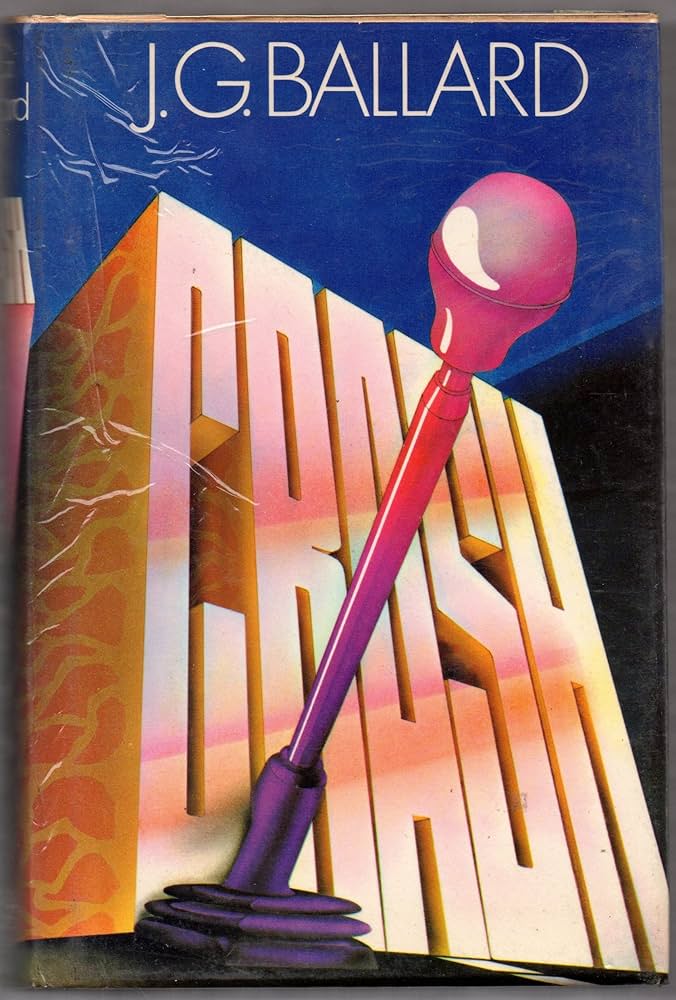
A book that opens like the sound of metal folding in slow motion, Crash forces you to attend to the place where flesh and machine meet. In J. G. Ballard’s unnerving fable, the motorway becomes a theater of desire: collisions are not merely accidents but rituals, car parts become prosthetic organs, and the engineered violence of modern transport is refracted into erotic obsession. Ballard’s prose is at once antiseptic and feverish, laying out scenes of impact wiht the cool precision of a surgeon and the fervor of a voyeur.
This review, titled “Crash: Anatomy of desire and Machine Echoes,” approaches Ballard’s novel as a dissection — less to condemn or canonize than to trace how the text translates the mechanical into the sexual and how it turns private longing into public spectacle. It will consider the narrative voice’s clinical detachment,the novel’s insistence on technology as an extension (and mirror) of the body,and the ethical questions that arise when violence becomes aestheticized.alongside close reading, I will situate the book within its cultural moment and note why its images continue to reverberate in discussions about desire, risk, and the seductions of late industrial modernity.
What follows is a temperate navigation of a provocative text: an attempt to listen for the echoes of machines in Ballard’s language, to chart the anatomy of a desire that reconfigures the human as both subject and instrument, and to ask what, if anything, the spectacle of the crash tells us about the world that made it.
When steel meets longing exploring the erotic geometry of automobile collisions and the cold artistry of mechanized desire in Crash

Best-Selling Books in This Category


Ballard reframes collision as a kind of cartography: angles, glass splinters and bent metal become coordinates on a map of longing. The physicality of impact is rendered with the calm precision of a surgeon and the detached curiosity of an engineer — a cold, aesthetic inventory where wounds read like diagrams and seduction is measured in crumple zones and angular momentum. The prose converts erotic impulse into geometry, so that a bumper, a seatbelt and a shattered headlight speak with the same intimacy as a whispered confession.
- Bent chrome — a folded line that reads like a scar.
- Headlight glare — a flash that substitutes for glance and intent.
- Seatbelt restraint — boundary turned to embrace.
- Skid marks — the handwriting of impulse on asphalt.
There is an artistry to this cold cataloguing: scenes staged with clinical care so that violence becomes choreography and the machine answers human solitude with mirror-like fidelity. Pleasure and injury oscillate into a single aesthetic — an apparatus of desire in which the car, stripped of mere utility, becomes both object and lover, and the echoing metal records memory more faithfully than any human witness.
Anatomy of desire dissected by clinical prose mapping the body machine interface where attraction meets fatal beauty on the road

Ballard’s clinical eye dissects desire the way a surgeon maps veins: with cool, precise descriptions that turn pulse and touch into schematic lines on a diagram. The prose translates interest into function — wiring of longing, the glare of chrome rendered as a intentional incision, the body’s appetites catalogued like mechanical faults.In this register, attraction sheds sentiment and gains anatomy; beauty becomes a forensic specimen, and the reader is invited to read the bruise, the dent, the graft as evidence of an urgent, almost academic eroticism.
- Prosthetic glamour — synthetic allure replacing human softness
- Silver scars — wounds as trophies of transcendence
- Velocity as topology — movement remaps intimate geography
Machines echo human appetites back in metallic tones: the car’s silhouette becomes a counterpart of flesh, its impact a rite that compresses sensation into a crystalline aesthetic. This is not mere fetishization but an anatomical conversation where metal teaches the body new contours of desire and death appears as a consummation.The narrative’s neutrality in tone onyl heightens the effect — detached observation renders transgression clinical, and the fatal beauty Ballard describes reads like a laboratory result, precise, unsettling, unambiguous.
| Signal | Echo |
|---|---|
| Metallic Contact | Cold longing |
| Deformity | Aesthetic fixation |
| Crash | Ecstatic termination |
The aesthetics of automotive wreckage how Ballard transposes metal and flesh into ritual sculptures of obsession and clinical fascination
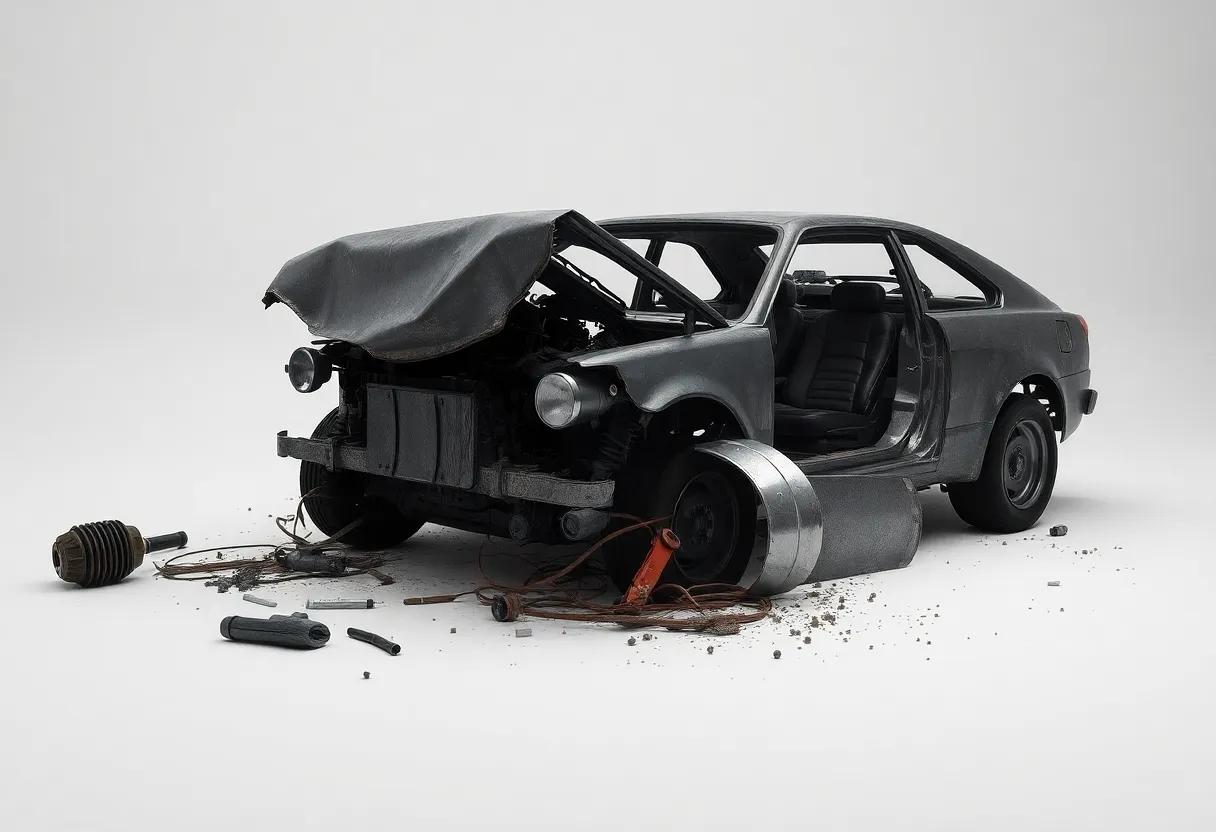
Ballard transposes collision scenes into a kind of secular liturgy where scrap and skin become the materials of devotion. He treats twisted steel with the same forensic curiosity usually reserved for relics — measuring angles, cataloguing fractures, and fixing each aberrant reflection as if it were an icon. In this economy of ruin, the crash is not an end but a composition: a tableau in which geometry, residue and absence align to produce a cold, ritual beauty. The motif repeats in small, surgical details:
– Chromed geometry: arcs and planes that catch light like deliberate brushstrokes.
– Traces of presence: clothing impressions, displaced objects, the impression of a life interrupted.
- Mechanical relics: headlights and dashboards recast as votive objects.
| component | Ritual Role |
|---|---|
| Bumper | Threshold — the point of contact |
| Windshield | Veil — fractured transparency |
| Engine | Resonant core — echo of motion |
In Ballard’s economy of fascination, obsession is clinical rather than febrile: participants map desire onto deformation, perform meticulous inventories of damage, and create meaning thru repetition. The wreck becomes a diagnostic stage where the human and the machine are braided into a quiet, ritualized choreography of attention.
Stylistic coldness balanced with vivid symptomology the prose invites both revulsion and analytical curiosity in equal measure
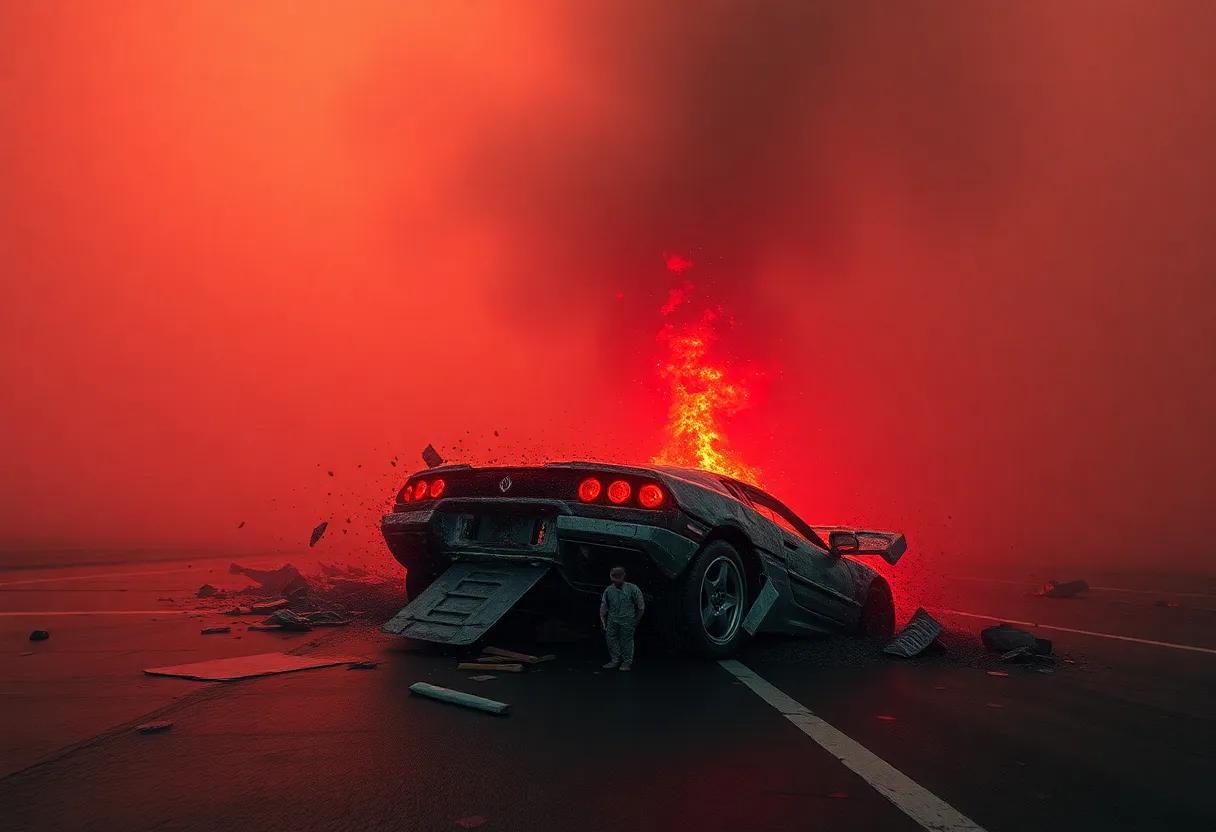
Ballard’s sentences operate like an autopsy report written by a poet: clinically pared, anatomically exact, and unashamed of their morbid clarity. Within that frost lies a pulse — small, insistently human — that appears in tactile details and shockingly precise metaphors. The prose renders flesh and metal interchangeably vivid: the smell of petrol becomes a mnemonic for memory, a dented fender reads like a bruise, and a seatbelt’s creak is catalogued with the same sobriety as a patient’s symptom list. Detachment here is not absence but lens; the reader is invited to observe, catalog, and feel. Elements that sharpen the effect include:
- Enumerated injuries described with clinical calm
- Mechanical imagery that translates erotic charge into engineered geometry
- Sensory fragments—glass, oil, vinyl—rendered with forensic precision
That balance produces a strange ambivalence: revulsion softens into forensic curiosity, disgust morphs into analysis, and desire is read as protocol rather than confession.The book becomes a lab where motifs—trauma, intimacy, instrumentation—echo like diagnostic terms, encouraging the reader to map symptom to machine and machine back to psyche, always under the watchful, unflinching grammer of Ballard’s voice.
Ethical and psychological unease how the narrative forces readers to witness desire as a kind of technology induced transgression

Ballard’s prose rigs desire into an apparatus: sexual longing is no longer private feeling but a machinic spectacle that the reader is compelled to inspect. The text converts crash scenes into a kind of clinical liturgy where the body and metal are narrated with the same cool precision, and that neutrality becomes a moral provocation. Desire here reads like code—parsed, catalogued, and replayed—and the effect is an ethical vertigo that makes us ask whether witnessing equals consent. Inside the paragraph the novel stages a few strategies that unsettle the reader:
- Clinical anatomical detail that aestheticizes harm
- Portrayal of machines as erotic partners
- Moral ambiguity presented without authorial censure
That choreography produces psychological unease: we shift between fascination and revulsion, recognizing in ourselves a willingness to be complicit in transgression. Ballard doesn’t simply depict a taboo; he engineers an implicatory mirror that refracts social norms into mechanical desire, so the reader becomes both observer and participant.The novel’s power lies less in shock than in its ability to map the architecture of temptation—how technology can rewire ethics and make forbidden longings feel like unavoidable, almost logical, extensions of human appetite—and in that mapping we find our own responses put under ruthless, often uncomfortable, scrutiny.
Narrative pacing and scene construction recommendations for readers on when to approach this intense speculative fable and how to pace rereads
Choose your entry wisely: approach Ballard’s feverish laboratory of desire when you can sit with unease and curiosity simultaneously occurring—daylight reads if you need distance, twilight if you want to lean into the book’s cinematic chill. The novel rewards a reader who treats it like a controlled experiment rather than background noise: clear phone, a notebook, and a willingness to pause. For first encounters, consider short, attentive sessions rather than a single marathon; this text compounds its effects.
- Begin in the afternoon—alert, observant, not numbed by late-night rumination.
- Read in 25–45 minute blocks to let unsettling images settle between sessions.
- Keep a page of immediate reactions—phrases, sensations, questions—to return to later.
- Flag scenes that feel physically intense or ethically sharp for breaks or discussion.
Rereads should be staged like dissections: each pass reveals a different machinery — narrative mechanics, erotic politics, and the echoes of technology in flesh. Map your rereads to distinct goals (language, symbolism, affect) and allow intervals that let the first reading ferment: immediate short re-reads to trace language, medium gaps to watch imagery reconfigure, long pauses to see how the book haunts memory.
| Reread focus | Suggested gap | Session length |
|---|---|---|
| Surface plot & chronology | same week | 45–60 min |
| Symbolism & machine motifs | 1–3 months | 60–90 min |
| Ethics & affective response | 6+ months | short bursts |
- Annotate differently each time—first for facts, second for images, third for moral tension.
- Compare scenes to filmed or visual references to test the book’s cinematic suggestions.
- Consider shared rereads or focused discussions for the most charged passages.
Visual and sensory motifs to look for suggestions for artists and designers translating collision imagery into still or moving visual art practice
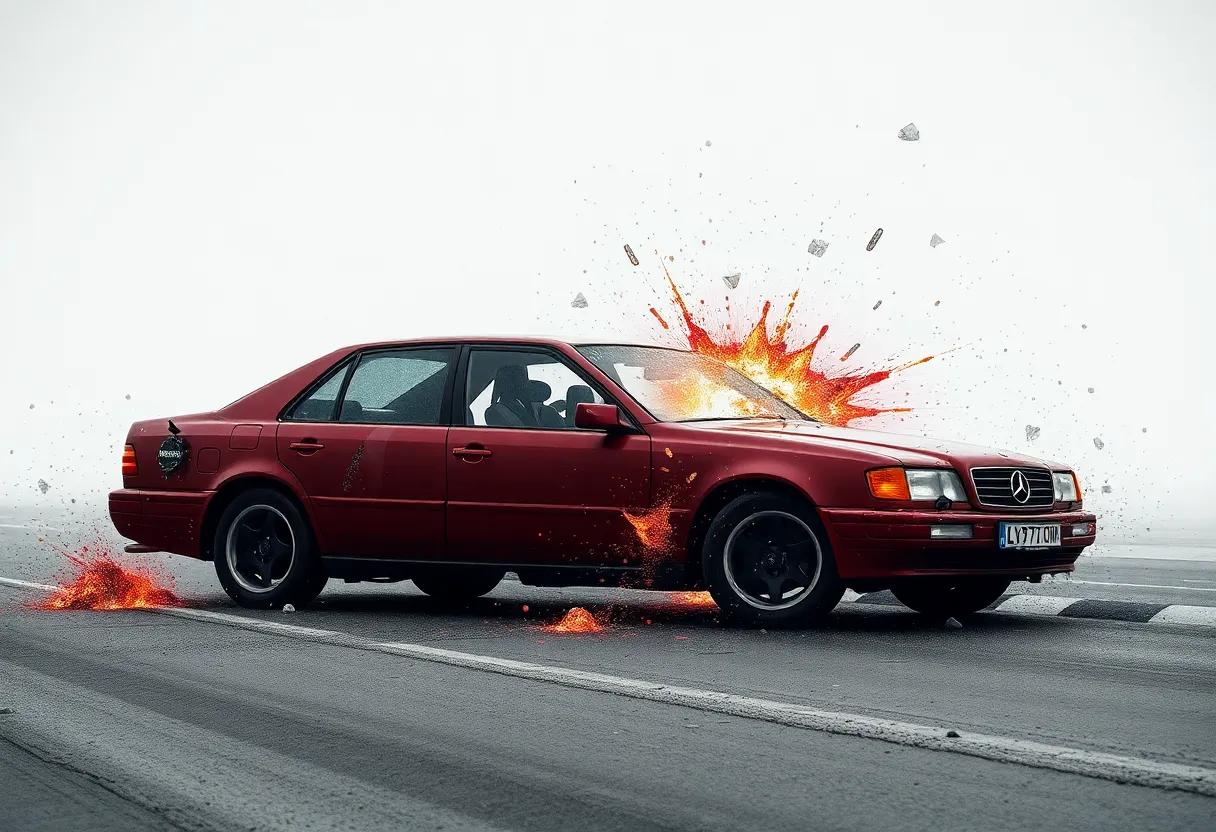
Think of crashes as choreography—slow, sensual, and juridical of metal against flesh—and translate those rhythms into visual shorthand: the cold blue of scorched chrome, the warm lacquer of stopped breath, the geometry of smashed glass like fractured retinas. Pay attention to micro-moments you can amplify visually: sparks as punctuation, airbags as expanding moons, the glossy map of tire rubber. Consider echoing these motifs through restrained elements that recur across frames or canvases so the collision becomes an obsession rather than a single event:
- Surface: scratched chrome, matte rubber, skin sheen
- Fragment: shards, splinters, hanging threads
- Trace: skid marks, smeared makeup, residue of oil and blood
- Light: flash bulbs, reflection slashes, backlit dust
Translate sensation into technique by treating sight and sound as equivalent materials: give the eye something to here and the ear something to see. Use slowed time, frozen blur, and looped micro-motions to let the spectator inspect impact like an anatomical specimen; pair those with tactile props or mixed-media surfaces so canvases hum with implied weight. Practical suggestions for production and composition include:
- Editing rhythms: stutter-cuts, reversed fragments, sustained frames
- Sound design: metallic reverb, low-frequency thuds, breath textures synced to cuts
- Materiality: collage of upholstery, glass dust varnish, scorched pigments
- Framing: off-center crops, close-ups of contact points, mirrors to multiply collision
Comparative context placing Crash alongside contemporaneous speculative works and cultural obsessions with machines bodies and mediated sensation
Ballard’s novel occupies a peculiar crossroads where mid-twentieth century speculative inventiveness met a rising fixation on mechanized intimacy. Rather than projecting a distant future of circuitry and skyscrapers, it excavates the eroticism of chrome and chassis right inside the present — much like contemporaneous works that interrogated how machines reconfigure human sensation. In this company, authors and filmmakers probed the same nervous system of modernity: the artist who reduced the body to schematic desire, the director who filmed violence as choreography, the novelist who turned technology into a mirror for private obsessions. The resonance is not mimicry but a shared diagnosis: machines do not simply serve humans; they re-sculpt the anatomy of longing.
That diagnosis shows across genres and media, often in uneasy or ironic forms — a sterile operating room, a motorway fetish, a televised psychodrama. Consider these touchstones and their diagnostic slants:
- The Atrocity Exhibition (Ballard) — fragmentation of identity through media collage.
- A Clockwork orange (Kubrick, 1971) — calibrated violence and the body as social experiment.
- Solaris (Tarkovsky, 1972) — the uncanny return of interiority via alien technology.
The cultural moment was obsessed with mediation — seatbelts and car design as rites, prosthetics as promise, film and television as simulators of sensation — and Crash sits at the fulcrum, translating those obsessions into a cold, anatomized eroticism.
| Work | Machine focus | Body as… |
|---|---|---|
| Crash | Automobile systems | prosthetic erotic object |
| A Clockwork orange | Behavioral technology | Conditioned specimen |
| Solaris | Alien intelligence | Manifested memory |
Content warnings and suitability guidance for sensitive readers including depictions of bodily harm sexual transgression and emotionally challenging scenes
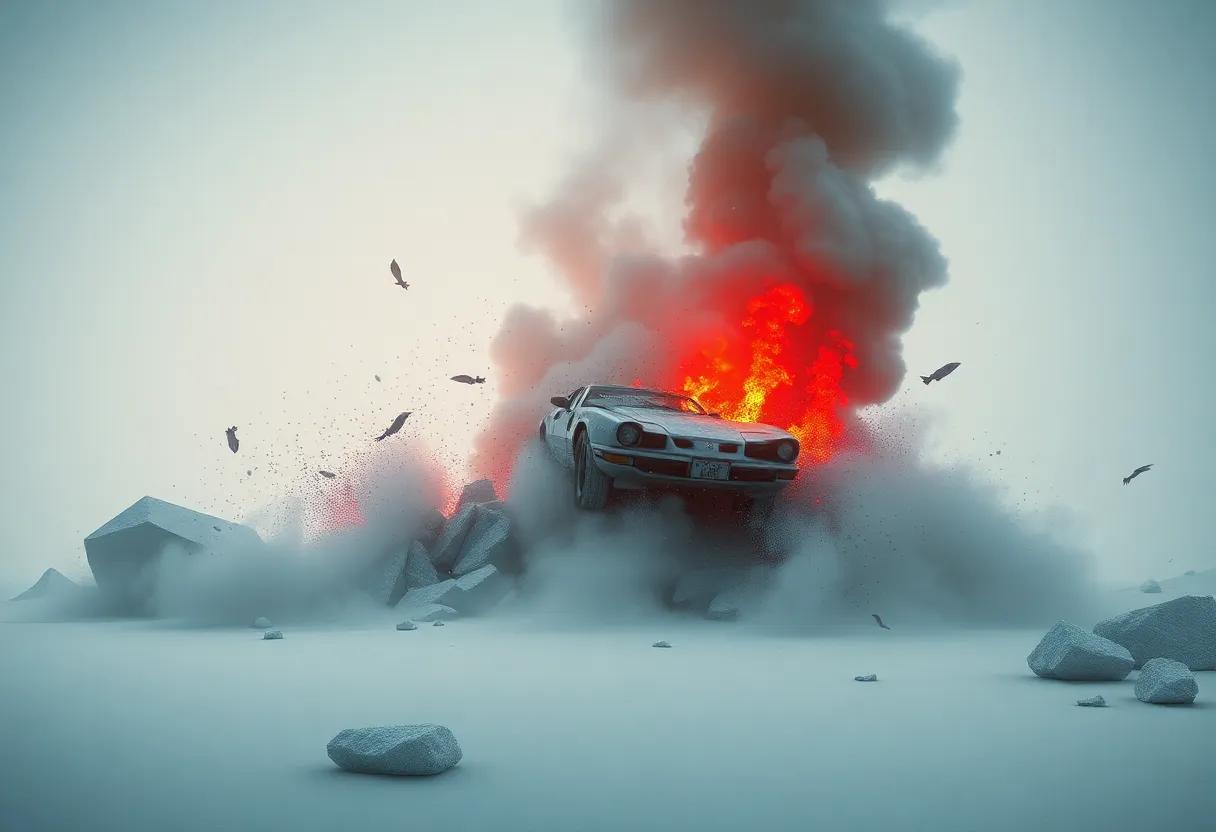
- Graphic car-crash imagery and physical mutilation
- Sexual acts framed around injury and taboo
- Themes of death, detachment, and moral transgression
- Emotionally numbing or fetishistic tone rather than consolatory resolution
Consider skipping the novel or approaching it with safeguards if you have a history of trauma, are sensitive to sexual violence, or find graphic physical injury triggering.Practical steps: read a synopsis first, sample an annotated edition, set time-limited reading sessions, and pause if descriptions become overwhelming.If you prefer a quick reference, the mini-table below offers simple actions for common triggers.
| Trigger | Suggested action |
|---|---|
| graphic injury | Read summaries or skip detailed chapters |
| Eroticized trauma | Discuss with a friend or therapist before/after |
| Emotional overwhelm | Take breaks; switch to grounding activities |
About the writer J G Ballard his career influences recurring obsessions and how Crash fits within his evolving exploration of modernity and desire
J. G. Ballard’s literary life traces a singular arc from childhood in wartime Shanghai to the cool,clinical corridors of late-20th-century modernity: a voice shaped by displacement,Surrealist imagery,pulp science fiction and a steady fascination with Freud’s darker maps. His career moves—early short stories that cut through suburban banality,mid‑career experiments in dystopic landscape,and late works that interrogate technology’s erotic charge—are driven by a patient,forensic curiosity. Influences and obsessions recur like motifs in a symphony: the clinical gaze, ruined architecture, accelerated transport and the body as a machine.
- Surrealism & psychoanalysis — dream logic married to emotional detachment
- Pulp SF & modernist form — speculative scenarios with precise, sterile prose
- Catastrophe & landscape — roads, airports and wreckage as psychological terrain
Crash sits at the confluence of those strands, turning Ballard’s long-standing fixations into a distilled probe of how desire rewires technology. The novel treats collisions as ritualized, eroticized acts—an anatomy of yearning where metal, paint and glass speak a lexicon of longing—while Ballard’s narrator performs the role of anthropologist and voyeur. The prose remains deliberately flat, which makes the erotic geometries colder and, paradoxically, more intimate: we are invited to catalog sensations as if assembling evidence.
| Element | Role in Crash |
|---|---|
| Car | Erotic prosthesis |
| Crash | Ritual & revelation |
| Road | Cathedral of modern desire |
- What Crash continues — the project of mapping how modern technologies reshape intimacy
- What it departs from — it abandons pastoral nostalgia for a clinical embrace of mechanized libido
Crash leaves no neat resolution — only the slow afterimage of metal and motive that lingers when the lights go down. Ballard’s prose is surgical and cinematic at once: it dissects desire with a cool, almost mechanical curiosity and then holds the fragments up to the light so we can watch their reflections multiply.This book does not ask to be liked; it asks to be witnessed.
As an anatomy of modern longing and a catalogue of the strange music made when flesh meets machine, Crash is as unnerving as it is lucid. Readers willing to trade reassurance for provocation will find a work that reframes accidents as allegory and technology as mirror. Those seeking consolation should choose elsewhere. For anyone prepared to be unsettled, to think through the echoing consequences of attraction, spectacle and speed, Ballard’s investigation remains a sharp, necessary provocation.