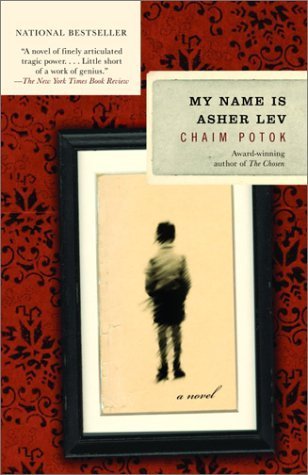
A child’s paint-stained fingers and the fringe of a prayer shawl—two images that, in Chaim Potok’s My Name Is Asher Lev, refuse too share the same silence. This review, titled “Brushstrokes of faith and Art,” steps into that charged space where devotion and creation collide, following Potok’s portrait of a young artist torn between the demands of his Hasidic upbringing and the uncompromising call of his talent.
Rather than praise or condemn, the introduction that follows aims to map how Potok frames this conflict: the novel’s moral and aesthetic questions, the shaping force of community and family, and the ways language and imagery negotiate identity. I will consider narrative voice, character development, and the ethical tensions that animate the plot, while situating the work within its cultural and literary contexts. The goal is to offer a measured reading that illuminates how My Name Is Asher lev paints faith and artistry not as opposites but as overlapping fields—messy, illuminating, and stubbornly human.
Brushstrokes and Belief A deep thematic exploration of faith versus artistic compulsion in My Name Is Asher Lev and its lasting resonance

Brooklyn streets and Hasidic prayer shawls collide on the page as the protagonist’s brush refuses to be tamed by tradition; the novel stages a delicate war where artistic compulsion pulls like a magnet and faith anchors like stone. In intimate, frequently enough wrenching episodes, creation becomes confession — each canvas an act of translation from private memory to public testimony — and this is not mere rebellion but a ritualized negotiation. Consider how the tension manifests in everyday moments:
Best-Selling Books in This Category


- familial duty versus individual calling
- communal norms challenged by candid imagery
- silence in prayer answered by noisy color
- guilt refracted into aesthetic breakthrough
These fragments assemble into a portrait of an artist who cannot choose between salvation and selfhood, making the story less about victory than about the cost of being true to one’s inner vision.
The book’s lasting resonance comes from its refusal to simplify: its moral dilemmas remain open-ended,its symbols both revered and profaned,and its language insists that questions are sometimes more significant than answers. The interplay of iconography and human fallibility yields images that linger — not as neat morals but as ethical provocations — and the narrative’s power is in how it makes readers look again at what they worship, and why. Long after the last page, these tensions continue to resonate in studio light and synagogue shadow, as mapped below:
| Element | Impact |
|---|---|
| Sacred imagery | Reframes devotion as inquiry |
| Autobiographical brushstrokes | Transforms pain into witness |
| Community response | Reveals limits of acceptance |
This compact map shows why the novel endures: it makes art a form of inquiry into belief, and belief itself a canvas that will not stay blank.
Portrait of a Prodigy Character study of Asher Lev his inner conflicts creative impulses and the moral cost of uncompromising artistic vision

asher Lev moves through his world like a lightning strike in a synagogue—brilliant, disorienting, impractical to ignore. His art is an act of revelation and rebellion: each canvas insists on being seen, even when seeing causes pain.The book limns the anatomy of a prodigy’s psyche with surgical tenderness, showing how talent can split a life along an axis of devotion and desire. In Asher’s inner chamber the echoes are unmissable: the pull to honour tradition wars with the compulsion to render human truth, and that friction becomes the engine of his creativity.
- Compulsion to render truth: art as necessity, not luxury.
- Need to transgress: images that confront communal taboos.
- Yearning for beauty: aesthetic longing that refuses compromise.
Those creative impulses have a clear ledger of costs—relationships strained, spiritual exile, and the quiet erosion of innocence. Yet the book refuses easy judgment, portraying sacrifice as both tragic and strangely sacred: a portrait of a boy who pays for vision with solitude and uses solitude to widen the field of what can be seen. The moral account is summarized starkly in the small tradeoffs between making and belonging, shown here as a compact map of cause and consequence:
| Creative Impulse | Moral Cost |
|---|---|
| muse-driven honesty | Familial rupture |
| Taboo imagery | Communal alienation |
| Relentless practice | Personal isolation |
Ultimately, the novel asks whether art that refuses compromise redeems or condemns its maker—and leaves the answer both unsettling and luminously clear.
Sacred Boundaries and Artistic Taboo How cultural traditions shape asher Lev and where compassion meets aesthetic transgression
Born into a world where every gesture is mapped against centuries of law and lore, the artist in this narrative navigates a lattice of obligation and longing. His canvases do more than depict; they interrogate the line between private revelation and communal propriety, turning quiet rituals into focal points of visual debate.The friction reads like a map of cultural limits—each brushstroke negotiates an inherited code:
- Ritual boundaries that dictate visibility and sacredness
- Communal reputation that measures art by its social consequence
- Family loyalty that ties creative freedom to filial duty
Such constraints make the act of painting not merely aesthetic but moral, forcing the viewer to consider what is sacred because it is protected and what is sacred because it is seen.
When compassion enters the studio, it complicates judgments about transgression: empathy softens accusations while clarifying the stakes of portrayal. The work becomes a space where intention and impact collide—an attempt to translate interior truth into public form that can wound as easily as it heals. Consider the players and the emotional economy they inhabit:
| Actor | Moral Stance |
|---|---|
| Artist | Truth through provocation |
| Community | Preservation through silence |
| Family | Love hedged with hurt |
Here, compassion is not a softening of critique but a lens that reframes transgression as conversation—one that asks whether aesthetic risk can coexist with care, and what is lost or gained when a brush crosses a line drawn by faith.
Visual Language and Painterly imagery Close readings of scenes symbols and the recurrent metaphors that give the novel its luminous intensity
The prose unfolds like a gallery: scenes are composed with an eye for balance, contrast and the play of shadow. Color becomes diction,brushstroke a sentence—so that every domestic disagreement or ritual moment reads as an act of painting. In close reading,several visual tropes return with insistence,each carrying emotional freight:
- Light — not merely illumination but moral clarity and the threat of exposure.
- Canvas — a margin where private truth can be made public, risky and raw.
- Hands — instruments of creation and transgression, trembling with devotion or defiance.
- Faces — surfaces that record suffering, revelation, and the capacity to hold contradiction.
These motifs do more than decorate scenes; they function as a visual grammar that translates spiritual crisis into luminous narrative intensity.
Close readings show how metaphors accumulate until painting itself becomes a theology: the brush is a kind of prayer, the studio a confessional, the finished portrait both sacrament and accusation. Small tableaux—an artist bent over a canvas, a lamp angled across a synagogue, a cracked mirror catching an eye—operate like recurring refrains, each variation deepening the book’s central questions. Consider the schematic below for a quick map of emblem to effect:
| Symbol | Resonance |
|---|---|
| Brush | Agency; the precarious locus where faith and craft intersect. |
| Light | Exposure and mercy—clarity that can heal or indict. |
| Broken Image | Loss and the possibility of reassembly into new meaning. |
In the novel’s architecture, these painterly images do the work of epiphany: they make suffering legible and, paradoxically, beautiful.
Narrative Structure and Pacing An assessment of story arcs chapter rhythm and how momentum supports emotional payoff and reader engagement

Reading this book is like watching a composition take shape: the opening sections lay down measured strokes—family, faith, and the first stubborn sketches of talent—while middle chapters apply tighter cross‑hatching as crises tighten and choices accumulate. The author balances long, contemplative passages that invite reflection with sharper, compressed scenes that supply forward thrust; this interplay keeps the momentum honest so that each emotional climax feels earned rather than manufactured. The arcs never collide gratuitously—each rise and fall is calibrated to feed the next, so the reader moves from sympathy to discomfort to, a strange admiration in step with the protagonist’s own progression.
Chapter rhythm functions like tempo in music: some chapters slow to linger over ritual and texture, letting the reader absorb values and small domestic horrors; others accelerate, compressing revelations into breathless pages that force an immediate emotional response. This elasticity in pacing—the intentional pauses, the quickening beats, the quiet refrains—sustains engagement by offering variation rather than monotony. Below are a few of the pacing devices that create those shifts and a short table mapping the major arc phases to their narrative effects.
- Lingering scenes that deepen character and cultural context
- Sudden accelerations that generate shock and decision
- repetitive motifs that build rhythm and expectation
- Quiet interludes that let emotion settle before release
| Phase | Narrative effect |
|---|---|
| Setup | Establishes world, stakes, and voice |
| Fracture | Conflict accelerates; choices become costly |
| Synthesis | Art and faith reconcile (uneasily), yielding payoff |
Historical Context and Community Portraits Placement of the novel within twentieth century American Jewish life and cultural tension
saul Bellow once wrote that the artist “must be made of a harder stuff,” and My Name Is Asher Lev plants that hardness in the soft soil of immigrant neighborhoods, kosher kitchens, and Sunday afternoons at the Y. Roth’s narrative maps the uneasy choreography between obligation and obsession: a child raised on scripture who hears rather the urgent argument of color and line. Within those streets and shuls the novel renders a communal portrait that is at once intimate and public, showing how faith informs daily etiquette while art insists on its own laws.
- Religious obligation: communal rituals, rabbinic authority, moral silhouettes
- Artistic yearning: ateliers, forbidden canvases, the private studio as sanctuary
- Familial duty: honor, shame, and the cost of visibility
Set against the larger sweep of twentieth-century American Jewish experience — mass migration, the trauma of European catastrophe, and the slow pull toward assimilation — the novel becomes a prism through which competing loyalties shine. The following snapshot places cultural currents alongside their pressures in a compact frame:
| Historic Moment | Cultural Pull |
|---|---|
| 1900–1930 | Community cohesion vs. survival instincts |
| 1930s–1950s | Trauma, memory, and American belonging |
| 1960s–1970s | individual expression and artistic rebellion |
in this light Asher Lev is less an anomaly than a symptom: his canvases expose the fault lines of a people negotiating sanctity and selfhood in a modern republic.
Ethical Dilemmas and Parental Bonds Examining guilt discipline and the fraught loyalties between family duty and creative autonomy

In sparse, aching sentences the story forces you to hold two truths at once: that love can be as much a chain as a cradle, and that creation frequently enough arrives wearing the bruise of obedience. The protagonist’s canvases become a ledger of transgression and devotion, where every color is weighed against a parent’s fear and religious law. Guilt in this world is not a private ache but a communal currency—spent in whispered admonitions, repaid in acts of discipline, and hoarded like a sanctified relic. Consider how small decisions ripple outward in the household:
- Compliance — preserves family harmony but dims the artist’s flame
- Defiance — feeds authenticity but risks exile from the heart of the home
- Silence — a compromise that asks the most painful price
| Allegiance | Cost |
|---|---|
| Family Duty | Comfort, constraint, continuity |
| Creative Autonomy | Freedom, isolation, moral questioning |
there is no tidy reconciliation offered; rather the narrative presents a series of fraught loyalties that ask readers to decide which sacrifice feels more humane.The moral architecture here is deliberately unstable, inviting empathy rather than judgment and leaving you unsettled in the most honest way.
Stylistic Notes and Language choices Observations on voice dialogue and descriptive restraint with suggestions for close rereading and annotation
The novel’s voice frequently enough works like a painter’s underlayer: thin,deliberate strokes that let the canvas of faith and guilt show through. Notice how dialogue functions less as exposition and more as texture—short exchanges, strategic silences, and elliptical answers force the reader into the space between words. In close rereading, mark every time a character’s speech is interrupted or softened; these are places where interior conflict leaks into the surface of conversation. Pay special attention to recurring nouns and color terms—their repetition is rarely accidental and often maps the protagonist’s shifting attention between art, family, and God.
- Annotate pronoun shifts (I/we/he) to track authority and alienation.
- Underline painterly verbs (mix, smear, scrape) to follow aesthetic obsession.
- Circle moments of restraint—short sentences, dashes, and ellipses signal emotional compression.
- Note silences: stage directions, blank pages, or paragraph breaks that act like brushless spaces.
| Signal | What to mark | Why it matters |
|---|---|---|
| Short declaratives | Bracket in margin | Creates stanza-like emphasis |
| Color words | Highlight | Maps emotional palette |
| Interrupted lines of dialogue | Annotate with “pause” | Reveals power dynamics |
Adaptation Potential and Visual Translation How the novel might become film or stage and what cinematic choices would honor its interior landscapes
The book’s inner life begs for a visual language that feels painted rather than merely filmed: think long, contemplative takes where the camera behaves like a brush, tracing gestures and pigments rather than following action. A cinematic adaptation could honor the protagonist’s interior by privileging texture over exposition—macro close-ups of cracked canvas, fingerprints, and oil glazes; a palette that shifts with moral and spiritual weather; and sound design that amplifies the hush of a studio or the swell of an argument as if it were a choir. Scenes of conflict can breathe through silence and light, allowing the audience to inhabit sensation rather than be told how to feel.
on stage, minimalism is not austerity but focus: sparse set pieces, movable frames that become canvases, and lighting cues that sculpt emotion like chiaroscuro. Use of movement and voice—an actor’s hands in extreme close-up projected onto scrims, or a disembodied inner monologue layered under dialogue—can translate interiority without heavy dialogue. Elements to consider include:
- Brushwork camera language — slow pans and tilt-shifts that mimic painting motions;
- Chromatic scoring — color acting as a character that evolves;
- Tactile sound — breath, scrape, and cloth amplified to inhabit the studio;
- Projection and framing — staged paintings and projections to collapse space and memory.
| Novel Element | Film Translation | Stage translation |
|---|---|---|
| Private prayer | Close-up, minimal sound | Single spotlight, whispered voiceover |
| Painting process | Montage of hands and pigments | Live brushwork, projected detail |
| Family confrontation | Long take, static camera | Physical blocking, shifting frames |
About the Writer Reflections on chaim Potoks background influences methods and the biographical notes that illuminate the genesis of Asher Lev
Chaim Potok’s life and learning are the loom on which Asher Lev’s world is woven. Born into the intensity of Orthodox Jewish life and shaped by an appetite for modern currents, Potok translated religious cadence and familial expectation into prose that listens as much as it narrates. The novel’s moral tensions feel less like invention and more like excavation: Potok excavates the language of prayer, the hush of the study house, and the jarring colors of the modern art world to show how a single vocation can cleave a life in two. Key currents that irrigate his fiction include
- religious formation — ritual, study, and communal duty;
- aesthetic hunger — the visual and the irreverent pull toward painting;
- intellectual curiosity — conversation, scholarship, and translation between worlds.
His method reads like careful portraiture: observation embedded in empathy, disciplined detail folded into psychological insight. Potok excavates memories, reconfigures dialogues, and amplifies small biographical truths until they become archetypal conflicts—father against son, tradition against creation, obedience against compulsion. The following compact table maps a few biographical sparks to their fictional echoes, showing how life furnished Potok with raw material that he then transmuted into narrative art.
| Biographical Spark | Fictional Echo |
|---|---|
| Yeshiva upbringing | Tension of faith and vocation |
| Exposure to modern art | Asher’s consuming visual impulse |
| Community expectations | Father-son rupture and moral dilemmas |
As the last page falls into place, My Name Is Asher Lev remains less a tidy portrait than a study in contrasts — light and shadow, duty and desire, tradition and individual impulse. It doesn’t resolve the tensions it raises so much as render them with frankness and care, inviting readers to linger over each disquieting detail. For those drawn to novels about art, faith, or the cost of singular gifts, the book offers a textured, often uneasy experience rather than easy answers. Read it as you would a tough painting: slowly, with attention to the strokes that create both beauty and rupture. In that careful looking you’ll find the novel’s real power — not to reconcile its opposites, but to make their collision feel vividly, almost unbearably, human.