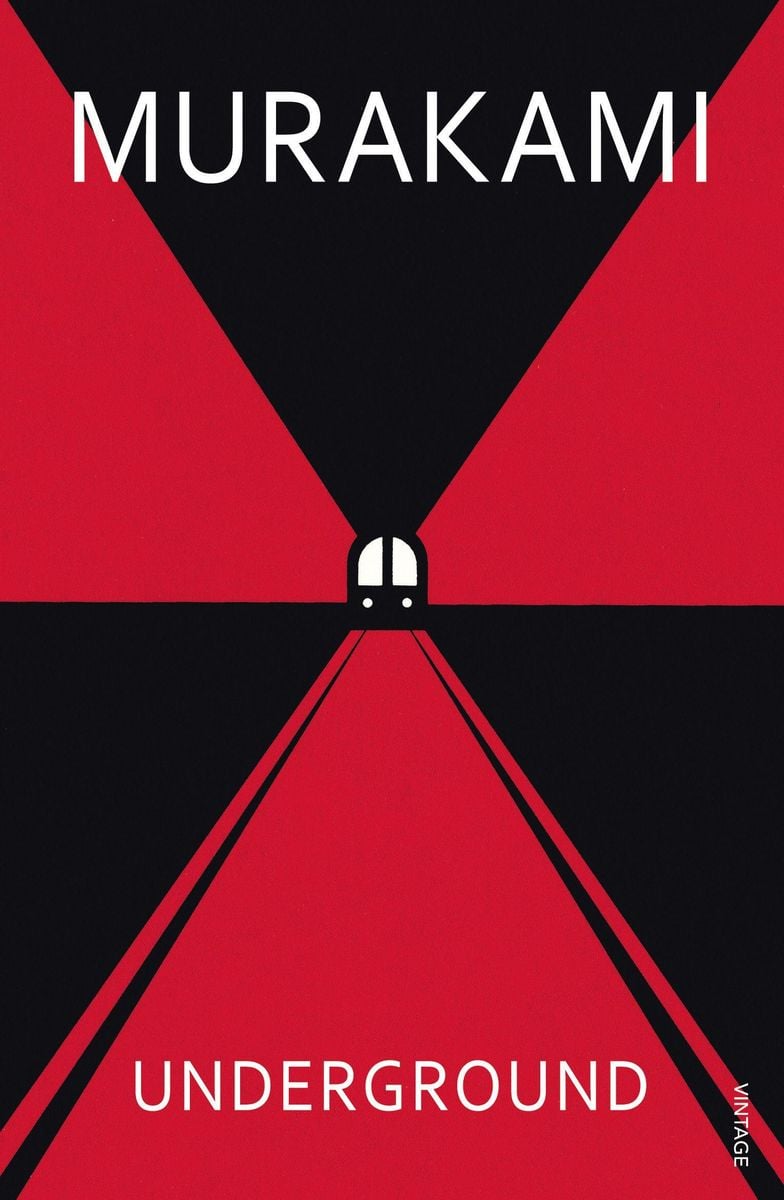
In the labyrinth of human experience, memory often serves as both a guide and a ghost, revealing and concealing the shadows of trauma beneath the everyday façade. “” delves into this intricate interplay, unpacking the layers of collective and personal pain embedded within Haruki Murakami’s acclaimed work. this book invites readers to navigate the delicate corridors of remembrance and silence, shedding new light on how trauma imprints itself on consciousness and narrative.As we embark on this critical journey, we are urged to reconsider the boundaries between history and memory, fact and fiction, in Murakami’s poignant exploration of Japan’s subterranean scars.
Unveiling the Depths of Trauma Through Murakami’s Narrative Lens and Its Impact on Collective Memory
Murakami’s approach to trauma weaves a delicate interplay between personal anguish and communal consciousness, allowing readers to traverse beyond mere historical recounting into the intimate emotional landscapes shaped by tragedy. His narrative lens captures the residual echoes of the Tokyo subway sarin attack, not simply as an isolated event, but as a prism through which collective memory fractures and reconstructs itself.Through meticulous interviews and poetic prose, he exposes how trauma imprints upon individual psyches, distorting time and sense, while together forging a shared space where silence, pain, and resilience coexist.
The infrastructure of memory in Underground can be envisioned as a dynamic mosaic, composed of fragmented stories and human experiences that challenge the limits of language and remembrance. in exploring these fragments, Murakami reveals several pivotal themes:
Best-Selling Books in This Category


- The duality of victim and perpetrator, blurring simplistic notions of evil.
- Quiet endurance amid chaotic destruction, spotlighting subtle acts of survival.
- Disconnect between personal grief and societal acknowledgment, suggesting collective amnesia.
These elements converge to illustrate how trauma, while deeply private, becomes a collective catalyst-shaping not only how history is remembered, but also how societies negotiate identity and healing across generations.
| Aspect | Representation in Underground | Impact on Collective Memory |
|---|---|---|
| Personal Testimonies | Voices of survivors and witnesses | Humanizes abstract tragedy |
| Silence & Absence | Unspoken fears and gaps in narrative | Highlights societal discomfort |
| Time & Temporality | Nonlinear recounting | Mirrors fragmented memory |
Tracing the Interwoven Layers of Personal and Social Trauma Within the Chronicles of Underground Experience
Within the tangled narratives of Murakami’s Underground, trauma is not merely an individual affliction but a shared, almost communal experience that ripples through the social fabric.The interviews weave together voices marked by both personal scars and collective wounds, revealing how memory operates as a bridge linking the self with society.Here, trauma manifests in multiple dimensions-psychological, cultural, and historical-each layer feeding into the next, creating a dense web of pain and resilience. These testimonies unfold like shards of a fractured mirror, reflecting the complex interplay between deeply personal loss and the pervasive trauma etched into the nation’s consciousness.
key aspects explored within these layers include:
- How individual memories are shaped by social narratives and vice versa
- The role of silence and speech in processing and preserving traumatic experiences
- The intersection of personal grief and political instability in post-crisis Japan
| Layer | Characteristics | Impact on Subjects |
|---|---|---|
| Personal | Emotional responses, fragmented memories | Deep psychological distress, private sorrow |
| Social | Collective silence, shared trauma narratives | Identity shaping, community cohesion or fractures |
| Cultural | Historical trauma, national mythologies | Generational memory, societal healing or denial |
Analyzing the Subtle Use of Symbolism and Metaphor to Convey Unspoken Emotional Realities in the Text
Murakami’s narrative mastery lies not only in the stories told but in the spaces left intentionally silent-spaces where symbolism and metaphor breathe life into the unspoken emotional landscapes of his characters. Subtle elements like the recurring image of tunnels or underground pathways become powerful conduits for the exploration of trauma,memory,and the collective psyche scarred by the sarin gas attacks. These metaphoric subterranean journeys mirror the characters’ internal efforts to navigate the labyrinth of suppressed memories and emotional wounds. Rather than direct exposition, Murakami uses these symbols to evoke a sense of lingering unease, the invisible weight of trauma that anchors itself beneath conscious thought.
Consider the delicate interplay between the seemingly mundane and the symbolically rich: everyday objects-such as clocks frozen at a particular hour or a broken radio emitting static-transform into poignant reflections of fractured time and disjointed dialog within the narrative. This metaphorical layering enables readers to perceive the emotional undercurrents without explicit description. Key symbolic motifs serve as emotional signposts, guiding the reader through the complex terrain of pain and resilience.
- Tunnels and underground passages: Represent the hidden recesses of memory and trauma.
- Frozen clocks: symbolize moments where time seemingly halts amid crisis.
- static noise: Evokes the garbled, often incomprehensible nature of emotional pain and disconnection.
| Symbol | Emotional Reality |
|---|---|
| Tunnel | repressed trauma |
| Frozen Clock | Time suspended at trauma |
| Static Radio | Isolation and miscommunication |
Exploring the Role of Memory Reconstruction and Fragmentation in Shaping the Reader’s Understanding

Murakami’s narrative deftly weaves memory reconstruction into a tapestry that challenges readers to navigate the fragmented nature of trauma. Rather than presenting a linear, cohesive recollection, the stories emerge as patchworks-snippets of experiences colliding with moments of silence and ambiguity. This deliberate fragmentation mirrors how survivors process their pasts: pieces held together by emotional resonance rather than chronological certainty.As readers piece together these shards, they are invited into an active role, becoming archaeologists of memory, sifting through layered narratives to discover meaning beneath surface-level recollections.
The interplay between recall and omission is further accentuated through the juxtaposition of vivid detail and vague allusions, underscoring the unreliability and malleability of memory itself. This dynamic is encapsulated in the following breakdown of narrative elements and their impact on reader perception:
| Element | Effect on Reader | Example |
|---|---|---|
| Fragmented timelines | Creates disorientation,reflecting trauma’s disruption | Non-linear interviews and flashbacks |
| Inconsistent details | Challenges truthfulness,inviting skepticism | Contradictory survivor accounts |
| Ellipses and silence | Emphasizes what is unspeakable or forgotten | Gaps in storytelling,hesitations |
by engaging with memory not as a fixed archive but as an evolving,frequently enough fractured construct,readers gain a nuanced understanding of how trauma reshapes identity and perception. This exploration fosters empathy, as one begins to appreciate the complex, sometimes contradictory ways in which individuals bear witness to their own histories.
Examining Murakami’s Portrayal of Survivors’ Voices and the Ethics of Bearing Witness to Trauma
Murakami’s narrative approach delicately navigates the complex terrain of survivors’ testimonies, capturing their voices with a profound sense of respect and subtlety.Rather than imposing a singular interpretation, he allows each individual’s story to resonate on its own terms, underscoring the fragmented and often elusive nature of trauma memory. This method challenges readers to confront the discomfort of partial truths and silences, emphasizing that bearing witness is less about definitive answers and more about acknowledging pain without distortion or appropriation.
In presenting these recollections, Murakami seems aware of the ethical responsibility entailed in recounting others’ suffering. His work subtly prompts reflection on the limits of empathy and the dangers of voyeurism, advocating for a stance of humility and attentiveness. The following table highlights key ethical considerations illustrated through his narrative approach:
| Ethical Dimension | Murakami’s Portrayal |
|---|---|
| Respect for Survivors’ Agency | Stories left open-ended, avoiding imposed closure |
| Authenticity vs. Interpretation | Emphasis on raw testimonies rather than authorial commentary |
| Silence and Memory Gaps | Recognition of what is unspeakable or forgotten |
| Reader Engagement | Invites active listening over passive consumption |
The Intersection of Historical Context and Individual Storytelling as a Framework for Healing and Awareness

History and personal narrative intertwine seamlessly in Murakami’s Underground, creating a powerful tapestry where collective trauma is both chronicled and humanized. By framing individual testimonies against the backdrop of the 1995 sarin gas attack on Tokyo’s subway, Murakami transcends mere reportage. This layering compels readers to confront how historical events ripple through countless lives, shaping identities and memories that often go untold or misunderstood. The rawness of personal perspectives breathes life into facts,transforming them from static history into a dynamic,living dialogue that fosters empathy and awareness.
Utilizing such a framework encourages a nuanced exploration of healing, one that acknowledges trauma not only as an external event but as an ongoing internal process. It invites audiences to consider:
- The fragility of memory and its role in reconstructing personal and collective identity.
- The multiplicity of voices that defy singular narratives or simplistic interpretations.
- The space for reconciliation between what is remembered and what is suppressed.
In this way, Murakami’s work serves as both a mirror and a window – reflecting the scars etched into a society while offering a pathway toward understanding and healing.
| Element | Role in Healing | Impact on Awareness |
|---|---|---|
| Personal Testimony | Authenticity and emotional connection | Humanizes abstract history |
| Historical Context | Provides structure and scope | Encourages societal reflection |
| Memory | Facilitates processing of trauma | Highlights complexities of experience |
Assessing the Narrative structure and Its Effectiveness in Balancing Factual Account and Literary Expression
Murakami’s narrative weaves a delicate tapestry where stark, factual recounting of the Tokyo subway sarin attack coexists with deeply introspective literary expression. The book’s dual structure – combining meticulous interviews and personal essays – allows readers to navigate the collective trauma while simultaneously exploring the intimate, often fractal nature of memory. This approach resists a linear timeline, opting instead for a mosaic of perspectives that lend a haunting fluidity to the recollections. Such structural choices emphasize that memory is not merely a fixed archive but a living, sometimes evasive, entity shaped by emotion and subjective experience.
Within this framework, several elements contribute to the work’s resonance:
- Juxtaposition of voices: Survivors, witnesses, and experts each articulate parts of the puzzle, allowing factual data to be refracted through diverse human lenses.
- Fragmented chronology: Disjointed timelines mirror the disrupted consciousness of trauma survivors, reinforcing the book’s thematic core.
- Philosophical musings: Murakami’s reflective prose subtly blurs the boundary between reportage and art, inviting readers to ponder the ephemeral nature of life and memory.
| Aspect | Factual Account | Literary Expression |
|---|---|---|
| Voice | Objective, varied interview testimonies | Evocative, reflective narration |
| Tempo | Measured, documentary pacing | Fluid, poetic rhythm |
| Purpose | Inform and archive | Illuminate emotional truth |
How Beneath the Surface Invites Reflection on Trauma’s Lingering Effects Beyond immediate Events

Murakami’s narrative challenges the reader to look beyond the immediate shock of traumatic events, emphasizing the persistent shadows they cast over individual lives and communities. Rather of confining trauma to a singular moment, the text reveals how it seeps into daily existence, altering memories and reshaping identities in subtle, frequently enough invisible ways. Through intimate testimonies and reflective prose, the work illustrates that trauma is not only an event but an enduring presence that continues to influence emotions, behavior, and relationships long after the initial incident has faded from public discourse.
This ongoing impact manifests in various forms-emotional numbing,fractured recollections,and even involuntary silences-reminding us that healing is neither linear nor uniform. Key aspects highlighted include:
- The tension between remembering and forgetting
- How collective memory shapes personal grief
- The subtle ways trauma infiltrates daily routines
| Dimension | illustration in Text | Lingering Effect |
|---|---|---|
| Memory Distortion | Conflicting personal accounts | Blurred past and present |
| Emotional Aftermath | Recurring feelings of anxiety | Persistent unease |
| Social Silence | Unspoken shared pain | Isolation within community |
Practical Recommendations for Readers Seeking to Engage Critically and Compassionately With Trauma Literature

Engaging with trauma literature demands a delicate balance of critical analysis and empathetic understanding. Readers should approach Murakami’s Underground with openness to the fragmented realities presented by survivors, recognizing that trauma frequently enough resists neat narratives or closure. To deepen engagement, consider highlighting instances of silence and pause within the testimonies-moments where words fail or emotions linger beneath the surface. These spaces speak volumes about the lived experience of trauma beyond explicit description. Additionally,maintaining awareness of cultural context enriches interpretation,as trauma is not only personal but intricately tied to societal memory and collective identity.
- Practice active listening: absorb stories without rushing to judgment or solution.
- Reflect on your positionality: examine how your background shapes your reception of the narratives.
- balance critique with compassion: question representations carefully while honoring survivors’ voices.
- Engage with supplementary materials: explore historical accounts,interviews,or psychological studies to broaden context.
When analyzing characters’ recollections and Murakami’s narrative choices, charting emotional responses can illuminate the text’s impact. The following table offers a simple framework to map key emotional themes against moments in the book, fostering a structured yet empathetic reading practice:
| Emotional Theme | Representative passage | Reader reflection |
|---|---|---|
| Silence & Loss | Unspoken fears after the sarin attacks | What does the absence of explicit trauma reveal? |
| Resilience | Testimonial endurance and survival stories | How does resilience reshape personal and collective memory? |
| Disorientation | Fragments of disjointed memories | In what ways does fragmentation mirror trauma itself? |
Comparing Beneath the Surface to Other Works on Trauma to Highlight Its Unique contributions and Limitations

Unlike many trauma narratives that frame memory as either a linear recounting or a fragmented chaos, murakami’s Underground adopts a delicate balance between these extremes by weaving personal testimony with cultural reflection. While works like Cathy Caruth’s Unclaimed Experience emphasize trauma’s ghostly return through repetitive breakdowns,Murakami’s approach foregrounds the conscious negotiation of memory,particularly through ordinary voices resisting both erasure and sensationalism. This positions Underground uniquely as a literary ethnography, where the aftermath of trauma does not solely belong to the individual psyche but to the collective societal fabric, highlighting how memory and trauma persist beneath everyday life.
Though,such strengths come paired with certain limitations. Whereas clinical texts or more explicitly analytical works dissect trauma’s psychological mechanisms in detail, Murakami’s narrative leans on the emotive power of storytelling and witness testimony, sometimes sacrificing deeper theoretical critique for ambiance and empathy. The following table sketches a brief comparison to clarify where Underground breaks ground and where it yields to other modalities:
| Aspect | Underground | Typical Trauma Works |
|---|---|---|
| Narrative Style | Testimony-driven, poetic | Clinical or fragmented |
| Focus | collective memory & cultural layers | Individual trauma experience |
| Analytical Depth | Moderate, implicit | High, explicit |
| Emotional impact | Subtle, immersive | Intense, direct |
In essence, while Underground may not serve as a clinical guide to trauma’s psychological terrain, its unique strength lies in capturing the interstitial spaces where memory, identity, and society intersect-an evocative realm that many trauma narratives overlook. Embracing this vantage enables readers to perceive trauma not only as a wound but as a persistent echo woven into the mundane rhythms of life.
Implications for Educators and Therapists Using Murakami’s Work as a Tool to Understand Memory and Healing

Murakami’s intricately woven narratives offer educators and therapists a profound lens through which the complexities of memory and trauma can be explored. His characters often navigate fragmented recollections and suppressed pain, mirroring the non-linear and deeply personal nature of healing.This approach encourages professionals to embrace a more nuanced understanding of how individuals process traumatic events,emphasizing patience and empathy over rigid methodologies. Utilizing Murakami’s work as a pedagogical or therapeutic tool enables the incorporation of storytelling techniques that validate silenced voices and foster a safe space for emotional exploration.
In practical settings, Murakami’s portrayal of memory’s fluidity highlights the importance of recognizing diverse healing trajectories in both education and therapy. Professionals can draw from this to craft interventions that respect individual timelines and cultural contexts. Here are some key takeaways for applying his work thoughtfully:
- Emphasize narrative reconstruction: Encourage clients or learners to frame their experiences in ways that make sense to them personally.
- Honor ambiguity: Accept the uncertainty and complexity within memories rather than pushing for clear-cut resolutions.
- Promote creative expression: Use mediums like writing or art inspired by Murakami’s style to unlock subconscious insights.
- foster relational safety: Build trust that mirrors the compassionate attentiveness found in Murakami’s empathetic storytelling.
| Aspect | Murakami’s Influence | Submission |
|---|---|---|
| Memory | Fragmented & subjective | validate personal recall over objective facts |
| Trauma | Lingering, often unspoken | Create spaces for indirect expression |
| Healing | Non-linear & unique | Adapt pacing and methods to individual needs |
| Communication | Metaphorical & poetic | Use creative tools to deepen understanding |
Profiling the Author behind Beneath the Surface and Their Contribution to Contemporary Trauma Studies

In peeling back the layers of , we find a work as complex and haunting as the memories it seeks to unravel. The book invites us to sit quietly with discomfort,to listen to stories that ripple beneath the calm surface of everyday life. Whether you’re a Murakami devotee or a newcomer to his shadowed worlds, this exploration offers a thoughtful lens through which to examine how trauma shapes not only individual lives but collective memory itself. As the final page turns, the echoes of those submerged truths linger-urging us to look closer, listen deeper, and perhaps understand a little more about the invisible wounds that bind us all.