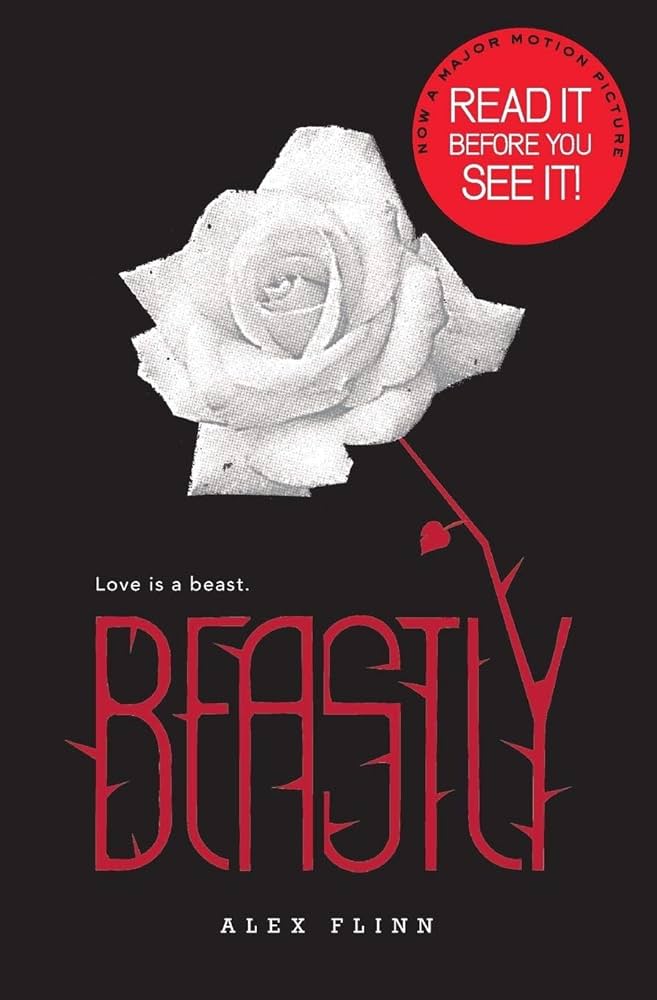
I picked up Beastly on a rainy afternoon expecting a light retelling adn ended up reading well past my planned bedtime. What struck me first was how natural the voice felt — conversational, a little salty, and unmistakably teenage — which made the whole story land like a conversation with someone honest about their mistakes.If you’ve ever rolled your eyes at YA retellings, this one might surprise you: it keeps the fairy-tale bones but places them in a recognizable, messy present.That combination is why I still find myself recommending it to friends who think they’ve outgrown modern fairy tales.
Beauty and the Beast reimagined in a gritty Manhattan high school with rooftop secrets

Reading Beastly feels like wandering into a secret part of the city: the hallways of a Manhattan high school are harsh and fluorescent,but the rooftop — where confessions and unlikely alliances happen — is quiet,wind-blown,and oddly intimate. Alex Flinn turns the fairy-tale beats into something gritty and immediate: Kyle’s cruelty and the way his world collapses around him after the curse hit harder as everything else felt so familiar — the jocks, the cliques, the casual cruelty of popularity. Lindy isn’t a distant moral ideal; she’s practical, stubborn, and oddly convincing as the person someone like Kyle might actually learn from. those rooftop scenes, with the city skyline as a kind of witness, give the story its most surprising tenderness.
I loved the book’s voice — it’s sharp and readable, with small moments that stick long after you close the pages — though the middle dose slow down now and then and a few supporting characters could use more room. What stayed with me was how the modern details make the old story feel urgent: humiliation via peers, the hunger for second chances, and how beauty and ugliness play out in public and private. A few highlights that felt true to me:
Best-Selling Books in This Category
- Vibrant Book Review Bookmarks: features 10 soft morandi colors, each includes 10 book markers; These elegant and friendly colors help you quickly locate pages and reduce visual strain, suitable for readers and as thoughtful gifts

- Colorful Design:Our reading markers set contains 8 different bright colors, with 15 bookmarks for each color. Bright but not dazzling colors can not only stand out between your pages, allowing you to quickly track the last reading section, but also relax your eyes and make you feel good

- Book Lovers Gift: Our book review notepad is designed with ample space for readers to jot down their thoughts, impressions, and critiques, making it the perfect companion for any book lover
- Lindy’s practicality and warmth, which make the romance feel earned
- The rooftop as a liminal space where masks come off
- The way modern social cruelty replaces enchanted wolves and thorns
Ultimately it’s a YA fairytale with teeth — not flawless, but emotionally honest, and surprisingly comforting in its belief that people can change if they’re forced to look at themselves.
Kyle and Lindy chemistry shown through stolen glances and late night makeovers
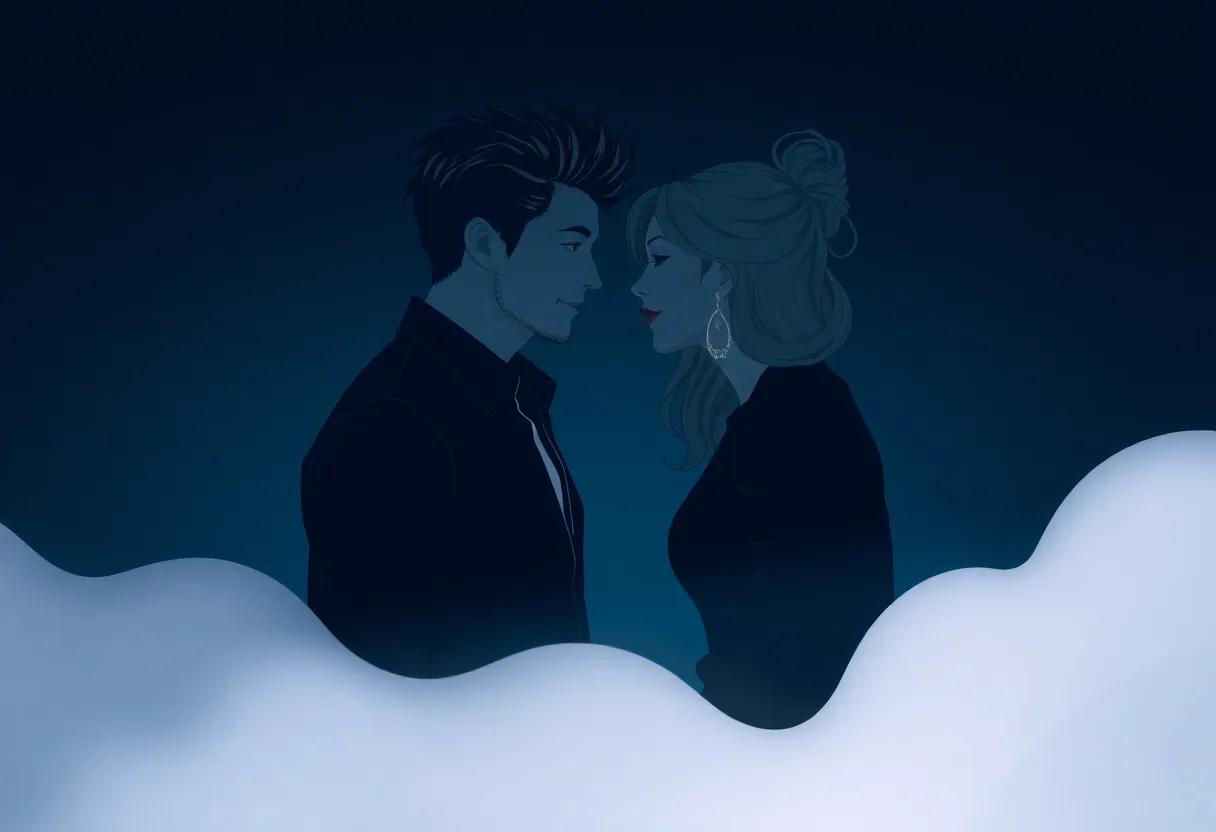
What stayed with me most was how the romance sneaks up on you in the quiet moments — a saved look across a room, a half-smile that lingers, the sudden heat of awareness when they’re caught in the same small space. Alex Flinn trusts those tiny beats to carry the feeling that Kyle and lindy belong together; their attraction is built more from small, honest details than grand declarations. Those stolen glances feel real because they’re messy and unsure, the kind of attention that both thrills and scares teenagers, not polished movie love at first sight but something more believable.
The “late-night makeovers” — sometimes literally when they fumble with hair and clothes, sometimes figurative when they strip away defenses in whispered conversations — are where their chemistry deepens. It’s in the awkward laughter, the accidental touching of hands, the way one confesses an insecurity and the other surprises them by staying. A few moments verge on melodrama and the pace slips occasionally, but the intimacy mostly lands:
- furtive looks that say more than words
- shared silliness in private, when masks drop
- those quiet, supportive gestures that change a person
These scenes make them feel like a real couple forming, fragile but honest, which is what keeps the story lingering after the last page.
The modern curse shown with mirrors tattoos and a wolfish mask in moody moonlight

I loved how the curse isn’t delivered on velvet pillows but mirrored in modern things we all recognize: the harsh glare of a glass screen, the permanence of inked skin, a wolfish mask you can pull on to survive the street. Those images—mirrors that reflect more than faces, tattoos that look like trophies and wounds at once, and the animal mask under a moody moonlight—turn a classic fairytale beat into something gritty and immediate. It feels less like a distant myth and more like a rumor that could be whispered between classes or uploaded as a photo, which gives the book an intimacy that surprised me.
Reading it, I kept getting little jolts of sympathy where I expected only horror or shame; the beastliness here is as much about pride and loneliness as it is about looks. Sometimes the middle drags a bit—there are moments where the trapdoors of teenage melodrama open a little to frequently enough—but the imagery keeps pulling me back. What stuck with me most was how those symbols do the emotional work:
- mirrors that demand truth;
- tattoos that refuse to be forgotten;
- a mask that both protects and isolates.
They make the curse feel oddly human: painful, visible, and strangely tender in small, crooked ways.
Side characters who feel like high school archetypes painted with surprising warmth
Reading Beastly, I kept noticing how the supporting cast could have been one-note—yet Flinn gives them little moments that make them feel real.The kids who orbit Kyle read like textbook high school types at first: the popular clique, the loyal buddy, the scorned ex—but a sentence, a gesture, or a private admission peels back the stereotype and shows a person who’s scared, petty, protective, or unexpectedly kind. Those flashes don’t rewrite the characters into fully formed backstories, but they sprinkle warmth on what could have been flat caricatures and make the school setting feel lived-in instead of just theatrical.
I especially liked how small scenes with side characters change the mood without slowing the story—sometimes a beat of humor, sometimes a tug of sympathy. A few moments do drift into familiar tropes,and occasionally I wanted more depth,but overall they serve the romance and Kyle’s transformation well. A rapid snapshot of the types that stuck with me:
- The popular kid who still craves approval beneath the swagger.
- The loyal friend whose loyalty reveals tender limits.
- The mean-girl who isn’t evil so much as hurt.
- The quiet outsider who offers unexpected perspective.
These smaller players don’t steal the show, but they give the story texture and remind you that even archetypes can surprise you with a little humanity.
How redemption and punishment play out in classrooms and quiet backyard apologies

Reading Beastly, I kept coming back to how punishment plays out where everyone can see it — the classrooms, the hallways, the text-message gossip that feels like a modern-day pillory. Kyle’s curse is dramatic, yes, but the book does something quieter and meaner: it shows how a single cruel attitude ricochets through a school. I felt that public shaming and enforced exile are treated as both outcome and spectacle; classmates become jury and audience, and small mercies — a teacher who doesn’t humiliate, a peer who answers a question for him — register as tiny, fragile steps toward repair. Those moments made me believe that redemption here is not instant or theatrical, but earned in slow, awkward stages.
Where the novel really softens, though, is in the private apologies that happen offstage — backyard confessions, late-night phone calls, the awkward fumbling of words when someone finally admits they were wrong. Those scenes felt true: apologies that are half-said, backed up by actions rather than grand speeches, and tested by the ordinary routines of life. I liked how Flinn shows that real change looks less like a dramatic transformation and more like persistent, small acts — listening without interrupting, showing up when it’s inconvenient, making reparations rather of excuses. Those tiny, stubborn gestures are what made me believe in the possibility of forgiveness, even when the pacing sometimes skimmed past the messy middle of learning to be better.
The voice of the narrator blending teenage sarcasm with fairy tale tenderness

Reading Kyle’s voice is like eavesdropping on a teenager who’s read too manny romance novels and too much sarcasm for his own good — one minute he’s cracking a joke at his own expense,the next he’s startlingly sincere about loneliness. That blend of snark and softness makes the fairy-tale moments feel lived-in rather than staged: when the story leans into tenderness, the language loses its defensive edge and you can feel how genuinely surprised he is by kindness. Occasionally the sarcasm overstays its welcome and a joke will snap you out of a quietly beautiful scene, but more often it’s the thing that keeps the book from drifting into saccharine territory.
I kept thinking the voice is what makes this retelling stick for modern teens — it’s familiar without being juvenile, and honest without being cruel. The shifts aren’t always seamless, but the payoff is real: you start by rolling your eyes and end by feeling protective. A few moments that stuck with me:
- the early bravado that reads like a shield
- a slow, awkward tenderness that arrives like a surprise
- the small, everyday acts of growth that feel earned
In short, Kyle’s narrator wears sarcasm like armor, but the tenderness underneath is what turns a familiar fairy tale into something quietly affecting. It’s messy, sometimes funny, and ultimately human.
Pacing that alternates between brisk school days and slow emotional reckonings
There’s a pulse to the book that feels almost like a school bell: scenes in corridors, classrooms and parties move with a brisk, almost gossipy energy — sharp dialogue, quick digs, and that rush of social momentum that makes teenage life feel urgent. Then the pace drops away into long, quiet stretches where the main character has to sit with what he’s done and who he’s become. Those slower sections are patient and inward, full of small, awkward reckonings and moments of vulnerability that wouldn’t register if everything stayed at the same tempo.
I found the back-and-forth oddly satisfying; the quick beats keep you turning pages while the slow ones let the emotional work actually land. Sometimes the shifts are a little jarring — a scene of prankish cruelty can snap into a reverent interior monologue faster than I expected — but that tension also mirrors how real teens move between performance and private shame. if you like stories that alternate between crowd-driven noise and intimate, careful feeling, expect:
- fast-paced social scenes that sketch the world quickly
- slower, quieter chapters that deepen the emotional stakes
- a rhythm that makes the character’s change feel earned, even when it slows things down
The use of metropolitan winter light to mirror inner change and lonely streets at dusk

Reading Beastly felt like walking through a city at dusk where the light itself keeps score of what happens inside people.Alex Flinn uses that metropolitan winter glow—the hard, tilted sun, the sodium lamps that halo abandoned sidewalks—to hold up a kind of mirror to Kyle’s slow unravelling and re-assembly. The streets feel empty in a way that isn’t just background; they reflect his isolation, the small admissions of shame and desire. Sometimes the descriptions skate close to being pretty on purpose, but more often they give the book a quiet honesty: the cold makes every small kindness look like warmth, and every slammed door echo a little louder.
What I loved was how those scenes used everyday city details to show inner change rather than announce it. Little things—the steam rising off a grate, a neon sign reflected in a puddle, a shadow that looks lonelier as night deepens—turn into emotional signposts. It makes the transformation feel lived-in, not just magical. A few moments do slow the pace with too much introspection, but mostly the winter light and lonely streets at dusk make the story feel intimate and believable by showing how the city itself seems to respond to people’s mistakes and small redemptions.
- fogged breath against a subway platform
- taxi headlights pooling like eyes
- a streetlamp that suddenly feels like company
Alex Flinn pictured as a storyteller with a warm smile and a stack of well worn pages
Reading Beastly feels like Alex Flinn has sat down across from you with a warm smile and a stack of well‑worn pages, telling the story like a friend who knows how to listen and how to tease out the heart of a moment. Her voice is conversational and quietly funny, the kind that lets you see how small cruelties build into character and how apologies can be clumsy and sincere at the same time. Kyle’s bad-boy vanity unravels in ways that are awkward and believable,and lindy’s steadiness never feels flat — she’s the kind of person who changes the room without grand gestures. The New York setting and the contemporary details keep the fairy tale from drifting into fantasyland; it stays grounded in everyday textures.
What lingers most is the tenderness underneath the plot: the reminder that people can surprise you, and that empathy often arrives slowly. There are a few predictable beats and a couple of pacing blips in the middle, but those moments don’t erase the warmth of the ending or the honesty of the characters’ growth. I find myself returning to certain passages, the ones that read like a favorite note folded into a book — familiar, honest, and quietly hopeful.
Why Beastly Still Matters
There’s a particular texture to reading Beastly: its modern voice wraps a familiar fairytale shape in moments that feel immediate and personal. The prose moves quickly, but certain lines and scenes linger, the kind that resurface when you least expect them.
What stays after the last page isn’t plot so much as mood — a mix of awkward tenderness,quiet regret,and a small,stubborn hope.It nudges readers to consider how we see others and ourselves, and the cost of transformation when it’s both literal and emotional.
This is a book that suits diffrent readers at different times: teens sorting identity, grown-ups revisiting adolescence, anyone who appreciates a retelling that asks gentle, persistent questions.Its resonance isn’t loud; it’s the kind that hums under daily life, inviting a pause now and then.