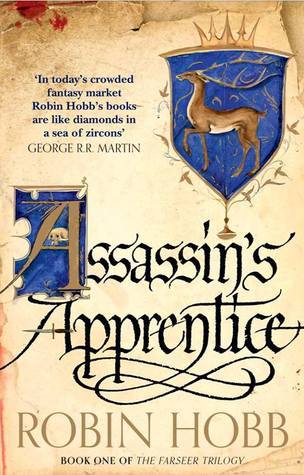
There are books that arrive like fireworks — loud, immediate, dazzling — and there are books that unfurl more like a careful map, revealing their contours one ridge at a time. Robin Hobb’s Assassin’s Apprentice belongs firmly to the latter category. Written as the opening note of a long, quietly ambitious saga, it places a single, reluctant life at the centre of an expansive courtly world, asking readers to move slowly enough to notice the small acts that shape a destiny.
What makes this debut distinctive is less spectacle than intimacy: a voice that lingers over the textures of loss, loyalty and learning; a world built through the patient accretion of detail; and a magic system that feels personal rather than theatrical. At the same time, its unhurried rhythms and focus on interiority can test the expectations of readers seeking constant plot propulsion. The result is neither flawless masterpiece nor mere apprentice work, but a richly crafted introduction that rewards those willing to read attentively.
In the pages that follow I’ll take a measured look at how Hobb balances character and craft, where the novel’s strengths most clearly shine, and where its choices may divide readers — all without surrendering the pleasures that made Assassin’s Apprentice a quietly influential entry in modern fantasy.
Opening the Gates of Buckkeep and Bingtown a close look at the immersive worldbuilding and tactile sense of place in the book
Best-Selling Books in This Category


- Amazon Kindle Edition
Robin Hobb builds setting the way a conservator restores a relic: with patient, exacting attention to surface and stitch. In Buckkeep you can feel the cold of flagstone corridors, the weight of tapestries, and the hush that comes from centuries of ceremonies—details delivered not as exposition but as contact points the reader can touch. Her prose privileges tactile specificity: a leather-bound ledger, the grit under a heel, the metallic tang of a sword—small things that aggregate into an entire social order. Those sensorial breadcrumbs make the castle less an abstract seat of power and more a body you can map by running your fingers along its seams.
Bingtown answers with salt and commerce: open quays, shouted bargains, fishy tang and rope-smell, where identity is negotiated in lanes and ledger-books rather than courts.Hobb uses geography to teach character—how a tight staircase in Buckkeep breeds restraint, how the open water around Bingtown encourages risk—and in doing so lets the reader understand politics and personality through place. The result is a world where places act like characters,shaping memory and choice,and where the lived details of home and harbor explain why a person becomes who they are.
- Texture: tapestries, salt-crusted ropes, worn leather
- Sound: creaking stairs, market calls, the far clang of armor
- Smell: hearth smoke, ink and vellum, sea spray
- Temperature: the chill of stone halls vs.the wind off the harbor
| Buckkeep | Bingtown |
|---|---|
| Ordered, ancestral, shadowed | Open, mercantile, salt-swept |
Fitz as a study in contradictions exploring vulnerability cunning and the slow burn of identity formation in a young royal bastard trained for shadows
Fitz moves through Robin HobbS world like a whisper that keeps becoming a shout—equal parts vulnerability and sharpened instinct. The novel delights in small, controlled reveals: a boy who is heir by blood yet an outsider by fate, learning how to turn his bruises into craft. He is soft where he must be tender and merciless where survival demands it; this tension is not resolved quickly, but lived, tested and remade. Consider the elements that pull him in opposing directions:
- Hidden lineage and public contempt
- Childlike need for affection versus trained detachment
- Naïveté that evolves into strategic patience
Each contradiction chisels him rather than breaking him, and Hobb’s prose lets these fractures glow, giving Fitz a humanity that feels earned rather than engineered.
What makes the arc quietly devastating is the slow burn of selfhood: identity here is an apprenticeship as much as any lesson in blades or poison. The book stages small tests—loyalty, secrecy, the cost of lying to oneself—and the accumulation of those tests becomes the architecture of a person. The following snapshot shows how core traits translate into survival tactics in the narrative:
| Trait | How it Shows |
|---|---|
| Royal blood | Doors closed and unexpected leverage |
| Shadow training | Silence as both weapon and refuge |
| Emotional tenderness | Motivation for long-term alliances |
This measured tempering—where cunning grows out of hurt and loyalty out of loneliness—turns Fitz into more than an assassin-in-training: he becomes a portrait of identity being slowly, inexorably forged in the dim places.
Intimate point of view and steady narrative voice how the vantage shapes empathy and keeps secrets while revealing interior conflict with restraint
Hobb’s choice of a tightly controlled, first-person vantage turns every whisper and bruise into a private currency between narrator and reader. The prose is both close and cautious: you are invited into the protagonist’s breath and misgivings but never handed every motive on a platter. That tension is deliberate — a narrative discipline that grows empathy by showing rather than explaining. Small structural choices compound the effect:
- Sensory focus — smells, aches and the weight of tools root emotion in the body.
- Selective memory — omissions become a form of character protection and dramatic fuel.
- quiet interior monologue — thought that circles rather of declaring deepens intimacy.
Each element nudges the reader toward understanding without collapsing mystery into exposition.
The voice keeps confidences by technique: it reveals the interior through implication, repetition and the careful withholding of certainty, so that secrets feel earned rather than manufactured. These strategies let internal conflict glimmer—small contradictions, a lingering sentence, a glance reinterpreted—so the reader assembles truth as the narrator cautiously admits it. The table below sketches how a few recurring techniques translate into the reader’s experience:
| Technique | Effect on Reader |
|---|---|
| Quiet confession | Uneasy empathy |
| Elliptical recall | Curiosity and doubt |
| Understated pain | Slow, accumulating revelation |
The result is a voice that reserves judgment, shapes sympathy, and keeps surprises intact—showing inner turmoil with restraint rather than spectacle.
Measured pacing and patient structure balancing training scenes political intrigue and quiet domestic detail to reward readers who savor slow revelations
Robin Hobb’s debut unfolds with a deliberate heartbeat: the long,patient training sequences teach the mind of the protagonist as much as they teach the reader to notice nuance,while the courtly maneuvers thread a slow tautness through every chapter.There is no frantic reveal—instead the novel rewards attention with staggered confidences,small betrayals,and domestic details that accumulate weight. Readers are invited to savor moments rather than rush them, and the book repays that patience in layers: the tactile rhythm of apprenticeship, the quiet dread of politics, and the warmth of ordinary rooms all compound into revelations that feel earned.
Those textures are reinforced by Hobb’s structural choices: short, deliberate beats alternate with longer, reflective passages so that intrigue never overwhelms intimacy.
- Training: incremental skill, slow confidence
- Politics: patient plotting, gradual exposure
- Domestic: small gestures, cumulative meaning
| scene Type | Primary Function | Reader Payoff |
|---|---|---|
| Training | Character craft | Empathy, credibility |
| Intrigue | Tension building | Slow-burning suspense |
| Domestic | Emotional grounding | Quiet revelations |
Each small scene functions like a tessera in a mosaic: alone it is indeed modest, together they resolve into a picture that only patience can reveal.
The two strange magics Wit and Skill explored as emotional technologies ethical burdens and tools for intimacy and alienation alike

Robin Hobb treats both Wit and skill as technologies of feeling — functional systems that extend perception and reshape relationships. The Wit reaches outward, letting a human become kin to a beast, fostering a language of scent and instinct that can be warmer and more embodied than ordinary speech; it is tenderness made practical but vulnerable to fear and social shame.The Skill folds others into a mental current, permitting counsel, command, and the intoxicating ease of shared thought; it offers clarity and coordination for politics and war while tempting domination. Consider how each operates on human needs and hazards:
- Wit — animal empathy, hidden intimacy, social stigma
- Skill — telepathic governance, strategic unity, ethical slippery slope
Both read like tools invented to measure love and power against the cost of exposure.
These magics are ethical burdens as much as gifts: one can use them to soothe and save or to bind and betray.Fitz’s life becomes a case study in how technology of feeling demands choices — secrecy to protect, transparency that destroys, consent that is rarely neutral. the moral ledger is messy, so here’s a brief contrast to hold in mind:
| aspect | Wit | Skill |
|---|---|---|
| Channel | Animal‑human bond | Human‑human mind link |
| Intimacy | Embodied, slow | Immediate, invasive |
| Main risk | Exile and cruelty | Control and addiction |
| Typical use | Companionship | Politics and command |
In the end Hobb suggests that any device for feeling — whether whispered to a wolf or shared across bloodlines — amplifies both closeness and loneliness, forcing characters and readers to reckon with love’s instruments as neither purely noble nor wholly corrupting.
Supporting cast as sturdy counterweights from mentor figures to rival claimants each relationship reframes Fitz and enriches the moral topology of the tale
Fitz only becomes legible against the people who orbit him: their loyalties, hypocrisies and quiet cruelty sketch the contours of the world he must navigate. Mentors like Burrich and Chade don’t merely teach skills — they anchor Fitz’s identity by offering conflicting blueprints for duty: one stubborn, earthly and corrective; the other shadowed, pragmatic and inscrutable. Opposing them are rival claimants and courtly predators whose very existence forces Fitz into ethical triangulation, weighing survival against honor, secrecy against truth. These relationships act less as wallpaper and more as counterweights, tilting the reader’s moral compass so that every choice Fitz makes feels like the only move available within a tightly sprung moral machine.
- Mentors — steadying hands that limit and guide.
- Friends — mirrors that reveal what Fitz might become.
- Rivals — provocations that test the boundaries of loyalty.
Read together, these roles form a lattice of pressure points: some relieve Fitz’s burden, others intensify it. The effect is architectural rather than ornamental — each ally or antagonist chisels a face onto Fitz’s conscience, transforming simple survival into a study of moral geometry. Even minor figures register as ethical fulcrums, forcing small reckonings that add up to seismic shifts in Fitz’s character arc, and making the novel less a single-minded apprenticeship than a gallery of perspectives that refract his actions into something complex and, humane.
| Name | Role | Moral Tilt |
|---|---|---|
| Burrich | Protector/Mentor | Practical, stern |
| Chade | Secret teacher | Moral ambiguity |
| Regal | Rival claimant | corrosive, self-serving |
Quiet but precise prose where simple sentences accumulate weight creating lyric moments of dread wonder and domestic tenderness without excessive ornament

The narrative voice moves with the economy of a hand that knows exactly where to rest. Short sentences act like careful footsteps across rooms and moors, each one doing a little work and adding to a slow, insistent pressure. Domestic details — a teacup, a scraped knee, the cadence of a household waking — are rendered without fanfare, and in the silence around them dread and wonder grow like things that have been left to their own devices. The restraint feels deliberate: language that refuses to show off, yet cannot help becoming quietly eloquent as small facts accumulate until a lyric ache or a cold shock is unavoidable.
- Economy: pared-back sentences that sharpen focus
- Accumulation: simple moments layered until they reverberate
- Domestic tenderness: intimacy born of mundane detail
- Tension and wonder: a slow fuse made of gestures and silences
| Effect | Signal |
|---|---|
| Intimacy | A quiet moment at a kitchen table |
| foreboding | A single, held breath in a corridor |
Reading the book feels like watching someone build a fragile house of memories: each beam is modest but exact, and when they are all in place the structure holds emotional weight you didn’t notice forming. The result is a voice that is both measured and humane — it trusts the reader to feel the pull of a sentence rather than demand it, and so those lyric flashes of dread, wonder, and tenderness land with the quiet authority of truth.
Themes of duty identity and belonging explored through small choices private loyalties and the slow costs of service that haunt the quiet ambitions of the book
In Hobb’s debut, identity is not forged in grand proclamations but in a steady series of quiet acts: the reluctant obedience to orders, the small mercies shown to a wounded animal, the secretive lie told to protect someone else. These miniature decisions accumulate into a life, and in that accumulation we see how characters carve out their sense of self. Private loyalties—to a king, a mentor, a found family—become the measuring rod for belonging, often asking for far more than they give back. The novel insists that who we are is as much a ledger of tiny, repeatable choices as it is the product of inheritance or title.
- Agreeing to obedience: a concession that secures trust but narrows freedom.
- Keeping a confidant’s secret: loyalty that anchors relationships and breeds solitude.
- Choosing silence over truth: protection that later becomes burden.
The cost of service is not sudden spectacle but a slow erosion: ambitions dulled by duty, tenderness shadowed by obligation, aspirations deferred by an unending list of small obligations. These are not dramatic betrayals but the melancholy of things repeatedly chosen until they feel inevitable. The book traces how such service haunts even the quietest hopes, turning personal aims into soft resentments and shaping a life that feels both honorable and quietly diminished.
| Action | Private Loyalty | Long-term Cost |
|---|---|---|
| Carry a command | Royal duty | lost autonomy |
| Conceal the truth | Friend’s safety | Growing isolation |
| Refuse personal desire | Service ethos | Stunted ambition |
Who will savor this book and how to approach it recommended for patient readers fans of character driven fantasy and those seeking moral complexity
this is a book for readers who don’t mind being led by character rather than spectacle — those who relish interior landscapes as much as physical ones. Patient readers, aficionados of slow-burn storytelling, and anyone drawn to the ache of moral uncertainty will find much to savor here.Consider whether you enjoy:
- Quiet, character-first narratives that prioritize growth over gadgets
- Stories where ethical choices feel heavy and unresolved
- Apprenticeship tales that unfold over long seasons rather than single acts
- Close, sometimes uncomfortable point-of-view intimacy
Treat the book less like a sprint and more like a conversation you want to stay in. Read slowly, give scenes breathing room, and let revelations accumulate; a few careful habits will deepen the experience:
- Annotate or bookmark passages—voices and small details reverberate later
- Track relationships and promises; hobb often rewards memory over recap
- Embrace ambiguity—moral complexity is deliberate, not sloppy
- Pair the book with patience: rereads and reflective pauses amplify its rewards
About the writer Robin Hobb her careful empathy long game narrative instincts and the origins of a career that reshaped modern epic character driven fantasy

Robin Hobb built a career on the quiet mechanics of feeling: sentences that tilt toward empathy, plots that advance by accretion rather than spectacle, and a patient faith in the long game. Her debut introduces a writer who measures result carefully, letting small acts—an apology, a withheld truth, a stubborn kindness—expand into irrevocable change. The result is fiction where interior life carries as much weight as political chess; readers are invited to witness growth rather than be dazzled by it, and the emotional architecture feels inevitable as it is indeed earned through sustained attention to character.
Her origins were unflashy but fundamental: years of short fiction, revisions at kitchen tables, and a shift from earlier pen-names toward a voice that insisted on being both intimate and expansive. That insistence helped reshape modern epic by proving that grandeur and intimacy are not opposites but partners; the genre responded by foregrounding interior stakes alongside sweeping plots. Key elements readers and writers continue to cite include:
- Patient pacing that lets consequence accumulate.
- Moral complexity where heroes and hurts coexist.
- Domestic detail anchoring the fantastic in the tactile.
| Early influence | Echo in her fiction |
|---|---|
| Folk tales & small communities | Close-knit casts with layered loyalties |
| Short-form discipline | Economy of detail that amplifies emotion |
like any long apprenticeship,reading asks for time and attention. It rewards patience with intimate character work and a world that unfurls at the same deliberate pace as its young protagonist grows—though readers in search of relentless plot momentum may find the tempo testing.
this measured debut balances quiet interiority with the threat of larger forces, and whether that balance charms or frustrates will depend on what you seek from fantasy. If you relish close, human-scale storytelling and don’t mind lingering in the margins, Hobb’s voice here is worth the seat at the table; if you prefer high-octane spectacle, you may come away admiring the craft but wanting more urgent sweep.
Either way, Assassin’s Apprentice remains a compelling beginning: imperfect, patient, and oddly persuasive. It won’t convert every reader, but it stakes a claim for those willing to listen to a story told in the small, sharp moments between danger and duty.