
I picked up The Body in the Library expecting the familiar comfort of a Christie puzzle, and almost immediately I was reminded how quickly her small, precise observations hook you. Reading it again felt like slipping into a once-frequented drawing room and noticing new things in the wallpaper — familiar, but with surprises that kept me turning pages.
If you’ve ever revisited a book you loved, you’ll know that mix of warm recognition and fresh outlook; that’s the angle I’m coming from in this short review. I’ll note what still clicks, what felt a bit dated, and why this particular Christie merits a second look.
A sleepy English village waking to the shock of a body laid in the library

There’s a peculiar jolt in the way Christie wakes the village: one ordinary morning of toast and papers, then a startling revelation that feels both absurd and utterly wrong — a young woman laid out in the Bantrys’ library, as if someone had strewn a stranger across the family portraits. I remember feeling oddly voyeuristic, peering into other people’s rooms through the pages, and yet the scene never loses its humanity. The shock is less lurid then persuasive; the violence is in the interruption of routine, in the hush that falls over cups of tea and ironing. At times the setup skates close to contrivance, but the detail of small-town manners makes the moment land hard and strangely believable.
Best-Selling Books in This Category

- Vibrant Book Review Bookmarks: features 10 soft morandi colors, each includes 10 book markers; These elegant and friendly colors help you quickly locate pages and reduce visual strain, suitable for readers and as thoughtful gifts

- 【Book Lovers Gift】 Our book review notepad is designed with ample space for readers to jot down their thoughts, impressions, and critiques, making it the perfect companion for any book lover

- Package Included: you will receive 120 double-sided designed kraft book review bookmarks, sufficient quantity to meet your reading needs, and share with your friend and teacher
After that first gasp, the village folds itself around the mystery in ways that are almost comforting — gossip, prayers, awkward sympathy, and the local constable trying to translate social codes into inquiry. A few things stood out to me:
- the bright, whispering gossip that feels like another character;
- the steady, almost comic attempts at propriety from well-meaning neighbours;
- the calm, uncanny clarity of miss marple when she arrives, seeing what others dismiss.
There’s a cozy cruelty to the setting: people will stare, they will speculate, and yet normal life keeps peeking through. Some secondary figures verge on caricature, which can undercut tension, but that very mix of charm and menace is what kept me turning pages — wanting to see how such a small, orderly world would explain away something so unignorable.
Dusty bookshelves and gaslight shadows where gossip and clues quietly mingle

Reading those scenes felt like standing in a dim parlor,watching dust motes spin in the pool of a gaslamp while neighbours sip tea and trade stories. The chatter — petty, affectionate, sometimes cruel — becomes a kind of low hum that you learn to listen to. Gossip in Christie’s hands is almost forensic: a stray remark, a remembered joke, a neighbour’s offhand observation slowly gathers weight until it starts to look like evidence. I kept catching myself paying more attention to the domestic small talk than to formal interrogations; it’s where the real pointing and shifting happens.
There are moments when those long,cozy set-pieces stretch the pace,and a few characters could use sharper edges,but the trade-off is the intimacy of the scene. The library’s ordinary clutter — cracked bindings, armchairs, the faint perfume on a handkerchief — becomes a quiet map of who people are and what they hide. A few tiny details stuck with me:
- a forgotten scrap of fabric
- an oddly placed book
- a smudge on the mantel that no one thought to mention
They’re small, domestic things that end up doing heavy lifting, and that steady, almost jealous attention to the homey particulars is what lets the mystery click into place for me.
The unexpected corpse as a puzzle piece that upends polite household routines

finding a dead body in a sitting room is more than a plot twist here — it’s a social earthquake. Christie loves to watch how a single, inexplicable object can turn everyday rituals into clues: afternoon tea becomes an interrogation, the maid’s polished steps become suspicious movements, and small talk collapses into thinly veiled accusation. As a reader I kept noticing the deliciously uncomfortable contrast between the neat, domestic world and the cold, absurd fact of a corpse laid out like a misplaced ornament; that tension is what turns the murder into a kind of macabre jigsaw piece that forces everyone to reveal how they really live and what they will say to keep up appearances.
There is a sly humor in the way characters cling to propriety even as their lives are dismantled, which made me laugh and shiver in equal measure. Christie uses social rules as much as fingerprints — manners, gossip, and routine become evidence in themselves — and while a few of the red herrings felt a touch overworked, the central trick of watching polite life upended never loses its bite. The result is an oddly intimate mystery: you come away thinking less about the mechanics of the crime and more about how fragile the polite veneer really is.
Guests and servants caught mid tea and whisper with stories to hide and tell
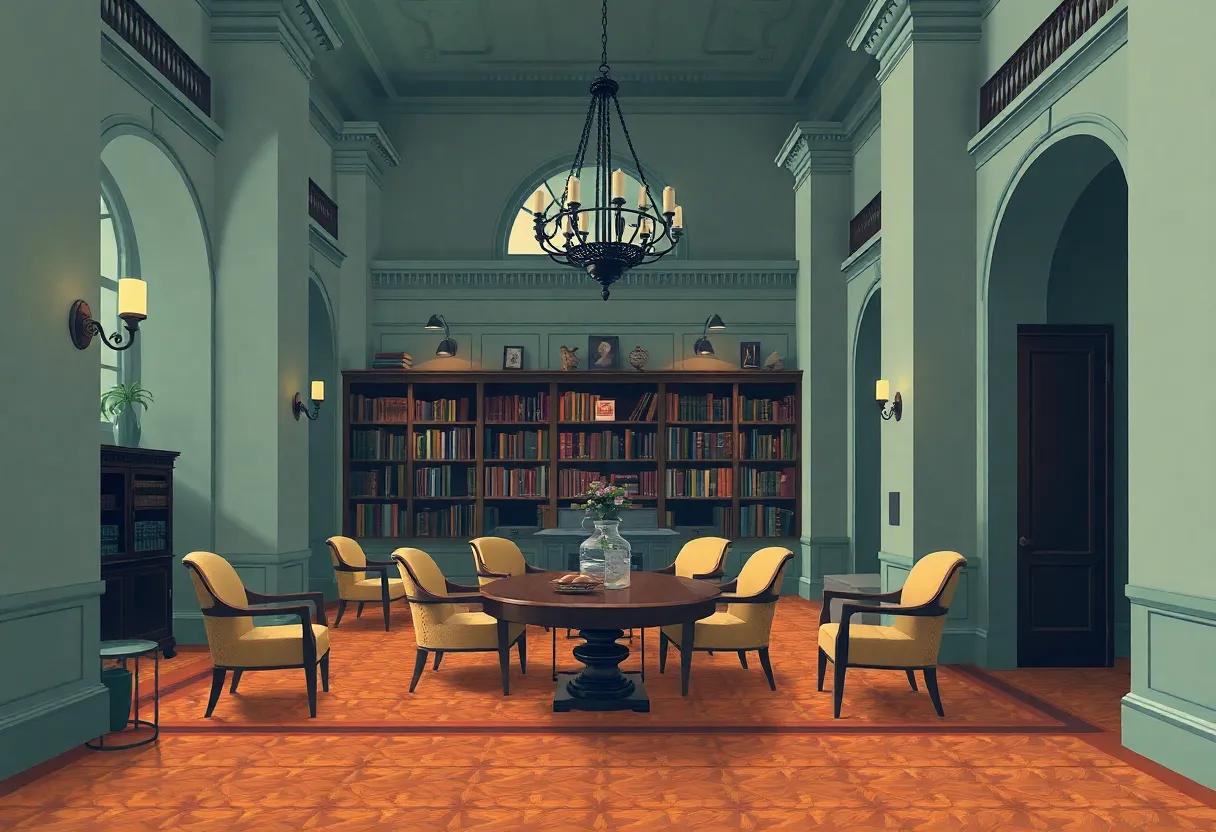
Walking into the Bantrys’ drawing room feels like stepping into a paused photograph: cups mid-air, servants frozen with teaspoons, guests leaning in with half-smiles. Christie has a knack for making the smallest domestic gestures feel loaded — a napkin folded too neatly, a curtsey that lasts a second longer — and those moments become almost loud with implication.I found myself eavesdropping on the scene as if I were another guest,noticing how gossip and the language of manners do as much work as any clue; whispers pass like currency between the upstairs and downstairs,and what people try to hide frequently enough says more than what they admit aloud.
I enjoyed the way ordinary intimacy — tea, tidying, the servant’s hurried glance — turns uncanny, though at times the parade of whispers slows the forward push and a few suspects feel sketched rather than fully shaded.Still, the book’s true pleasure is in those small domestic betrayals and the way Miss Marple (and the household) reveal lives in fragments: a chipped teacup, an overheard line, a servant’s nervous laugh. Those little things kept me turning pages even when the story paused for atmosphere, because they made the house feel inhabited and secret all at once.
Miss marple knitting in the corner while sharp eyes pick apart polite lies

There’s something quietly theatrical about watching Miss Marple sit with her needles, the steady click of knitting underlining conversations that are all sugar on the surface and rot beneath. As a reader I loved how Christie lets ordinary domestic details do the heavy lifting — a half-finished sock, the pattern she repeats, the way she compares a person to someone from a village gossip column. Miss Marple’s sharp eyes don’t flash like a spotlight; they just drift, catalogue, and return, and those small, patient observations chip away at the neighborhood’s carefully arranged smiles.
Her method of unpicking the thread of truth feels almost surgical: a casual question, a remembered phrase, a dropped gesture. Moments that might be dismissed as social niceties are exposed as polite lies, and watching them unravel is oddly satisfying. If I had a quibble, it’s that sometimes the solution hinges on coincidences that feel a touch convenient, but the gentle humor and the pleasure of seeing social facades fall make that forgivable. Little details that caught her eye — a scuffed shoe, an odd receipt, a misquoted Bible verse — are what stay with me long after the last page.
Plot turns that sneak behind curtains and keep you guessing in candlelight rooms

I kept thinking I knew where the next shoe would drop, and then Christie would slip a clue behind a curtain and I’d have to backtrack my assumptions. The mood in those drawing rooms and dim libraries is almost tactile — the hush of house parties, the polite small talk that masks something sharper, the way a dropped anecdote suddenly looks like a confession. Miss marple’s quiet observations feel like a flashlight in those candlelit corners: she notices the silly, domestic things that everyone else writes off, and those little details are exactly what send the plot veering in a new direction. I loved how the book trades on manners and appearances; the most ordinary remark can turn out to be the hinge of the whole mystery.
There are a few moments where the pace stalls — a few chapters that linger on alibis and interviews longer than I wanted — but the misdirections are mostly playful rather than frustrating. Small reveals arrive with the sort of satisfaction that comes from being pleasantly surprised rather than tricked. A few of my favorite sneaky turns were:
- a whispered rumor that reshapes a character’s motive
- a costume or prop that makes a face we thought we knew suddenly unreadable
- a casual lie that multiplies into something much darker
These elements kept me turning pages in the low light, always checking whether the next neat domestic detail was a red herring or the very thing that would untie the knot.
Pacing that strolls through afternoon tea and then races into midnight revelations

I loved how the book lingers in those small, comfortable moments — the clink of teaspoons, the polite silences, the kind of gossip that blooms over cakes.Those scenes feel lived-in: you can almost taste the tea and hear shoes on the hallway carpet. Miss Marple sits in the middle of it all, quietly watching people reveal themselves in the smallest gestures. That slow,domestic rhythm makes the world feel safe and oddly intimate; sometimes it even feels like the book is content to simply bask in the social niceties.If I had one quibble, it’s that Christie sometimes luxuriates in those details a touch too long, so the middle can feel pleasantly idle when you’re itching for forward motion.
Then, without warning, the story speeds up into something sharper and darker — secrets spill out, alibis crack, and the late-night conversations carry the weight of much more than gossip. The contrast between the gentle afternoon and the relentless midnight discoveries is what kept me turning pages: cozy domesticity one moment, tense unraveling the next. A few quick impressions that stuck with me:
- the comfort of the setting makes the sinister moments hit harder
- Miss Marple’s quiet logic slices through social façades
- the ending ties things up cleanly, though a couple of twists feel a touch rushed
the shift from leisured tea to urgent revelations felt thrilling — imperfect in spots, but very human and unexpectedly moving.
Period details from floral wallpaper to tweed coats that color the mystery scene
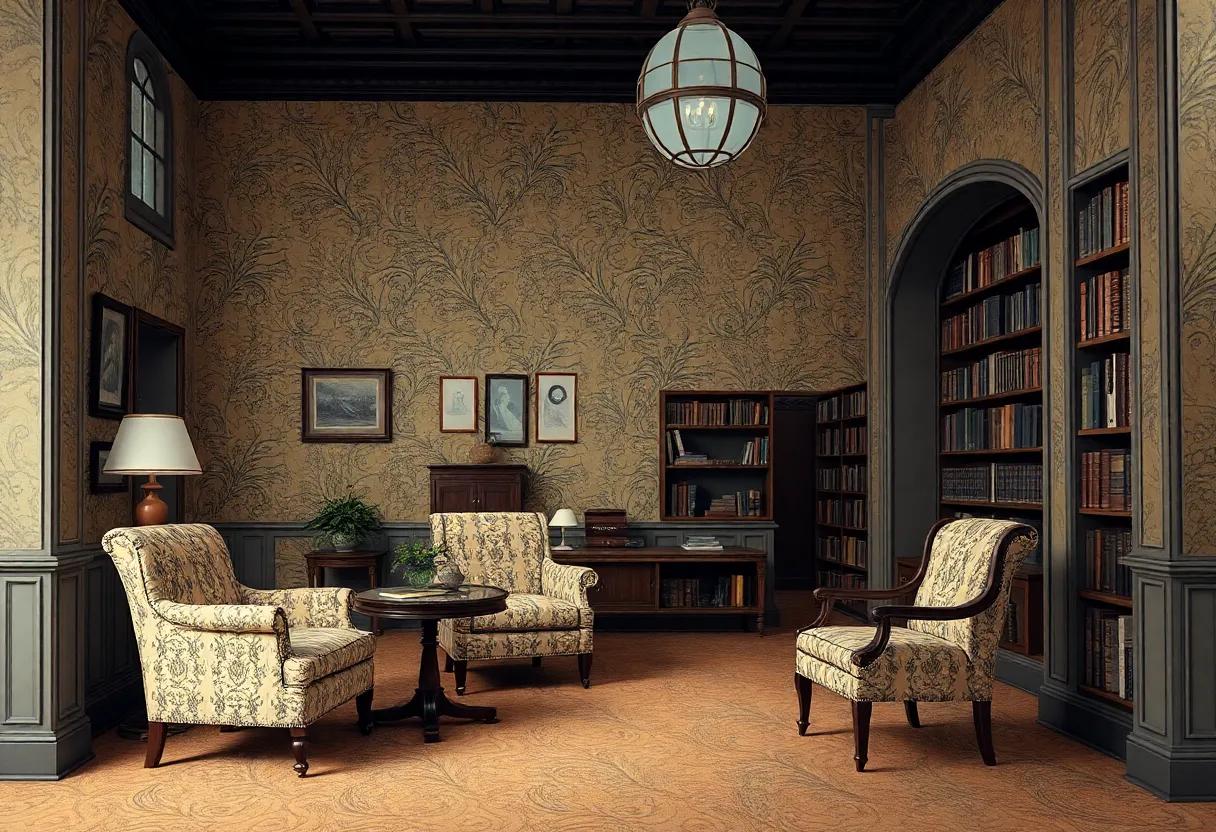
There’s a weird comfort in how Christie paints the rooms — the kind of domestic detail that makes the shock of a body in a drawing-room feel almost obscene. Floral wallpaper, doilies and the ritual of tea aren’t just backdrop; they press in on the reader, making the intrusion of violence more disturbing because it clashes with the expected gentleness of a house. I found myself noticing the small things long after finishing: a pattern that seems too busy, the way sunlight catches the edge of a carpet, the quiet choreography of servants. Those domestic markers become almost like fingerprints — familiar, reassuring, and suddenly suspect.
On the other side are the outward trappings of class — tweed coats, stiff collars, neat hats — which Christie uses like shorthand to place people quickly in your mind. Clothing becomes a kind of language: who belongs, who’s pretending, who could slip from one social sphere to another without anyone looking too closely. The book thrives on those visual cues, and while the constant attention to social niceties can slow the pace at times, it also makes the mystery feel lived-in. Little details — the rustle of tweed, the smear of lipstick, the careful arrangement of a brooch — kept nudging me toward possibilities I hadn’t expected.
Agatha christie the woman behind the puzzle with a life of travel and sharp wit

Reading The Body in the Library I kept noticing the woman behind the puzzle: Christie’s globe-trotting life and sharp wit quietly shape the whole scene. The village may be cozy, but the dialogue snaps with the kind of dry humor you get from someone who has watched diffrent manners in manny ports; small observations become clues to character rather than mere description. Miss Marple’s patient, unshowy intelligence feels like an echo of Christie herself—amused, attentive and not above exposing the petty hypocrisies of polite society.
Little telltales of her life and tone that kept catching my eye:
- a surprisingly cosmopolitan eye for detail in a very English setting
- short, bright exchanges that land like conversational asides
- a warm sympathy for ordinary people alongside a sharpness toward affectation
There are moments where the middle of the book slows and a few secondary characters verge on caricature, but those are small blemishes next to the pleasure of Christie’s voice: travel-hardened observation, sly humor, and an ability to turn everyday chatter into something revealing.
Reading The Body in the Library again felt like settling into an old armchair — familiar, a little witty, and just sharp enough to keep me alert. I left the pages with a mix of amusement and a mild, lingering unease that keeps me turning over small details in my head long after the lights are out.
This will likely sing to anyone who enjoys puzzles wrapped in polite society, or who likes mysteries that reveal character through manners as much as motive. For me it was less about answers and more about the pleasure of being led along — a gentle nudge toward exploring more of Christie’s slyly observant world.