A good book can feel like a room whose corners reveal themselves only gradually; Karin Slaughter’s Triptych opens a door and lets the light fall in unevenly, illuminating a story constructed in careful panels. Branded here as “A Haunting, Meticulously Woven Thriller,” the novel invites readers into a tightly controlled world of secrets, forensic detail, and the slow unpeeling of past wounds. From its first pages it promises precision—both in plot mechanics and in the way it examines the human cost of violence.
This review will trace how Slaughter assembles the novel’s pieces: the rhythm of its pacing, the design of its narrative structure, and the contours of the characters who carry the story’s moral weight. Without giving away the key turns that define Triptych’s suspense, the aim is to consider whether the book’s technical craftsmanship and emotional reach live up to the meticulousness the subtitle suggests—and what those qualities mean for readers who come to Slaughter for both shock and substance.
Atmospheric tension and setting that lingers long after the last page a vivid sense of place drives the suspense forward

silence settles like dust over Slaughter’s landscape: a place where fog moves through neighborhoods as if with intent, and the ordinary—porches, diners, schoolyards—takes on an accusing voice. The writing pins sensory details to the page so precisely you can smell the damp wood and hear the half-remembered footsteps; each small, domestic image becomes a pressure point, turning comfort into unease.The result is a world that feels lived-in and wounded, where atmosphere dose not decorate the plot but propels it, making every pause and whisper count.
Best-Selling Books in This Category

- Weather that mirrors mood—cold settling into bone
- rooms that hold secrets in their shadows
- ordinary objects reframed as evidence
The setting operates like a third protagonist, forcing choices and revealing truths; narrow streets, outdated records, and a town’s collective memory conspire to press the characters into corners where decisions are sharpened. Slaughter uses place to choreograph suspense—corridors lead to confessions, backyards to buried clues—so that tension is not merely psychological but spatial, mapped onto every step. It’s a texture that lingers after the last line, leaving readers with a vivid, unsettled image of where the story took them.
- geography as plot device—paths that intersect fate
- Memory and myth housed in familiar places
- Setting-driven reveals that reframe earlier scenes
Complex characterization and fractured relationships reveal human fragility beneath the thriller surface in careful layered portraits

Karin Slaughter peels back the varnish of suspense to reveal characters who are brittle at their cores—people whose survival strategies have become fractures. The narrative leans into small, devastating choices: what is confessed and what is buried, how silence can feel like protection and become its own danger. The result is a portrait of ordinary lives stretched thin, where the pulse of the thriller is measured not only in chases and reveals but in the quiet, corrosive toll of regret and unresolved intimacy.
Instead of treating relationships as plot props, the book makes them the engine of dread, mapping betrayals that ripple outward and loyalties that are tested until they splinter. Readers encounter:
- shame that calcifies into secrecy,
- friendships eroded by unspoken truths,
- parental love elaborate by past harms.
A simple inventory of the central strains makes the emotional architecture visible:
| Character | Fracture |
|---|---|
| Eva | Memory vs. self-preservation |
| Marcus | Guilt that silences |
| Lena | Betrayal disguised as care |
These layered tensions push the plot forward while insisting the reader keep watch over the fragile humanity beneath every twist.
Meticulous plotting and deftly timed revelations create a web of clues and misdirection that rewards patient attentive readers

Slaughter threads each scene with the precision of a watchmaker, slipping in tiny details that hum with significance only after the clock has run a little longer. The narrative teases answers and then withholds them,so that every casual observation can later snap into place as a crucial hinge. Patient readers are rewarded not just with plot payoffs but with the quiet thrill of recognition—those satisfying moments when disparate fragments click together and reveal a shape that felt inevitable in hindsight. Clues are planted, paths are closed, and motives are reframed, all without ever feeling contrived.
Much of the novel’s power comes from the timing of its revelations: a confession deferred until a single line of dialog, an image repeated until its meaning crystallizes, a background object that becomes a key.The result is a tapestry of misdirection that invites rereading and close attention, where the emotional stakes rise in tandem with the tightening plot. Attentive readers reap the rewards—not just surprises, but a deeper understanding of character and consequence.
- red herrings that sharpen, not frustrate
- Micro-details that echo later scenes
- pacing that balances revelation and restraint
| Clue | Payoff | Placement |
|---|---|---|
| A faded photograph | Reveals a hidden tie | Chapter 3 & 19 |
| A throwaway nickname | Clarifies motive | Interlude |
| An offhand comment | Shifts suspicion | Final third |
Atmosphere of unease and moral ambiguity where blurred lines between justice and vengeance complicate every investigation and decision

karin Slaughter conjures a constant, unsettled hum that threads through every scene, where shadows of doubt settle on the simplest facts and every motive can be read two ways. The book resists neat moral maps: protagonists and antagonists swap traits,victims harbor secrets,and even the evidence seems to whisper conflicting truths. This is not a world of tidy verdicts but of cumulative pressure—small choices and private grudges pile into catastrophic outcomes—so that by the time a case closes the reader is less certain about who was right and more aware of how thin the veneer of order really is.Right and wrong feel like moving targets, and Slaughter uses that instability to make every scene hum with consequence.
Investigations in Triptych are detective work and ethical minefield at once: procedures collide with personal vendettas, sympathy warps into complicity, and lawfulness can be indistinguishable from payback.the novel makes the mechanics of uncertainty one of its characters, forcing choices that are technical, emotional, and irrevocably human:
- Evidence that supports two opposing narratives
- Officers torn between duty and personal history
- communities that prefer closure over truth
- Perpetrators whose motives blur into survival
These elements keep decisions provisional and outcomes morally porous, so readers are left to weigh the cost of action against the comfort of inaction—there are no easy absolutes, only consequences that linger long after the last page.
Pacing that alternates breathless chase sequences with reflective quiet scenes balancing adrenaline and character driven emotional depth

Karin Slaughter choreographs momentum like a metronome that suddenly skips a beat — one moment you are hurled into a breathless chase,sprinting down rain-slick streets and through claustrophobic corridors as the prose tightens to a near-palpable pulse; the next,the narrative stutters into a hush where a single glance or a half-finished sentance carries more weight than any explosion. These transitions never feel like tricks; they are purposeful fulcrums that let the reader exhale and then be pulled taut again, so the physical urgency of pursuit always amplifies the emotional stakes rather than eclipsing them.
Quiet scenes are not empties but scalpel-like examinations of motive and memory, where silence becomes a room in which characters reveal what they most need to hide. Slaughter balances those small, intimate moments with bursts of fevered action using shorthand elements — a dropped photograph, a whispered confession, a sudden sprint — that slide the reader from observation into heartbeat.
- Adrenaline: short, hard sentences, sensory overload
- Reflection: extended thought, interiority, slow revelation
- Balance: cadence that makes both feel necessary
Sensitive treatment of trauma and memory that avoids gratuitous detail while confronting painful truths with honesty and restraint

Karin slaughter treats the book’s wounded pasts with a craft that favors implication over spectacle: small, pointed details stand in for exposition and the most harrowing moments are felt rather than fully spelled out. This approach gives the narrative a moral gravity—restraint that respects both victims and readers, and an unflinching honesty that never slips into sensationalism. Techniques the novel uses to hold this balance include:
- fragmented chronology to mirror fractured recollection
- limited third-person focus that keeps certain truths just out of reach
- sensory fragments rather than explicit description
- quiet aftermath scenes that emphasize consequence over spectacle
Each choice feels deliberate, a reminder that memory in the story is as much about what is left unsaid as what is remembered.
The emotional effect is subtle but cumulative: tension builds not through shock but through the slow, corrosive work of secrets and omissions, and the reader is asked to sit with discomfort rather than be relieved of it by tidy explanations. Slaughter’s writing privileges ethical clarity—she confronts painful facts with empathy and a commitment to truth, allowing characters to carry their scars without turning them into mere plot devices. The result is a thriller that remains haunting because it trusts the intelligence and compassion of its audience, giving space for reflection where gratuitous detail might otherwise demand only revulsion.
Structural brilliance in the triptych format interweaving timelines and perspectives to illuminate a single haunting crime from multiple angles
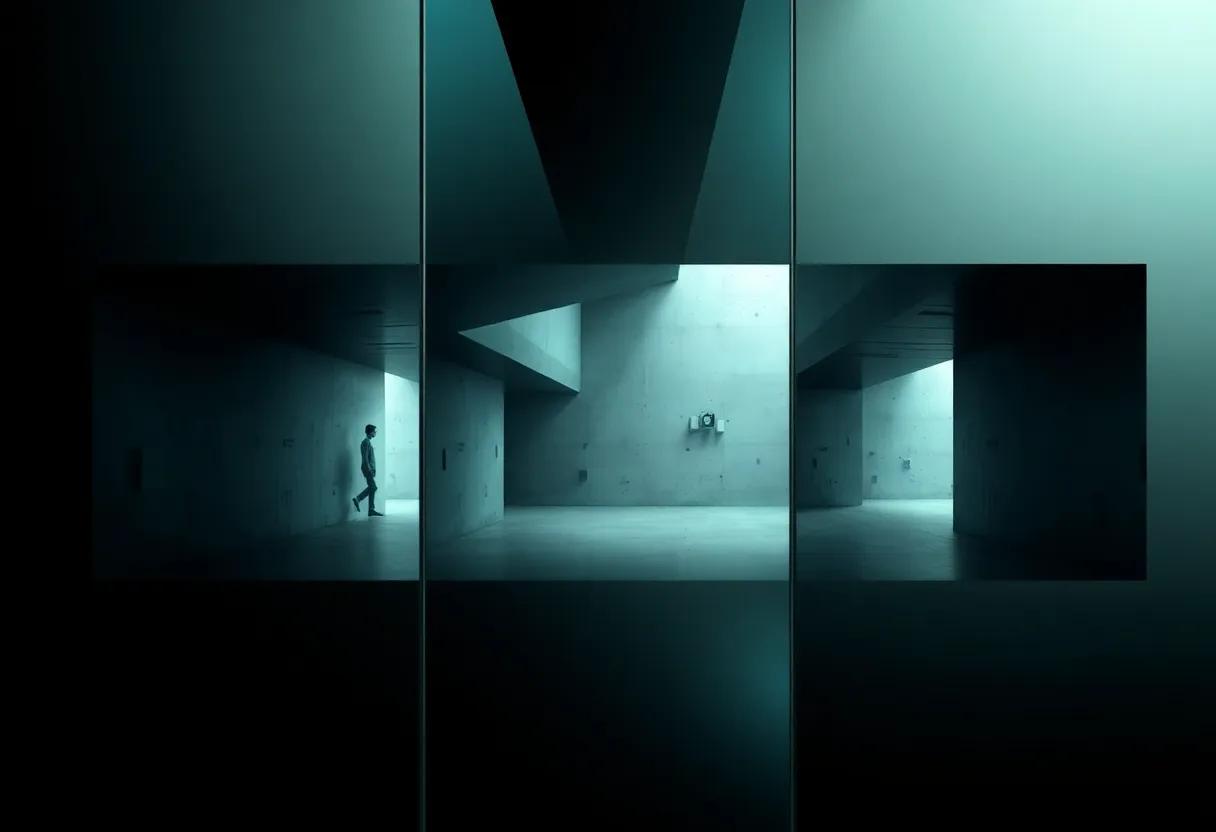
Triptych narration here functions less as a gimmick and more as a finely tuned lens: three contiguous frames that rotate around the same, grim nucleus until the image becomes unbearably clear. The novel alternates timelines and shifts perspectives with the precision of a scalpel—past memories bleed into present investigations, private confessions push public facts into sharper relief, and the reader is forced to assemble the crime from splinters of voice and time. This structure rewards patience; details that seem incidental in one panel return like clues in another, and the cumulative effect is a sustained, haunting illumination rather than a single reveal. Character psychology is revealed piecemeal, so empathy and suspicion rise and fall in tandem, making the act of reading an active excavation rather than passive consumption.
The book’s power rests on how formally clever choices serve emotional and investigative stakes rather than call attention to themselves. Atmosphere, motive, and misdirection are distributed across the three parts so that each segment reframes what came before—sometimes tender, sometimes brutal, always clarifying. Key techniques that elevate this approach include:
- Shifting focalization that decentralizes truth
- Temporal juxtapositions that expose cause and consequence
- Contrapuntal voices that test memory against fact
| Panel | Voice | Tone |
|---|---|---|
| One | Witness | Uneasy |
| Two | Investigator | Clinical |
| Three | Victim/Memory | Intimate |
Together,these elements make the single crime feel both inevitable and newly mysterious with each turn of the page.
Dialogue and voice that balance naturalism and tension each line revealing character motives while propelling the plot with urgent clarity
Slaughter’s dialogue reads less like exposition and more like a loaded instrument—every exchange tuned to make the unseen visible. The narrative voice is lean and unadorned, yet it carries a tensile charge: pauses curved into meaning, casual remarks that slice through alibis, and the kind of repetition that becomes accusation. Every line functions as a hinge, not merely revealing who a character is but why they might lie, fight, or collapse; speech becomes motive and clue in the same breath.
- Subtext-rich brevity — what’s unsaid does the heavy lifting.
- Rhythmic punctuation — short bursts, ellipses, and staccato cadence create heartbeat tempo.
- Emotional misdirection — casual warmth that masks threat and keeps readers guessing.
Their conversations are engines: tidy, sly, and relentlessly forward-moving, so that character revelation is never a digression but a plot device. Lines that feel intimate also function as clues; a throwaway joke becomes a red flag, a hesitation seeds suspicion, and confession often arrives in fragments. Below is a tiny map of how a single line can operate in three dimensions—character, motive, and momentum—showing how Slaughter converts speech into narrative force.
| Line | Reveals | Propels |
|---|---|---|
| “I was just passing by.” | evasiveness | raises suspicion about whereabouts |
| “I forgot the keys.” | avoidance of deeper truth | creates time pressure for discovery |
| “you don’t have to stay.” | control and bluff | sets up a power shift in the scene |
Reader recommendations and content notes for those seeking intense psychological suspense with mature themes and carefully handled difficult subject matter

Prepare for a book that lingers. Triptych probes cruelty, grief, and the slow unraveling of memory with relentless psychological pressure; the prose is precise and the revelations are intentional, not sensational. Readers should be aware that the novel contains themes of sexual violence, child endangerment, self‑harm, and severe trauma—handled with clinical attention and emotional weight rather than lurid detail. Consider the following before you dive:
- Primary triggers: sexual assault, child abuse, suicide.
- Secondary triggers: graphic injury, substance misuse, invasive forensic detail.
- Audience: recommended for mature adults agreeable with intense emotional suspense.
- Handling: empathetic, character‑driven, and forensic in tone—not exploitative.
If you seek a controlled but harrowing psychological experience, approach with intention: read with breaks, keep a trusted friend or support list handy, and allow time to process each revelation. Small practical tips: set aside one or two evenings for uninterrupted reading,skip or skim sections if needed,and pair the book with lighter fiction or nonfiction between chapters to reset. for speedy orientation, this short table highlights where the book exerts the most pressure and a simple reader tip:
| element | Intensity | Reader tip |
|---|---|---|
| Violence & trauma | High | pause after key scenes |
| Forensic detail | Moderate | Read deliberately |
| Emotional suspense | Very high | Discuss with a friend |
About the writer Karin slaughter her craft and recurring themes in crime fiction and why her voice resonates with contemporary readers

Karin Slaughter writes with a surgeon’s attention to detail and a novelist’s devotion to the human heart.Her sentences are economical but textured, carving scenes that feel both intimate and uncomfortably familiar; she builds suspense not just from the next reveal but from what her characters will do with the truth once it lands. Readers recognize her voice for its blend of clinical observation and deep empathy—character-driven plotting, razor-sharp dialogue, and a moral landscape that refuses easy answers. These techniques create a sustained tension that lingers after the last page, making each crime feel like a fracturing of everyday life rather than a mere plot device.
- Recurring themes: trauma,memory,justice,the cost of secrets
- Narrative tools: shifting perspectives,layered timelines,tight scenecraft
- Emotional core: survivors’ resilience and complicated morality
What makes her voice resonate now is how she treats genre as a mirror to contemporary anxieties: systemic failures,gendered violence,and the ripple effects of secrecy. Slaughter’s stories invite readers to sit with ambiguity—there are no tidy solutions, only characters learning to reckon with consequences. The result is a kind of literary honesty within crime fiction: visceral,unflinching,and ultimately humanizing. Below is a brief snapshot of how her dominant themes connect to readers’ concerns.
| Theme | Why it connects |
|---|---|
| Survivorhood | Offers empathy and recognition |
| Institutional failure | Reflects modern distrust and calls for accountability |
| Secrets & memory | Explores how past shapes present identity |
Triptych closes like a door left ajar: what remains are the outlines of lives and choices that refuse to settle quietly. Karin Slaughter’s meticulous plotting and gift for atmosphere make this a book that rewards patience and attention, even as it asks uncomfortable questions of its characters and its readers. It is neither mere puzzle nor pure melodrama, but a layered study in how trauma and truth entwine — gripping for those who seek depth in their suspense, sobering for anyone expecting tidy resolution. If you want a thriller that lingers after the last page, Triptych will stay with you, quietly insisting that the story is not finished when the book is.