They say some stories are like clockwork: wound tight, precise, inevitable. Revisiting Watchmen #1 feels a bit like returning to a clock tower at midnight — the same hands sweeping the hours, but seen through new light and different ears. Alan Moore’s opening salvo remains one of the most discussed comic-book moments of the 20th century, and approaching it with neither applause nor condemnation lets the work speak for itself.This review will step into that stillness with even footing. Rather than canonize or dismantle, it will trace the issue’s mechanics — narrative choices, visual rhythm, and tonal architecture — and consider how those parts cohere today. Expect close reading tempered by context: what the first issue set in motion in 1986, and how those effects register now, when readers come to Watchmen from varied directions.
If you’re looking for a fan’s hymn or an iconoclast’s hatchet, this isn’t that. Think of it as an austere lantern held at the threshold: illuminating details, leaving shadows where appropriate, and inviting you to decide which shapes matter.
Reassessing tone and pacing in Watchmen first issue At Midnight with calm observations and recommendations for modern readers and scholars

Alan Moore and Dave Gibbons calibrate the opening issue with a mix of restraint and sudden rupture: the tone drifts from noirish surveillance to domestic unease, and the pacing moves from elliptical exposition to a compressed, cinematic close. A calm read reveals deliberate choices rather than unevenness — the slow middle pages allow character textures to settle while shorter, denser pages accelerate narrative momentum. Key elements to notice:
Best-Selling Books in This Category


- Panel rhythm — spacing and gutters determine emotional tempo.
- Scene juxtaposition — mundane conversations sit next to graphic violence to unsettle the reader.
- Dialogue economy — sparse lines carry outsized weight, asking readers to infer subtext.
For modern readers and scholars, the proposal is practical and patient: approach the issue in multiple passes and treat pacing as an intentional device rather than a flaw. Read a first time for plot, a second time to watch how cadence is established across pages, and a third time to trace tonal shifts across panels.Consider annotating page turns, counting panel beats, and contrasting the single-issue rhythm with collected editions; these small, methodical habits illuminate how Moore’s narrative restraint and Gibbons’ framing produce a sustained, if disquieting, momentum that modern storytelling frequently enough packages differently. Suggested practice: read multiple passes, annotate the gutters, and compare print versus digital presentations to see how pacing translates across formats.
Examining Dave Gibbons artwork choices in At Midnight panels with close readings and suggestions for visual analysis in classrooms and collections
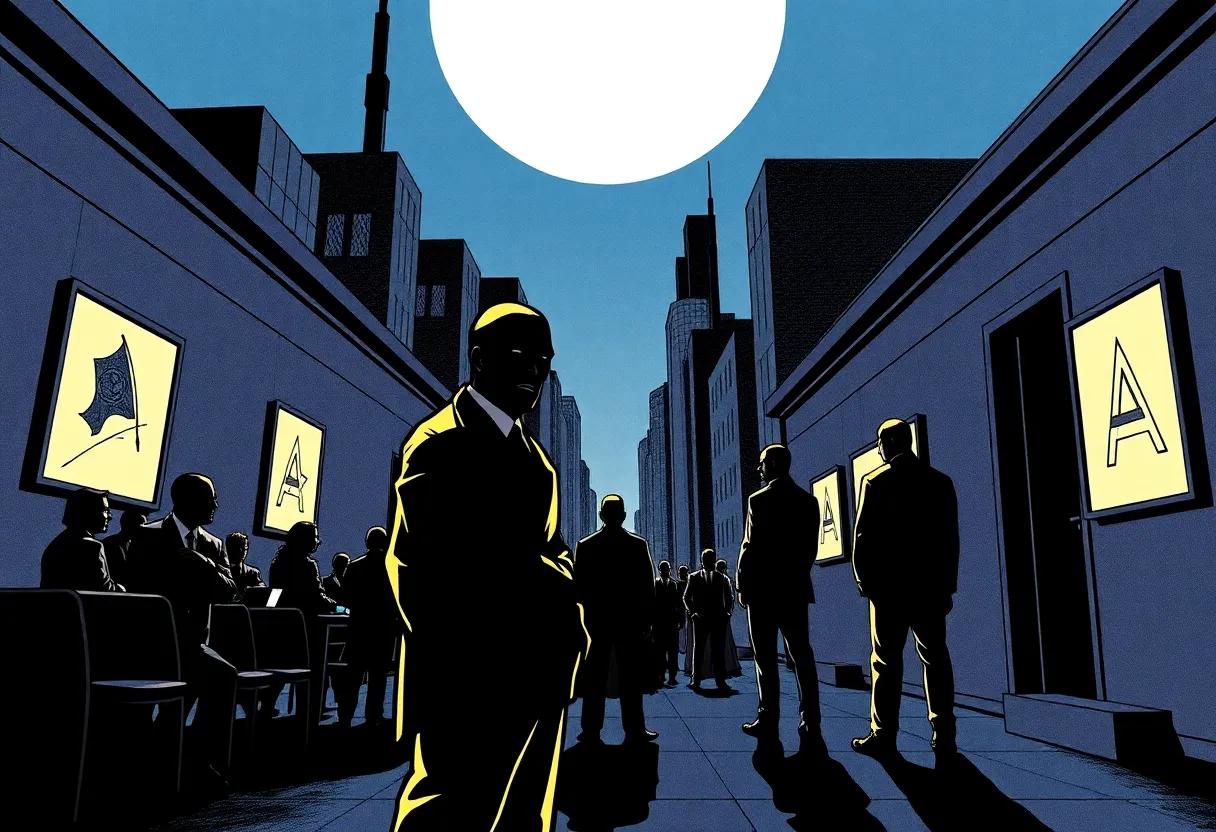
Dave Gibbons’ choices in the “At midnight” sequence are a masterclass in economical storytelling: composition, rhythm, and restraint carry as much narrative weight as any caption. In close readings, notice how Gibbons uses tight gutters and repeated geometric panel shapes to create a metronomic tension—each beat feels measured, inevitable. Pay attention to the way lighting sculpts the city into silhouettes,how a single low-contrast palette muffles action and foregrounds mood,and how facial micro-expressions are compressed into tiny,decisive marks that tell you more than words could. Useful focal points for study include:
- Panel rhythm — how repetition and variation set tempo;
- Negative space — where emptiness becomes implication;
- Line and texture — how cross-hatching and clean contours define depth;
- Iconic props — clocks,masks,and windows as recurring motifs.
These moments invite students and curators to map visual decisions to emotional outcomes: ask them to sketch a single panel at different scales or to rewrite a caption while keeping the panel unchanged, and watch interpretation shift.
For classroom and collection use, frame exercises that move from observation to interpretation to curation: begin with short, timed close-readings, then build comparative studies with other Gibbons pages or contemporaneous artists to highlight deliberate departures in style. Collections can preserve these lessons by cataloging not just provenance but visual features—margins, inking density, and color separations—turning each physical object into a teaching artifact. A compact table below can be printed into a lesson plan or archival tag for quick reference:
| Activity | Time | Goal |
|---|---|---|
| Timed panel sketch | 10 min | Observe composition |
| Motif mapping | 20 min | Trace recurring symbols |
| Curatorial tag draft | 15 min | Translate visuals to metadata |
Keep language neutral and descriptive when documenting: labels like “gutter cadence”, “silhouette emphasis”, or “contrapuntal lighting” help bridge classroom critique and collection records while preserving the visual integrity of Gibbons’ craft.
Dissecting Alan Moore narrative techniques in scene transitions and voice with practical reading strategies and annotations for newcomers and veterans alike
Alan Moore’s shifts between scenes feel less like cuts and more like controlled breath: a sudden hush,a newspaper column,a domestic fragment,then back into the public pulse. These transitions depend on visual and verbal counterpoint — the comic’s voice alternates between clipped reportage, ironic interior monologue, and theatrical aside — so the modern reader benefits from treating each panel as a tonal pivot rather than a single unit.Practical habits help:
- Read forward, then back: a single silent pass captures pacing; a second focused pass reveals thematic echoes.
- Mark recurring anchors: clocks, headlines, and props frequently enough function as transition keys.
- Annotate voice shifts: note when narration slips from omniscient to subjective — that slippage is Moore’s narrative gearbox.
Approach the artwork as parallel commentary; Moore writes transitions that expect the reader to fill small narrative gaps, so patience and a ledger of motifs reward close reading.
Annotation can be both minimalist and forensic depending on experience level: newcomers should prioritize readability and motif-tracking, veterans can map larger structural echoes across issues. A compact reference table like the one below helps keep annotations consistent in the margins and on digital highlights — use it as a shorthand when revisiting sequences.
| Annotation mark | What to note |
|---|---|
| 🕰️ | Time jumps, repeated timestamps |
| ▭ | Type of transition (cut, dissolve, juxtaposition) |
| “ ” | Voice register: irony, reportage, confession |
Then apply a three-pass routine: 1) full read for flow, 2) targeted re-read tracing transitions, 3) margin notes tying motifs to emotional beats — a simple, repeatable method that keeps both newcomers and longtime readers engaged with Moore’s craft without mythologizing it.
Unpacking political undertones and moral ambiguity present in At Midnight with balanced questions for book groups and prompts for guided debate
At its core the chapter invites readers to sit with discomfort: Moore stages a midnight tableau where ideological certainty frays and even ostensibly righteous acts cast long, ambiguous shadows. Treat the scene as a moral mirror—ask whether a character’s choice is shaped more by circumstance than conviction, and how external structures (state, media, public fear) tilt those choices. Use these balanced prompts to open discussion in a way that resists easy verdicts and surfaces nuance.
- How does the scene complicate our instinct to label characters as “heroes” or “villains”?
- Which institutions in the story hold real power, and how does that affect individual morality?
- Is there a clear moral failure, or is the failure systemic? Support both views.
- Can empathy for a character coexist with critique of their actions?
For guided debate, frame questions that force trade-offs rather than preachiness: encourage participants to defend positions with textual evidence and to switch roles mid-discussion so the group tests each argument’s limits. Below are succinct debate prompts and a quick reference grid to help moderators seed equal time for opposing views.
- Argue that the ends in this chapter justify morally dubious means; then reverse your case.
- Defend the state’s response to danger; then defend the vigilante alternative.
- Consider whether secrecy can ever be ethically endorsed in the name of safety.
| Debate starter | Neutral seed statement |
|---|---|
| Authority vs Agency | “Order requires sacrifice.” |
| Transparency vs Security | “Some truths endanger more than they free.” |
| Intent vs Outcome | “Good intentions can yield harm.” |
Assessing dialogue rhythm captions and narrative voice to guide readers and adaptors on tone matching and faithful scene reproduction techniques
Alan Moore’s interplay between spoken lines and those dense, often aphoristic captions acts like a metronome for the issue — it sets beats, suspensions, and sudden accelerations.For readers and adaptors alike, the trick is to treat captions as a parallel rhythm track rather than redundant exposition: let them counterpoint the dialogue, punctuate visual beats, and sometimes contradict what we see to preserve Moore’s uneasy tonal friction. Practical moves to keep in mind include an economy of space and timing; avoid overperforming the words or flattening them into mere paraphrase.
- Respect pauses: replicate panel-to-panel silence in cuts and actor breathing.
- Keep cadence: maintain the sentence breaks and ellipses that create tension.
- Let captions be a counter-melody: allow them to undercut or comment instead of explaining.
These are small, deliberate choices that preserve the comic’s layered tempo and keep scenes from becoming blunt translations of the page.
When translating that voice to stage, screen, or prose, think of the captions as an editorial voice with texture—sometimes sardonic, sometimes clinical—and match production elements to that texture rather than the literal words alone. Use voice-over sparingly and with varied proximity: close,intimate VO mirrors a caption written as an inner thought; distant,detached narration fits captioning that reads like clinical reportage. To make those decisions clearer for a production team, a compact reference helps:
| Element | Adaptation move | Why it matters |
|---|---|---|
| Caption cadence | Short VO bursts, timed to edits | Preserves panel rhythm |
| Panel silence | Hold on reaction shots | replicates visual pause |
| Contradictory caption | Let music or sound design disagree | Maintains tonal friction |
These concise techniques help readers and adaptors aim for fidelity without slavish literalism—matching tone, rhythm, and the uneasy narrative voice that gives the issue its specific emotional geometry.
Evaluating pacing and panel composition for reprints with preservation tips layout suggestions and archival notes for librarians and collectors
When flipping back through a reprint of Watchmen #1, the original’s deliberate pacing can feel recalibrated by trim size, paper weight, and modern restoration choices — pay attention to how each panel breathes. Evaluate the cadence by comparing the original page turns to the reprint’s margins and gutter widths: smaller gutters compress the eye’s travel, while increased white space can restore the comic’s punctuation. Panel composition is especially telling in the “At Midnight” sequence: watch for altered crop decisions that shift focus from peripheral details to central figures. Layout suggestions for reprints include:
- Restore original gutters where possible to maintain intended rhythm.
- Scale panels uniformly to avoid accidental emphasis changes.
- Include reading-order cues (subtle arrows or numbered folios) in deluxe editions to preserve pacing without being intrusive.
For librarians and collectors, preservation is a pragmatic art: prioritize stability over display. A compact archival checklist helps keep copies usable for decades.
| Format | Storage | Why it matters |
|---|---|---|
| Newsprint reprints | Acid-free box, flat | Prevents yellowing |
| Deluxe hardbacks | Upright, supported | Protects spine shape |
| Loose issues | Poly sleeve + board | Mitigates handling wear |
Keep environmental controls steady: 40–50% RH, stable temperature, and low light exposure are non-negotiable. Use archival labels for provenance, rotate displayed copies periodically, and document restoration decisions so future stewards can understand the conservation logic without guessing at past interventions.
Tracing cultural impact and legacy of At Midnight with neutral guidance on contextual reading recommended companion texts and timelines to consult
- Watchmen (the full series) — for narrative and thematic continuity
- V for Vendetta — to compare political allegory and tone
- Alan Moore interviews & essays — authorial context without advocacy
- Contemporary reviews (1980s) — primary-source reactions on release
- Publication chronology — issue, series, reprints
- Critical milestones — awards, major essays, academic studies
- Adaptation moments — film, TV, cultural references
| Year | Event | Why consult |
|---|---|---|
| 1986 | Original release | Anchors first reception |
| 2009 | Major adaptation | Wider cultural reach |
| 2016– | Academic reassessment | Shifts in critical framing |
evaluating character portrayals ethical dilemmas and ambiguous motives with clear recommendations for sensitive readers educators and classroom syllabi
Rereading Watchmen #1 asks us to hold contradictory impulses at once: admiration for craft and discomfort with characters whose ethics are tangled or opaque. Approach each portrayal as a composite of narrative choice and moral prompt — ask whether a character’s violence, cynicism, or secrecy is being critiqued, normalized, or simply observed. Use these quick lenses when evaluating ambiguous motives:
- Contextualize — situate actions within the era,genre conventions,and the creator’s voice rather than excusing harm.
- Differentiate — separate authorial commentary from character endorsement.
- Track impact — note who is harmed, who is granted power, and who gets narrative sympathy.
These steps help readers make balanced, evidence-based judgments instead of projecting modern sensibilities as moral verdicts.
For sensitive readers and educators aiming to include this material in syllabi, adopt clear, pragmatic strategies that respect emotional safety while preserving critical engagement. Offer content flags and structured scaffolding: provide pre-reading prompts, guided close-read questions, and optional alternative assignments for those who opt out of specific scenes. Practical classroom tools include:
- Content notes at the top of assigned pages.
- Reflection prompts that ask students to map power relations rather than simply label characters good or bad.
- Small-group debriefs to process reactions before whole-class debate.
| Audience | Quick Action |
|---|---|
| Sensitive readers | Use content notes & pause points |
| Educators | Scaffold context + offer opt-outs |
| Students | Journal reactions & cite text |
These measures preserve analytical rigor while honoring personal boundaries, letting Watchmen function as a teaching text rather than an unmediated exposure to morally fraught material.
Comparative reading suggestions pairing At Midnight with contemporaneous comics and later editions plus recommendations for editions to prioritize
At Midnight opens a window into 1986’s uneasy, hyper-aware comics landscape — pair it with works that sharpen different edges of the same era. Try reading it alongside
- The Dark Knight Returns #1 — for a grim, urban counterpoint to moral collapse and spectacle;
- swamp Thing (moore run) — to appreciate Moore’s tonal shift from cosmic dread to intimate, unsettling character work;
- V for Vendetta (collected chapters) — to compare political paranoia and the slow-burn reveal of ideology.
These pairings illuminate how ”At Midnight” negotiates atmosphere, pacing, and ethical ambiguity within the mainstream’s move toward darker, self-aware storytelling.
When choosing an edition to study or collect, prioritize fidelity and presentation:
- Absolute/Deluxe editions if you want pristine art reproduction and extras;
- Original single issues or a faithful reprint to sense the monthly rhythm Moore and Gibbons intended;
- Restored-color or annotated editions for clarity on visual cues and marginalia that reward close reading.
| Edition | Why prioritize |
|---|---|
| Absolute Watchmen | Best for visuals and extras |
| Collected trade (faithful reprint) | Balanced cost & readability |
| Original singles | Historical context & cadence |
For research or casual revisit, start with a high-quality collected edition and supplement with scans or singles to feel how “At Midnight” breathed in its first month — then branch into the contemporaneous and subsequent works that refract its themes in new ways.
Considering the writer Alan Moore as a craftsman of complexity with neutral appraisal and reading recommendations including select interviews and bios
Alan Moore’s work reads like a watchmaker’s bench: an array of small, exacting components—symbol, cadence, image, and rhetoric—assembled into engines that run longer and more insistently than many of his contemporaries’. His comics are architectural in ambition, favouring layered narration, metafictional devices and moral ambivalence over tidy resolution. Viewed dispassionately, this is craftsmanship rather than mere showmanship: the density and complication are techniques—choices that foreground complexity as a formal value. At the same time, the same choices can be experienced as gatekeeping; what one reader calls depth another may call opacity. A neutral appraisal recognizes both the persistent innovation in Moore’s narrative devices and the legitimate critique that his projects sometimes prioritize conceptual rigor over immediate accessibility.
For those who want to engage with that craftsmanship directly and in context, begin with his landmark texts and then move outward into conversations and critical life-studies. suggested primary reads:
- Watchmen — for structural ambition and moral calculus
- from Hell — for research-driven narrative and historical layering
- V for Vendetta — for political mythmaking and allegory
- The Killing Joke — for a compact study of character and consequence
- The League of Extraordinary gentlemen — for intertextual play
complement those with contextual material: seek out long-form interviews archived at outlets such as The Comics Journal and major press profiles in newspapers and magazines, watch documentary features and oral histories that trace his career, and consult essay collections and critical biographies that unpack themes and methodology. These secondary sources illuminate how Moore’s choices function as craft—useful reading order: primary work → contemporary interviews → critical biographies and collected essays.
As the midnight hour in Watchmen #1 fades and the streetlamps blink back to life, this revisiting leaves us less with definitive answers than with fresh ways of looking. Alan Moore’s opening chapter still reads like a carefully placed set of dominoes—each beat calibrated to shift the scene and the reader’s expectations—yet it yields different echoes depending on how closely you listen. Whether you come with a scholar’s eye, a fan’s nostalgia, or a newcomer’s curiosity, the issue resists being reduced to a single verdict. It neither demands worship nor invites dismissal; instead it offers a textured beginning that rewards attention and invites questions.In that spirit, this neutral take hopes to have unpacked a few of those textures without flattening their mystery. Read it again, or for the first time — and let the midnight linger a little longer.