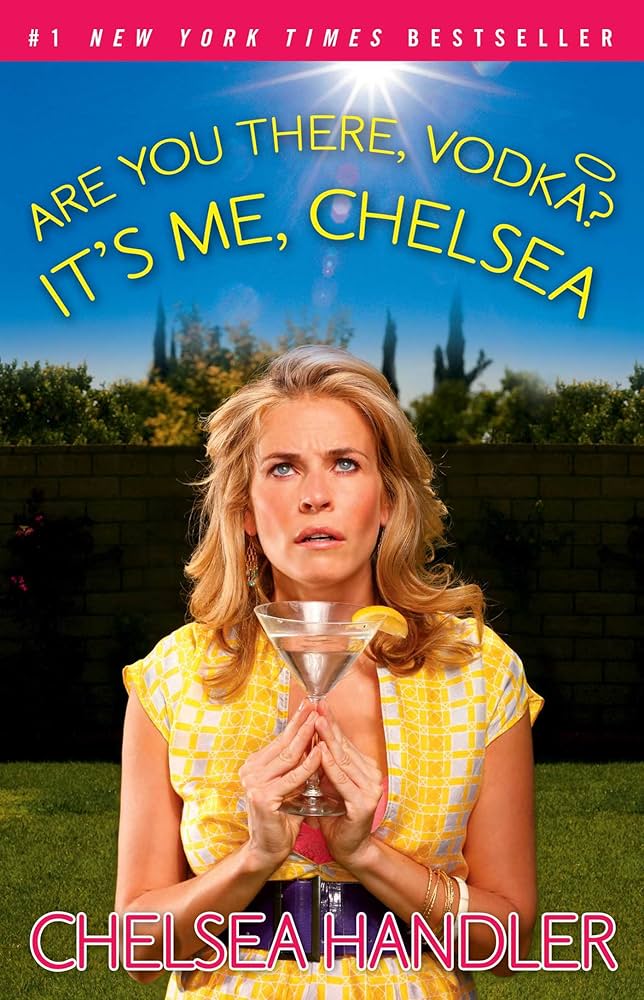
Like spotting a fluorescent cocktail umbrella on a crowded bar — Chelsea Handler’s Are You There, Vodka? It’s Me, Chelsea demands to be noticed. On the surface it’s a rapid-fire collection of personal anecdotes and punchlines; beneath that rapid laugh, it’s a portrait of a performer sharpening her voice on the small humiliations and bold confessions of everyday life.This review aims neither to crown nor to crucify, but to stand in the doorway and measure both the laughter it elicits and the questions it leaves behind.
What follows is a balanced look: highlights of Handler’s comic instincts and timing, together with attention to tones and choices that may sit uneasily with some readers. I’ll consider the book’s place in late‑2000s celebrity memoir culture, its strengths as stand‑up‑in‑print, and the ways its candor sometimes reads as refreshingly frank or uncomfortably blunt. Read on to decide whether this is a quick, guilty pleasure or a more complicated cultural snapshot worth revisiting.
evaluating the book tone humor and structural flow with specific examples and guidance for readers seeking light confessional comedy
Handler’s voice lands somewhere between a wink and a confession — candid,clipped,and often triumphant in its self-mockery. The humor is built on quick-setups and sharper payoffs: short anecdotal launches that ride a punchline rather than a long, moralizing arc. Expect breezy, conversational sentences that leap from one embarrassing detail to the next, and pay attention to how she lets a single absurd image carry an entire paragraph. For readers seeking light confessional comedy,this means the book rewards skimmed,stop-and-start reading as much as attentive page-turning: a two-page anecdote can feel like a complete sketch,while longer riffs sometimes sag when the structural momentum pauses. Practical signs it’s working for you include finding yourself laughing aloud at recurring themes, appreciating the rhythm of recurring self-deprecation, and enjoying abrupt tonal pivots that convert discomfort into comic relief.
If you want a quick checklist to decide whether this style fits your mood tonight, consider these simple touchstones and a short tonal map:
Best-Selling Books in This Category

- Mahon, Allen F. (Author)

- Preferred pace: rapid-fire quips and episodic beats.
- Sensitivity: frank confessions and blunt barbs — not for readers seeking gentle irony.
- Best setting: commutes, waiting rooms, or any low-commitment reading window.
| Tone | Example Affect | What to Expect |
|---|---|---|
| Confessional | intimacy through exaggeration | Relatability,sometimes sharp |
| Deadpan | Understated shock value | Quick chuckles, occasional wince |
| Anecdotal | Self-contained sketches | Read in bursts |
Use this guide to align your expectations: if you want a steady narrative arc, the book may feel patchy; if you crave instantaneous, candid laughs, it’s well suited to evenings when you want to be entertained rather than instructed.
Balancing candid anecdotes with ethical reflection a detailed look at what material lands well and which sections may feel dated or problematic to modern readers
Chelsea Handler’s blunt, laugh-out-loud anecdotes often still land because they trade on timing and a candid voice that feels like overhearing a friend: the confessional punchlines, the gleeful self-deprecation, and the knack for turning awkward dating rituals into shared absurdity. What works is less about shock and more about the craft — vivid details,quick beats,and an eye for the ridiculous in everyday life.
- Relatable confessionals that invite sympathy rather than judgment.
- Sharp comic setups that hold up outside of specific pop-culture moments.
- A voice that prioritizes self-mockery over mean-spiritedness in many chapters.
Simultaneously occurring,certain passages feel tethered to an earlier cultural moment and can read as dated or careless,especially when humor hinges on stereotypes or casual marginalization. Readers today may find some gags that onc passed for edgy now undermine the book’s warmth by punching down or relying on shorthand that flattens real people.
- Jokes that use identity as a setup rather than exploring nuance.
- Passing insults framed as “honesty” without contextual reflection.
- References that assume a narrow, privileged viewpoint.
| Excerpt type | How it reads today |
|---|---|
| Self-deprecating dating stories | Still funny and humanizing |
| Stereotype-based punchlines | Feels reductive and easy to criticize |
| Pop-culture one-liners | May require footnotes or context |
Close reading of standout chapters identifying effective punchlines pacing choices and moments that reveal deeper personal insight beyond surface gags

On a close read, the funniest chapters reveal that punchlines are less about shock and more about economy and honesty — Handler sets up a banal everyday image, tightens the frame with a single unexpected detail, then releases with a line that reframes the whole scene. The result feels like a nudge rather than a slap, which keeps the reader complicit. Small structural choices do heavy lifting:
- Brief set-ups that invite rapid payoff
- Rhythmic repetition that escalates absurdity
- Self-directed irony that disarms defensiveness
These devices calibrate tone so the laugh arrives without undermining the narrator’s credibility — the humor reads as personality, not performance.
Pacing choices are where the chapters that linger succeed: a quick gag can be followed by a longer, quieter beat that lets a personal truth settle in, transforming a punchline into a window. Those shifts are deliberate; they reveal when the book intends to be funny and when it wants to be felt. Noticeable moments that pierce the comedy include:
- Brief confessions tucked after a joke
- softened language when discussing family or loss
- Pauses in narrative energy that invite reflection
| Comic Device | Deeper Insight |
|---|---|
| Hyperbole | Masks insecurity about social norms |
| Deadpan afterglow | Signals real vulnerability beneath bravado |
| Parenthetical asides | Reveal private self-commentary |
Together, these elements show that beyond gags there’s an author shaping intimacy — the laughs invite you in so the quieter truths can land.
Humor mechanics explained how self deprecation timing and recurring motifs contribute to laughs plus tips for readers on what to savor and skip
Timing in Chelsea’s voice often reads like a metronome: a brisk setup followed by a self-deprecating drop that arrives just long enough for the reader to catch up and then laugh. She uses self-deprecation not as confession but as cadence — a quick, candid tumble that deflates tension and primes the punchline. Recurring motifs (the same embarrassing theme or image returned to throughout a chapter) act as tiny callbacks that compound: the first appearance gets a smile, the repeat nudges a grin, and a cleverly altered return earns a laugh by surprise.
- savor: crisp one-liners and callbacks that reward memory
- Savor: short, punchy self-mocks that reset the mood
- Savor: images or phrases that recur with a twist
Not every tumble and tangent needs the same attention — comedy is as much about what’s left out as what’s told. If an anecdote stretches past its natural beat, the joke can lose its currency; likewise, chains of similar gags without variation feel like background noise instead of a refrain. When reading, skip lengthy detours that stall the rhythm and pass quickly over dated name-drops that don’t land anymore; instead, lean into the patterns that pay off—economy of language, surprise reversals, and the comfortable vulnerability of a well-timed self-roast.
- Skip: long-winded setups with no stronger punch
- Skip: repetitive jokes that never change form
- Savor: concise reversals and callbacks that land
Emotional throughline assessment mapping vulnerability and resilience across essays with suggestions for readers who want catharsis versus pure entertainment
The book’s emotional throughline can be read like a map where peaks of vulnerability sit next to stretches of fast-paced comic relief; spotting those shifts makes reading either restorative or purely entertaining. use this quick checklist to orient yourself before you dive in:
- Catharsis: favor essays that dwell on personal missteps and recovery — they invite empathy and release.
- Entertainment: pick pieces heavy on punchlines and absurdity — they deliver laughs without emotional unpacking.
- Mixed: look for essays that end with a small insight — they balance levity and heart.
Below is a compact guide to help you match mood to motive, followed by a couple of practical reading tips to tailor the experience to your needs.
| Emotional Tone | Example Angle | best for |
|---|---|---|
| Raw confession | first-person mishaps | deep catharsis |
| zany anecdotes | outrageous set pieces | pure entertainment |
| Reflective humor | wry observations,soft lessons | balanced reading |
- If you want catharsis: read slowly,pause to reflect,revisit passages that resonate — allow the emotion to land.
- If you want to be amused: binge the high-energy essays and skip the confessional beats — let the rhythm carry you.
Cultural context and sensitivity review noting 2000s comedic norms and offering practical recommendations for trigger aware readers and group discussion
Reading Chelsea Handler through the lens of the 2000s means recognizing a comedic moment defined by edgy, shock-driven humor and a confessional, celebrity-driven voice that traded subtlety for punchlines. At the time, many writers leaned into blunt, outrageous anecdotes as a form of honest self-branding; today some of those same lines land differently as awareness around race, gender, mental health, and consent has evolved. A neutral, historically informed approach helps: note where the book reflects its era’s norms, call out language or jokes that may feel exclusionary now, and differentiate between a writer’s intent and the impact those words may have on contemporary readers.
For individual readers and reading groups, practical sensitivity practices make space for both critique and comfort. Consider these steps to keep conversations constructive and safe:
- Content warnings: Post a brief list of potential triggers ahead of meetings so participants can prepare or opt out.
- Establish ground rules: Agree on respect, no unsolicited corrections of trauma, and confidentiality for personal disclosures.
- Use a safe signal: Allow members to pause or skip passages without clarification.
- Contextualize and question: Frame problematic jokes historically and invite reflections rather than policing language.
| Trigger | Suggested approach |
|---|---|
| Sexual content | Offer warnings; allow skipping and debrief if it raises issues. |
| Substance use | Acknowledge humor vs. harm; avoid glamorizing risky behavior. |
| Derogatory language | Discuss historical context and impact; encourage respectful language in discussion. |
Literary craft critique examining voice sentence rhythm and anecdote selection with concrete editing suggestions readers can apply to their own memoir writing

Handler’s speaking voice in these pages is a theatrical, confessional cadence—fast-moving, punchy, and sometimes indulgently digressive. To sharpen a memoir voice like hers, identify the core mood of each scene and ask whether every joke, aside, and parenthetical line sustains that mood; if it doesn’t, cut or relocate it. Read sentences aloud and mark where your breath naturally falls: shorten breathy clauses, break long sentences into a short–long–short pattern to create rhythm, and replace weak modifiers with stronger verbs. Try this quick exercise: pick a paragraph, remove the first and last sentences, then rewrite only the middle sentence to carry the emotional weight—if it fails, the paragraph needs structural pruning.
- Trim openings: drop weather or distant scene-setting unless it reveals voice or stakes.
- Vary beats: alternate 5–15 word sentences with 1–4 word staccato lines for comic or dramatic impact.
- Show, don’t explain: swap one telling sentence for a concrete sensory detail every 250–400 words.
Anecdote selection is where memoir becomes architecture: select stories that disclose change, contradiction, or interior logic rather than mere entertainment. Ask whether each anecdote alters a reader’s understanding of the narrator—if it doesn’t, compress it into a line or cut it. When editing,map each story to one of three functions: character,outcome,or backstory; the strongest memoir scenes often do two at once. Use specificity—names, small gestures, exact dialog beats—to transform an anecdote from “funny memory” into a revealing scene.
- function test: label every scene with C (character), Q (consequence), or B (backstory); aim for a 2:1 ratio of C/Q to B.
- Micro-cut: remove the last sentence of an anecdote to see if the story still lands—if it does, the ending was surplus.
| Before | After |
|---|---|
| Long setup about a party ending in a generic punchline. | cut setup, keep the one revealing exchange that shows a relationship shift. |
| Paragraph full of asides and qualifiers. | Two sentences: one vivid image, one telling consequence. |
Reader mapping and pairing suggestions highlighting who will enjoy this collection where it sits on a memoir shelf and what to pick up next
Think of this book as the bubbly corner of a memoir shelf — not the heavy, wrenching confession nor the high-gloss celebrity tell-all, but a voice that trades intimacy for comic timing. Readers who like observational, self-deprecating humor and a late‑90s cultural lens will feel at home: young women navigating adulthood, fans of sitcom-style essays, and anyone who enjoys a memoir that prioritizes punchlines over psychoanalysis. It sits nicely between lighthearted essay collections and pop-culture memoirs, a bridge between candid honesty and performative humor that makes it an easy pick for commute reads or brunch‑table conversation starters.
For pairing and what to reach for next, think in terms of tone and appetite: if you want more laugh-first memoir, grab the next title; if you want depth behind the jokes, pick a companion with more introspection. Good follow-ups include:
- “Bossypants” by Tina Fey — similar comic cadence and celebrity anecdotes.
- “I Was Told There’d Be Cake” by Sloane Crosley — sharp personal essays with a social-eye view.
- “The Liars’ Club” by Mary karr — if you want to shift toward darker, lyrical memoir.
- “Yes please” by Amy Poehler — a warm,smart blend of humor and life lessons.
| Reader Mood | Next Pick |
|---|---|
| Need laughs | Fey |
| Witty essays | Crosley |
| Deeper feels | Karr |
Practical reading recommendations on pacing rereadable sections audiobook versus print considerations and how to guide a thoughtful shared group discussion

Find a rhythm that honors the book’s punchlines — Chelsea handler’s anecdotes land best when you give each one a beat. Short sessions (15–30 minutes) let you savor the comedic timing without burning out, and keeping a few pages or timestamps flagged will save you time when you want to revisit a particularly sharp riff. For rereadable passages, treat them like little comic sketches: read them aloud once, let the phrasing sink in, then reread more slowly to catch nuance. If you alternate formats, use the audiobook to absorb tone and cadence, then flip to print for sentence-level details and margin notes that reward a second look.
- Micro-sessions: read or listen in short bursts to preserve punchiness.
- Flagging: use bookmarks, highlights, or timestamps for riffs you’ll want to reread.
- Audiobook tips: experiment with 0.9–1.1x speed, rewind 10–20 seconds for a missed laugh.
- print tips: margin notes and sticky tabs make scanning for repeats effortless.
- Hybrid approach: listen first for voice; skim print later for craft and phrasing.
Turn shared reading into a conversation, not a quiz: prepare a few open prompts and invite members to bring one favorite line to read aloud — comparing a passage heard versus read sparks rich talk about tone and intent. Use a simple visual aid to focus discussion quickly:
| Format | Quick advantage |
|---|---|
| Audiobook | Immediate tone & pace |
| Easy to skim and annotate | |
| Hybrid | Best of both — voice + craft |
- Kickoff prompt: ”Which line made you laugh out loud, and why?”
- Compare-and-contrast: ask members who listened vs read whether tone changed their take.
- Focus questions: pick one anecdote to analyze structure, set-up, and payoff.
- Facilitation tips: timebox segments, invite quieter members, and normalize differing tastes.
About the writer Chelsea Handler a concise portrait of career influences comedic voice public controversies and what readers can expect from her broader work
Chelsea Handler arrived as a voice shaped by stand-up rooms, late-night production, and the memoir boom—an entertainer who learned to translate blunt, lived experience into punchlines and pages. Her comedic voice is candid and confrontational: equal parts self-deprecation and bold provocation, frequently enough switching from gossipy anecdote to pointed cultural critique in a single sentence. That directness has won fans for its honesty and sparked controversy when jokes collide with politics and shifting social mores; readers should expect an author who courts discomfort as part of her craft rather than avoiding it.
Across her broader work you’ll find a few consistent offerings worth noting:
- Candid storytelling — confessions framed as comedy.
- Sharp timing — brisk chapters and punchy lines.
- Topical edge — pop culture and politics woven into personal narrative.
- Varied moods — from reckless levity to surprisingly reflective moments.
| Element | What to expect |
|---|---|
| Influences | Stand-up candor, late-night polish |
| Voice | Wry, blunt, conversational |
| Controversy | Provocative remarks that provoke debate |
Like any good night of storytelling, Are You There, Vodka? it’s Me, Chelsea alternates between punchlines that land and asides that linger — sometimes to good effect, sometimes less so. Chelsea handler’s voice is unmistakable: brazen, confessional and often funny, and that same candor will be a draw for some readers and a barrier for others. This review has aimed to hold those contradictions in view rather than flatten them into praise or dismissal. If you enjoy sharp-tongued memoirs that trade vulnerability for laughs, you’ll find plenty to chew on; if you prefer quieter, more measured introspection, this may not be your cup of tea. Either way, the book is worth approaching with curiosity: decide for yourself which moments resonate, and which fade when the lights come up.