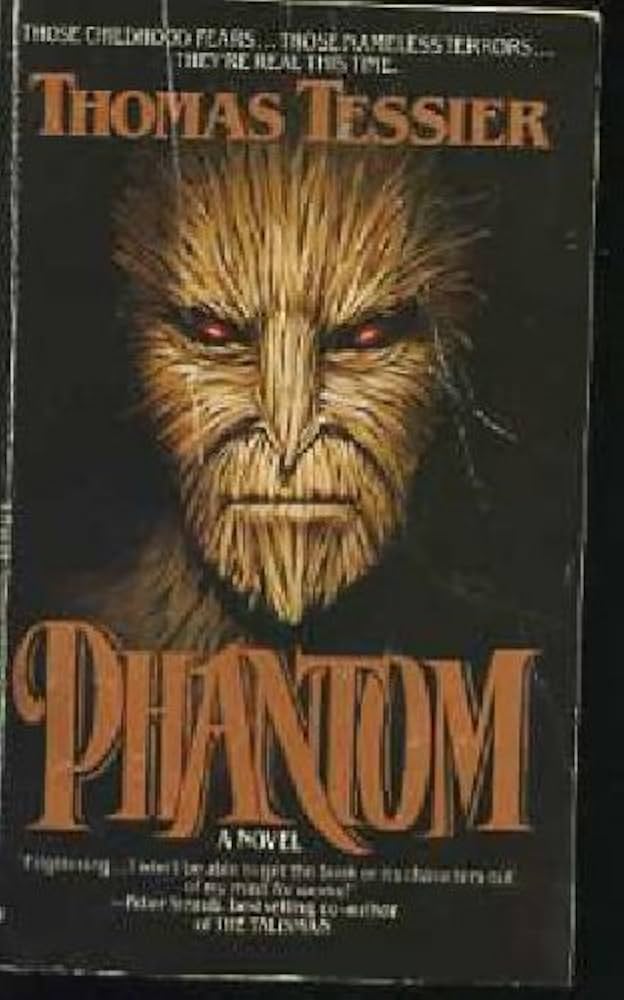
Haunting, in the popular creativity, arrives as sudden chill and shattered glass — a spectacle. Thomas Tessier’s Phantom prefers a slower gravity: the kind of presence that settles into the margins, rearranges the furniture of memory and language, and waits to be noticed. Examining Phantom: A Measured Look at Thomas Tessier’s Haunting Novel opens at that peripheral edge, were atmosphere and ambiguity conspire to keep both reader and character slightly off-balance.
This review will not simply catalog scares or plot beats.Instead it aims to map how Tessier builds texture — his use of silence, cadence, and suggestion — and to weigh the novel’s successes and limitations with even-handed attention.Expect close attention to craft (voice, pacing, imagery), to the novel’s emotional architecture, and to the questions it leaves lingering: about identity, memory, and the shape of fear. If Phantom is less a theatrical apparition than a slow-acting chemical, this measured look will try to trace its reactions without either dismissing the burn or inflating the scorch.
Close reading of mood and atmosphere in Phantom explores the novel’s slow burn dread and suggests pacing strategies for new readers
Thomas tessier builds unease like a slow leak rather than a sudden crack: the novel’s terror is coaxed out of domestic particulars, small weather shifts, and the drab rhythm of days. Close attention to recurring images — a stopped clock, a half-lit hallway, the texture of a neighbor’s voice — reveals how silence and repetition perform moral work, converting familiar detail into suspicion. read sentences aloud to feel the novel’s pacing, and track how pauses between clauses accumulate into a palpable tension; Tessier often lets dread live in the margins, in what is withheld as much as in what is shown.
Best-Selling Books in This Category


- Imagery: sensory anchors that mutate into threats
- Temporal stretching: prolonged description that slows emotional processing
- Focal restraint: limited outlook that makes events feel certain
For new readers wanting to honor the book’s tempo, adopt a measured approach that preserves Tessier’s architectural suspense: short, attentive sessions, note-taking of motifs, and allowance for silence before moving on. A simple pacing cheat-sheet can help you calibrate readings without flattening the novel’s tension:
| Session length | Effect |
|---|---|
| 20–30 minutes | Maintains atmospheric density |
| One chapter with notes | Preserves pattern recognition |
Experiment with reading a passage twice—once for plot, once for texture—and resist the urge to rush; the dread in Phantom grows by accrual, and giving the book its proper time rewards readers with the accumulating charge Tessier intends. Patience, not speed, is the practical key.
Structural analysis of narrative voice and unreliable perspectives with suggestions on annotation and reread tactics to reveal hidden layers

Thomas Tessier’s manipulation of point of view in Phantom often reads like a slow tilt of the camera: angles shift, the voice narrows and broadens, and what once seemed objective suddenly smells of memory. Treat the narrator as a crafted instrument rather than an omniscient fact-giver—listen for the micro-gestures that betray subjectivity: modal verbs, qualifiers, and sudden lapses into interiority that interrupt descriptive passages. When annotating, mark those moments as clues rather than stylistic flourish; they are the seams where the text peels back.
- Modal verbs (might, could, should): mark as doubt or projection.
- Temporal disjunctions: flag shifts in tense as signposts of memory or invention.
- Contradictions: circle opposing statements to map unreliable moments.
- Silences and ellipses: note what is withheld—the negative space is frequently enough where truth hides.
Rereading becomes a forensic exercise: approach the novel in passes, each with a focused question—Who benefits from this framing? What perception is being protected?—and use a simple visual system to reveal layers. Color-code margins (e.g., green for external facts, yellow for doubt, red for contradiction), keep a running list of recurring motifs that act as narrative anchors, and create a compact voice-map to track who is speaking, when, and how reliable they seem. Fast reference tables help crystallize patterns:
| Signal | What to ask |
|---|---|
| Shift to interiority | Is this memory or invention? |
| Inconsistent detail | Who benefits from this inconsistency? |
| Repeating motif | Does it validate or obscure the narrative? |
- First pass: underline factual claims.
- Second pass: highlight emotional language and doubt.
- Third pass: map contradictions and synthesize a revised chronology.
These tactics turn rereads into progressive reveals, letting you peel away the narrator’s haze and watch the novel’s hidden architectures emerge.
Psychological depth examination focusing on grief obsession and isolation with recommended companion texts and trigger warnings for sensitive readers

Tessier excavates sorrow with a scalpel: grief in Phantom is portrayed less as an event and more as a persistent inhabitant that reshapes memory, perception, and moral boundary. The narrative contorts time—repetition and sensory detail render obsession almost architectural, a narrowing corridor that both protects and suffocates the protagonist.Within these pages isolation functions as a device and a symptom: it is at once chosen refuge and imposed sentence, producing an interior world where small objects and private rituals take on mythic weight. Elements that most effect the psychological tone include:
- memory loops and repeated imagery
- obsessive attention to objects and names
- the erosion of social anchors
Together these techniques make the novel less about plot than about the slow crystallization of a mind living with unresolved loss.
For readers looking to widen the conversation, consider companion texts that echo Phantom’s preoccupations:
- Shirley Jackson — we Have Always Lived in the Castle (communal isolation, unreliable sympathy)
- Kazuo Ishiguro — The Remains of the Day (repression, memory and missed emotional life)
- Ruth Ozeki — A Tale for the Time Being (grief folded into intimate obsessions)
Trigger warnings for sensitive readers appear in the table below; approach the novel with care if any of these apply.
| Trigger | Notes |
|---|---|
| Suicide & self-harm | Present in themes and character background |
| Psychological deterioration | Slow-burn depiction of obsession and isolation |
Technical appraisal of Tessier’s prose style sentence rhythm and sensory detail plus actionable tips for editors and creative writers
There is a intentional, almost musical quality to how Tessier paces a sentence: long, sinuous lines that let atmosphere accumulate, punctuated by short, percussive clauses that act like a cold wind cutting the room’s warmth. His sensory detail rarely aims for cataloguing; rather he chooses a single, stubborn anchor—the smell of damp plaster, a rusted hinge’s metallic cry, the gritty give of floorboard underfoot—and lets that anchor reverberate.To translate that technique without mimicking voice, watch for the following recurring moves in the prose you want to preserve or reproduce:
- Variable cadence — alternating long accumulative sentences with abrupt fragments to control tension.
- Sensory specificity — one dominant sense per paragraph keeps scenes focused and memorable.
- Economy of adjectives — modifiers are selected for texture, not volume.
- Interior pressure — interior thought often bleeds into description, destabilizing perspective.
For editors and writers aiming to harness that haunting precision, adopt tools that preserve rhythm while sharpening clarity: read scenes aloud to feel the breath between clauses, mark sentences by length to ensure musical alternation, and map sensory anchors scene-by-scene so each paragraph carries a tactile pole. Practical moves to implement instantly:
- Trim to the concrete — replace general adjectives with one precise noun or verb that carries texture.
- Force variety — after three long sentences, insert a fragment to reset tempo.
- Choose a sense — annotate a manuscript with S (sight), A (auditory), T (tactile), O (olfactory) to avoid sensory clutter.
- Respect silence — embrace whitespace and short paragraphs as part of the rhythm, not as gaps to fill.
Comparative context situating Phantom among classic and contemporary hauntings with recommended editions and reading order for fuller appreciation
Reading Thomas Tessier’s Phantom alongside both the Gothic forebears and the more skeptical modern hauntings clarifies what the book is doing: it borrows the slow-burn dread of Henry James, the scholarly antiquarian menace of M.R. James, and the intimate domestic terror of Shirley Jackson, but it resists simple homage by insisting on psychological uncertainty over supernatural spectacle.Think of it as a bridge between era-defining models and late-20th/21st-century interrogations of fear — an atmosphere-first novel where suggestion matters more than explanation. For a targeted comparison,consider these touchstones and what to listen for in each:
- Henry James — ambiguous narrators,moral claustrophobia.
- M.R. James — antiquarian artifacts, slow reveals.
- Shirley Jackson — domestic breakdown,interior terror.
- Susan Hill — stark, lonely landscapes and economy of dread.
- Paul Tremblay — contemporary uncertainty, unreliable testimony.
To deepen appreciation, read with a modestly curated order and editions that foreground context and close reading: start with an annotated or scholarly edition of Henry James’s “The Turn of the Screw” to get the ambiguity engine working, follow with Shirley Jackson’s “The Haunting of Hill house” (a solid trade paperback or Modern Classics edition), then Susan Hill’s “The Woman in Black” for atmosphere, move to Phantom to hear Tessier’s particular timbre, and finish with a recent collection of contemporary weird fiction (paperback) to sense the novel’s aftershocks. A short comparative table below helps choose editions at a glance (WordPress-friendly styling):
| Work | Hallmark | Edition Suggestion |
|---|---|---|
| Turn of the screw | Ambiguity | Annotated/classic |
| Hill House | Domestic dread | Modern Classics |
| Woman in Black | Atmosphere | Sturdy paperback |
| Phantom | Psychological haunt | Latest reprint or trade |
| Contemporary picks | Uncertainty | Short fiction collection |
- Reading order: James → Jackson → Hill → Tessier → contemporary.
- Edition tip: prefer annotated or well-introduced copies for the classics; favor clean trade paperbacks for modern works so you notice tone over packaging.
Thematic deep dive into memory identity and the ethics of obsession offering questions for book clubs and prompts for reflective journaling

Thomas Tessier’s novel teases apart how memory scaffolds identity, showing obsession not as a theatrical villain but as a slow, ethical corrosion of self. Read as an anatomy of private histories, the book asks whether the fragments we clutch are faithful witnesses or cunning forgeries that remake us in the act of remembering; consider how reliability shifts when recollection becomes the site of longing. For book clubs:
- Whose memory in the novel feels most trustworthy, and why?
- Does obsession ever feel justified as a moral stance rather than a pathology?
- How does Tessier use silence and omission to shape identity—what’s invented by absence?
For reflective journaling, the text offers prompts that pry open personal archives and ethical imagination, encouraging readers to notice the ways they curate and haunt themselves. Use these prompts to test boundaries between mourning and fixation:
- Recall a memory you revisit uninvited—what does its recurrence protect or expose?
- Describe an obsession you’ve justified—what moral language do you use to defend it?
- Imagine forgetting one defining moment—how would your sense of self shift?
| Prompt | Why it matters |
|---|---|
| Map a recurring memory | reveals narrative you continually choose |
| Name an obsession aloud | Moves it from drama to reflection |
| Write the version you avoid | Tests ownership vs. construction |
Atmospheric imagery and setting analysis with scene staging recommendations for filmmakers and visual artists adapting Phantom’s haunting sequences

Thomas Tessier’s rooms and corridors translate beautifully to film when the director embraces the novel’s obsession with texture: paint flaking as topography, wallpaper seams as fault lines, fogged glass as a membrane between realities. Keep compositions that celebrate negative space—a single dim lamp or the suggestion of a doorway can carry as much weight as a crowd.For staging, consider these practical cues that honor the book’s restraint while heightening unease:
- Frame faces off-center to let architecture become character.
- Favor long lenses and shallow depth to compress memory and geography.
- Use practical lights and controlled haze rather than CGI haze for tactile presence.
- Pause on silence and ambient detail; let sound design reveal secrets slowly.
When blocking scenes, prioritize slow, deliberate movements and intersections—characters should often seem to almost miss one another, as if choreography were controlled by past echoes. Below is a compact staging guide mapping cinematic element to intention and a quick tip for execution; use it as a cheat-sheet on set to preserve the novel’s quiet dread without melodrama.
| element | Purpose | On-set Tip |
|---|---|---|
| Light | Isolate and reveal | Practical lamps with cutters |
| Sound | Anchor memory, unsettle present | record room tone long, layer subtly |
| Movement | Suggest past pulling at present | Block pauses; avoid direct confrontations |
Keep it minimal, tactile, and patient: the hauntings land best when the camera trusts silence and the set holds its breath.
Reader experience guide covering trigger considerations immersive reread pathways and suggested listening or reading speeds for maximal effect
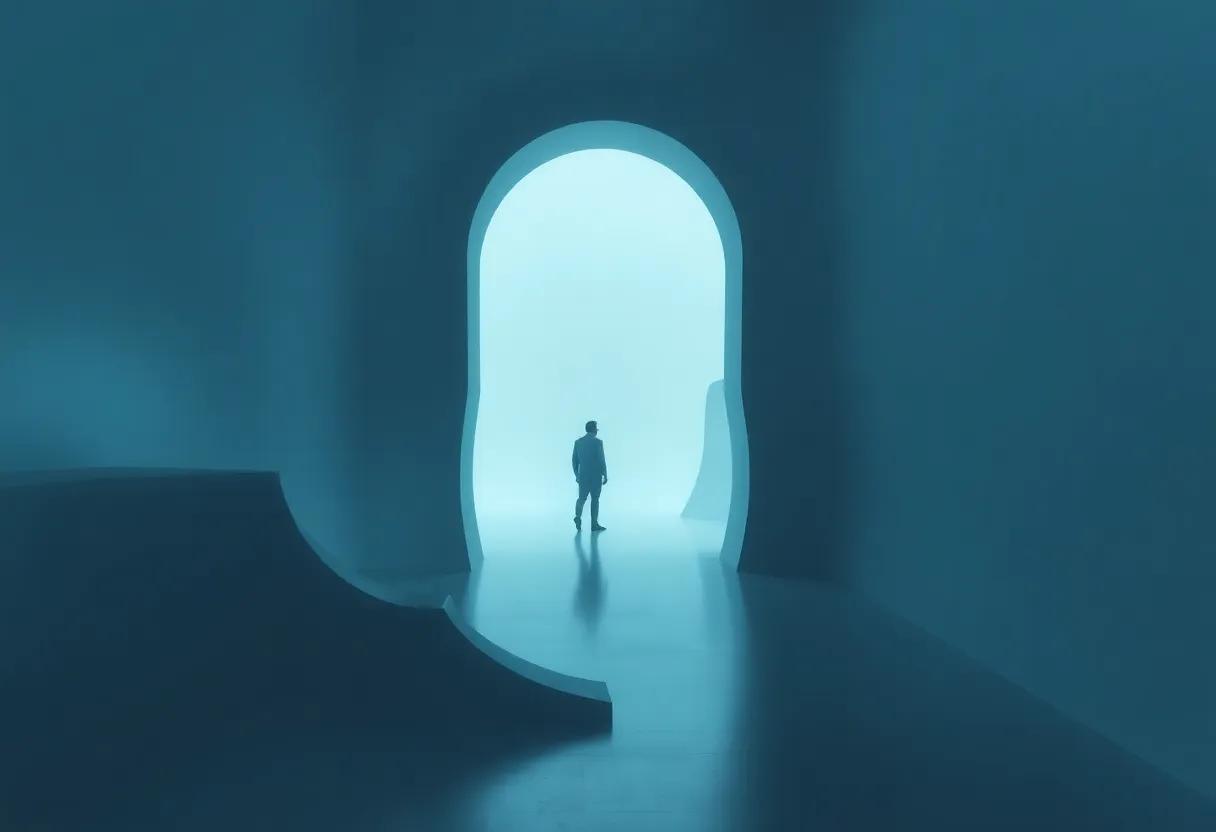
Before you re-enter tessier’s shadowed rooms, take a quiet inventory of what unsettles you: intense grief, bodily imagery, slow-burning obsession, and moments of ambiguous morality can surface unexpectedly.Consider reading during daylight if you want emotional distance, or at night with a single lamp if you want the book to press against your comfort zone; both are valid approaches. If particular scenes might be harmful, pause and note page ranges or chapter breaks so you can skip or skim on a second pass. For quick reference, the most commonly reported triggers include:
- Loss and mourning — prolonged sequences of sorrow and memory
- Physical decline — evocative descriptions of bodies and aging
- Obsession — repetitive thoughts and claustrophobic fixation
Use a reading buddy, marginalia, or a reflective journal to hold yourself between the book’s pulses and your life.
When planning an immersive reread, try themed pathways to extract different shades of meaning: the “Slow Burn” for atmospheric detail, the “Forensic Pass” for clues and structure, or the “Empathic Walkthrough” focusing on character interiority. Suggested listening/reading speeds for maximal effect are deliberately moderate—faster pacing dilutes Tessier’s accumulative dread, while too slow can flatten tension. A simple guide:
| Format | pace | Intended effect |
|---|---|---|
| Audiobook | 0.95–1.10× | Maintains intimacy and unease |
| Silent reading | 120–160 wpm | deep absorption, savoring detail |
| Close reread | 60–100 wpm | For analysis of phrasing and repetition |
For a layered experience, start with an audiobook at ~1.0× to gather tone, then reread slowly on paper to map motifs; mark passages that tug at you and revisit them in different lighting or at varied speeds to see how perception shifts.
Critical reception and enduring appeal tracing early reviews adaptation attempts and advice for librarians curating modern horror collections

Upon release, Tessier’s Phantom inspired a divided chorus: some reviewers celebrated its cold, slow-burn dread while others found the tempo stubbornly deliberate. Critics consistently praised the novel’s ability to render interior terror—atmosphere and psychological nuance were nearly unanimous strengths—while quibbles clustered around pacing and the novel’s resistance to tidy explanation. Early responses also noted the book’s literary leanings,meaning it often sat awkwardly between genre racks and mainstream fiction sections.
- Atmosphere: Evocative, lingering, frequently enough cited as the novel’s primary virtue.
- Character work: Subtle, interior-driven, rewards patient readers.
- pacing: Intentional lethargy—polarizing for contemporary audiences.
- Adaptation attempts: Frequently contemplated, rarely realized, owing to the novel’s inward focus.
| Reviewer | Publication | read |
|---|---|---|
| H. Martin | Literary Review | “Haunting, slow-burn success.” |
| S. Alvarez | Horror Quarterly | “Atmosphere wins; momentum lags.” |
| K. Bell | Daily Books | “Aspiring but uncinematic.” |
Over decades Phantom’s appeal has hardened into a quiet cult classic: its ambiguity and domestic unease continue to reward rediscovery,and readers who favor mood over spectacle return to it repeatedly. For librarians curating modern horror collections, the book functions as a bridge title—ideal for introducing literary readers to uncanny fiction and for showing genre fans a more introspective strain of fear. Practical suggestions include:
- Shelving: Cross-list under both “Contemporary Horror” and “Literary Fiction” or use spine labels to flag it as a crossover pick.
- Reader advisory: Pitch to patrons who enjoy atmospheric slow-burns, psychological dread, or authors like Shirley Jackson and Ramsey Campbell.
- Programming: Pair with film screenings or talks on adaptation to spark discussion about the challenges of translating interior terror.
- Collection strategy: Keep multiple copies during spooky seasons and offer curated displays titled “Quiet Nightmares” or “Domestic Dread.”
About the writer Thomas Tessier his career influences and craft evaluation with suggested readings and guidance for exploring his broader oeuvre

Thomas Tessier’s work thrives in the liminal: a steady apprenticeship in the shadows of Gothic precedent, mid‑century psychological unease, and the pared‑down realism of literary fiction shapes his voice more than any single manifesto. Read as a whole,his career maps a deliberate tightening of focus — from broader atmospheric landscapes to the intimate claustrophobia of a single mind — which makes his pacing feel surgical and his hauntings insistently interior. Consider these recurring influences and what to listen for when reading:
- Gothic ancestry — atmosphere, ruin, and the uncanny as emotional topography;
- Psychological realism — characters whose fears sculpt the plot;
- Minimalist detail — economical prose that makes small images resonate.
| Craft Element | What to Notice |
|---|---|
| Tone | Measured, quietly relentless |
| Setting | Familiar places made strange |
| Protagonists | Flawed, interiorly haunted |
Paths into his broader oeuvre: begin with the novel at hand and then branch outward with intention — alternate novels with short‑story collections to catch how motifs compress and expand. Practical approaches that reveal depth:
- Read chronologically to watch recurring obsessions evolve;
- Pair short fiction with novels to compare scale and technique;
- compare contemporaries (think psychological horror and literary realists) to situate his aesthetic choices;
- Keep a motifs list (doors, echoes, memory) and track their permutations across works.
These strategies transform a casual reading into a guided excavation of craft — revealing how restraint, repetition, and the slow tightening of perspective produce the peculiar, enduring chill that defines his fiction.
this measured reading of Phantom leaves us with a book that is less about easy answers and more about the slow work of being unsettled. Tessier’s prose,patient and precise,builds a mood that lingers long after the last page; readers who favor atmosphere and psychological nuance will find much to admire,while those seeking tidy resolution may come away wanting.my aim in this review was not to coronate nor to dismiss, but to untangle what the novel sets in motion: a sustained interrogation of fear, memory, and the soft architecture of dread.
If anything, Phantom is the kind of novel that insists on being experienced rather than summarized. Approach it with time to notice the small disquieting details, and you may discover why Tessier’s work continues to provoke conversation. Whether it becomes a favorite or a fascinating detour will depend on what you look for in a ghost story — but it will, almost certainly, be a book you remember.