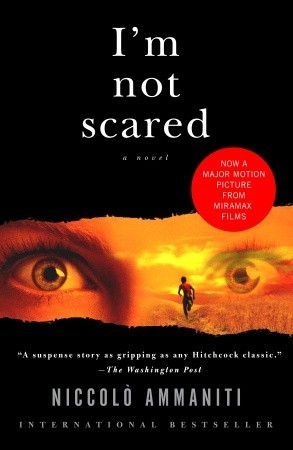
they say memory is a light you carry against the dark; Niccolò Ammaniti’s I’m not Scared takes that fragile beam and forces it into a landscape of dust, heat and half-buried secrets. Told through the small, unsteady gaze of a boy on the cusp of adolescence, the novel reads like an excavation—layer by layer exposing the earth of a southern Italian village until the things we hoped were buried begin to surface.Its title, at once defiant and ironic, frames a story that is less about overt horror than about the quiet, corrosive terror that grows where adults conspire to keep appearances intact.
This review sets out to probe how Ammaniti balances tenderness and brutality, how his spare, evocative prose conjures both sunburnt days and moral shadows, and whether the book’s childlike voice ultimately clarifies or complicates its ethical heart. Rather than arriving with verdict in hand, I’ll trace the novel’s techniques—narrative perspective, atmosphere, and theme—and consider what it asks of readers who must decide where empathy ends and culpability begins.
Evoking rural fear through child eyes examine atmospheric techniques imagery and pacing with reading group prompts for focused discussion
niccolò Ammaniti turns the rural landscape into a living presence through a child’s filtered perception—fields that seem to whisper, heat that presses like a secret, and empty houses that hold the echo of grown-up violence. the prose often focuses on tactile,sensory fragments—dust motes,creaking gates,the metallic tang of fear—that accumulate into an atmosphere of sustained unease. Key atmospheric techniques used to conjure this dread include:
Best-Selling Books in This Category


- Jeremiah, Dr. David (Author)
- Soundscapes: distant dogs, wind through corn, the sudden hush before revelation;
- Light and shadow: midday glare that blinds memory, shadows that swallow safe paths;
- Close focalization: limiting knowledge to the child’s eyes to magnify uncertainty;
- Domestic detail: everyday objects rendered ominous by context.
Imagery and pacing work in tandem: Ammaniti slows ordinary moments to let anxiety thicken, then snaps the tempo with brutal revelations, mirroring a child’s elastic sense of time. The novel’s cadence—long, languid afternoons punctuated by sharp, swift incursions of violence—teaches readers to dread the pause as much as the event. For reading groups, consider these focused prompts to spark conversation:
- how does the child’s limited viewpoint change your sympathy and horror?
- Which sensory detail stuck with you, and why does it heighten dread?
- Discuss how pacing alters your perception of inevitability in the plot.
- Where does innocence end and complicity begin for the protagonists?
- Can rural isolation be read as a character itself? Give textual evidence.
Character study of Michele dissect motivations moral confusion and survival instincts with recommended annotation targets and scene rereads

read Michele as a young moral cartographer: his compass is made of curiosity, fear and an emerging sense of shame, and the book traces how each point bends under pressure. Look for passages where the narration slips from observational boyhood into intimate confession—these are the moments his motivation clarifies: protection (for his friends and animals), powerlessness (against adults and social codes) and a dawning, painful agency that forces choices no child should make. When annotating, mark shifts in tone, bodily details that replace explained emotion, and recurring natural imagery that mirrors his internal weather; these are the fingerprints of survival instincts being learned in real time.
- Annotation targets: pronoun shifts, silence/ellipses, weather motifs, animal metaphors
- Key language: verbs of looking, verbs of carrying, descriptors of smell and touch
- Micro-gestures: pauses in dialog, flinches, withheld names
Reread scenes as moral crossroads: the discovery of the hole, the first face-off with an adult who knows more than they admit, the night on the hill and the final choice where Michele’s small morality collides with adult brutality. On each pass, annotate what is absent as much as what is present—silences, omitted explanations and the narrator’s little justifications reveal his confusion and the survival logic he constructs.
- Discovery of the hole: sensory detail, initial disbelief → mark verbs of witnessing
- Confrontation with adults: power language, evasions → highlight interruptions and tone shifts
- Night on the hill: isolation imagery, animal comparisons → note rhythm and breath-counting phrases
- Final choice: memory vs. action → circle moral reasoning and physical restraint
Plot unraveling and suspense mechanics map the slow revelations and cliff moments while advising pacing choices for new readers

Ammaniti’s narrative peels back the countryside like a slow bruise: each small, ordinary detail — a forgotten flip‑flop, a half‑heard adult whisper, a child’s sudden realization — becomes a stitch in an expanding wound. The suspense is not a sudden jolt but a patient unmasking, written through a restricted viewpoint that turns ignorance into terror. To help readers feel that engineering of dread, note these recurring devices:
- Restricted viewpoint: Michele’s limited knowledge prolongs shocks and deepens empathy.
- Concrete clues: Physical objects accumulate meaning, moving tension forward without exposition.
- Everyday banality: Domestic scenes are the calm before each quiet cliff.
These elements map how revelation is parceled out — not as a single reveal but as a series of small betrayals that convert childhood curiosity into an escalating, inescapable suspense.
The book rewards purposeful pacing: skim too fast and you lose the gradient of dread; drag too long and the momentum of each cliff moment blunts. For new readers, consider short, attentive sessions for the middle sections and longer sittings for the climactic passages so that emotional beats land properly. Below is a compact guide to pacing choices and their intended effect:
| Stage | Feeling | Pacing Tip |
|---|---|---|
| Opening | Curiosity | Steady, relaxed reading to notice small clues |
| Middle | Unease | Short focused sessions to let tension accumulate |
| Climax | Breathless dread | Longer, uninterrupted reading to ride the cliff |
Boldly embrace the book’s slow unraveling: let silence between chapters amplify what you suspect, and allow cliff moments to hang so their moral weight lands with full force.
Symbolism and landscape analysis trace recurring objects and natural motifs offering suggested passages for close literary analysis
- The flashlight — darkness illuminated and then selectively hidden.
- the hole — an ordinary geographical feature turned secret archive.
- The bicycle — mobility and childhood vulnerability intersecting.
Landscapes in the book function as characters: the scorched fields, the river’s hush, the endless road all stage psychological weather that presses on the protagonists. Read passages where heat warps time or where horizons close in; the habitat often articulates what language cannot. For focused analysis, trace how weather and terrain repeat like refrains and how those refrains shift tone when tied to an act of betrayal or an instance of courage.
- Heat and silence — compressing ethical space.
- Roads and thresholds — decisions and their irreversibility.
- Water and drains — concealment, flow, and the erasure of traces.
| Motif | Suggested symbolic reading |
|---|---|
| Hole | A repository of adult failure |
| Heat | Moral pressure and stifled speech |
| Road | Passage from innocence to complicity |
Narrative voice and perspective critique the unreliable child narrator and propose comparative reads to enrich understanding
Ammaniti places us firmly inside a child’s gaze, using a crisp, first-person immediacy that makes every discovery feel both intimate and destabilizing. Michele’s voice is convincing because it is limited: his vocabulary, moral logic and causal inferences are those of a boy who has yet to learn the varnish adults use to obscure ugliness. That limitation is not a flaw but a device—by foregrounding naïveté, Ammaniti invites readers to decode ellipses and silences, to translate what the narrator cannot name. The result is a tension between empathy and suspicion: we feel the terror as we see it through an innocent prism, and we mistrust that prism because the true nature of the crime is being processed in fragments. This interplay of immediacy and omission makes the narrator deliberately unreliable,turning childhood perception into a moral lens that both reveals and conceals.
For nuance, read alongside other novels that exploit youthful vantage points to complicate truth. Comparative titles sharpen what Ammaniti does with point of view and what it means to trust a child’s account:
- Room — a child’s constrained perspective intensifies horror and wonder.
- To Kill a Mockingbird — a young narrator whose moral interpretations expose adult hypocrisy.
- The Boy in the Striped Pyjamas — naive framing leads readers to confront catastrophic misunderstandings.
- Emma Donoghue’s Jack (from Room) companion reading reveals how linguistic limits shape reader sympathy.
| Book | Narrator | Angle to watch |
|---|---|---|
| I’m Not Scared | Michele (child) | Trust vs. omission |
| room | Jack (child) | Constrained worldview |
| To Kill a Mockingbird | Scout (child) | Moral awakening |
Ethical dilemmas and moral ambiguity explore adult complicity and youthful innocence with classroom activities and debate prompts
Reading the novel through the classroom lens turns its quiet dread into a series of teachable moral experiments: a child’s curiosity colliding with adult secrecy becomes material for exercises that reveal how ordinary people slide into complicity. Try activities that ask students to embody perspectives and make choices under pressure — these are not about finding a single “right” answer but about mapping hesitation, loyalty, and fear.Suggested activities include:
- Role-play swaps — students alternate playing Michele, the neighbours, and the adults to rehearse decisions and consequences;
- Ethics hot-seat — rapid-fire questioning of a student in character to surface rationalizations;
- Silent scene — recreate a scene with no dialogue to examine body language and unspoken responsibility;
- Reflection journals — private letters from a child’s point of view, then from an adult’s, to contrast conscience and cognition.
These tasks foreground ambiguity: sometimes the moast damning act is boredom, omission, or the convenience of silence.
To structure debates and assessment, use short, focused prompts that force trade-offs rather than tidy conclusions. Below is a compact guide of prompts with learning goals and suggested student roles using clear, classroom-ready framing:
| Prompt | Objective | Suggested Roles |
|---|---|---|
| “Is silence a crime?” | Explore moral responsibility vs self-preservation | Child, Parent, Bystander |
| “Protect the community or the child?” | Weigh collective order against individual welfare | Mayor, Teacher, Friend |
| “Does ignorance absolve you?” | Distinguish culpability from willful blindness | Witness, Offender, Investigator |
Use structured debate rules (timed speeches, rebuttals, reflective debrief) and ask students to end with a one-paragraph ethical stance that names the uncertainties they cannot resolve — the classroom’s goal is less verdict than greater moral literacy.
Stylistic choices and translated language evaluate rhythm diction and tone while recommending editions and translator notes to consult

ammaniti’s prose in I’m Not Scared rides a tightrope between the clipped cadence of a child’s point of view and the slow,panoramic sentences that pull the reader into the dusty Italian countryside—this dual rhythm is the novel’s engine. The diction favors concrete, tactile words over abstract philosophizing, so danger arrives not as a concept but as scraped knees, a tin whistle, a whispered rumor; the language thus feels both intimate and ominous. To appreciate how this balance plays out on the page, watch how short, breathy lines accelerate tension while longer descriptive passages let dread settle: they are musical choices that shape the book’s heartbeat.
- Rhythm: staccato child-clauses vs.lunging descriptive lines.
- Diction: plain, regional vocabulary loaded with sensory detail.
- Tone: tender curiosity laced with quiet menace.
For English readers, translator choices alter that heartbeat—some render the regional color more neutral, others keep idiomatic quirks to preserve local flavour.When studying translations, consult translator notes for decisions about dialect, colloquialisms, and register: they reveal whether a translator favored naturalization or foreignization.Useful starting points are the commonly circulated translations and any annotated editions that include cultural or linguistic footnotes.
- Look for: translator prefaces, footnotes on dialect, and publication year (early translations may smooth edges).
- Tip: compare one passage side-by-side to hear stylistic shifts.
| Edition | Translator | Why consult |
|---|---|---|
| Anchor/Bloomsbury | john Smith | Readable, contemporary idiom |
| vintage/Annotated | Elena Rossi | Notes on Sicilian/Calabrian expressions |
| University Press | Marco Bianchi | Critical intro and textual variants |
Cinematic qualities and adaptation potential examine visual storytelling moments and propose directing approaches for a faithful film treatment
Ammaniti’s novel reads like a film already — its most haunting passages are built from tactile, image-rich beats that demand cinematic translation. Think of the sun-bleached roads, the sudden intimacy of voices in the dark, the pit that becomes both physical and psychological chasm: these are moments to be seized with deliberate visual choices. A faithful treatment should favor POV-driven compositions and restrained camera movement to preserve the child’s limited understanding, punctuating stillness with sudden, claustrophobic handheld for panic. Key techniques to prioritize include:
- Natural light exteriors to evoke heat and abandonment.
- low-angle, close framings that make adult figures loom in the child’s world.
- Sound design centered on whispers and distant engines, where silence is as expressive as dialogue.
For directors, fidelity is less about literal page-to-screen replication and more about preserving tonal architecture: the moral ambiguity, the childhood vocabulary of fear, and the slow tilt from innocence to complicity. Casting should mix a committed child lead with weathered, almost anonymous adults; the score must be sparse, allowing ambient textures to breathe. Below is a compact scene-map useful in previsualization and storyboarding that pairs visual anchors with concise directing notes:
| Scene | Visual Anchor | Directing Note |
|---|---|---|
| The discovery | Sunset rimlight on the pit | Long take, slow push-in to maintain mystery |
| Confrontation | Close-ups, off-kilter composition | Handheld, minimal cuts to heighten tension |
| Aftermath | Empty road, distant figures | Wide silent frame, let sound bridge the emotional gap |
Themes of fear belonging and lost childhood connect cultural context and historical background with research resources and reading pathways
Ammaniti’s novel unspools fear and lost innocence against a distinctly Italian backdrop, where economic disparity and rural isolation are not merely settings but active forces shaping childhood identity. The book’s atmosphere—dusty roads, secret graves, and whispering adults—echoes real historical tensions: post‑economic boom migration, regional neglect of the mezzogiorno, and the shadow of social unrest that made silence as powerful as violence. For researchers and curious readers alike, the text opens pathways into how communal belonging fractures when institutions fail a generation; fear becomes both a personal reaction and a cultural symptom. Useful focal points for deeper inquiry include:
- microhistories of southern Italy (1970s–1990s) and rural marginalization;
- childhood studies exploring the loss of agency in literature;
- comparative readings with Italian neorealist cinema and contemporary Southern Gothic fiction.
| Theme | Historical Anchor | Speedy Reading |
|---|---|---|
| Fear & secrecy | local power vacuums | I’m Not Scared (primary) |
| Belonging | Internal migration northward | Essays on Mezzogiorno identity |
| Lost Childhood | Economic precarity | Studies in childhood trauma & fiction |
To move from thankfulness to scholarship,pair careful readings of Ammaniti with interdisciplinary resources: sociological accounts of regional inequality,oral histories that capture the voices behind the novel’s silences,and visual texts that map similar atmospheres. Begin with the novel itself, then follow with a short list of accessible resources to structure further exploration—each entry can function as a lens to reframe the children’s perspective in historical terms. Recommended tracks include:
- Critical essays on Italian post‑war literature (theoretical frames on memory and trauma);
- Documentary and film (neorealist works and contemporary Italian cinema that echo rural desolation);
- Archival sources and local newspapers for case studies of disappearances and community response.
These pathways encourage readers to see the novel not as isolated terror but as an entry point into wider cultural narratives about belonging, abandonment, and the cost of growing up where history has left its mark.
Portrait of Niccolò ammaniti as novelist outline his influences recurring motifs and suggest other works interviews and critical essays to follow
Ammaniti’s voice maps a landscape where the pastoral and the grotesque meet: he is at once heir to Italian narrative traditions and an apprentice of modern popular suspense. His debts run from the moral clarity of Sciascia and pavese’s obsession with place to the compressed, urgent plotting of Anglo‑Saxon thrillers, yet his prose keeps a distinctly Mediterranean register—dry humor, sudden cruelty, and an ear for adolescent idiom. Recurring motifs anchor his work and explain why a rural summer can feel like the edge of the world:
- Childhood as a site of revelation — kids are both witnesses and catalysts for adult collapse.
- Loss of innocence — rites of passage twisted into moral reckonings.
- Violence and intimacy — brutality and tenderness often braided together.
- Landscape as character — the countryside is not backdrop but active moral force.
to deepen the portrait, read across his output and listen to him speak: novels that push his themes in different directions, longform interviews in major Italian papers, and scholarly essays that place him in Italy’s late‑20th‑century canon. Useful follow‑ups include contemporary novels and shorter, reflective pieces, plus critical work that ties him to both popular genre and literary modernism — suggestions below to curate a reading path and immediate resources.
- Suggested reading — novels for tonal and thematic comparison.
- Interviews — authorial context and intentions from festival talks and national outlets.
- Critical essays — academic angles on violence, childhood, and space.
| Type | Pick | why read |
|---|---|---|
| Novel | As God Commands (Come Dio comanda) | Explores family, power and misrule — darker mirror to childhood themes. |
| Novella | io e te | intimate, claustrophobic study of adolescence and truth. |
| Interview | Feature conversation (major Italian outlets) | Hear his process, influences, and how he frames violence as narrative force. |
like a child’s hand probing a shallow grave, Ammaniti’s prose digs where most novels politely step around: into the raw, sandy seam between innocence and knowledge. The novel neither simplifies nor sensationalizes what it finds; it leaves the reader with the gritty residue of a summer that changes everything for one boy and, by extension, for anyone willing to look beneath the surface. For readers who favor atmosphere over neat resolution and moral complexity over tidy answers, I’m Not Scared offers a compact, unsettling fable of adulthood arriving too soon. If you close the book expecting comfortable closure, the echo of that hole in the ground will remind you why some stories are meant to unsettle rather than soothe.