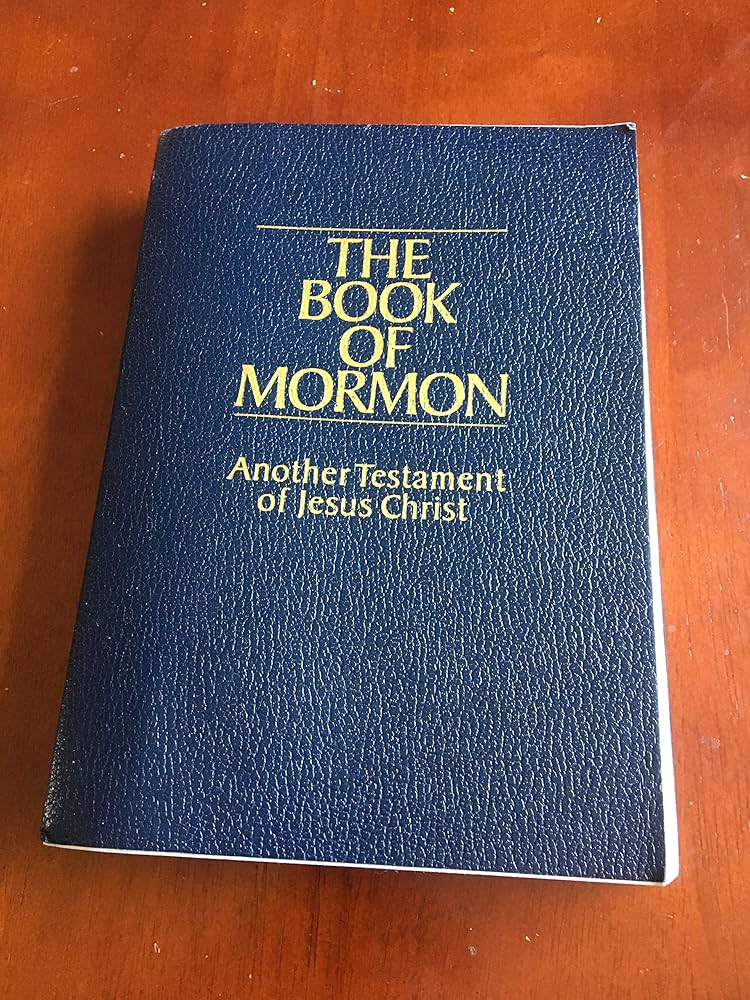
Opening the pages of feels a little like stepping onto an island shaped by scripture,story and centuries of interpretation. the title itself promises both journey and witness: an invitation to examine a text that functions as sacred scripture for millions, while also asking readers to consider how narrative, theology and history interweave on its pages.
This review aims to be a clear-eyed companion for that journey. Rather than arguing for or against the book’s claims, I will trace its themes, assess its literary and rhetorical qualities, and consider how accessible and meaningful it might be to different types of readers—devoted believers, curious newcomers, and critical scholars alike. Along the way I’ll note moments that illuminate, passages that challenge, and the ways the work positions itself as “another testament of Jesus Christ.”
If you approach this review as a mapmaker, a pilgrim, or simply a curious reader, the following analysis will offer landmarks: what the book does well, where it raises questions, and how it sits within broader conversations about faith, history and scripture.
Exploring narrative arcs and recurring motifs in the Book of Mormon with practical study techniques and suggested cross referencing approaches

Best-Selling Books in This Category


Study techniques that illuminate the Book of Mormon’s sweeping storylines begin with patterns instead of isolated verses: map character arcs on a timeline, color-code recurring images (light/dark, covenant, exile), and sketch short summaries of each major narrator to see how themes evolve from Nephi to Moroni. Practical habits—reading a chapter aloud to catch rhetorical echoes, keeping a margin list of repeated words, and asking “what does this passage want to teach about Jesus, covenant, or community?”—turn abstract motifs into tangible study paths. Try these focused practices to surface meaning across books:
- make a two-column chart for character decisions vs. outcomes to trace moral arcs.
- Compile a motif index (e.g., repentance, prophecy, covenant) and mark every verse occurrence.
- Cross-read parallel passages with an eye for variation in emphasis or detail.
Cross-referencing examples can be organized in a compact table for quick reference and devotional study sessions:
| Motif | Suggested Cross-Reference |
|---|---|
| Covenant | 2 Nephi 9; Deuteronomy 7 |
| Prophetic Call | 1 Nephi 1; Jeremiah 1 |
| Christ Typology | Mosiah 3; Isaiah 53 |
Assessing theological themes and Christ centered testimony while offering discussion prompts and group study exercises for leaders and teachers
Evaluate the text through the twin lenses of scripture and witness: pay attention to recurring motifs—covenant, prophecy, atonement, mercy, and restoration—and trace how each motif points back to Christ. Use concentrated close-readings of key passages and encourage participants to record where a verse shifts from doctrine to personal conviction; this fosters a living, Christ-centered testimony rather than an abstract theology. Try these quick prompts during discussion:
- where in this passage is Christ most plainly revealed?
- How does this teaching reshape our understanding of discipleship?
- What covenant promise here invites a personal response?
these questions help leaders move a group from textual analysis into heartfelt application, allowing testimony to emerge naturally from study rather than being imposed upon it.
Design exercises that equip teachers to guide both thinkers and feelers toward authentic conviction: combine reflective journaling,paired testimony-sharing,and small-group scriptural mapping so learners both reason and bear witness. Suggested activities include role-plays of missionary dialogues, verse-mapping charts, and a short testimony circle with strict time limits to keep focus. below is a simple facilitator cheat-sheet to structure a thirty- to sixty-minute session:
| Exercise | Time | Leader Goal |
|---|---|---|
| Verse Mapping | 15 min | Identify Christ motifs |
| Paired testimony | 10 min | Practice concise sharing |
| Group Synthesis | 10–20 min | Apply doctrine to life |
These tools help teachers balance doctrinal clarity and personal witness so that every study becomes an invitation to encounter Christ.
Evaluating the translation claims and textual transmission with clear guidance on sources to consult and questions to raise during independent research
Approach claims about translation and transmission like a careful reader at a crossroads: weigh the spoken accounts, the surviving manuscripts, and the modern critical editions with equal curiosity. Start by cataloging primary witnesses — Joseph Smith’s own narratives, the 1829 printer’s manuscript, and the fragments of the original manuscript — then move outward to how later editors and printers shaped what we now read. Ask focused questions as you go:
- Who recorded this claim, and when?
- What surviving manuscripts or versions exist, and how do they differ?
- How did contemporaries describe the translation process?
- Which editorial decisions (spelling, punctuation, emendations) were made and why?
- What methodological assumptions do modern translators and critics bring to the text?
These concrete queries help separate oral tradition from written evidence and illuminate the pathways by which the text reached readers across generations.
To build a balanced understanding,consult a mix of archival materials,critical editions,and scholarly commentary rather than relying on a single authority. Useful starting points include digitized manuscript images, Royal Skousen’s critical work on textual variants, denominational publications, and independent academic journals — each offers distinct angles on provenance, variant readings, and editorial rationale. Below is a compact guide to where to look and why:
| Source Type | Example | Why Consult |
|---|---|---|
| Manuscripts & Images | Printer’s/Original fragments | Direct evidence of transmission |
| Critical Editions | Textual Critical project | Maps variants and editorial choices |
| Scholarly Articles | church & non‑church journals | Contextual analysis and debate |
| Contemporary Accounts | eyewitness statements | Immediate ancient viewpoint |
Keep a log of citations, note disagreements among sources, and let open questions drive further reading — the best independent research stitches together evidence rather than accepting any single explanation as final.
Analyzing character development and prophetic voices to illuminate moral lessons and propose sermon outlines or reflective journaling prompts
Characters in these narratives are sculpted by their choices, shadows, and revelations; by tracing arcs from doubt to conviction we uncover living moral lessons that speak to contemporary hearts. Nephi’s obedience,Alma’s repentance,and Samuel the Lamanite’s boldness are not merely historical sketches but mirrors reflecting how faith,humility,and courage reshape identity. Consider these distilled themes that surface when we read closely and listen for the prophetic cadence:
- Conversion over time — virtue as a gradual habit rather than a single event
- Prophetic accountability — words that call communities back to covenant
- Compassionate leadership — power exercised in service and correction
- Persistent hope — endurance amid trial as a moral hallmark
From those themes we can craft sermons and reflective prompts that move pew and personal journal alike: short outlines give preachers a scaffold, while targeted questions invite private excavation of conscience. Below are imaginative, compact prompts and sermon foci you can adapt for a thirty-minute talk or a fifteen-minute journaling session — each item pairs a central claim with a practical application.
- Sermon Focus: “Small Means, Great Ends” — illustrate with nephi; application: identify one tiny obedience to begin this week.
- Sermon Focus: “Return and Rebuild” — center Alma’s story; application: lead a communal repentance exercise and action plan.
- Journaling Prompt: “Where has pride hardened my heart?” — write two recent moments and one step toward humility.
- Journaling Prompt: “Which prophetic voice have I ignored?” — list influences and imagine a corrective conversation.
Mapping geographic and cultural references alongside suggested multimedia resources and field study ideas to enrich classroom instruction
Bring text to terrain by plotting places and cultures across layered classroom maps that pair visual context with sensory-rich media. Use modern tools like StoryMap or simple Google My Maps to overlay probable Book of Mormon sites, trade routes and settlement patterns; then attach short documentary clips, dramatized audio passages, or tribal art galleries to each pin. To spark curiosity and anchor comprehension, try integrating:
- Interactive maps — animated routes and zoom layers
- Short films & clips — 3–7 minute documentary excerpts
- Audio dramatizations — scene readings and orchestral hymns
- primary-source images — high-resolution manuscript scans and indigenous art
these combinations help students visualize movement, climate, and cultural exchange while keeping lessons multimedia-rich and accessible.
Translate those maps into real-world learning with focused field study ideas and simple classroom extensions. Below is a compact reference linking evocative regions to multimedia and hands-on activities you can adapt for age and time:
| Region | Suggested Multimedia | Field Study Idea |
|---|---|---|
| Nephi plateau | Animated route map + dramatized reading | Topography walk & mapping sketch |
| Bountiful coast | Coastal ecology video + period songs | Beach study comparing text to shoreline features |
| Zarahemla plains | Interactive timeline + primary-source art | Community oral-history interview project |
- Tip: Pair any field trip with a short pre-visit media prompt and a reflective journal task.
- Scale: Mini-field studies (1–2 hours) can be local parks or museum exhibits; longer units can include virtual exchanges with cultural historians.
These practical pairings let teachers weave geography, culture, and multimedia into memorable, inquiry-driven lessons.
Comparing Book of Mormon doctrines with wider Christian scripture with neutral commentary and recommended further reading for lay audiences

Reading across texts invites a side-by-side look at shared convictions—such as the centrality of Jesus, the reality of resurrection, and the moral call to repentance—while also noting distinct claims about continuing revelation and additional scripture. The Book of Mormon positions itself as a companion witness to Christ with theological emphases that often echo the Bible but sometimes frame salvation, prophecy, and covenant life in ways that feel fresh to readers. Below is a compact snapshot to help lay readers spot quick points of convergence and divergence without taking a stance for or against either tradition.
| Topic | Book of Mormon | Wider Christian Scripture/Tradition |
|---|---|---|
| Christ | Affirms divinity, atonement, and post-resurrection ministry | Central in varying Christian denominations with shared creedal language |
| Scriptural canon | Includes additional revealed scripture alongside the Bible | ranges from sola scriptura perspectives to traditions valuing extra-biblical writings |
| Revelation | Emphasizes ongoing prophetic guidance | Views vary from closed canon to continued spiritual insight |
| Salvation | Combines grace through Christ with covenantal practices | Stretches from faith-alone doctrines to synergistic traditions |
Further reading for curious lay readers: explore primary texts first, then approachable introductions and comparative works that present multiple viewpoints. Suggested starting points include:
- The Book of Mormon — the primary text for firsthand reading.
- The Bible — read in parallel to notice themes and language echoes.
- By the Hand of Mormon (Terryl Givens) — an accessible cultural and theological study that situates the book in broader religious history.
- Mormons and the Bible (Philip L. Barlow) — a scholarly yet readable look at how Latter-day Saint engagement with scripture compares to other Christian approaches.
- Gospel topics essays — official,short essays that address common questions and historical topics in plain language.
- The Bible project — multimedia resources for understanding biblical themes and structure, helpful for comparative reading.
examining literary devices and poetic structures with tips for close reading and creative presentation ideas for workshops and book clubs
Listen for the rhythms, patterns, and repetitions that shape meaning: note where a line echoes an earlier verse, where names and places recur, or where a sudden shift in voice reframes a passage. Mark imagery and metaphor—water, journey, and covenant language are rich veins—and track how they accumulate to build themes. Pay special attention to structural devices such as chiasmus, parallelism, and deliberate breaks in cadence; these often signal emphasis and invite multiple readings. Use targeted questions as you read: what emotion does the diction aim to evoke? which phrases repeat and how do they change? whose perspective is centered, and when does it shift?
- Read aloud in pairs to hear cadence and rhetorical rise.
- Trace echoes—highlight a key phrase and map where it reappears.
- line-by-line prompts—each member annotates one verse and shares a 60‑second reflection.
- Compare passages side-by-side to spot structural symmetry.
Turn close reading into creative presentation: transform a passage into a short spoken-word piece,build a visual collage of recurring motifs,or design a soundscape that reflects shifts in tone and setting. For workshops, assign small groups to dramatize contrasting voices or to make a “map” of a narrative’s emotional geography. Encourage members to create a brief teaching moment—one person poses an interpretive question, another responds with textual evidence, a third offers a creative response—so discussion alternates with creation and keeps insight flowing.
| Activity | time | materials |
|---|---|---|
| Echo Mapping | 20 min | Highlighters, notes |
| Mini Performance | 15 min | Props, scripts |
| Motif Collage | 25 min | magazines, glue |
Reviewing the pedagogical approach of the book with annotated lesson plans and assessment suggestions tailored to diverse learning environments
This approach privileges story-led exploration alongside rigorous skills practice,inviting learners to move from close reading to lived application.Annotated lesson plans act as scaffolds that instructors can tune for time, culture, and cognitive demand: each plan notes essential questions, core scripture passages, suggested hooks, and quick formative checks so facilitators can pivot in real time. Emphasis is placed on culturally responsive prompts,scaffolded comprehension tasks,and community-facing activities that make abstract themes tangible without sacrificing textual fidelity.
- Objective: concise learning target tied to faith, ethics, or literary skill.
- Passage: passage selection with context notes and cross-references.
- Hook & Launch: 5–10 minute entry activity to activate prior knowledge.
- Guided Questions: tiered prompts for recall,analysis,and application.
- Differentiation: options for multilingual learners, varied reading levels, and neurodiversity.
- Assessment Checks: quick formative moves (exit slips, think-pair-share, annotated evidence).
- Extension: project seeds and community engagement ideas.
Assessment suggestions are intentionally plural: combine brief, frequent formative checks with richer summative tasks so every learning habitat can show growth. Use rubrics that translate spiritual, analytical, and collaborative outcomes into observable criteria; encourage digital portfolios for longitudinal evidence, oral presentations for verbal learners, and reflective journals for contemplative practice. Wherever possible, align evaluation to purpose—service-learning for community classes, close-textual essays for secondary settings, and discussion-led assessments for adult study groups.
| Environment | Suggested Assessment |
|---|---|
| K–8 Classroom | Illustrated reflection + short rubric |
| Secondary school | Socratic seminar & analytical essay |
| University | Research paper or comparative project |
| Adult Study Group | Facilitated dialog + reflective portfolio |
| Online Learning | Multimedia forum posts & peer review |
Practical reading schedules and devotional formats proposed for different time frames plus guidance on customizing plans for personal study goals
Choose a rhythm that fits your life: whether you have a week to immerse yourself, a month to deepen a theme, or a year to absorb the entire narrative, there’s a practical plan for every schedule. Try these compact formats as starting points and adapt them to your pace:
- 7-Day Sprint — Daily chapters focused on core testimonies and Christ-centered passages.
- 30-Day Focus — Thematically grouped readings (faith, repentance, hope) with a short question for reflection each day.
- 90-Day Rotation — Balanced daily portions mixing prophecy, narrative, and sermon material to keep variety.
- One-year Companion — A steady, manageable cadence that pairs passages with weekly study prompts and journaling.
Each plan can be scaled — shorten or expand daily portions — but keep a simple ritual: read, reflect, and record one takeaway. Bold a key verse in your journal each time to build a visible trail of spiritual growth.
Personalizing the journey turns reading into devotion. Use the quick customization guide below to align time and intent, then experiment until the format feels natural.
| Devotional Focus | Time | Suggested Format |
|---|---|---|
| Scripture Memorization | 10–15 min/day | One verse + meditation |
| Doctrinal Study | 20–40 min/day | Chapter + cross-references |
| Family Reading | 15–25 min/day | Short passage + question |
Additional tips:
- Anchor sessions to a daily habit (morning coffee, evening wind-down).
- Mix media — audio readings, maps, and talks to enrich comprehension.
- Review weekly — summarize three insights and one action step to keep study transformative.
Customize boldly: if a plan doesn’t stick, shorten it, change the time of day, or swap thematic focus until it becomes a sustained, meaningful practice.
Profile of the author examining background influences academic credentials and editorial choices that shaped this guide to the Book of Mormon
Raised between scriptural study and archive rooms, the author brings a childhood threaded with family scripture evenings and early work cataloguing nineteenth‑century religious manuscripts. Those dual influences — intimate devotional practice and hands‑on archival scholarship — shaped a voice that is both reverent and rigorously curious. Key formative experiences include a stint living near historic Book of Mormon sites, fluency in both English and Biblical languages, and collaborative projects with historians; these elements surface in the guide as a steady blend of narrative warmth and attention to provenance.
- Devotional upbringing — shaped literary tone and pastoral empathy
- Archival training — grounded textual assertions in documented sources
- Field study — added geographic and cultural texture to commentary
The author’s formal training complements those lived influences: an M.A. in Religious Studies and a Ph.D.in Early American History inform a method that privileges context, intertextual reading, and clear editorial choices. The guide’s editorial framework is explicit about translation philosophy, citation standards, and why certain passages recieve expanded notes or modernized language; this is not neutral copyediting but a deliberate set of interpretive decisions meant to aid readers of varied backgrounds.
| Credential | Institution | Focus |
|---|---|---|
| M.A. | Union Theological Seminary | Scriptural Hermeneutics |
| Ph.D. | Columbia University | Early American Religious history |
- Clarity: footnotes distinguish original text from modern clarifications
- Accessibility: language choices aimed to welcome new readers without sacrificing nuance
- Scholarly dialogue: cross‑references invite further research rather than close the conversation
As you close the final chapter, this review leaves you with more than a summary — it leaves a map. navigates familiar terrain with a blend of historical context, devotional reflection, and textual close-reading that will satisfy some readers and provoke questions for others. It neither forces conclusions nor ignores complexities; rather, it invites a steady, curious walk through a text that has shaped many lives.
If you seek an introduction that balances reverence with inquiry, this book offers signposts and perspectives to guide your reading. If you come looking for definitive answers, you may find the journey itself more revealing than any single destination. Either way,the work prompts thoughtful engagement: read it slowly,mark the pages that resonate,and let the echoes of its themes—faith,testimony,and interpretation—linger.
this volume functions less as a verdict and more as a companion. Whether you view it as scripture, history, literature, or all three, it opens a door to conversation — one that rewards readers willing to step through.