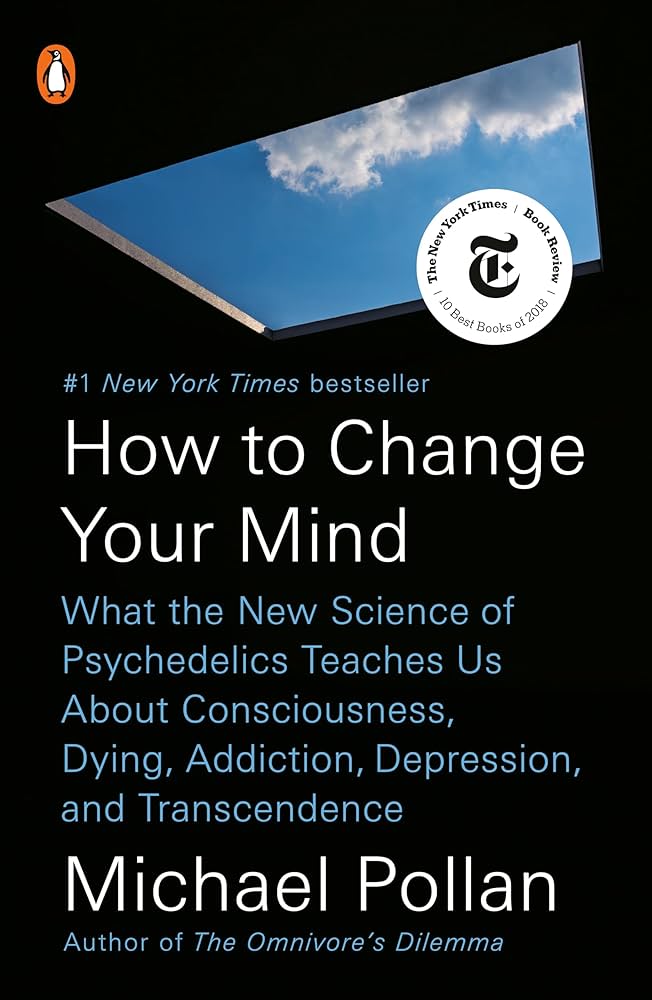
At the crossroads of neuroscience, history, and personal testimony lies a subject that has provoked wonder, fear, and fierce debate: the use of psychedelic substances to alter consciousness and relieve suffering. In , we set out into that terrain with Michael Pollan as our cartographer — a writer whose curiosity compels him to trace the tangled pathways between scientific study, cultural stigma, and intimate experience. The book reads like a map drawn from multiple perspectives: archival trails of mid‑century research, the detours of prohibition and counterculture, and the new lines of investigation that promise therapeutic possibility.
Pollan’s approach blends immersive journalism with scientific reporting and memoir, folding interviews with researchers and therapists into accounts of his own guided encounters.This synthesis raises the questions that shape this review: How faithfully does the narrative represent the science? Where does personal anecdote illuminate or obscure broader claims? And what ethical, political, and clinical implications follow from reintroducing these compounds into mainstream medicine? We will look for balance between skepticism and enthusiasm, clarity of evidence and the allure of transformative stories.
The following review examines how effectively Pollan navigates complexity — the strengths of his storytelling,the limits of his argument,and the contribution his book makes to a conversation that spans laboratories,clinics,policy chambers,and living rooms. Rather than offering verdicts of unqualified praise or condemnation, this review aims to situate the book as a readable, provocative waypoint in an ongoing inquiry into minds and medicines.
A panoramic opening into altered states and clinical promise where narrative meets neuroscience and historical context for psychedelics
In Pollan’s unfolding,subjective voyage and scientific mapping do not merely coexist — they illuminate each other. The prose acts like a lens that brings felt experience and synaptic change into the same frame: personal testimonies sit beside studies of neuroplasticity, ritual practices are measured alongside controlled protocols, and historical memory colors modern trials. this synthesis leaves the reader with a sense of wide-angle viewpoint, where cultural lineage and laboratory rigour jointly explain why certain substances can open perception, shift narratives of self, and catalyze therapeutic change.
Best-Selling Books in This Category


- High quality sticker: The sticker is made of waterproof PVC material which are sun protection and waterproof

- Breathing Lamp Function: A mindful breathing lamp is a powerful and effective tool that can help you reduce stress and anxiety, relax your mood, improve focus, improve sleep, and promote overall health
Within that panorama, clinical promise is tempered by careful questions of context, safety, and meaning. Researchers and clinicians are urged to pair biochemical models with narrative-informed care,recognizing that healing often depends on both mechanism and metaphor. Key themes to watch in the translation from promise to practice include:
- Safety frameworks — standardized dosing, screening, integration support
- Ethical stewardship — consent, access, and cultural humility
- Narrative integration — therapy that honors story as an active ingredient
- Mechanistic clarity — linking subjective reports to measurable brain changes
| Domain | Why it matters |
|---|---|
| Clinical Trials | Validate efficacy and refine protocols |
| Anthropology | Contextualizes ritual and meaning |
| Neuroscience | Maps mechanisms behind lasting change |
Clear explanation of scientific evidence and therapeutic trials balanced with personal accounts and societal implications for health care policy
Pollan threads a careful line between laboratory bench and bedside, summarizing randomized controlled trials, neuroimaging findings, and mechanistic hypotheses without losing sight of statistical caveats. He highlights rapid, often durable symptom relief seen in controlled trials of psychedelics for depression, PTSD, and end-of-life anxiety, while acknowledging limitations such as small cohorts, variable protocols, and challenges in blinding. The result is a measured portrait: science points to potent therapeutic effects and distinctive neural signatures, but the evidence still demands cautious interpretation and larger, diversified studies to confirm reproducibility and long‑term safety.
- notable trial trends: fast onset of benefit after a few doses
- Consistent concerns: small sample sizes and selection bias
- Research needs: standardized protocols and longer follow-up
Interwoven with the data are vivid personal narratives that give texture to clinical numbers: transformative sessions that defy simple quantification and adverse experiences that remind readers of real-world complexity. Those stories illuminate policy questions about training standards, equitable access, reimbursement, and informed consent—areas where clinical promise collides with ethical and logistical realities. Policymakers must weigh therapeutic potential against the infrastructure required for safe rollout, building frameworks that prioritize patient safety, clinician education, and social justice as much as scientific rigor.
| Policy consideration | Implication |
|---|---|
| Provider training | Certification and supervision models |
| Insurance coverage | Cost barriers vs. public health benefit |
| Access equity | Programs for underserved communities |
Thoughtful critique of cultural narratives surrounding risk stigma and regulatory barriers while offering pathways for ethical research and access
Reading Pollan through a critical lens reveals how entrenched narratives about danger and deviance shape what we call “acceptable” research. rather than treating risk as a fixed quantity, the book invites us to examine how social anxieties, historical injustices, and media frames amplify stigma and harden regulatory walls. Risk is often political—it is priced, policed, and publicized—so any meaningful reform must address the cultural scripts that precede legislation. Common distortions include:
- Over-simplified danger narratives that ignore comparative harms.
- Criminalization-first approaches that exclude patients and communities.
- Selective moral panics that skew funding and research priorities.
From that diagnosis come concrete, ethically grounded pathways toward better science and fairer access: frameworks that center participant dignity, clarity, and community leadership. Policymakers and researchers can collaborate to design trials that are both rigorous and restorative, while clinicians and advocates work to normalize harm-reduction practices and informed choice. practical steps worth pursuing include:
- Community-engaged protocols that give voice to those most affected.
- Regulatory sandboxes allowing monitored innovation without criminal penalties.
- Equity-focused funding to dismantle access gaps and diversify research cohorts.
Close reading of case studies patient experiences integration practices and potential pitfalls for clinicians and community support systems
Reading the case studies closely reveals a tapestry of singular journeys that nonetheless map onto shared motifs — abrupt shifts in self-concept, resurgent trauma, and moments of clarity that complicate diagnosis and care.Clinicians and community allies who parse these narratives do best when they balance evidence with empathy: attend to medication interactions, appreciate the power of set and setting, and track delayed emotional aftershocks as carefully as immediate physiological responses. Quick takeaways that emerge from the stories include practical flags for follow-up and referral, such as:
- Watch for medication contraindications and altered pharmacodynamics after psychedelic sessions.
- Prioritize continuity of care and scheduled debriefs in the first 72 hours and across weeks.
- Create pathways for trauma-informed referrals when difficult material surfaces unexpectedly.
Integration practices that translate insight into sustainable change require frameworks that are both structured and adaptable; too rigid a protocol flattens personal meaning, while too loose an approach risks leaving vulnerable people unsupported. Accomplished teams blend integration frameworks with community-based supports,explicit safety plans,and clinician training in transference,boundary management,and cultural humility.Key operational points to watch — and common pitfalls to avoid — can be summarized as:
- Establish predictable touchpoints for assessment and peer-support matching.
- Document consent, risks, and follow-up responsibilities in plain language.
- Invest in cross-disciplinary supervision so clinicians recognize when to escalate care.
| Stakeholder | Typical Role | Potential Pitfall |
|---|---|---|
| Clinician | Assessment & medical safety | Underestimating psychological fallout |
| Peer Support | Normalization & shared experience | Boundary blurring |
| Community Org | Navigation & resources | Uneven training |
Assessment of methodological rigor in cited studies suggestions for future randomized designs longitudinal follow up and improved reporting standards

Pollan’s narrative stitches together a wide array of experiments, but beneath the tapestry you can still see the scaffolding: many cited trials rely on small sample sizes, exploratory case series, or open-label designs that limit causal claims. Common methodological gaps include inconsistent blinding, informal control conditions, and short follow‑up windows that fail to capture durability or late-emerging outcomes. Outcome measures are often heterogeneous—mixing subjective self-reports with clinician ratings without clear justification—which complicates meta-analysis and reproducibility. Transparency also varies: protocol preregistration, data sharing, and standardized adverse‑event reporting are uneven, leaving readers to infer weather promising signals reflect robust effects or artifacts of design and publication bias.
Moving the field forward will require trials built on sturdier architecture: randomized, adequately powered, multi‑site designs with active placebos, longer longitudinal follow‑up, and harmonized outcome batteries that balance subjective experience with objective function. Practical steps include:
- Centralized randomization and blinded outcome assessment to reduce bias
- Predefined primary endpoints and standardized psychometric tools
- Commitment to data sharing, adverse‑event transparency, and CONSORT‑style reporting
| Recommended Feature | Practical Tip |
|---|---|
| Randomization | Central allocation, stratified by site |
| Follow‑up | 12–24 months with retention incentives |
| Reporting | Preregistered protocol + open data |
These measures will help convert evocative anecdotes into a reliable evidence base—one that can safely inform both clinical practice and further cultural exploration.
Practical recommendations for clinicians therapists and researchers on dosing models screening protocols safety monitoring and informed consent practices

Begin with humility and structure: adopt a “start low,go slow” mindset that pairs a clear,weight- or sensitivity‑adjusted dosing framework with rigorous pre-session screening—medical history,psychotropic interactions,and trauma vulnerability. Keep intake nimble but thorough: screen for cardiovascular risk, bipolar spectrum features, active psychosis, and recent substance misuse, and use collateral details when available to reduce surprises.
- Dosing baseline: conservative starter dose, pre-defined titration windows.
- Screening essentials: medication review, suicide risk, sleep and substance patterns.
- team readiness: trained responder on-site, emergency plan, and clear referral pathways.
monitor, document and consent with clarity: continuous vital and mental-status checks during active sessions, routine post-session follow-ups, and an explicit consent process that outlines expected experiences, risks, alternatives, and integration plans. Use standardized monitoring checklists and schedule integration contacts to capture delayed adverse reactions and to support lasting benefit.
- during sessions: vitals q15–30min initially, symptom rating, and staff observational notes.
- Post-session: structured check-ins at 24–72 hours and at one week; provide emergency contact.
- Consent elements: explicit on unpredictability, possible psychological risk, medication interactions, and right to withdraw.
| Item | Typical Frequency |
|---|---|
| Vitals & mental status | During session: every 15–30 min |
| Suicidality check | Baseline, 24–72 hrs, 1 week |
| Integration session | 24–72 hrs, 1–2 follow-ups |
Reflections on spiritual frameworks existential insights and cross cultural perspectives that enrich clinical outcomes without overselling metaphysical claims

Pollan’s inquiry invites clinicians to hold humble curiosity toward spiritual frameworks and existential questions without converting them into clinical dogma. By attending to meaning-making, ritual forms, and communal narratives we can amplify therapeutic alliance and openness to change, while keeping rigorous evidence and patient autonomy at the center. Practical considerations often look simple in theory but matter in practice:
- Cultural humility: ask, listen, and adapt rather than assume universality.
- Contextual safety: integrate rituals and symbols in ways that minimize harm.
- Meaning-focused interventions: support patients’ narratives without prescribing metaphysics.
- Research-minded translation: test rather than assert spiritual claims.
These moves preserve the therapeutic potency of existential insight while resisting the temptation to oversell metaphysical explanations.
When modestly integrated, cross-cultural perspectives and spiritual sensibilities can translate into measurable clinical gains — improved adherence, reduced isolation, and richer frameworks for coping — without invoking supernatural certainties. Below is a brief, practical mapping of how different frameworks can inform care in concrete ways; note the emphasis is on request, not endorsement of metaphysical truth:
| Framework | Clinical Insight | Cross‑cultural Note |
|---|---|---|
| Indigenous ritual | Collective meaning, community reintegration | Honor elders, adapt respectfully |
| Buddhist practice | Attention training, non-reactivity | Translate concepts to accessible language |
| Existential therapy | purpose, mortality awareness | Focus on personal narrative over doctrine |
Emphasizing clinical humility and evidence-informed integration keeps therapy grounded: spiritual and existential resources become tools for healing, not metaphysical claims to be proven in the clinic.
Editorial notes on structure tone and readability with suggestions to expand marginalized voices clarify technical passages and add visual summaries
Shape and cadence matter as much as the ideas themselves: tighten long, meandering paragraphs, add clear subheadings to guide readers from anecdote to evidence, and use signposts so the narrative breathes. Consider simple structural edits that improve readability without flattening Pollan’s voice — trim nested clauses, break dense explanations into bite-sized paragraphs, and introduce pull-quotes or boxed highlights for memorable lines. Concrete copy edits to prioritize:
- Shorten sentences that run past three lines on mobile
- Insert transition phrases between personal story and clinical data
- Vary paragraph length to maintain rhythm
- Use bold sparingly to emphasize takeaways, not everything
These choices preserve tone while making the essay more navigable for both curious general readers and practitioners skimming for insight.
To deepen inclusivity and clarity, proactively expand perspectives from communities historically sidelined in psychedelic discourse and simplify technical passages with layered explanations: a one-sentence summary, a plain-language paragraph, than a succinct technical note. Visual summaries — simple diagrams, timelines of regulatory history, and comparative charts — will translate complexity into instant comprehension. Quick editorial checklist:
| Focus | Practical Fix |
|---|---|
| Marginalized voices | Add quoted perspectives,cite community-led studies |
| Jargon | Glossary pop-ups + 1-line plain explanation |
| Visuals | Infographic distilling mechanisms and patient pathways |
These edits keep the piece intellectually honest while opening it to a broader,more critical readership.
Policy oriented recommendations to lawmakers insurers and institutions to responsibly integrate psychedelic therapies into public health frameworks with equity focus

Lawmakers should craft pragmatic guardrails that treat psychedelic care as a regulated, evidence-driven modality rather than a fad—creating clear licensing pathways, standardized training requirements, and adaptive research clauses that allow iteration as the science evolves. Key policy levers include:
- licensing & accreditation: tiered credentials for facilitators, therapists, and oversight bodies;
- Research-pleasant regulation: conditional approvals, pilots, and fast-track evaluation for community-based trials;
- Harm-reduction frameworks: statewide guidance for safe settings, adverse-event reporting, and emergency protocols;
- Community oversight: participatory review boards that include representatives from affected and marginalized communities.
Insurers and institutions must align payment models and infrastructure to remove barriers while safeguarding equity and outcomes—reimbursing not just drugs but the full package of planning, integration, and aftercare, and investing in culturally competent delivery. Operational commitments to achieve this should emphasize:
- Outcome-based coverage: pilot reimbursement tied to measurable functional endpoints and equity metrics;
- Data stewardship: privacy-preserving registries that track access disparities and long-term benefit;
- Capacity building: funding for community clinics, workforce scholarships, and multilingual services;
- Anti-exclusion safeguards: explicit policies to prevent socioeconomic, racial, or geographic gatekeeping of care.
Profile of the writer Michael Pollan examining his research approach narrative ethics stylistic choices and influence on public understanding of psychedelics
Pollan approaches the subject with a hybrid of investigative rigor and candid immersion: he reads clinical literature, sits in on lab meetings, and often recounts his own experiences to open ethical questions rather than close them.This method foregrounds transparency — he names uncertainties, acknowledges bias, and weaves personal narrative with expert testimony so readers can weigh evidence and subjectivity together. Key traits of his research approach include:
- Field reporting combined with literature synthesis
- First-person experiments framed by scientific context
- Respectful engagement with indigenous and clinical voices
These choices create a moral posture that is neither technocratic nor purely anecdotal, inviting readers into a reflective conversation about risks, benefits, and the responsibilities of storytellers who shape public medicine narratives.
Stylistically,Pollan favors crystalline prose,sensory vignettes,and structural clarity that transform complex neuroscience into digestible,evocative scenes—he makes synapses feel like landscapes without flattening data. His narrative ethics show up in measured qualifiers and repeated sourcing, which help normalize nuanced conversations around substances that were once taboo. Influence on public understanding has been tangible:
- Destigmatization of research into psychedelics
- Greater public literacy about clinical trials and harm reduction
- Fueling policy and funding conversations by translating science into story
By balancing evocative storytelling with evidentiary respect, he reshapes how readers imagine both mind and medicine, nudging mainstream culture toward curiosity rather than dismissal.
Like any good journey narrative, this review — and Pollan’s inquiry itself — leaves you at a crossroads: dazzled by new vistas, aware of the map’s blank spaces, and compelled to keep walking. Pollan frames psychedelics as both instruments of scientific curiosity and mirrors reflecting cultural anxieties; he opens doors without pretending to know what lies beyond them. For readers who want clear summaries of research, human stories that humanize the science, and a thoughtful account of social and ethical trade-offs, this book is a useful companion. for those seeking definitive answers or a policy playbook, it will feel intentionally provisional.
Ultimately,Exploring Minds and Medicines asks less for verdicts than for attention — careful,critical,and imaginative.Whether you close the cover convinced, skeptical, or somewhere between, the conversation pollan restarts is likely to continue long after the last page is turned.