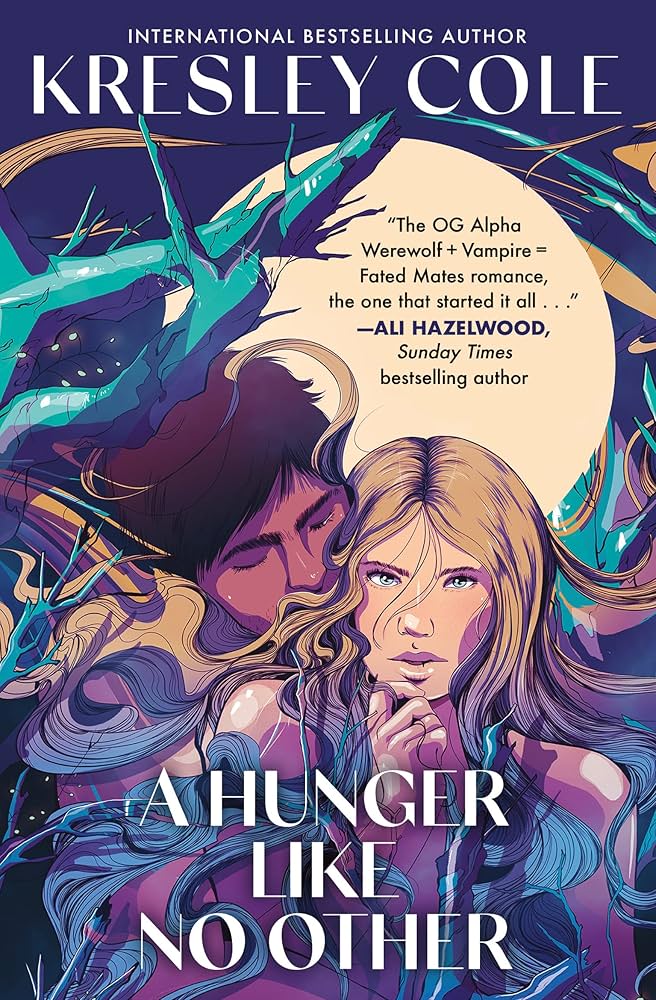
Like a moon that pulls tides, A Hunger Like No Other exerts a steady, unmistakable tug on the reader: it promises heat, danger and mythic longing. Kresley Cole’s novel occupies a well-worn crossroads of paranormal romance and urban fantasy, where predatory instincts collide with stubborn humanity and the boundaries between monster and mate blur into something combustible.This review is a measured appraisal — not a hymn of adoration nor a line-by-line takedown, but a close look at what the book sets out to do and how well it succeeds. I’ll consider its storytelling architecture (plot and pacing), character work (depth, chemistry, and agency), worldbuilding (rules, originality, and internal logic), and prose (voice, imagery, and readability). Expect an evenhanded assessment that highlights both the novel’s pleasures and its limitations, so you can decide whether its particular brand of passion is the one you’re looking for.
Atmosphere and world building evoke a lush dangerous paranormal realm rich in sensory detail and consistent supernatural rules

Kresley Cole paints a landscape that feels tactile and breathing: moss that clings like memory, moonlight that tastes of iron, and wind that carries the distant clack of taloned feet. The world-building leans into the senses rather than long exposition, so rules reveal themselves through temperature, scent, and consequence—so that a reader knows as surely as a character when a threshold has been crossed. Small, precise details accumulate into a convincing whole: the salt of the bay stains a ritual cloth with meaning, a heat-haze corrodes illusions, and the hush before predation is a language all its own. Textures and timbres double as lore; the narrative trusts the reader to learn the system by touch and ear rather than through spoon-fed codices.
- Smell: iron and brine as markers of ancient pacts
- Sound: animal calls as warnings and portents
- Sight: color shifts that betray enchantment
The danger in this realm is never arbitrary; threats follow a logic and the supernatural has costs, which is what makes the peril feel real rather than theatrical. Rituals have predictable outcomes, bargains carry fixed consequences, and predators abide by hunger that can be bargained with but never wholly sated—so tension comes from choices, not deus ex machina. The consistency of these mechanics gives emotional weight to every transgression and each desperate bargain, turning atmosphere into an active force that shapes character decisions. Stakes are reinforced by the ecology and etiquette of the paranormal: territories, taboos, and tally marks of owed debts create a framework where every action ripples outward.
Best-Selling Books in This Category



- Blood bonds anchor promises
- Night tilts power toward predators
- Names carry binding weight
Character dynamics analyze the chemistry slow burn and power exchange offering notes on empathy motive clarity and growth arcs

There is a tactile, measured charge between the leads that reads like craftsmanship rather than chemistry-by-accident. The novel’s slow burn is an exercise in restraint: tension accrues through small favors, misread glances and withheld confessions, so when the spark finally flares it feels earned. Power exchange is handled as an evolving negotiation rather than a fixed hierarchy — dominance and surrender circulate between scenes, and what matters is the consistent presence of boundaries and mutual recognition. Notes to keep in mind:
- Empathy: Scenes that invite a character’s interiority do more to humanize power plays than any dramatic outburst.
- Motive clarity: Clear, sometiems quietly selfish, motives sharpen stakes and make choices believable.
- Tension pacing: The slow-burn rhythm benefits from intermittent relief; emotional payoffs must match the buildup.
Growth arcs are mostly satisfying because the author lets consequence and memory steer change — nobody shifts overnight, but repeated compromises and confessions accumulate into transformation. The balance between showing and telling is generally well-judged: when motives are explicit,empathy follows; when they’re opaque,curiosity and discomfort replace sympathy,which can be a deliberate,effective choice. Below is a concise snapshot of those trajectories for quick reference:
| Character | starting Stance | growth Highlight |
|---|---|---|
| Protagonist | Guarded, principled | Learns to accept help without losing agency |
| Love Interest | Stoic, commanding | Softens through genuine accountability |
| Secondary | Catalyst, ambiguous | Reveals a humane motive that reframes conflict |
Plot structure assessment weighs momentum subplot balance and tension techniques with recommendations to tighten beats and refine stakes

The novel’s forward drive is mostly compelling, but it occasionally loses its grip when subplots outnumber catalytic beats; the engine of momentum sputters precisely where the main emotional throughline should tighten. Scenes that linger on secondary romance threads or extended worldbuilding can diffuse urgency, and tension techniques sometimes lean on repetition rather than escalation. To keep readers invested, the work benefits from surgical economy — clarifying which scenes serve the protagonist’s arc, sharpening the cause-and-effect of each turning point, and ensuring that every intimate or expository beat either raises stakes or complicates choices. When those elements align, the novel’s rhythm moves from episodic to unavoidable, and the suspense becomes both felt and earned.
- Tighten beats: prune scenes that stall; convert leisurely scenes into catalytic moments that push decisions forward.
- Balance subplots: merge or remove secondary arcs that mirror rather than complicate the heroine’s dilemma.
- Refine stakes: make consequences concrete and immediate — clear costs for failure, tangible gains for success.
- Vary tension techniques: alternate cliffhangers, failed attempts, and false resolutions to avoid emotional plateaus.
- Pace with purpose: tighten chapter endings to propel the reader, and use midpoint pivots to reorient momentum.
| Problem | micro-fix |
|---|---|
| Meandering midpoint | Insert a consequential choice that reframes goals |
| Subplot overload | Combine two secondary threads into one opposing force |
| Diffuse stakes | Attach a personal loss or deadline to the main aim |
Romantic themes and consent dialogue reviewed for emotional authenticity narrative consent framing and recommended cautionary edits

In this novel’s moonlit sweep of desire and danger, the emotional beats often land with cinematic intensity, but the ledger for consent can feel uneven—partly because supernatural power dynamics blur agency. To preserve emotional authenticity, scenes that hinge on surrender or insistence benefit from clear, interior markers of choice: the character’s thought, a hesitation acknowledged aloud, or a quiet, conscious agreement that offsets any implied compulsion. Signs of emotionally authentic consent include outward affirmation, mutual vulnerability, and visible aftercare; red flags are rationalizations that equate persistence with passion, absent dialogue when control shifts, or language that fetishizes the breakdown of agency.These subtleties help readers sympathize without erasing the ethical contours of intimacy, keeping the romance compelling while honoring characters’ autonomy.
For editorial work that wants to keep the story’s heat but shore up ethical clarity, small targeted edits can have outsized effects: add short lines of explicit verbal consent, lengthen a scene by a paragraph to show a character processing a choice, or insert a brief aftermath beat that normalizes checking in. Consider these quick revision moves and their aims:
- Insert explicit consent cues — clarifies agency in charged moments.
- Amplify internal perspective — reveals motivation beyond attraction.
- Include consequential aftercare — acknowledges emotional impact and responsibility.
| Edit | Purpose |
|---|---|
| Add one confirming line of dialogue | Affirms consent in the moment |
| Extend the scene by a reflective beat | Shows internal assent or doubt |
| Insert a brief aftercare moment | Demonstrates respect and consequences |
Voice and prose balance measures lyrical intensity readability and pacing with targeted edits to reduce repetition and sharpen imagery

Cole’s voice walks a tightrope between baroque sensuality and propulsive storytelling, and the most effective edits nudge that balance toward clarity without dulling the shine. By pruning needless echoes and tightening cadence,the prose preserves its lyrical intensity while improving readability and forward momentum. Small, surgical changes—trimming a repeated adjective, replacing an abstract descriptor with a tactile sensation, or breaking a long sentence for rhythm—can transform a passage from ornate to urgent. Key interventions:
- eliminate repeated metaphors that dilute impact
- Swap vague nouns for sensory specifics
- Shorten or split sentences to sharpen pacing
These moves keep the voice distinct while making the emotional through-line easier to follow.
To visualize the tradeoffs, consider a simple editorial ledger that maps a measure to a concrete tweak and its effect—small edits, big clarity.
| Measure | Tweak | Effect |
|---|---|---|
| Imagery | Replace abstract with touch/sound | Sharper scene textures |
| Pacing | Vary sentence length | Improved narrative drive |
| Repetition | Prune echoes | Stronger emotional beats |
A few practical takeaways anchor the approach: prioritize sensory specificity, respect the novel’s tonal richness, and let rhythm dictate sentence shape rather than ornament. These choices preserve the book’s intoxicating voice while making each scene land with greater precision.
Secondary cast utility evaluates their emotional payoff scene economy and suggestions to expand or condense moments for stronger resonance

Secondary players in this novel act less like background wallpaper and more like pressure points — they push the protagonists into choices, illuminate worldbuilding, and occasionally shoulder emotional weight that the leads can’t carry alone. When used economically, these figures provide resonance: a brief, well-placed exchange can reframe a heroine’s decision or reveal a subtle cultural detail without derailing pacing. Conversely, some detours linger, diluting immediacy; scenes that reiterate a character’s motivation three times, or introduce an ancillary romance without payoff, blunt the story’s forward motion. the strongest secondary moments are surgical — they either deepen a theme, create contrast, or supply a catalytic beat that justifies their screen time. Trim redundancy, prioritize catalytic presence, and let smaller gestures stand for larger emotional truths.
Practical adjustments to sharpen emotional economy include a mixture of expansion where payoff is scarce and condensation where echoing scenes repeat the same note.
- Expand: give brief aftermath beats to moments that currently end on a cliff — one or two lines that show emotional consequence will convert setup into payoff.
- Condense: collapse repetitive exposition scenes into single, sharper exchanges that preserve information but accelerate tone.
- Reassign: move a revealing line from a cluttered scene to a quieter character moment so the revelation lands with more intimacy.
- Cull with purpose: remove sideplots that neither complicate the protagonist nor deepen theme; fewer, stronger secondary arcs create clearer emotional echoes.
World building continuity check flags mythic inconsistencies timeline questions and clear fixes to ground readers in the paranormal system

the novel’s mythic scaffolding sometimes creaks under the weight of its passion: origin myths get recast mid-story, power limits shift to suit climactic beats, and ancestral rules are hinted at without formal anchoring. Readers who enjoy the paranormal system want a dependable map—small slips (a fluctuating regeneration rate, an unexplained social taboo, or a sudden exception to a hunting law) register as larger sins of coherence. To keep immersion intact, these recurring flags should be treated as intentional motifs or quickly reconciled; otherwise a single unexplained divergence turns into an interpretive gap that distracts from the romance rather than deepens it. Consistent stakes and a few annotated margins of “how this world works” will uphold the story’s internal logic while preserving its mythic wonder.
practical fixes are compact and readable: a few anchor details, a timeline checkpoint after major reveals, and a short in-world glossary can neutralize confusion without halting momentum. Try these lightweight tools to ground readers in the paranormal system while keeping the mystery alive:
- Anchor scenes that reaffirm rules (one page reminders are enough)
- Timeline blurbs to mark centuries or era jumps
- Character-coded exceptions that explain why a rule is broken
| Problem | Clear Fix |
|---|---|
| Shifting power limits | Short scene showing training or rule change |
| Unclear lineage | one-line genealogical note |
| Timeline jumps | Timestamped chapter headers |
These modest interventions maintain the novel’s emotional charge while tightening the world so readers never have to pause and ask, “Wait—how does that work?”
Pacing and read length suggestions offer scene pruning chapter transitions and strategic expansion points to enhance momentum and emotional payoff
Think of the narrative like a heartbeat: when it flutters, prune; when it slows, inject rhythm. Quick wins include trimming scenes that repeat emotional information, collapsing two similar conversations into one sharp exchange, and converting exposition dumps into a single revealing action. Practical moves to preserve momentum:
- Cut redundancies — if a feeling or fact has already landed, don’t restate it verbatim;
- Trim transitional scenes — merge short lead-ups that exist only to get characters from A to B;
- Sharpen beats — reduce tagging and stage directions to what moves the plot or character arc.
These choices shorten read length without sacrificing emotional clarity, keeping the pace lean where the story needs to sprint.
Chapter endings and strategic expansions are your throttle and brake: end chapters on a question, a revealed desire, or a small defeat to generate forward pull, and expand only when the emotional payoff demands breath. Use expansion as a tool — not a filler — for moments that require lingering: an intimate confession, a revelation that reframes earlier events, or a sensory scene that grounds the reader. Consider cues for expansion in a simple checklist:
- stakes change — extend to let consequences settle;
- Perspective shift — expand to justify a new POV’s interiority;
- emotional apex — give the scene space so the payoff lands.
Tactically pruning and enlarging scenes in this way keeps momentum taut while ensuring the emotional moments breathe long enough to resonate.
Reader expectations and audience fit map target reader profiles series placement trigger notes and advice for marketing blurb adjustments
Expect readers to come in hungry for mythic stakes and unapologetic heat: this book performs best for those who like romance braided with folklore and unapologetic alpha energy. Target reader profiles map cleanly into a few archetypes —
- Paranormal Devotees: crave world-building,immortal politics,and a sweeping series canvas;
- Heat-frist Readers: prioritize chemistry and erotic tension above intricate plotting;
- Dark-Romance Curious: intrigued by morally gray heroes and high-risk emotional payoffs;
- Series-committers: enjoy gateway entries that invite bingeing the rest of a saga.
Quick series placement reference:
| Position | reading Context |
|---|---|
| Book 1 | Gateway — best read first to appreciate recurring lore |
| Standalone appeal | Strong emotional arc; can be read alone but rewards series readers |
Be transparent about triggers and tune blurbs to set the right expectations — readers respond to honesty as much as to promise. trigger notes to flag in copy:
- Explicit sexual content (includes dominance themes);
- Physical violence in fantasy contexts;
- Emotional intensity with possessive behavior.
Marketing adjustments that land: lead with the mythic hook, follow with the emotional beat, then a clear heat-level signal. Example lines to consider: “Mythic passion meets dangerous desire” or “A fierce,first-in-series love that demands the rest of your reading night.” Small formatting cues — heat icons, a short trigger line, and a “best for fans of…” callout — will reduce returns and increase conversions by aligning expectation with experience.
Kresley Coles authorial signature examined across voice themes and career trajectory with constructive suggestions for future projects and series choices

Kresley Cole’s signature lives in the tension between baroque sensuality and wry, almost domestic humor — a voice that makes the extraordinary feel lived-in. Over her career she has layered mythic stakes onto recognizably modern emotional beats: alpha heroes whose brutality is tempered by vulnerability, heroines who oscillate between surrender and calculated defiance, and a worldbuilding approach that steadily migrates from intimate duels to sprawling supernatural ecosystems. This evolution shows an author increasingly pleasant expanding scale while keeping the reader tethered to character interiority; where early books read as concentrated vignettes of heat and obsession, later works build serial mythologies that reward long-term readers but sometimes risk burying the romance under lore.The net effect is unmistakable: a cocktail of raw sensuality, theatrical myth, and sly domestic moments that together form a distinct narrative fingerprint.
To sharpen that fingerprint for future projects, consider leaning into deliberate contrasts and small formal experiments that preserve core strengths while refreshing expectations. Concrete suggestions: explore inverse power dynamics, try limited unreliable narrators, or pilot a short series of novellas told from secondary characters’ perspectives to keep world depth without bloating main arcs. Possible directions include a contemporary-set trilogy that pares back supernatural exposition in favor of psychological tension,a queer-centered spin-off that reframes alpha/pack tropes,or a tonal gamble — a darker,noir-tinged entry that foregrounds moral ambiguity over smoldering closure. Ideas at a glance:
- Micro-series: 3–5k novellas showcasing side characters.
- Genre cross: paranormal heist or romantic noir.
- Structural pivot: alternating unreliable POVs across a series.
| Voice Element | Suggested Submission |
|---|---|
| Lush sensual prose | Reserve for emotional climaxes; tighten mid-book pace |
| Mythic worldbuilding | Spin-off novellas to expand without stalling main plots |
| Alpha archetypes | Invert expectations with vulnerable or nonbinary leads |
These moves would honour her recognizable cadence while offering fresh entry points for new readers and satisfying pivots for longtime fans.
A Hunger Like No Other reads like a story that knows exactly what it wants to be: a full‑blooded,sensuous plunge into a vividly imagined paranormal world. Cole’s command of atmosphere and her willingness to push at the edges of the genre yield scenes that linger, even when their excesses occasionally crowd the narrative’s center. For readers who prize mood, mythology, and electric chemistry, the novel delivers richly; for those who favor tighter plotting and restraint, it may feel indulgent.
This measured appraisal doesn’t aim to flatten the book’s textures into simple judgment. Instead, consider it an invitation to weigh what you most value in a romance—wild invention and heat, or measured structure and subtlety—and let that decide whether to open the cover. Either way, A Hunger Like No Other is unlikely to be forgettable: it stakes a claim, makes its voice heard, and leaves traces long after the last page is turned.