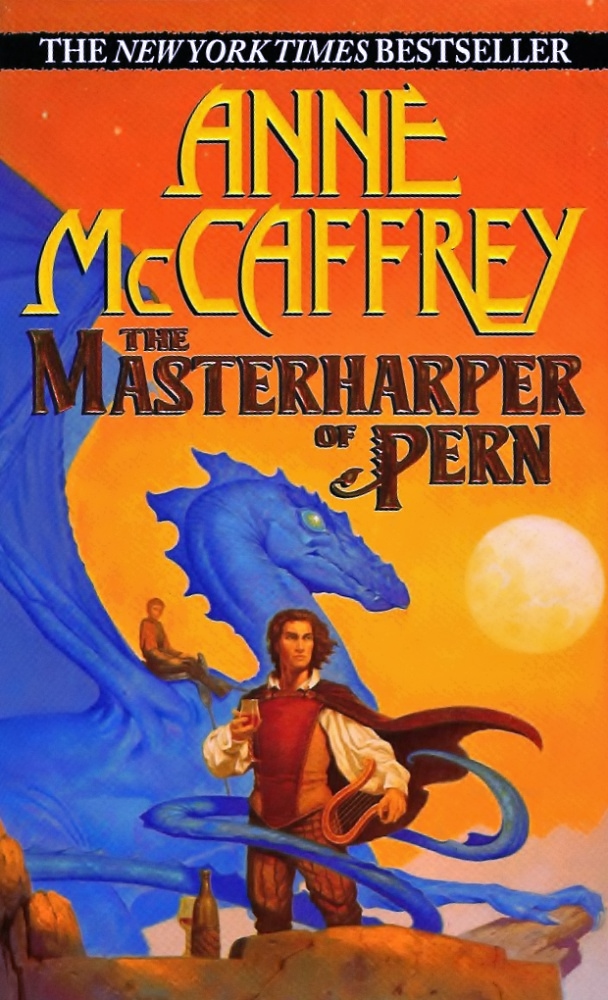
Weaving Song and history opens the review like a harp-string plucked between two eras: the intimate world of a single musician and the sweeping chronicle of a planet shaped by dragonflight. At its heart is the Masterharper — a figure whose music, memory, and maneuvering stitch individual lives into communal legend — and the novel that claims to tell how that voice came to be. This introduction will not rehearse plot beats; it will instead set the scene for a measured look at how the book balances portraiture and panorama, melody and myth.In the pages that follow I’ll consider how the narrative voice frames its subject, how the rhythms of song and speech serve worldbuilding, and how the novel positions itself within the larger Pern saga. Expect close attention to structure and tone: whether the book reads like a memoir, a chronicle, or a crafted performance, and how that choice affects our access to character and history.If the novel is a tapestry, this review asks whether its threads hold together — and whether the patterns it creates still resonate.
Thematic tapestry exploring how music memory and communal identity interlace within The Masterharper of Pern for new and returning readers

In McCaffrey’s landscape, song functions as both artifact and artery — a living archive that stitches personal recollection to communal fate.The Masterharper is less an entertainer than a keeper of mnemonic architecture: melodies become maps, refrains become legalese, and silence between notes carries as much meaning as sound. For new readers, the revelation is that every tune is a condensed history; for returning readers, each reprise unveils how memory has shifted. Consider how songs serve practical roles within Pernese life:
- Chronicle — compressing battles, migrations, and law into singable forms;
- Lineage — encoding family memory and harp tradition so identity survives generations;
- Communion — offering shared ritual that reshapes private grief into public resilience.
This interplay of tune and identity makes communal memory dynamic rather than static: melodies are handed down but also edited, contested, and recontextualized when circumstances change. the book reveals how a community negotiates its past through performance, deciding which verses to emphasize, which cadences to preserve, and which stories to let fade. A small table illustrates how different song-forms on Pern resonate across the social fabric:
Best-Selling Books in This Category

| Song Thread | Community Resonance |
|---|---|
| Ballad | Collective memory of heroism |
| work-song | Rhythm of daily life and cooperation |
| Lament | Processing loss and binding survivors |
The result is a textured portrait of a society that remembers itself through song—fluid, selective, and always in conversation with the past.
structural rhythm and narrative voice assessing how pacing song interludes and chapter architecture shape emotional resonance in the story

McCaffrey’s narrative pulse in The Masterharper of Pern moves like a melody—sometimes a slow, lingering adagietto, sometimes a brisk jig that propels the reader forward. The insertion of song interludes acts less like decorative ornament and more like structural rests: each ballad or verse reframes history, deepens character, and gives the prose a musical counterpoint that reshapes emotional perception. within the flow you feel small accelerations and deliberate lulls, exemplified by short, clipped scenes that quicken breath and longer, reflective passages that let grief and memory settle. Consider how the book uses micro-structures to modulate feeling:
- refrains — echoing motifs that tether reader to theme
- Breath pauses — songs that halt momentum to deepen intimacy
- Bridging lines — brief scenes that pivot tone or reveal
These devices make emotional transitions feel earned rather than abrupt,so the songs become instruments for pacing as much as for lore.
the chapter architecture reinforces that musicality: alternating lengths and point-of-view shifts create a cadenced scaffolding that controls suspense and sympathy. Short chapters frequently enough function like drumbeats—urgent and insistent—while longer chapters unfold like slow movements, expanding context and result. A simple table of recurring elements shows how design choices translate into affective impact:
| Element | Effect |
|---|---|
| Short chapters | accelerate tension |
| Song interludes | Pause for reflection |
| Recurring motifs | Weave memory into plot |
Together, these structural choices create a narrative rhythm that feels both historical and lyrical—an architecture where pacing itself becomes an emotional instrument.
Character studies of the harp community highlighting mentorship rivalry and the intimate craft of composition and performance under pressure

The book paints its musicians as craftsmen of memory and subtle politics, where every apprenticeship is a lesson in humility and cunning. Scenes hum with the friction of personalities: the gentle tutor who measures silence as much as sound, the impatient prodigy who polishes solos until thay cut, and the jealous peer whose criticisms sharpen tempos into truths. Mentorship is rendered not as guidance alone but as a shared ledger of debts — deeds, favors, and songs passed down with corrections that sting. The interplay is intimate and human, captured in small gestures and long rehearsals that reveal more about character than any speech could.
Composition and performance are shown as acts of confession and construction,especially when stakes are high and audiences expect precision. Under pressure, technique becomes language: the right ornamentation can absolve a mistake; a held breath can hold a room in suspended consensus. Consider this rapid map of tendencies that recur across the cast:
- Teacher — steady cadence, corrective patience
- Student — restless invention, brittle confidence
- Rival — public bravura, private insecurity
| Trait | Effect in Performance |
|---|---|
| Deliberate pause | Builds communal suspense |
| Improvised ornament | Signals mastery or panic |
| Shared motif | Binds mentor to student |
Worldbuilding through music examining how rituals geography and historical memory are revealed via songs and oral transmission

Music on Pern acts like a walking map and a living archive: a single refrain can point to a crossing, a ridge, or a weather pattern remembered by generations of riders and harpers. through melody and meter, communities compress ritual into repeatable cues—who stands, who speaks, which token is shown—so that etiquette survives long after the originators are gone.Songs also function as selective memory: refrains smooth raw events into teachable narratives, and cadences become shorthand for emotional landscapes. Memory, in this sense, is not passive recollection but a practiced skill passed mouth-to-ear, finger-to-string, where place and practice entwine.
- Mnemonic maps: verses that encode routes and hazards
- Lineage jingles: short genealogies sung at gatherings
- Ritual refrains: cues embedded in ceremonial performance
The Masterharper’s craft, then, is partly curator and partly archivist: rearranging tunes to suit new alliances, excising verses that inflame, and bolstering those that heal communal memory. Songs become the medium through which geography and history converse—ballads point to lost halls, roundelays name season and soil, and laments keep the names of the fallen from dissolving. Below is a concise table showing how different song forms operate as social tools on Pern, each entry a tiny node in the wider network of oral transmission.
| Song Type | Primary Function |
|---|---|
| ballad of first Flight | Historical record |
| Weyr Naming Chant | Ritual cohesion |
| Coast Work-Shanty | Geographic/weather cue |
Literary craft and lyrical language noting memorable passages sentence texture and places where repetition enhances or diminishes impact

The novel frequently enough reads like a braided song, its language shaped by a harper’s ear: long, lilting sentences alternate with sudden staccato clauses so that the page breathes in measured cadences. Memorable passages are not only moments of plot revelation but lines where texture — vowel-rich alliteration, unexpected assonance, and tactile verbs — slows the reader to listen. Imagery lands through physical detail (the salt grit of sea-swept strings, the rough callus of a thumb on a harp) and sensory specificity gives the lyricism its weight. In particular, repetition functions as a chorus: when a phrase or motif returns sparingly, it accumulates meaning and becomes a mnemonic anchor; when it repeats to often, the music flattens. Consider these recurring devices that most frequently enough uplift the prose:
- Motivic return — short phrases that echo across chapters and deepen theme.
- Sentence-length contrast — long descriptive runs followed by compact declarative beats.
- Sensory stacking — layering smell, sound, and touch to conjure place.
Each is a tool for tuning the reader’s attention, and the book excels when the author treats them like instruments in an ensemble rather than fixtures onstage.
At times the rhetorical styling leans toward ornamentation: a richly wrought sentence can be a triumph of craft or, if left unchecked, a place where scenery overwhelms momentum. Repetition illustrates this dual nature clearly — phrases that echo like refrains can sublime effect or, in excess, call attention to themselves and diminish urgency. Below is a compact guide to how certain techniques are deployed across the narrative and when they most often succeed or falter:
| Technique | When it sings | When it sours |
|---|---|---|
| Choral refrains | Used sparingly to mark memory or ritual | Repeated verbatim across scenes with no progress |
| Extended syntax | builds atmosphere and immersion | Obscures pacing in action sequences |
| Iconic imagery | Creates lasting sensory motifs | Becomes cliché if over-relied upon |
The craft is most affecting when lyrical language and historical scope serve one another: music and memory entwined rather than competing, the prose tuned so that every repeated note feels earned.
Historical layering and chronology unpacking how oral tradition archival gaps and character memory shape a believable cultural past in the novel

Memory and song act as the novel’s architecture,stitching together fragmented lives into a convincing cultural past. Through the hands and voices of harpers, a world is both recorded and reshaped: what is remembered becomes ritualized, and what slips away becomes fertile ground for legend. The result is a lived history that feels organic because it is visibly worn by repetition, omission, and reinterpretation. Consider how oral transmission operates in practice:
- Preservation — melodies and refrains keep names,dates,and feelings alive long after archives fail.
- Compression — complex events are cast into memorable image and meter, making them transmissible but simplified.
- Prioritization — personal loyalties and local needs determine which episodes endure.
- Mythmaking — gaps invite embellishment, turning practical memory into cultural myth.
| Source | Effect on Collective Memory |
|---|---|
| Songs | Embed emotion and moral lessons; live in performance. |
| Journals | Anchor detail but remain partial and private. |
| Rumor & Gossip | Fill silences with speculation, shaping identity. |
By letting characters remember differently and leaving deliberate archival lacunae, the narrative builds a believable past that readers can piece together—feeling both the warmth of lived memory and the cold edges of what has been forgotten.
Comparative reading suggestions for fans recommending which Pern books or musical epics to pair with this novel to deepen thematic appreciation

To sharpen the novel’s themes of artistry, authority, and the slow labor of legacy, consider these Pern companions:
- Dragonsong / dragonsinger (Harper Hall Trilogy) — a close look at apprenticeship and the friction between talent and tradition that mirrors the Masterharper’s own growth.
- The white Dragon — for a counterpoint on memory and myth, where personal history becomes a public story and echoes the harper’s role as keeper of narrative.
- All the Weyrs of Pern — to see how social and political upheaval reframes songs and histories; the stakes around preservation and change become planetary here.
These pairings let readers trace how music and memory move from intimate craft to cultural charter, illuminating Robinton’s quiet rebellions and compromises.
To feel the novel’s tonal textures more viscerally, pair it with musical epics—both canonical and imagined—that capture the harper’s vocation:
- “The Ballads of Robinton” (imagined) — a curated suite of songs that would translate novel passages into refrain, emphasizing leitmotifs of loss and renewal.
- “The Harpers’ Lament” — a darker cycle to explore the cost of truth-telling in small, closed societies, useful for readers who want thematic contrast.
- Dragondrums — to hear how rhythm and message intersect in Pern’s young voices, offering a youthful echo to the Masterharper’s seasoned viewpoint.
Approach these epics as annotations in sound: read a chapter, then imagine or listen to a corresponding ballad to heighten the interplay between song, authority, and the long arc of Pernese history.
Accessibility and audience guidance assessing whether newcomers can follow the lore and offering reading paths for different interest levels

The world here is deliberately layered: songs and brief scenes do heavy worldbuilding work, so a newcomer can feel the culture through repetition rather than encyclopedic description. If you prefer a gentle entry, follow one of these quick paths — each is tuned to a different appetite for background material and time.
- Starter: Read the chronicle-driven episodes and let the harp-songs reveal customs as you go.
- contextual: Skim the historical chapters first to frame the later character stories.
- Deep-fan: Read sequentially and use in-world poems and footnotes as anchors for further research.
- companion: Pair the book with audiobooks or annotated guides for layered enjoyment.
To help you choose quickly, here’s a compact guide with recommended entry points and a sense of commitment — designed with wordpress styling for clarity.
| Path | Start Here | Time |
|---|---|---|
| Starter | A single character-focused tale | Short (weekend) |
| Contextual | Historical prologue chapters | Moderate (couple of weeks) |
| Deep-fan | Full chronological read | Long (months) |
Pro tip: keep a small notebook for names and songs — they become delightful signposts as the lore opens up rather than puzzles to be solved all at once.
Specific strengths and weaknesses pinpointing scenes to savor structural risks to be aware of and editing choices that affect reader engagement

The book’s greatest asset is its musical intelligence: scenes where song and memory entwine—an impromptu harper duel at the crafthall, a quiet lullaby over an archival lament, and the charged song that reconfigures a family’s history—are written with vivid sensory precision that rewards slow reading. Savor these moments:
- Apprentice concert: the clash of ambition and technique.
- Archive finding: when a buried tune reframes a lineage.
- Farewell chorus: a quiet, almost unbearable closure.
| Scene | Why it effectively works |
|---|---|
| Apprentice concert | Character through cadence |
| Archive discovery | History made intimate |
| Farewell chorus | Emotion in restraint |
But that strength also exposes structural risks: the book occasionally lingers in exposition, and the alternation between long historical passages and present-tense performances can stall momentum. Editors and readers should watch for info-dumps, repeated motifs that no longer pay off, and a cast of secondary names that blur rather than deepen stakes. Practical choices that affect engagement include:
- Trim archival monologues down to one or two keystone revelations.
- Sharpen scene transitions so songs feel like turns in the plot, not interruptions.
- Prune redundant characters or fold them into composite figures to keep focus.
| Risk | Quick fix |
|---|---|
| Exposition drag | Cut, show through melody |
| Scene repetition | Elevate or remove |
| Crowded cast | Consolidate roles |
On the author Anne McCaffrey examining her craft influences and how her lived experience and career shaped the musical historiography in Pern

McCaffrey drew from living practice as much as from literary theory: the harpers of Pern feel like descendants of balladeers who kept clan histories alive by ear, not by archive. Her awareness of oral tradition, workshop critique, and long apprenticeship as a professional storyteller fused into a craft that treats song as a working technology of memory. The textures in her prose—refrains that return, names that anchor eras, and small melodic motifs that signal political shifts—reflect influences both intimate and communal:
- folk and ballad patterns that prioritize repetition and mnemonic hooks
- practical apprenticeship models from real-world trades and guilds
- a novelist’s attention to pacing, allowing songs to punctuate plot beats
- collaborative editing and fan discourse that refined performance details
These elements make Pern’s musical historiography feel like a living archive: partial, contested, and shaped by the people who sing it rather than a neutral chronicler writing from above.
Her career choices and lived rhythms shaped what counts as history on Pern: songs are not mere decoration but the community’s ledger, reshaped each time they are performed and repurposed by context. McCaffrey’s experience balancing serialized storytelling, reader expectations, and the practicalities of worldbuilding taught her to encode social change into melody and verse—so that a tune can mark a lost generation, a political turn, or an intimate memory. The result is musical historiography that functions on multiple levels—social, mnemonic, and archival—conveying how history is made, remembered, and revised through performance.
| Element | Narrative Function |
|---|---|
| Songform | Structures communal memory |
| Performance | Tests and transmits social norms |
| Notation & Lore | Becomes contested record |
Whether you come for the lore, the music, or the chance to linger in Pern’s quieter rooms, this book keeps its needle steady: it stitches together character and chronicle in ways that will comfort some readers and test the patience of others. Its strengths lie in texture — in the way small scenes and sung histories accumulate until the setting feels fully inhabited — while its weaknesses are those of any work that favors tapestry over sprint, asking you to enjoy the stitchwork as much as the pattern it produces.
If you enjoy novels that treat memory like melody and worldbuilding like woven cloth, there is much here to admire and return to.If you prefer your stories compressed and plot-driven, consider this a patient, richly detailed detour rather than a direct route. The Masterharper of Pern offers a particular kind of pleasure: the slow, steady satisfaction of song and story braided into one. Sit with it awhile, and you may find the final refrain staying with you long after the last page.