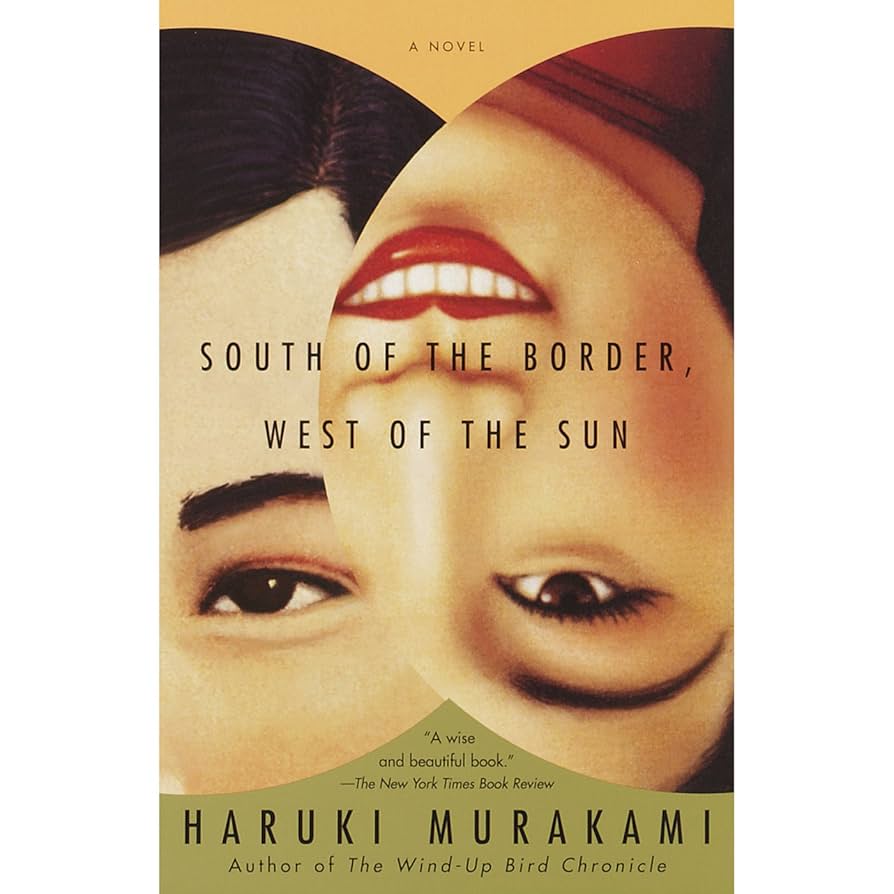
There are novels that announce themselves with fireworks adn others that creep up behind you like a familiar song on the radio; Haruki Murakami’s south of the Border, West of the Sun belongs too the latter category. At once intimate and slightly uncanny, it traces the quiet dislocations of a man who has built a respectable life out of routine and restraint, only to have a long-buried yearning resurface and rearrange his inner geography. The subtitle,Echoes of memory and Desire,points to the book’s twin engines: the persistence of the past and the way desire can fracture the ordinary present.
Murakami is less interested in plot machinations than in the texture of longing—how small details (a restaurant booth, a song, a childhood promise) vibrate outward into consequences that feel both unavoidable and bewildering. Set against a Japan caught between memory and modernity, the story unfolds in a voice that is at once conversational and elliptical, inviting readers to inhabit its silences as much as its lines. In the pages that follow I’ll examine how the novel stages those echoes—its strengths in mood and characterization, the limits of its ambiguities, and what it ultimately asks of readers who must decide how much of themselves to forgive.
Lush memory and restrained desire explored through nostalgic scenes and precise details with moments to reread and savor the quiet revelations

Rooms remembered like film frames—sunlight pooling on tatami, the thin clink of a cup against saucer, a cigarette stub glowing in a borrowed ashtray—become repositories of longing. The prose tends to hush rather than shout: small, precise details (a recorder’s crackle, a train’s steady sway, the exact shade of a winter coat) tether sensation to memory, and in that tethering desire is measured out in increments. These vignettes ask you to lean in; they reward attention with quiet, almost private revelations that sit heavy with what is unsaid.
Best-Selling Books in This Category


- A scratched vinyl paused mid-song—time held at the most fragile point.
- A backstreet vending machine dispensing change and a sudden laugh.
- A hand brushed on a commuter train that rewires a whole evening.
- The perfume from a long-ago winter that drifts through a doorway and collapses years.
Each scene is compact and deliberate, inviting rereading as if the lines themselves conceal maps.When you return to a paragraph, a previously overlooked adjective or a single syllable can flip a feeling—what seemed simply nostalgic becomes crystalline: regret, acceptance, or the soft ache of longing. The work is crafted for savoring; the best sentences pause in the mouth and insist on being read again until their small truths unfold.
Characters rendered in spare luminous prose offer emotional ambiguity and moral nuance ideal for book club debate and deep character study
They move through the sentences with a quiet insistence, each sentence a thin, luminous thread that leaves more open space than it fills. In that delicate economy the reader finds both clarity and crevasse: the characters are defined by what they do not say as much as by what they confess. Emotional textures shift—longing glints into resentment, tenderness hardens into regret—and the book rewards slow attention. consider these starting points for conversation and close reading:
- What is revealed by their silences?
- how do small, ordinary details betray inner conflict?
- Which actions feel like redemption, and which like self-deception?
Those paradoxes make the novel a fertile ground for debate: characters are neither wholly sympathetic nor wholly culpable, and moral judgments shift as memory and desire collide. The prose offers moments of crystalline insight that complicate rather than resolve, inviting readers to map motives and trace moral echo across scenes. A quick comparison clarifies the interplay at the story’s heart:
| Figure | Essence | Moral Pull |
|---|---|---|
| The narrator | Measured, regret-tinged | Remorse and yearning |
| The returned love | Elusive, luminous | Temptation and disruption |
Pacing and structure favor slow accumulation of mood and leitmotifs so readers patient with subtle payoff will be richly rewarded and moved

The prose unfolds like a slowly unfurling photograph: nothing is rushed, and every paragraph acts as an equidistant footstep deeper into the same remembered street. Motifs recur not as explanation but as echo—oblique, patient, insistently familiar—so that small images accrete meaning across the book. Readers willing to sit in that gentle repetition discover that what first feels like ornamental detail becomes the story’s quiet architecture; the room, the song, the passing train turn into anchors of feeling. Patience is not a demand but the means by which the novel transforms momentary sensations into lasting ache.
- Train lights: a ribbon of longing that reappears at dusk
- Half-heard songs: phrases that stitch past to present
- A cigarette’s ash: a small ritual that marks change
Structure here is sculpted by pauses—ellipses of thought,scenes that breathe,and leaps that are felt rather than explained—so the narrative’s emotional climax arrives as an accumulation rather than a sudden reversal. The payoff is subtle but profound: layers of image and feeling finally align, and what seemed like quiet insistence becomes an unmistakable tide of longing. Readers who savor the slow architecture of memory will find themselves steadily given something more than plot—a sustained sensibility that leaves them quietly, indelibly moved by the resonance of memory and desire.
Memory as landscape reveals how nostalgia distorts identity and prompts ethical choices suitable for reflective readers and classroom discussion

Memory unfolds like a mapped horizon where hills of fact mingle with the fog of longing,and what we call “self” becomes a cartography drawn more by desire than by cartographers. In that tinting, nostalgia does not simply recall— it edits, smoothing contradictions, amplifying losses into guiding myths, and inviting us to inhabit versions of ourselves that may never have existed.Consider the small, sharp ways identity is reshaped by sentiment:
- selective memory
- idealized pasts
- erased choices
—each a quiet revision that asks readers to negotiate truth with tenderness.
That negotiation becomes ethical terrain in miniature: choosing whether to protect a comforting story or to expose its distortions is a moral act as much as an intellectual one. For classroom discussion and reflective readers alike, the work is to trace where sympathy ends and self-deception begins, to ask what responsibility we owe to those omitted by our nostalgia, and to practice translating longing into action rather than mere retreat. Ethical remembrance asks simple, hard questions—who benefits from this recollection, who is rendered invisible, and how might we rewrite our attachments so they invite accountability instead of simply consoling the self.
poetic imagery married to cinematic scenes invites readers to visualize settings and assemble a playlist to amplify mood during readings

Light falls like memory across frames: a gravel road that smells of rain,a cigarette ember glowing in a foreign language,the slow tilt of a shipyard crane under a blood-orange sky. These images sit beside each other the way film cuts do — elliptical, intimate, charged — so that a single sentence reads like a scene. Let your mind hold the textures: ash against satin, hum of distant trains, the copper aftertaste of nostalgia. To help you linger in these moments, imagine quick vignettes you can step into as you read:
- Midnight bar on the coast: glass, sea-spray, low saxophone
- Train platform at dawn: steam, footsteps, a lost letter
- Apartment with an open window: vinyl crackle, rain asleep on the sill
- empty cinema lobby: neon reflection, a pocket of hush
Sound sharpens perception; a deliberate playlist can push the prose from background to atmosphere. Build sets that answer the book’s moods — sparse piano for confession, warm brass for remembered desire, quiet cello for the ache of what wasn’t chosen. Think in layers: rhythm for forward motion, timbre for color, silence for space. Try these compact directions while you read and watch the pages light up:
- For late-night yearning: soft trumpet, slow brushes, distant reverb
- For reflective passages: solo piano with room tone, minimal echoes
- For the ache of memory: low cello, subtle electronics, vinyl warmth
- For fleeting brightness: acoustic guitar, hand percussion, a single vocal line
Translation choices shape tone and cadence so compare English editions consult translator notes and favor versions preserving lyrical ambiguity

Choices made at the level of single words and punctuation ripple outward: a translator who favors plain diction tightens the novel’s rhythm and makes scenes feel economical, while one who lingers on metaphors expands its breath and invites reverie. Cadence can be altered by clause length, rhythm of dialogue, and even the translator’s decision to keep or soften cultural markers — small shifts that change how desire and memory echo across sentences. To read the book as a sound as much as a story, look for differences in how translators handle pauses, repetitions, and uncertainty:
- Sentence rhythm — clipped versus flowing lines
- Lexical hue — concrete nouns or suggestive, ambiguous terms
- Modal tone — decisive verbs or hedged possibilities
Follow translator notes and compare English editions side by side: notes often reveal whether a choice was literal fidelity, cultural adaptation, or an intentional ambiguity preserved for effect. Favor translations that keep the novel’s delicate ambivalence rather than flattening it into clarity; the power of the story often lives in what is left unsaid, in the gaps between memory and yearning. Below is a quick comparison to guide a first look at editions you might sample:
| edition | Tone | Why it matters |
|---|---|---|
| Edition A | Restrained | Sharper cadence, less ambiguity |
| Edition B | Lyrical | Preserves suggestive gaps in meaning |
Stylistic echoes of jazz imagery and lonely urban nights create an atmospheric reading recommendation for late hour reflection and solitude
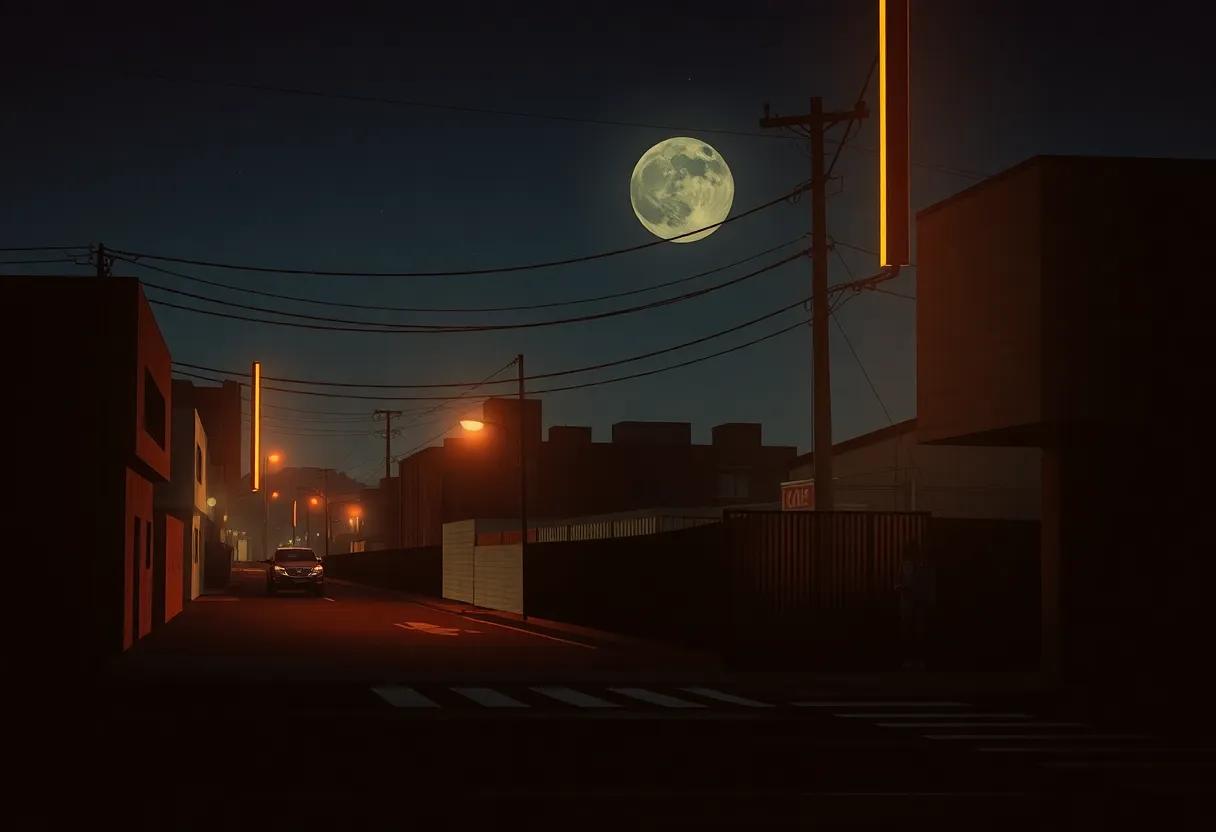
There is a hush to this book that falls like cigarette smoke in a midnight room — sentences that unfurl in soft, syncopated rhythms and images that feel plucked from a dimly lit jazz club. The city in these pages is at once intimate and indifferent, where memory arrives like a late train and solitude is less a punishment than a precise, tolerable condition. Reading it after midnight amplifies the novel’s ache: the quieter the hour,the more the prose resembles a slow saxophone line,each note pulling a thread of longing and leaving space for the reader to fill in the dark between them.
Let this be a companion to small rituals that honor quiet introspection:
- Gentle light — a shaded lamp, not overhead glare.
- Ambient sound — distant trumpet or a low piano; nothing that demands attention.
- Something warm — tea, coffee, or a glass to hold while you turn pages.
| Mood | Soundtrack |
|---|---|
| Melancholy | Late-night sax |
| nostalgia | Slow piano trio |
| Restless | Brush drums, low bass |
These small choices sharpen the book’s atmospheric edges, turning solitary reading into a deliberate act of listening to one’s own memories unfold.
structural motifs and recurring objects work as interpretive keys identify scenes to annotate and passages to quote for thematic essays

Recurring objects in the novel operate like mnemonic magnets: a piano, a train ticket, a cigarette, a photograph—each one gathers memory and desire around it and signals moments worth hauling into an essay. Treat these items as interpretive keys: highlight the first and last appearances, note shifts in tone when they recur, and mark the sentences that tie an object to a character’s interior life. In practice, create a short in-text inventory while reading (object, page, emotional inflection) and use it to map patterns across chapters. Examples of motifs to watch for include:
- Piano — moments of private memory and public performance
- Train/Station — departures,returns,and the sideways motion of longing
- photographs — frozen possibilities,evidence of alternate lives
- Cigarette — punctuation of pause,habit,and intimacy
Once you have this inventory,use it to identify scenes to annotate and short passages to quote: choose the earliest scene that introduces a motif,a turning point where the motif’s meaning shifts,and a late instance that echoes or contradicts earlier usage. Annotate each passage with a one-line note linking the object to a theme (memory,regret,futurity),and extract a 1–3 sentence quote that shows the object’s emotional charge. Quick reference markers to paste into your notes:
- Introduction scene — quote the line that first frames the object
- Transformative scene — quote where the object changes meaning
- Echo scene — quote the reprise that completes or complicates the motif
Recommended reading strategy includes slow immersive sessions rereading key chapters jotting notes and discussing memory motifs with a reading partner

Treat the novel like a long, slow conversation: sink into a single chapter until its images and rhythms begin to feel familiar, then pull back and let the echoes settle. Create a simple ritual—cup of tea, uninterrupted half-hour, a pen at hand—and commit to a handful of deliberate practices that tame the book’s slipperiness. Read slowly,reread key passages,and keep a running list of recurring symbols; this makes the novel’s faint refrains more audible. Try this mini-checklist inside each session:
- Anchor a scene with a sentence you can return to
- Annotate one motif or question per page
- Pause to breathe and imagine the memory behind the line
Pairing the solitary close read with conversation transforms private impressions into shared evidence: a partner can point out a pattern you missed or argue that a memory motif carries a diffrent weight. Keep exchanges focused—swap three observations at most—and fold those comments back into your notes so the dialogue becomes part of your reading archive. for quick reference, a little table like this can guide your sessions and partnership roles:
| Mode | Purpose |
|---|---|
| Solo | Deep sensory immersion |
| Reread | Verify motifs |
| Partner | Challenge & expand interpretation |
Keep these methods modular—mixing solo absorption, careful re-reading, and measured discussion will map the book’s currents of memory and desire into something you can return to and revise.
About the writer Haruki Murakami examines influences of postwar Japan jazz culture and solitude in life and work with suggestions for further Murakami reading
Murakami’s sentences carry the hush of late-night jazz clubs and the ache of cities rebuilding themselves—the soft, repeating motifs of a country remaking its identity after war. In his work, memory and desire interplay like solo and rhythm sections: concrete details of Tokyo streets and record-shop corners sit beside wide, unspoken gaps of longing, creating a narrative tempo that feels improvised yet inevitable. Jazz, Western pop culture and the hum of postwar Japan seep into character, setting and mood, while an almost clinical attention to everyday solitude turns private spaces into landscapes of meaning.
The best way to follow those echoes is to read with an ear for rhythm and an eye for absence. Below are compact directions for a reader who wants to trace Murakami’s influences and obsessions:
- Norwegian Wood — intimate portrait of grief and the everyday, entry-level Murakami for melancholic clarity.
- Kafka on the Shore — mythic, dreamlike intersections where memory and desire fold into the surreal.
- the Wind-Up Bird Chronicle — sprawling, layered inquiry into history, identity and the echoes of the past.
- Sputnik Sweetheart — a quieter study of longing and the distance between people.
- After Dark — nocturnal, compressed, excellent for noticing how music and setting carry mood.
Keep a record of favourite passages and song titles mentioned; they often act as keys to the emotional architecture of his novels.
as the last page falls into place, leaves the reader less with neat answers than with a residue of questions — about choice, loneliness and the ways the past reasserts itself in the smallest gestures. the novel’s quiet rhythms and elliptical logic reward patience: its images and silences persist like a song half-remembered, beatiful but elusive. At once intimate and aloof,the book resists tidy moralizing,asking rather that we sit with its uncertainties.
If you favor character-driven, introspective fiction that privileges mood and memory over plot mechanics, this will likely linger with you. If you prefer clear resolutions and brisk momentum, its slow accumulation of feeling may frustrate. Either way, the story offers a distinct reading experience: not a destination so much as an afterimage, one that asks you to consider how desire and regret shape the contours of an ordinary life.