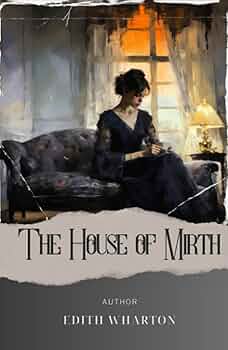
In the intricate web of early twentieth-century society,where appearances frequently enough mask underlying truths,Edith Wharton’s The House of Mirth stands as a poignant exploration of social ambition,identity,and the fragile nature of reputation.Unveiling Society’s Facade: A Thoughtful Look at Edith Wharton’s The House of Mirth invites readers to delve beyond the polished veneer of New York’s elite to examine the subtle tensions and moral complexities that define Wharton’s world. This review seeks to illuminate the novel’s enduring relevance, tracing how Wharton’s nuanced narrative continues to resonate in our understanding of societal expectations and personal agency.
Unraveling the Social Web of New York’s Elite in The House of Mirth and Its lasting Impact on Literature
Edith Wharton’s The House of Mirth serves as a meticulously woven tapestry capturing the intricate dance of New York’s upper class at the turn of the 20th century. Through the delicate rise and tragic fall of Lily Bart, Wharton exposes the rigid societal expectations and unspoken power plays that govern the elite. Beneath the glitz and glamour lies a suffocating web where reputation is currency, and self-preservation often demands the sacrifice of personal happiness. The novel’s sharp social critique not only unveils the superficiality lurking behind lavish balls and exclusive clubs but also reveals the precarious position of women who must navigate a world that commodifies thier virtue and influence.
Its reverberations in literature extend far beyond Wharton’s era, inspiring authors to dissect the facades of privilege with similar courage and nuance. The themes explored-social stratification, gender roles, and moral decay-continue to resonate in works that critique societal norms across different contexts and cultures. Below is a brief comparison of key societal elements in The House of Mirth and their modern literary counterparts:
Best-Selling Books in This Category


- Wharton, Edith (Author)

| Element | The House of mirth (1905) | Modern Literature |
|---|---|---|
| Social Mobility | Rigid class boundaries with social climbing fraught with peril | Explored as fluid yet complicated,reflecting contemporary inequalities |
| Gender Expectations | Women’s worth tied to marriage and appearance | Focus on identity,autonomy,and intersectionality |
| reputation | Social ruin equated with personal failure | Questioned and deconstructed in the age of social media |
| Wealth as Power | Exclusive clubs and inherited fortunes dominate social life | Critiqued in narratives addressing capitalism and privilege |
- Sharp dialogue: Unmasking the pretense with biting wit
- Psychological depth: Diving into internal conflicts beneath societal roles
- Symbolism: Objects and settings as metaphors for decay and desire
Examining Lily Bart’s Complex Character Through the Lens of Societal Expectations and Personal Struggles
Lily Bart emerges as a poignant symbol of the clash between individual desires and the rigid social hierarchy that defines early 20th-century New York high society. Her character embodies the intricate dance of appearances and reality, where every choice is scrutinized through the unforgiving lens of social acceptability. Caught in the ceaseless pursuit of security and status, Lily’s internal conflicts reveal a subtle but powerful critique of the limited avenues available to women of her class. Her charm and intelligence become both her armor and her vulnerability, exposing how societal expectations impose a performance that ultimately constricts authenticity and freedom.
In unraveling Lily’s story, several elements contribute to her tragic complexity:
- Social Pressure: The constant demand to marry well and maintain an impeccable reputation.
- Personal Ambition vs. Morality: Her struggle to balance societal gain with integrity.
- isolation: The emotional toll of navigating a world that rewards conformity but punishes deviation.
| Aspect | Implication |
|---|---|
| Wealth & Status | Defines opportunities and restricts autonomy |
| Gender Expectations | limits professional and personal choices |
| Appearance | A currency as powerful as money |
| Reputation | Fragile yet paramount for survival |
The Role of Wealth and Class Divide: How Edith Wharton Captures the Subtle Cruelties of High Society
Edith Wharton masterfully exposes the rigid social hierarchies that govern the lives of her characters,illustrating how wealth and class are not merely markers of status but instruments of invisible control. Through Lily bart’s tragic journey, readers witness a world where alliances are forged and broken not by personal merit, but by cold financial calculations. Wharton’s portrayal reveals the subtle cruelties embedded in high society - the whispered judgments, the calculated favors, and the relentless pressure to conform. This societal stage prizes appearances over authenticity, where every gesture carries the weight of unspoken expectations and failures mean social death.
- Invisible Barriers – social mobility is restricted by lineage and wealth rather than talent or character.
- Double Standards – women bear the brunt of reputation’s fragility, trapped in a web of moral scrutiny.
- Economic Dependencies - relationships often hinge on financial advantage rather than affection.
| Class Trait | Social Impact |
|---|---|
| Inheritance | Defines lifelong privilege |
| Marriage | Tool for economic security |
| Reputation | Fragile, yet all-consuming |
Narrative Techniques That Amplify the Themes of isolation and Desperation in The House of Mirth
Edith Wharton masterfully employs a range of narrative techniques that bring the profound emotions of isolation and desperation to the surface,allowing readers to deeply empathize with Lily Bart’s tragic journey. Through free indirect discourse, the novel often merges Lily’s internal voice with the third-person narration, blurring the lines between her thoughts and the external world. This technique reveals not only her loneliness but also the relentless pressure placed upon her by high society. The author’s vivid sensory descriptions-whether the chilling emptiness of a ballroom or the suffocating quiet of a forsaken room-serve as an atmospheric mirror to Lily’s isolation, reinforcing the theme through surroundings as much as psychology.
- Symbolism in objects like jewelry and houses,highlighting materialism and entrapment.
- Irony illustrating the stark contrast between appearance and reality in social interactions.
- Foreshadowing subtly hinting at Lily’s descent into despair before it fully unfolds.
Dialogue and social exchanges further emphasize the desperation underpinning Lily’s facade of grace. Conversations are often laced with double meanings and social barbs, revealing the harsh judgment lurking beneath genteel manners. The pacing of the narrative tightens during moments of heightened tension, mimicking the increasing pressure on Lily to conform or fall from grace. Below is a concise overview of how various narrative elements coalesce to amplify these themes:
| Narrative Element | Affect on Themes |
|---|---|
| Free Indirect Discourse | Blurs inner turmoil and outer reality, intensifying isolation |
| Atmospheric Description | Creates a palpable sense of loneliness and desolation |
| Symbolism | Exposes the superficiality and entrapment within society |
| Irony & Dialogue | Highlights social hypocrisy and personal desperation |
Symbolism and Setting: How Wharton Uses the Gilded Age’s Opulence to Reflect Inner Turmoil
Edith Wharton masterfully employs the glittering backdrop of the Gilded Age to mirror the complex emotional landscapes of her characters. The lavish balls, sumptuous estates, and extravagant fashion are not merely decorative elements; they serve as symbols of the societal pressures and facades that confine Lily Bart.Each opulent setting becomes a gilded cage, highlighting the stark contrast between outward appearances and internal struggles. The superficial luxury masks a deeper, pervasive anxiety about survival, reputation, and personal worth in a world that values wealth over authenticity.
Wharton’s use of setting also extends to subtle details that echo Lily’s shifting fortunes and emotional state. For instance, the grandeur of the Barts’ contry house versus the chill of the bleak urban spaces she sometimes inhabits illustrates the fluctuating nature of her security and social standing. Consider this table highlighting these contrasts:
| Setting | Symbolic Meaning | Reflection of Lily’s Inner State |
|---|---|---|
| Luxurious Ballroom | Societal performance and ambition | Masking vulnerability,seeking approval |
| Bart Family Estate | Inherited privilege and expectation | Conflicted sense of belonging |
| City’s Grim Corners | Isolation and decline | Fear and despair creeping in |
- Opulence reflects not prosperity but fragility-how the wealth surrounding Lily cannot shield her from emotional decay.
- Settings serve as mirrors, reflecting both social aspiration and the certain dissonance between facade and reality.
The Interplay of Gender Roles and Power Dynamics in Shaping the Fate of the Protagonist
In wharton’s narrative, the protagonist’s journey is intricately woven with the expectations and limitations imposed by societal gender roles. Lily Bart is not only navigating the treacherous waters of New York’s upper class but is also confined within a rigid framework that dictates her value and agency predominantly through marriage and appearance. Her struggles underscore how entrenched power dynamics exploit gender norms,positioning women as collateral in a social game dominated by men’s decisions and privileges. this double bind perpetuates a cycle where Lily’s attempts to assert independence are thwarted by the very structures meant to define her, illustrating a profound tension between individual desire and societal script.
The consequences of these power structures manifest not only in personal downfall but in a larger commentary on the era’s rigid social hierarchies. Consider the following social pressures that shape Lily’s fate:
- Economic dependence on male benefactors
- Social ostracism tied to perceived moral lapses
- Limited pathways for female self-determination
| Aspect | male Power | Female Constraint |
|---|---|---|
| Economic Control | Patriarchal inheritance laws | Reliance on dowry/marriage |
| Social Standing | Gatekeepers of reputation | Guarded by moral expectations |
| freedom | Mobility and choice | Restricted by etiquette |
This stark interplay reveals how power and gender are inseparable forces sculpting Lily’s tragic trajectory,ultimately exposing the fragile facade of a society that values appearances over authenticity and authority over autonomy.
Critical Reflections on The House of Mirth’s Commentary about Morality and Social Judgment

Wharton’s narrative strikes at the heart of a society obsessed with appearances, where moral judgments are less about intrinsic virtue and more about maintaining social facades. The protagonist, lily Bart, personifies the perilous tightrope between personal integrity and societal expectation-her every action scrutinized, often unfairly, through a lens clouded by class prejudices and rigid conventions. This exposes not only the hypocrisy embedded within the upper echelons but also the devastating consequences of a world that values reputation over humanity. Through subtle yet piercing commentary, Wharton questions whether true morality can even exist in an environment so dominated by superficial judgment.
Essential to this critique is how social judgment functions less as an ethical compass and more as an instrument of social control. Wharton deftly reveals patterns that include:
- The weaponization of gossip that rapidly ostracizes individuals.
- The double standards applied to women’s behavior and choices.
- The fragile nature of social capital, where one misstep can result in irreversible decline.
This commentary serves as a mirror, reflecting the enduring tension between societal roles and personal authenticity-a dynamic still resonant in today’s culture. By silently cataloging these pressures, Wharton invites readers to reconsider the cost of maintaining such a rigid moral architecture.
| Aspect | Impact on Lily |
|---|---|
| Class Prejudice | Limits her freedom to choose |
| Gender Expectations | Forces her to navigate a narrow path |
| Social Reputation | Defines her fate more than merit |
Contemporary Relevance of Wharton’s Insights on Social Facades and Personal authenticity

Edith Wharton’s exploration of social facades remains strikingly pertinent today, as modern society continues to grapple with the tension between curated public images and genuine self-expression. In an era dominated by social media, where personas are meticulously crafted and carefully broadcast, Wharton’s portrayal of characters trapped by appearances resonates deeply. The relentless pressure to conform to societal expectations-whether in elite circles or digital communities-underscores the fragile balance between maintaining external approval and nurturing internal authenticity. This duality invites readers to recognize how the masks we wear can sometimes suffocate the truest parts of ourselves.
The complexities of personal identity versus social role transcend time, revealing enduring conflicts that shape psychological well-being and interpersonal relationships.Consider the following symbolic parallels Wharton lays bare, now magnified in contemporary culture:
- Image Management: Past salons mirror today’s influencer culture, where reputation is currency.
- Emotional Suppression: Societal expectations often demand the concealment of vulnerability.
- Authentic Connection: The struggle to forge genuine bonds amid performative interactions.
| Aspect | Wharton’s Era | Contemporary Equivalent |
|---|---|---|
| Social Circles | Elite New York Society | online Communities & Influencers |
| Pressures | Marital Status & Wealth | Followers & Personal Branding |
| Consequences | Social Ostracism | Cancel Culture & Digital Shaming |
The House of Mirth as a Cautionary Tale: Lessons for Modern Readers About Ambition and Vulnerability
Edith Wharton’s narrative serves as a piercing mirror, reflecting how ambition can be both a driving force and a dangerous trap. Lily Bart’s struggle reveals the precarious balancing act between societal expectations and personal desire, reminding modern readers that unchecked ambition, when intertwined with vulnerability, often leads to profound alienation. Wharton’s portrayal is far from a simple moral lesson; rather, it challenges us to scrutinize the invisible pressures that still shape contemporary social dynamics, urging a compassionate understanding of those caught in the relentless pursuit of status and security.
In the world Wharton sketches, vulnerability isn’t a sign of weakness but a condition most intimately linked to humanity’s fragility in the face of societal judgment. The novel’s lessons translate seamlessly into modern contexts,urging readers to consider how external validation can obscure self-worth. The following table highlights the key tensions faced by lily Bart, forming a cautionary framework for today’s readers:
| Aspect | Modern Parallel | Lesson |
|---|---|---|
| Social Ambition | Career Climbing & Image Management | Beware ambition unchecked by authenticity |
| Emotional Vulnerability | Online Exposure & Mental Health | Protect your inner self amidst external pressures |
| economic Dependence | Financial Insecurity & Social Safety Nets | Foster independence but acknowledge interdependence |
- Ambition: Can inspire growth but risks isolation when driven by societal approval alone.
- Vulnerability: It humanizes but also exposes the fragile boundaries between public and private self.
- Resilience: Essential for navigating the societal labyrinth without losing one’s identity.
Writing Style and language: Edith Wharton’s Masterful Use of Prose to Convey Emotional Nuance

Edith Wharton’s prose dances gracefully between elegance and precision,capturing the subtleties of human emotion with a deftness that few authors achieve.Her language, rich yet restrained, mirrors the societal constraints imposed upon her characters, allowing readers to sense the tensions and unspoken desires lurking beneath polished exteriors. Through carefully crafted dialogue and vivid descriptions, Wharton exposes the fractured inner lives of her protagonists, painting emotional landscapes that feel both personal and universal.
Several techniques stand out in Wharton’s masterful narration:
- Subtextual layering: emotions conveyed through pauses, gestures, and social interactions rather than overt declarations.
- Symbolism: recurring motifs that underscore themes of isolation, decay, and societal facades.
- Irony and understatement: often used to reveal the disparity between appearance and reality.
| Element | effect |
|---|---|
| Precise diction | Enhances emotional clarity |
| Formal structure | Reflects societal rigidity |
| Poetic imagery | Evokes mood and atmosphere |
Comparing Adaptations: How Film and Stage Interpretations Enhance or Limit wharton’s Original Story

When comparing the cinematic and theatrical reimaginings of Edith Wharton’s classic, each adaptation brings unique textures to the narrative fabric. Films frequently enough capitalize on visual symbolism, emphasizing the lush settings and opulent details that mirror Lily Bart’s societal cage. Through close-ups and evocative score choices, cinema captures the silent desperation and intricate emotions of characters in ways that the stage might only suggest through dialogue. Conversely, stage adaptations thrive on immediacy and raw performance; the intimate atmosphere of live theater invites the audience to engage directly with the vulnerability and tension that pulses through Wharton’s prose. These interpretations, while constrained by spatial and temporal limits of the stage, often highlight interpersonal dynamics more starkly than film.
Key differences in adaptation focus include:
- Film: Visual grandeur, internal monologues via voice-over or facial expressions, expansive settings.
- Stage: heightened dialogue, symbolic set design, immediacy of actors’ presence, audience interaction.
| Aspect | Film Adaptation | Stage Adaptation |
|---|---|---|
| Emotional Nuance | Subtle facial cues, musical underscoring | Expressive speech, live emotional intensity |
| societal Setting | Lavish, detailed period visuals | Simplified but symbolic backdrops |
| character Depth | Internal thoughts through cinematic techniques | Dialogue-driven growth |
Both adaptations inevitably place boundaries on Wharton’s original storytelling, distilling complex social undercurrents to suit their mediums. Yet, this filtration also invites new interpretations and fresh critical dialogues about the narrative’s core themes: the fragility of status, the entrapment within social facades, and the tragic trajectory of a woman caught between desire and convention. Ultimately,the juxtaposition between film and stage illuminates how different techniques can either enhance the subtlety of Wharton’s social critique or,conversely,limit its full emotional resonance-offering fans of The house of Mirth varied lenses through which to appreciate the timeless tale.
Edith Wharton The Woman Behind the Words: Exploring the Author’s Life and Influence on American Literature

Edith Wharton’s The House of Mirth masterfully unveils the intricate dance of social expectations and personal ambition that defined early 20th-century American high society. Through the tragic journey of Lily Bart, Wharton exposes the harsh realities faced by women constrained by rigid class structures and the suffocating pursuit of wealth and status. The novel’s brilliance lies in its nuanced portrayal of a facade, where appearances mask internal despair, and societal approval often trumps individual happiness. Wharton’s sharp critique remains strikingly relevant, reminding readers that beneath the glittering veneer of privilege frequently enough lies vulnerability and a ruthless survival game governed by unspoken rules.
At the core of Wharton’s influence on American literature is her unflinching exploration of themes such as identity, morality, and the roles imposed by society, which she presents with both empathy and incisiveness. Her attention to detail and subtle symbolism craft a vivid tableau of a world obsessed with reputation while wilfully ignoring its moral decay. Consider the following elements that recur throughout her works and highlight her literary impact:
- Complex female protagonists: Women struggling to assert autonomy within confining social roles.
- Social stratification: intricate depictions of class dynamics and their consequences.
- Psychological depth: Exploration of characters’ inner conflicts and motivations.
- Critique of materialism: A persistent examination of wealth as both a symbol and trap.
| Aspect | Wharton’s Approach | Impact on Literature |
|---|---|---|
| Characterization | Multifaceted, morally ambiguous figures | Broadened scope of psychological realism |
| Setting | elegant, yet claustrophobic social milieus | Contextualized societal critique |
| Theme | Conflict between individual desire and social expectation | Influenced modern American narrative themes |
The House of Mirth stands as more than just a narrative; it is a mirror held up to the complexities of societal expectation and the fragile human spirit caught within it.Edith Wharton’s deft exploration invites readers to look beyond the glittering surface and consider the subtle forces that shape identity and fate. Whether approached as a period piece or a timeless social critique, this novel continues to resonate, urging us to question the facades we encounter-and perhaps, those we ourselves maintain.