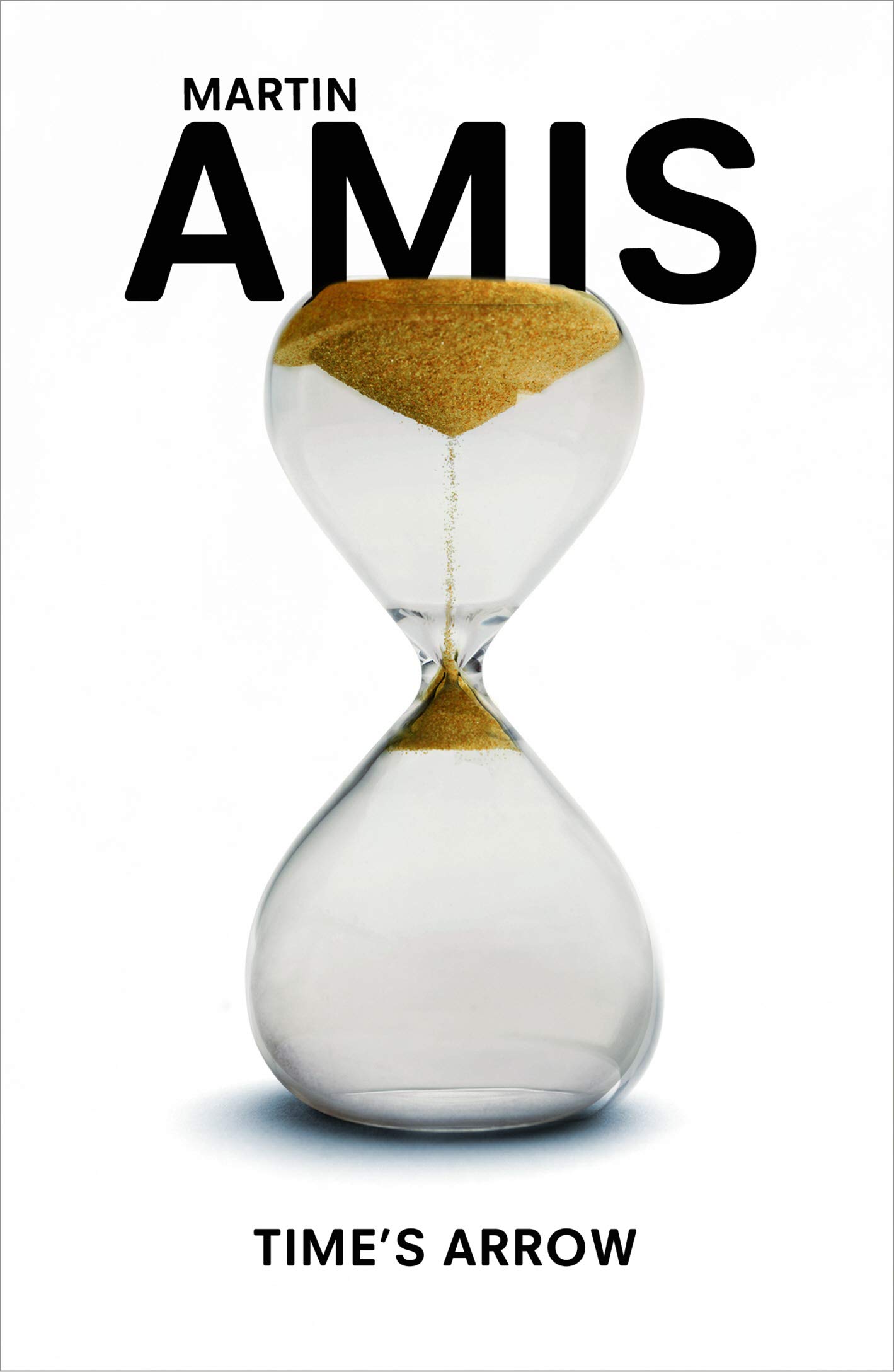
In the intricate landscape of literary experimentation,Martin Amis’s Time’s Arrow stands out as a perplexing and provocative journey through the reversals of time and morality. invites readers into the complex labyrinth that Amis constructs, offering fresh perspectives on a narrative told backward yet resonating deeply wiht forward-moving ethical questions.This review explores how the book navigates the challenges of interpreting a reversed chronology, unraveling the layers of meaning that make Amis’s work a compelling study in narrative innovation and human ambiguity.
Exploring the Unique Narrative Structure That Defines Time’s Arrow and Challenges Conventional Storytelling Techniques

Martin Amis’s novel defies traditional chronology by reversing the flow of time, creating a narrative where cause follows affect, and actions unravel backward before the reader’s eyes.This reversal is not merely a gimmick but a profound device that forces us to reconsider the nature of memory, morality, and consequence. the story’s protagonist lives life from death to birth, compelling readers to process events with a sense of disorientation that mirrors the character’s own bafflement. The unique timeline challenges expectations by blending forensic detail with existential questions, making each moment both revelation and enigma simultaneously.
The structure invites a fresh outlook on how stories can be conveyed, refusing the comfort of linear progression. It highlights the tension between what is seen and what is understood, prompting readers to engage actively rather than passively absorbing data. The complexity of the narrative flow can be summarized by the following contrasts:
Best-Selling Books in This Category


- Lombardo, Claire (Author)

| Traditional storytelling | Time’s Arrow Approach |
|---|---|
| Chronological, forward-moving timeline | Reverse chronology from death to birth |
| Cause precedes effect | Effect precedes cause |
| Clear character growth | Character unravels, identity emerges retrospectively |
- Memory is interrogated as fragments are reassembled in reverse.
- Moral clarity becomes elusive when past actions are encountered as future events.
- Emotional resonance deepens through the dissonance between expectation and revelation.
A Deep Dive into the Novel’s Chronological Inversion and Its Impact on Reader Perception and Emotional Engagement

Martin Amis’s novel challenges traditional narrative structures by flipping the arrow of time,compelling readers to experience events in reverse. This unusual temporal mechanic disorients yet enthralls, as cause and effect dissolve into a curious tapestry where consequences precede actions. By narrating a life backward-from death to birth-the novel forces readers to reconsider moral judgments, as atrocities unfold in reverse and pain seemingly diminishes into innocence. This inversion radically reshapes perception, provoking an intellectually stimulating engagement that disrupts the passive consumption of storytelling and rather demands active reevaluation of character motivations and ethical complexities.
Emotional engagement in this backward chronology is as paradoxical as the narrative itself. Readers find themselves empathetically tethered to a protagonist whose journey undoes itself, creating moments of profound melancholy intertwined with eerie detachment. The reversed timeline transforms ordinary life milestones into haunting revelations, where moments of love, loss, and despair gain new resonance. This temporal reversal cultivates a unique emotional rhythm characterized by:
- heightened suspense: Outcomes are known, but their origins mystify.
- Deepened empathy: Acts of kindness and cruelty are refracted through an unfamiliar lens.
- Philosophical reflection: Time’s fluidity inverts the ethical framework, urging readers to question notions of guilt and innocence.
| Aspect | Traditional Narrative | time’s arrow |
|---|---|---|
| Timeline Progression | Linear,forward-moving | reverse,backward-moving |
| Cause and Effect | Clear and sequential | Blended,effect precedes cause |
| Reader’s Emotional Journey | Builds steadily | Alternates between detachment and intimacy |
Unpacking the Themes of Morality,Memory,and the Nature of Time Embedded in Martin Amis’s Unconventional Tale

Time’s Arrow isn’t merely an experiment with narrative technique; it challenges readers to confront the unsettling relationship between morality and memory. By telling the story in reverse, Amis invites us to rethink how actions are judged when causality is inverted. The protagonist’s backward journey exposes the fragility of ethical frameworks that rely on chronological order-highlighting how our understanding of good and evil is intrinsically tied to cause and effect. In this unraveling, memory becomes a double agent, at once revealing and obscuring truths, forcing us to ask: can memory be trusted when time itself is a flexible construct?
The novel also delves into the nature of time as a mutable force rather than a rigid sequence. Within this reversed chronology, moments of horror and kindness blur, illuminating the paradoxes that arise when beginnings and endings trade places. Consider the following table illustrating how traditional temporal concepts are subverted:
| Concept | Traditional Perception | Reinterpreted in Time’s Arrow |
|---|---|---|
| Cause and Effect | Linear progression | Effect precedes cause |
| Memory | Recollection of past events | Preemptive glimpse of consequences |
| Morality | Judged by outcomes | Ambiguous and cyclical |
Through this lens, Amis’s work explores how deeply time shapes our identity and ethical sense. The fluidity of memory-caught between past and future-echoes the novel’s broader skepticism about simplistic moral judgments.Ultimately,the book serves as a haunting meditation on whether we truly understand what it means to live-and to live rightly-when time itself runs backward.
- Morality becomes a shifting puzzle rather than a fixed code.
- Memory’s role transforms into a prelude instead of a history.
- Time reveals its nonlinearity, urging readers to question perception.
Analyzing the Protagonist’s Journey Through a World Presented Backwards and Its Philosophical Implications

At the heart of the narrative lies a protagonist whose existence unfolds in reverse-beginning with death and ending in birth. This inversion challenges our traditional understanding of life’s cause and effect, forcing us to reconsider the nature of guilt, duty, and redemption. As the story progresses, actions that in a forward timeline would represent moral decay rather appear as attempts at absolution. This reversal not only disorients readers but also poignantly illustrates how the arrow of time shapes our ethical frameworks, provoking questions about whether morality is intrinsic or merely a product of temporal perspective.
Philosophically, this backward trajectory invites reflections on determinism and the fluidity of time. Is the protagonist merely trapped in a predestined loop, or is there a freedom in reliving existence with hindsight? The unraveling of his memories in reverse forces us to confront uncomfortable truths about memory and identity, such as:
- Memory’s role: How recalling events in reverse impacts self-awareness and accountability.
- Ethical ambiguity: when good actions precede evil consequences, can one be judged as immoral?
- Temporal dislocation: How reversed causality dismantles the conventional meaning of life’s progression.
| Aspect | Forward Time | Reverse Time |
|---|---|---|
| Cause and Effect | Action → Consequence | Consequence → Action |
| Memory | Past guides future | Future shapes past |
| Morality | Judged by actions | Judged by outcomes |
The Role of medical Ethics and Historical Atrocities in Shaping the Dark Undertones of the Story’s Backward Timeline

martin Amis’s novel employs a reversed chronology that serves as a profound commentary on the atrocities committed under the guise of medical science during some of history’s darkest moments. By unspooling the protagonist’s life backward,the narrative forces readers to witness acts of cruelty - including those in Nazi concentration camps – not as distant horrors but as tangible consequences of a corrupted ethical framework. This backward unraveling emphasizes the perversion of medical ethics,where the oath to “do no harm” is grotesquely inverted.The reader is confronted with horrifying experiments and systematic dehumanization,highlighting how the manipulation of science and morality can lead to cataclysmic human suffering.
Through this innovative timeline, Amis invites reflection on the gradual erosion of moral compass that allows for such atrocities.The story’s structure mirrors the disintegration of ethical standards,underscoring key elements that shaped this dark chapter in history:
- Distortion of medical ethics for political ideology
- Dehumanization through pseudo-scientific justification
- Complicity and silence within the medical community
- Loss of individual agency amid systemic evil
| Ethical Principle | Violation Example | historical Impact |
|---|---|---|
| Beneficence | Forced experiments on prisoners | irreversible physical and psychological trauma |
| Autonomy | Lack of informed consent | Loss of personal agency and dignity |
| Non-maleficence | Purposeful harm under experimentation | Thousands of innocent lives lost |
Stylistic Choices and Language Use that Enhance the Disorienting Yet Captivating Narrative experience

Martin Amis’s linguistic craftsmanship serves as the backbone of the novel’s unique temporal fabric, where the reverse chronology is not just a gimmick but a deeply immersive feature. His calculated employment of paradoxical phrases and unexpected juxtapositions pulls the reader into an unsettling dance with time. Through simple yet evocative sentences, Amis blurs cause and effect, making readers question the very nature of reality within the text. Repetition of key motifs and distorted analogies reinforce the sense of dislocation, while the precise, almost clinical description of events moving backward challenges conventional narrative comfort zones.
The language itself becomes a character, adding layers of complexity to the storytelling.Observations that seem mundane in a forward-flowing timeline take on a haunting new importance when reversed. Amis’s use of temporal inversion is reflected not only in plot but in syntax and rhythm, often breaking grammatical norms to echo the backward march of time. Below is a subtle breakdown of how certain stylistic elements work against conventional expectations, creating a captivating yet unsettlement experience:
| Stylistic Element | Effect on Reader | Example |
|---|---|---|
| Fragmented Syntax | heightens disorientation by disrupting flow | “Death un-happens.” |
| Reverse Cause and Effect | Challenges perception of reality | “He puts the gun back into his hand.” |
| minimalist Description | Focuses reader on subtle emotional shifts | “Light returns to the room.” |
| Repetitive Motifs | Creates an eerie, cyclical atmosphere | “Stars retreat into the night sky.” |
How time’s Arrow Reflects Broader Societal Critiques and the human Condition Through Its Reverse Chronology

At its core, Time’s Arrow challenges the very fabric of human experience by presenting life in reverse, compelling readers to confront uncomfortable truths about memory, morality, and the irreversible nature of history. This narrative inversion is not merely a stylistic experiment but a profound societal critique, illustrating how actions and consequences become scrambled when perceived backward. it exposes the absurdity of trying to rationalize suffering and evil through conventional storytelling, emphasizing the incomprehensibility and randomness that often define human atrocities. Through this lens, Amis critiques the collective amnesia and denial that societies employ to mitigate culpability, inviting us to question how history is recorded and remembered-unveiling uncomfortable parallels between personal and societal ethics.
The novel’s structure also acts as a mirror reflecting the paradoxes of the human condition-where empathy is complicated by the reversal of cause and effect, and understanding is constantly elusive. This disorienting timeline unsettles traditional notions of progress, success, and redemption, highlighting how human lives are frequently enough entangled in contradictions beyond clear moral judgements. consider the table below which succinctly captures these paradoxes:
| Concept | Forward Time | Reverse Time |
|---|---|---|
| Cause and Effect | Action → Consequence | Consequence → Action |
| Memory | Remembrance of Past | Forgetting the Future |
| Morality | Intentional Judgment | Unintended Implications |
| Empathy | Understanding Others’ Pain | Confusion and detachment |
Recommendations for readers Interested in Experimental Fiction, Philosophical Questions, and Moral Complexity

For those captivated by narratives that challenge conventional storytelling,exploring works that twist the fabric of time and identity can be profoundly rewarding. Experimental fiction invites readers to step beyond linear plots and engage with stories as complex puzzles that reflect the fractured nature of reality itself. Authors like Italo Calvino and Jorge Luis Borges masterfully blur the boundaries between the real and the surreal, provoking deep contemplation about the fluidity of memory and existence. Pairing these with Martin Amis’s Time’s Arrow, which uniquely tells its story in reverse, offers a compelling framework for readers eager to question how narrative structure shapes meaning.
When delving into philosophical questions and moral ambiguity,the following recommendations provide fertile ground for reflection and debate:
- “The Stranger” by Albert Camus – Exploring existentialism and absurdism through a chilling moral lens.
- “Crime and Punishment” by Fyodor Dostoevsky - A profound dive into guilt, redemption, and the psyche of a flawed protagonist.
- “House of Leaves” by Mark Z. Danielewski – An avant-garde narrative that warps reality and perception in labyrinthine layers.
| author | Philosophical Focus | narrative Style |
|---|---|---|
| Italo Calvino | Metafiction, Reality vs. Creativity | Nonlinear, Playful |
| Albert Camus | Absurdism, Existentialism | Direct, Philosophical |
| Mark Z. Danielewski | Perception, Reality | Experimental, Multilayered |
Comparing Time’s Arrow to Other Works of Reverse Narration and Its place in modern Literary Canon

martin Amis’s Time’s Arrow stands as a distinctive experiment in reverse narration, weaving a dark tapestry that challenges the conventions established by earlier literary works like kurt Vonnegut’s Slaughterhouse-Five or Nabokov’s Pale fire. While these novels toy with temporal dislocation and unreliable narration, Amis’s narrative moves relentlessly backward, compelling readers to reconstruct meaning from a disorienting chronology. This technique does more than invert time; it interrogates memory, guilt, and morality through a fractured lens where cause follows effect in an unsettling dance. The novel’s reverse chronology is less a gimmick and more a profound philosophical inquiry, setting it apart from other reverse narratives that lean more heavily on stylistic playfulness or metafictional commentary.
In considering its place within the modern literary canon, Time’s Arrow occupies a niche between postmodern experimentation and moral reckoning. Its backward storytelling not only reshapes narrative expectations but also serves as a vehicle for reckoning with historical trauma. Below is a comparison highlighting crucial features that distinguish Amis’s work among reverse narratives:
| Work | Reverse Narrative style | Primary Thematic Focus | Narrative Impact |
|---|---|---|---|
| Time’s Arrow | Chronological inversion | Memory, morality, Holocaust trauma | Provokes ethical reflection through disorientation |
| Slaughterhouse-five | Non-linear time jumps | War absurdity, fatalism | Blurs experience of trauma and free will |
| Pale Fire | Meta-narrative framing | Authorial identity, madness | Questions reliability and authorship |
| Time and Again (Jack Finney) | Time travel and flashbacks | Nostalgia, past vs present | Romanticizes history through temporal shifts |
- Impact on narrative theory: Amis revitalizes reverse narration by blending psychological depth with temporal inversion.
- Emotional resonance: By forcing readers to witness events backward, it distills sorrow and ethical inquiry in unusual but potent ways.
- Legacy: Though less widely anthologized than other modernists, its thematic ambition ensures ongoing scholarly interest.
Visualizing the Backward Journey: Imagery and Symbolism That Bring Depth to the Novel’s Reversed Life

In Martin Amis’s time’s Arrow, imagery serves as a vital conduit for immersing readers in the disorienting world where time flows backward. The novel’s unique narrative perspective transforms everyday actions into surreal, almost grotesque tableaux-blood leaps into wounds, smoke gathers into cigarettes, and conversations unravel in reverse. This deliberate distortion invites readers to reexamine the nature of memory and morality, using striking visual cues that linger long after the page. The use of reversed imagery isn’t just a gimmick; it is a mechanism that amplifies the psychological tension,showing how moments we take for granted assume new,unsettling meanings when seen through the prism of reversal.
Symbolism in the novel is tightly interwoven with this backward journey, enriching the narrative’s philosophical undertones.Objects and motifs gain layered significance: a medical parable where healing is undone, the persistent motif of mirrors reflecting impossible truths, and the interplay of light and shadow as metaphors for moral ambiguity. Consider this table highlighting key symbols and their reversed associations:
| Symbol | Forward-Life Meaning | Reversed-Life Interpretation |
|---|---|---|
| Blood | life’s vitality | Regressive loss or cleansing |
| Clock | unstoppable progress | Confounding stasis |
| Mirror | Self-reflection | Distorted identity |
Each symbolic element bends under the weight of reversed chronology, compelling readers to explore the ethical labyrinth where cause and effect entwine in bewildering ways. Through his exquisite use of imagery and symbolism, Amis not only crafts a narrative that challenges perception but also evokes the haunting complexity of human experience when viewed in reverse.
The Enduring Relevance of Martin Amis’s time’s Arrow in contemporary Discussions of History and Memory

Martin Amis’s novel pushes readers to re-examine the fluidity of history and the complexities of memory by unraveling time itself. Presented through the lens of a reversed chronology,the narrative compels us to engage with events in a non-linear way,challenging the conventional cause-and-effect relationship. This artistic choice magnifies the fragility of our understanding of the past, urging a deeper contemplation of how histories are constructed, remembered, and sometiems distorted. In contemporary discourse, where the contestation over historical narratives is ever-present, the novel’s reverse life invites an exploration of moral ambiguity and the consequences of selective memory, reminding us that history is as much about what is remembered as what is forgotten.
- Memory as a subjective archive: Amis dramatizes how personal and collective memory reshape identities and realities.
- Historical accountability: By flipping events, the narrative spotlights the frequently enough overlooked perspectives behind historical atrocities.
- Timelessness of trauma: The reverse chronology emphasizes how trauma resists linear progression and neat closure.
| Aspect | Conventional History | Amis’s Reverse Narrative |
|---|---|---|
| Chronology | linear, cause to effect | Backward, effect to cause |
| Perception of Events | Clear moral direction | Ambiguity and discomfort |
| Role of Memory | Selective and preservative | Fragmented and questioning |
About Martin Amis The Author Behind the Bold narrative and His Contribution to Late 20th Century Literature

Martin Amis carved his niche in late 20th-century literature by daring to fuse dark humor with profound philosophical questions,challenging readers to confront uncomfortable truths. His narrative style is characterized by a razor-sharp wit and an incisive cultural critique,creating bold and often polarizing works that reflect the complexities of the era. More than just a storyteller, Amis became a literary cartographer, mapping the moral ambiguities and existential anxieties of his time with a fearless pen.
His contribution extends beyond mere storytelling; through innovative techniques and complex character studies, he reshaped how narratives could unfold. Consider these key facets of Amis’s literary impact:
- Experimental Narratives: Playing with time and perspective to disrupt traditional plot structures.
- Cultural Commentary: Embedding sharp observations on society,politics,and human nature.
- Language Innovation: Crafting prose that is at once elegant, brutal, and deeply evocative.
| Work | Year | Literary Innovation |
|---|---|---|
| Money | 1984 | Black humor, anti-hero protagonist |
| London Fields | 1989 | Multi-narrator suspense, social critique |
| Time’s Arrow | 1991 | Reverse chronology, moral reckoning |
Unraveling Reverse Life offers a compelling lens through which to revisit Martin Amis’s Time’s arrow, illuminating its intricate dance with memory, morality, and the elusive nature of time itself. Whether you’re a longtime admirer of Amis or approaching his work anew, this thoughtful exploration encourages a deeper engagement with the novel’s reverse chronology and its haunting ethical questions.It’s a reminder that sometimes, to move forward in understanding, we must first look backward-unraveling the threads of narrative to reveal the complex textures beneath.