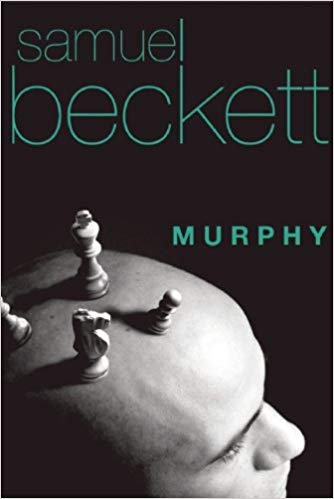
In the vast landscape of twentieth-century literature, few works stir as much quiet contemplation as Samuel BeckettS Murphy. A novel both elusive and intriguing, it weaves together themes of absurdity, identity, and the elusive quest for meaning.Unraveling beckett’s Enigma: A Thoughtful Review of Murphy invites readers to journey beneath the surface of Beckett’s prose, exploring the intricate layers that make this work a compelling puzzle. This review endeavors to illuminate the subtle complexities of Murphy, offering insight without unraveling all the mysteries, and setting the stage for a deeper appreciation of Beckett’s unique literary vision.
Exploring the Intricate Themes that Define Beckett’s Murphys Unique Place in Modern Literature

Beckett’s Murphy delves deep into the chaotic interplay of mind and existence, carving a niche that defies conventional narrative boundaries. The novel’s exploration of mental dislocation, absurdity, and the elusive search for meaning resonates through Murphy’s paradoxical desire to escape both thought and reality.This tension is masterfully embodied in the protagonist’s intentional retreat into inner voids, challenging readers to confront the uneasy balance between sanity and madness. beckett doesn’t just tell a story; he dismantles the very framework of traditional storytelling, inviting contemplation on the limitations and absurdities inherent in human consciousness.
The complexity of Murphy can be distilled into a few core themes that ripple throughout the narrative:
Best-Selling Books in This Category


- Existential Isolation: Murphy’s detachment highlights the human struggle for authentic connection amid an indifferent world.
- Language and Silence: The novel probes how dialog both illuminates and obscures truth, with silence becoming both refuge and prison.
- Duality of Reality: Beckett contrasts Murphy’s internal spiritual escapism with the tangible chaos of external reality.
These interwoven motifs create a textured landscape were philosophy and absurdity collide, securing the novel’s place as a pioneering work that challenges and expands the scope of 20th-century literature.
| Theme | Depiction in Murphy | Effect on Reader |
|---|---|---|
| Existential Isolation | Murphy’s self-imposed withdrawal | Feelings of alienation and reflection |
| Language and Silence | Dialogues mixed with long pauses | Heightened awareness of communication limits |
| Duality of Reality | Contrasting mental escapades and physical world | Engages readers in questioning perception |
A Deep Dive into the Complex Characterization and Psychological Layers of Beckett’s Protagonist

At the heart of Beckett’s narrative lies a protagonist whose psyche is a labyrinth of contradictions and enigmas. Murphy’s characterization defies traditional literary molds, embodying a man who simultaneously seeks detachment from the world and engagement with his inner chaos. His actions and silences reveal a poignant tension between the desire for control and the surrender to unconscious impulses. This delicate balance grants Murphy a profound humanity, inviting readers to explore how isolation can be both a refuge and a prison.The subtle gradations in his demeanor-moments of whimsical humor interspersed with deep existential despair-capture the fragility of selfhood in an absurd universe.
Beckett’s skillful layering of psychological motifs enriches the narrative texture, making Murphy a canvas where themes of identity, autonomy, and madness interplay. Consider the following traits that define Murphy’s complex persona:
- Detachment: A deliberate withdrawal from physical and emotional entanglements.
- Internal Conflict: A continuous oscillation between rationality and irrationality.
- Intellectual Dissociation: Engages with ideas while distancing from real-life consequences.
- Search for meaning: Despite his evasions, Murphy is driven by a quest to understand existence.
To further appreciate the multidimensional characteristics of Murphy, the table below summarizes how these traits manifest throughout his journey:
| Psychological Trait | Behavioral Manifestation | impact on Plot |
|---|---|---|
| Detachment | Refusal to engage socially, preference for internal fantasy | Drives his eccentric lifestyle and interactions |
| Internal Conflict | Moments of indecision, introspective monologues | Creates tension and reflective pauses in narrative |
| Intellectual Dissociation | Engages with theories yet avoids emotional involvement | Highlights absurdity and alienation motifs |
| Search for Meaning | Attempts to find coherence in chaos through thought | Shapes the philosophical undercurrents of the novel |
the Role of absurdity and Humor in Balancing the Existential Weight of Murphy’s Narrative

Beckett masterfully weaves absurdity into the fabric of Murphy, transforming existential dread into a canvas ripe with dark humor and irony. this interplay serves not merely as comic relief but as a vital mechanism that challenges readers to confront the contradictions of existence with a wry smile. The characters’ surreal escapades and nonsensical dialogues reflect an underlying chaos, yet this chaos reveals a profound truth-the absurdity of life itself. Through humor, Beckett creates a space where the heaviness of existential questions is tempered, inviting readers to reconsider despair as a shared human experience rather than a solitary burden.
In examining key scenes where Murphy’s absurd decisions border on the comical,one can identify the nuanced balance between levity and gravity.Below is a breakdown illustrating how beckett oscillates between these tones to sculpt the narrative’s unique atmosphere:
| Element | Absurd Instance | Existential Impact |
|---|---|---|
| Murphy’s detachment | Choosing to live in a rocking chair | Highlights alienation and search for comfort in meaninglessness |
| Dialogue with Mr. Endon | philosophical nonsense and riddles | Reveals struggle to find coherence in an incoherent world |
| Use of language | Playful wordplay and paradoxes | Underscores limits of communication and understanding |
- Absurdity acts as a mirror to human vulnerability.
- Humor softens existential isolation without trivializing it.
- Together, they evoke a contemplative laughter that lingers beyond the text.
Unpacking Beckett’s Stylistic Choices and their Impact on the Story’s Pacing and Mood

Beckett’s distinctive stylistic choices in Murphy act as essential gears driving the novel’s rhythm and atmosphere.His sparse yet meticulously crafted prose often oscillates between the absurd and the profound, creating a unique pacing that both lulls and jolts the reader. The deliberate fragmentation of sentences and the frequent use of repetition contribute to a meditative cadence, mirroring Murphy’s own mental meanderings. This pacing is far from linear; it stretches and contracts, much like a breathing organism, lending the narrative an almost hypnotic quality. Beckett’s use of seemingly mundane details, loaded with symbolic weight, further deepens this effect, blurring the lines between contemplation and chaos, ultimately shaping the reader’s emotional engagement with the story.
Furthermore, Beckett’s manipulation of mood is achieved through a careful balance of dark humor and existential melancholy, often within a single passage.By weaving contrasts-such as lighthearted irony against bleak philosophical inquiry-he crafts a textured emotional landscape that resists easy categorization. The following list highlights some of the key stylistic elements and their narrative impacts:
- Elliptical Dialogue: Creates a sense of disconnection and internal struggle.
- Repetitive Motifs: Establishes thematic continuity and a hypnotic rhythm.
- Minimalistic Descriptions: encourages readers to fill the emotional void, intensifying engagement.
- Juxtaposition of Absurdity and Lucidity: Enhances mood fluctuations that echo Murphy’s psyche.
| Stylistic Choice | Impact on Pacing | Impact on Mood |
|---|---|---|
| Frequent Repetition | Creates rhythmic loops, slowing narrative flow | Evokes obsession and internal conflict |
| Elliptical Sentences | Interrupts smooth reading, adds unpredictability | Generates tension and disorientation |
| Sudden Shifts in Tone | Surprises reader, re-energizing the story | Blends humor with existential unease |
how Beckett Challenges Conventional Storytelling Through Symbolism and Minimalism in Murphy

Beckett defies traditional narrative frameworks by infusing symbolism and minimalism into the fabric of Murphy, transforming the reading experience into an exploration of existential ambiguity. Characters and objects transcend their literal meanings,becoming vessels for abstract concepts such as consciousness,absurdity,and the search for meaning.As a notable example, the recurring motif of the chair is not merely a piece of furniture but a symbol of comfort, entrapment, and the human condition’s inertia. Through this symbolic layering, Beckett invites readers to delve beneath the surface, challenging the notion that stories must follow linear logic or resolution.
The stark minimalism in language and setting further amplifies the thematic resonance of the novel.Beckett pares down descriptive elements to their bare essentials, often relying on fragmented dialogue and sparse scenes that resist closure. This economy of expression heightens the tension between presence and absence,reflecting Murphy’s fragmented psyche. Consider this breakdown of Beckett’s minimalist tools and their narrative effects:
| Minimalist Tool | Narrative Effect |
|---|---|
| Elliptical Dialogue | Creates ambiguity, invites interpretation |
| Repetitive Phrases | evokes cyclical patterns of thought and behaviour |
| Sparse Settings | Focuses attention on internal conflict |
| Symbolic objects | Encodes philosophical concepts subtly |
By intertwining symbolism with minimalist aesthetics, Beckett dismantles conventional storytelling boundaries, urging readers to experience Murphy not as a straightforward narrative but as a layered meditation on existence itself.
The Philosophical Underpinnings that Shape the Moral Questions Beckett Raises in Murphy

Beckett’s Murphy is more than a narrative; it is a labyrinth of existential inquiry, where morality is fragmented and reassembled through the lens of philosophical skepticism and absurdism. At its core, the novel wrestles with notions of meaninglessness and the human desire to impose order on chaos. Murphy’s own detachment from the world serves as a subtle critique of traditional ethical frameworks, questioning whether conventional moral codes hold any sway in a universe that seems indifferent at best. The tension between action and inaction, presence and oblivion, becomes a canvas on which Beckett paints his exploration concerning the nature of choice and result.
- Existential Disillusionment: Murphy embodies the struggle of finding purpose when faced with the void of absurdity.
- moral Ambiguity: The novel denies clear-cut judgments, pushing readers to grapple with ethical uncertainty.
- The Limits of Rationality: Beckett shows how reliance on reason falters when confronting human suffering and alienation.
In a way,Beckett uses philosophical dualities-mind versus body,sanity versus madness-as vehicles to challenge the reader’s moral compass.The interaction between Murphy and other characters underscores this dialectic,reflecting broader questions about autonomy,obligation,and the illusions of control. A concise table below captures some of the philosophical contrasts Beckett weaves into the narrative:
| Philosophical Theme | Representation in Murphy |
|---|---|
| Absurdity | Life’s inherent meaninglessness |
| freedom | Choice as paralysis or rebellion |
| Identity | Fragmented selfhood and alienation |
| Ethics | Morality without global truth |
comparing Murphys Reception Across Generations and Its influence on Contemporary Writers

Since its publication, Murphy has navigated a shifting landscape of interpretation and appreciation.Early generations often viewed the novel through the lens of its absurdist and existential qualities, aligning it closely with Samuel Beckett’s later, more celebrated works.This initial reception emphasized the playful yet profound exploration of human detachment and the search for meaning in chaos. However, as literary criticism evolved, newer readers and scholars began to unearth layers of nuance related to identity, mental health, and the idiosyncrasies of societal norms that Beckett subtly critiques. These evolving perspectives have made Murphy a versatile text,engaging various audiences differently yet profoundly.
- Baby Boomers: Romanticized Beckett’s innovative narrative style and humor as a rebellious echo to post-war disillusionment.
- Generation X: Focused on the existential isolation of the protagonist,finding parallels with the era’s cultural skepticism.
- Millennials & Gen Z: Are drawn to the novel’s themes of mental instability and escapism, correlating with contemporary dialogues on mental health.
| Generation | Primary Focus in Reception | Influence on Contemporary Writers |
|---|---|---|
| Baby Boomers | stylistic innovation, dark humor | Encouraged experimental narrative forms |
| Generation X | Existential themes, alienation | Inspired thematic depth and character introspection |
| Millennials & Gen Z | Mental health, escapism | Prompted nuanced psychological characterizations |
Specific passages to Highlight Beckett’s Linguistic Genius and Thematic Depth in Murphy

Beckett’s prose in Murphy pulsates with a unique rhythm that challenges traditional narrative forms, inviting readers into a linguistic labyrinth. Consider the passage where Murphy muses on existence, “Thousands of people pass through life aimlessly, yet within that void, the play of words animates meaning.” This duality-language as both cage and key-showcases Beckett’s mastery in blending philosophical inquiry with literary innovation. His deft manipulation of syntax and vocabulary not only crafts a surreal atmosphere but also probes the limits of communication, reflecting the protagonist’s internal struggles and the novel’s broader existential themes.
Another striking excerpt illustrates Beckett’s ability to embed profound thematic concerns within seemingly whimsical dialogue.When Murphy converses with Mr. Endon, the exchange oscillates between absurdity and poignancy:
- “To sleep is to escape, yet in dreaming lies another form of captivity.”
- “Freedom is but the subtle art of entrapment.”
Such sentences encapsulate the tension between consciousness and unconsciousness, autonomy and confinement.This thematic depth, woven seamlessly into the fabric of Beckett’s stark yet playful language, elevates Murphy beyond mere narrative, inviting readers to dwell on the paradoxes of human existence.
| Passage | Highlight | Theme |
|---|---|---|
| “The mind’s echo resounds louder in silence.” | Stylistic boldness | Isolation and consciousness |
| “Words build as much as they dismantle.” | Paradoxical imagery | Language and reality |
| “A man’s escape is not from the world, but from himself.” | Philosophical insight | Self and freedom |
Recommendations for Readers Beginners and Seasoned Beckett Enthusiasts Alike

Whether you’re picking up Murphy for the first time or revisiting its intricate layers after years of beckett studies, this novel offers a uniquely rewarding experience. for those new to beckett’s world, patience and a playful mindset unlock much of its charm. Start by focusing on Murphy’s eccentric habits and his philosophical battles; these elements provide accessible entry points to Beckett’s abstract themes. To deepen your engagement, consider annotated editions or companion guides that illuminate the subtle gestures and past context lurking beneath the witty prose.
Seasoned readers will appreciate diving into the novel’s structural nuances and recurring motifs that echo across Beckett’s oeuvre, noticing how Murphy prefigures later masterpieces. Engage in discussions or reread sections aloud to uncover new dimensions in dialogue and rhythm that often slip past casual reading. For a more interactive exploration, the table below breaks down key themes against narrative techniques, highlighting areas ripe for analysis or reflection:
| key Theme | Narrative Technique | Points of Interest |
|---|---|---|
| Absurdity | Satirical prose | Juxtaposition of logic and nonsense |
| Isolation | Internal monologues | Murphy’s detachment from society |
| Consciousness | Stream of consciousness | Blurred boundaries of mind and body |
| Freedom | Symbolic imagery | Escape from societal constraints |
- Beginners: Embrace the oddities and ask “why” often.Seek out supporting texts for clarity.
- enthusiasts: Revisit with an eye for Beckett’s evolving style and philosophical puzzles.
- All readers: Allow space for ambiguity-it’s part of the Beckett experience.
the Author behind This Thoughtful Review and Their Approach to Literary Criticism

behind every nuanced critique lies a mind deeply entwined with literature’s shifting landscapes. The reviewer of Murphy approaches beckett’s enigmatic narrative with a blend of scholarly rigor and intuitive sensitivity, aiming to peel back layers that often elude cursory readings. Their method is not confined to surface-level analysis; instead, it embraces the paradoxes and ambiguity that the text embodies, allowing the complex interplay of absurdity and humanity to emerge vividly. Grounded in both contemporary and classical literary theories, their perspective invites readers to reconsider traditional interpretations and discover original meaning beneath Beckett’s sparse prose.
Their approach can be summarized through a dynamic framework that balances emotional resonance with intellectual inquiry:
- Contextual Immersion: Delving into Beckett’s historical, philosophical, and biographical background to enrich textual understanding.
- Close Reading Practices: Focusing on language, structure, and symbolism to extract hidden significances.
- Interdisciplinary Connections: Linking literary elements with psychology, existentialism, and postmodern thought.
- Critical Dialogue: engaging with diverse critiques, fostering a multi-voiced narrative within the analysis.
| Aspect | Approach | Outcome |
|---|---|---|
| Language | Close reading of syntax and diction | Uncovered subtle irony and tonal shifts |
| Philosophy | Analysis through existentialist lens | Highlighted themes of absurdity and alienation |
| Context | Biographical research on Beckett | Clarified influences shaping the narrative |
In peeling back the layers of Murphy, this review has sought to illuminate the intricate dance between chaos and clarity that Beckett masterfully choreographs. Though the novel’s enigmatic prose and philosophical undercurrents may perplex as much as they reveal, they invite readers into a richly textured landscape of existential inquiry. Whether approached as a puzzle to be solved or an experience to be savored, Murphy stands as a testament to Beckett’s singular voice-one that continues to challenge and captivate, long after the final page is turned.