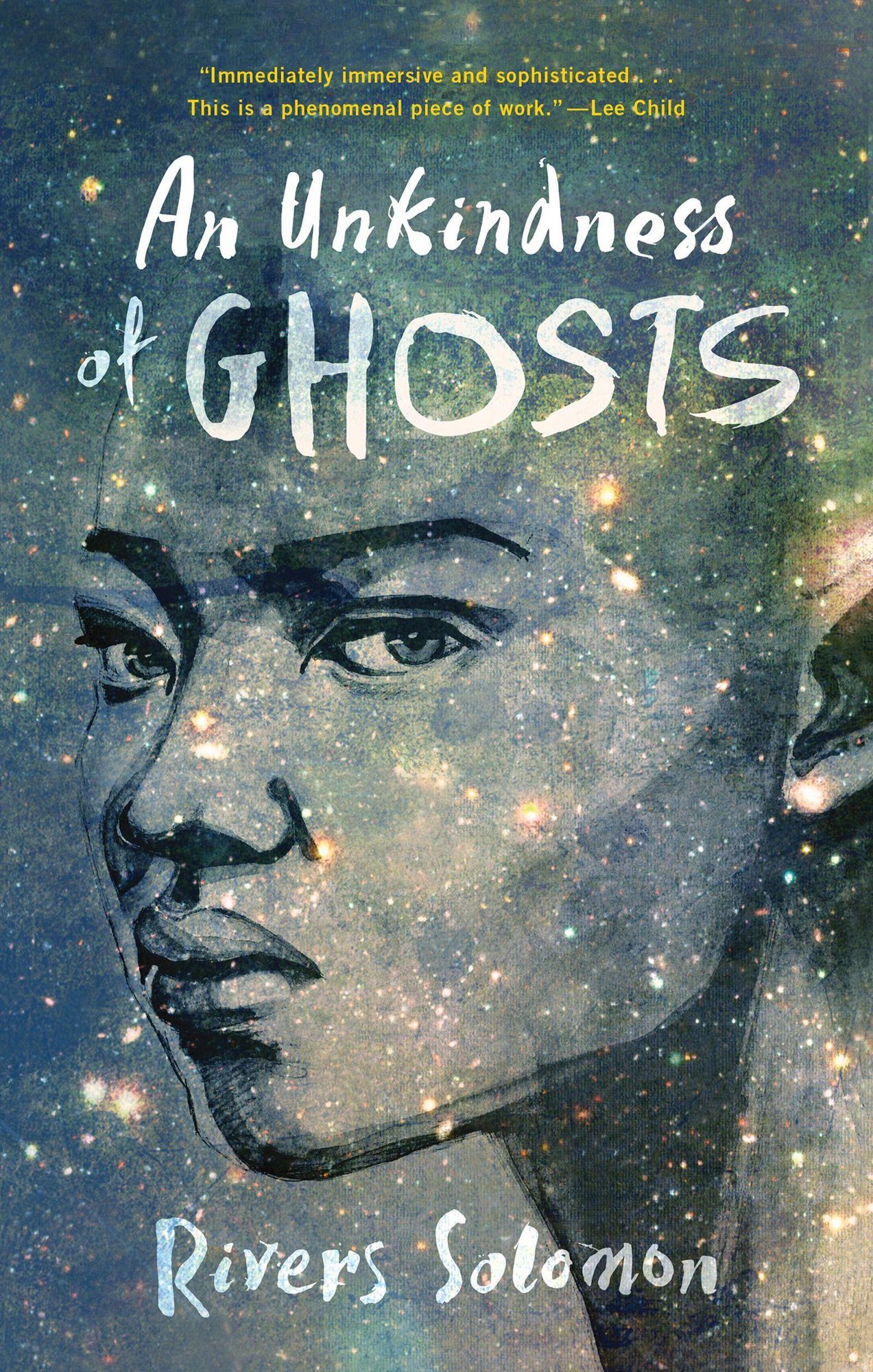
In the vast landscape of speculative fiction, Rivers Solomon’s An Unkindness of Ghosts emerges as a compelling exploration of identity and power, set against the oppressive confines of a spacefaring society. With poetic precision and unflinching honesty, Solomon crafts a narrative that navigates the turbulent waters of systemic inequality, trauma, and resilience through the eyes of Aster Gray, a young woman searching for truth aboard the generation ship Matilda. This review delves into how the novel intricately weaves themes of race, gender, and social hierarchy, inviting readers on a journey that challenges conventional boundaries while illuminating the enduring human quest for belonging and self-understanding.
Exploring the Complex Layers of Identity and Belonging in Rivers Solomon’s An Unkindness of Ghosts

Rivers Solomon masterfully peels back the layers of identity through the lived experience of Aster, the protagonist, whose journey aboard the HSS Matilda is marked by persistent negotiation between self-definition and imposed social order. The ship’s rigid caste system mirrors ancient and contemporary structures of oppression, compelling readers to confront how identities are shaped, constrained, and weaponized within power hierarchies. Through Aster’s nuanced perspective, identity emerges not as a fixed essence but as a fluid battleground where memory, trauma, and resilience intersect.This complexity challenges simplistic binaries and invites a deeper consideration of what it means to belong in a world designed to exclude.
Within the stratified decks of the matilda, belonging becomes both a sanctuary and a site of resistance. The narrative lays bare the emotional toll of enforced invisibility while also illuminating the strength found in shared histories and collective defiance. Solomon’s exploration is vividly encapsulated in the following contrasts:
Best-Selling Books in This Category



| Aspect | Oppression | Resistance |
|---|---|---|
| Identity | Erased markers, enforced roles | self-naming, reclaiming heritage |
| belonging | Isolation, alienation | Community bonds, solidarity |
| Power | Control, surveillance | Subversion, empowerment |
- Memory: Acts as both a weapon and a refuge, connecting past to present.
- Language: Shapes identity and enforces hierarchy.
- Physical space: Reflects and enforces social stratifications.
This intricate interplay fuels a poignant interrogation of selfhood and survival, highlighting how marginalized individuals carve out spaces of belonging and assert agency within oppressive systems.
Dissecting Power Structures and Social Hierarchy on the generation Ship Matilda in the Novel

On the Matilda, power is not just a matter of command but an intricate web of social stratifications that dictate every interaction and life opportunity onboard. The ship’s hierarchies are sharply delineated between the Decks, with those in the upper tiers enjoying relative privilege and those below subjected to harsh servitude and systemic oppression. This rigid social order reflects a microcosm of colonial and racialized power dynamics, where the ruling class enforces control through surveillance, indoctrination, and violence. key elements of the power structure include:
- administrative Command: Elite officers dominating policy and punishments.
- Medical and Scientific Authority: Gatekeepers of knowledge wielding influence over marginalized groups.
- Labor Class: Enslaved descendants relegated to grueling, dehumanizing work.
- Informal Networks: underground communities fostering resistance and identity preservation.
Understanding these layers reveals how An Unkindness of Ghosts critiques systemic injustice by weaving personal trauma with structural critique. The tense coexistence and rebellion aboard Matilda highlight that power is not merely possessed but continuously negotiated and contested. The following table summarizes the dominant forces on Matilda and their primary roles:
| Faction | Role | Influence |
|---|---|---|
| Upper Deck Command | Governance & Security | High |
| Medical Corps | Healthcare & Surveillance | Moderate |
| Lower Deck Inhabitants | Labor & rebellion | Low, but growing |
| Resistance Cells | Subversion & Solidarity | Invisible, potent |
The Intersectionality of Race, Gender, and Class through the Eyes of Aster in the Story

Aster’s journey on the HSS Matilda unravels a complex web where race, gender, and class are not just social categories but interlocking structures that dictate every facet of life aboard the ship. Her experience vividly illustrates how systemic oppression operates on multiple levels, with the lowest decks symbolizing the forced invisibility of marginalized communities.As a mixed-race woman navigating this stratified society, Aster embodies the cumulative weight of these intersecting identities, challenging the rigid hierarchies imposed by the Autogen-created regime. The narrative exposes how racial segregation, gender bias, and class-based violence are deeply intertwined, leaving Aster to maneuver a path shaped by both resilience and constraint.
The layers of the Matilda serve as a metaphorical and literal representation of societal layers - each deck enforcing a particular struggle related to identity and power. In this context,aster’s position reveals the nuances of oppression that cannot be fully understood when examining race,gender,or class in isolation. Consider the following framework outlining key aspects of her intersectional challenge:
| factor | Manifestation in Aster’s World | Impact on Identity |
|---|---|---|
| Race | Enforced segregation, restricted access, systemic prejudice | Marginalized, invisible in upper decks’ society |
| Gender | Expectations, vulnerability, limited autonomy | Power struggles intensified by stereotypes and violence |
| Class | Living conditions, labor roles, social mobility | Economic disenfranchisement, survival-driven decisions |
- Interlocking oppressions create compounded challenges beyond single-axis analysis.
- Aster’s resilience highlights the power of identity negotiation in unfriendly environments.
- Storytelling reveals the importance of acknowledging multi-layered systems of control.
How Memory and Trauma Shape the Characters’ Journeys Toward Self-Discovery and Resistance
Within An Unkindness of Ghosts, memory operates as both a prison and a key. The characters grapple with fragmented recollections of a history marred by oppression and loss, textures that shape their perceptions of self and other. For Aster, memories of her mother and the systemic violence inflicted upon her community ignite a fierce determination to unravel the ship’s oppressive hierarchy. Trauma, while debilitating, becomes a conduit through which hidden strengths emerge, driving characters to question inherited narratives and seek authenticity beyond imposed identities.
Their journeys are marked by moments of silence and revelation, where memories surface as painful truths yet also as catalysts for change. Consider these ways memory and trauma influence their path:
- Memory as Resistance: Recalling suppressed histories fuels acts of defiance against the ship’s authoritarian regimes.
- Trauma as Identity: Wounds borne from institutional violence forge a collective resilience, shaping solidarity among factions.
- Self-Discovery through Reckoning: Confronting past horrors leads characters to reimagine their place and power within the social order.
| Character | Memory’s Role | Impact of Trauma |
|---|---|---|
| Aster | Motivates uncovering truth | Sharpens resolve, prompts rebellion |
| Hark | Reveals dual histories | Creates internal conflict |
| Lenore | Preserves cultural legacies | Strengthens community bonds |
The Role of queer Identity in challenging Norms and Empowering Marginalized Voices Within the Narrative
Queer identity in An Unkindness of Ghosts transcends mere representation; it becomes a radical act of resistance against the rigid societal structures imposed aboard the HSS Matilda. rivers Solomon crafts characters whose sexualities and gender expressions refuse to conform to the oppressive norms dictated by the ship’s hierarchies.These identities disrupt the binary perceptions of power and belonging,offering option modes of existence that challenge the legitimacy of the dominant culture. Through their lived experiences, queer characters illuminate the intersectionality of oppression, as thay navigate not onyl racial and class struggles but also the policing of bodies and desires.This nuanced portrayal foregrounds how queerness serves as a site of both vulnerability and strength, where marginalized voices articulate new possibilities for community and self-empowerment.
- Queer identity as resistance: Refusal to abide by imposed societal norms and gender roles.
- Intersectional struggles: Navigating compounded oppressions based on race,class,and sexuality.
- Subversion of power: Queer existences challenge dominant narratives of control and purity.
- Community building: Formation of supportive networks that uplift marginalized experiences.
The impact of these voices is visually and thematically echoed through Solomon’s intricate world-building. The Matilda’s stratified quarters symbolize not only racial and economic segregation but also the forced erasure or marginalization of queer identities. Though, pockets of queer resistance carve out spaces of refuge and dialog. In this way, the narrative reframes queerness as an essential lens for understanding power dynamics-not simply as a facet of identity but as a catalyst for transformation. The following table highlights key characters whose queer identities intersect with their social roles, illustrating the complex interplay between personal and political struggles aboard the ship.
| Character | Queer Identity | Role in Challenging Norms |
|---|---|---|
| Aster gray | Queer, non-binary | Leader who disrupts racial and gender hierarchies |
| Hess desali | Gay | Caregiver challenging emotional repression |
| Other Residents | Various queer expressions | Community builders who resist segregation |
A Deep Dive Into the Symbolism of Space and Isolation as Reflections of Societal Oppression
In An Unkindness of Ghosts, Rivers Solomon masterfully crafts the spaceship Matilda as more then just a vessel drifting through the vast cosmos-it becomes a floating microcosm of embedded societal hierarchies and systemic oppression. The ship’s rigidly segregated decks and claustrophobic corridors symbolize the inescapable constraints imposed on marginalized identities. Space, often associated with freedom and exploration, here paradoxically mirrors confinement, illustrating how isolation becomes a tool for enforcing control and perpetuating power imbalances. This inversion forces readers to confront how physical environments can internalize and reflect broader social structures, making isolation a metaphoric prison rather than a sanctuary.
The spatial arrangement aboard the Matilda also echoes historical and contemporary realities of segregation, discrimination, and class stratification. Consider the following dynamics:
- Upper Decks: Inhabited by the privileged ruling class, embodying power and access.
- Lower Decks: Populated by the oppressed, reflecting marginalized peoples’ struggle for visibility and voice.
- Restricted Zones: Invisible boundaries reinforcing fear, ignorance, and division between groups.
| Spatial Element | Symbolic Meaning | Societal Parallel |
|---|---|---|
| Corridors | Pathways of control and surveillance | Policing and social monitoring |
| Airlocks | Barriers to freedom and escape | Systemic barriers in society |
| Compartments | Isolated existence and fragmentation | Social alienation |
Narrative Techniques and Storytelling Devices That Amplify the Novel’s Themes of Survival and Hope
Rivers Solomon employs a range of narrative techniques to immerse readers deeply in the harrowing yet resilient world of An Unkindness of Ghosts. The novel’s first-person, present-tense perspective creates an immediacy that mirrors the protagonist Aster’s constant state of alertness in a hostile environment. this choice not only fosters intimate connections between reader and character but also underscores the urgency of survival amid systemic oppression. Interwoven flashbacks serve as poignant storytelling devices, revealing layers of history and trauma that shape present struggles without overwhelming the current narrative.Through a careful balance of revelation and mystery, Solomon magnifies themes of endurance and reclamation, inviting readers to witness both the weight of history and the sparks of hope that fuel resistance.
Stylistically, the novel’s use of fractured narrative structures and poetic language amplifies emotional complexity, reflecting the fragmented identities forced by authoritarian control aboard the generation ship. Notably, Solomon integrates symbolism through recurring motifs such as the river-an emblem of both confinement and possibility. The author’s deft weaving of speculative elements with social realism further enriches thematic contrasts, highlighting survival not just as a biological imperative but as a persistent choice of hope and self-definition. Below is a brief overview of key storytelling devices that reinforce these thematic currents:
- unreliable narration: Challenging perceptions and highlighting personal and societal fractures.
- Non-linear storytelling: Drawing attention to cyclical trauma and the persistence of memory.
- Motif of water: Representing fluidity in identity and transformation.
- Code-switching in dialogue: Portraying cultural hybridity and systemic stratification.
The Impact of Science Fiction Elements in Framing Real-World Issues of Inequality and Identity
Rivers Solomon’s An Unkindness of ghosts employs the confined, hierarchical structure of the spaceship setting to mirror and magnify the persistent struggles surrounding race, class, and gender in our own world. The sci-fi elements are not mere aesthetic choices but serve as powerful metaphors-the ship’s segregated decks, each designated for a particular social class, echo the systemic inequalities deeply embedded in societies. This framing allows readers to explore identity and marginalization in a novel way, where the characters’ battles for autonomy and recognition become allegories of real-world oppression, inviting a critical reflection on the social constructs that govern us.
- Biological modification: highlights tensions between conformity and self-identity.
- Artificial intelligence: raises questions about personhood and human value.
- Spatial confinement: symbolizes societal restrictions on upward mobility.
Moreover,the novel’s layered narrative challenges traditional notions of identity by blending memory,trauma,and history through a blend of cultural storytelling and futuristic speculation. This intersectionality is reinforced by the science fiction context,where speculative technology and alien social norms become tools for dismantling binary views of race and gender. The following table illustrates how various science fiction motifs in the novel correspond to broader themes of inequality and selfhood:
| Science fiction Element | Real-World Issue | Impact on Character Identity |
|---|---|---|
| Genetic Engineering | Eugenics & Racial Purity | Conflicted sense of self-worth |
| Ship’s Social Stratification | Classism & Segregation | Forced social mobility constraints |
| Non-binary Gender Roles | Gender Fluidity & Norms | Rewriting gender identity norms |
Analyzing the Tone, Pacing, and Emotional Resonance that Engage Readers Throughout the Book
Rivers solomon’s narrative voice in An Unkindness of Ghosts is a masterclass in weaving intimacy and urgency. The tone strikes a delicate balance between stark realism and moments of poetic surreality, which draws readers deeply into the multilayered world aboard the God’s Mercy. This fluid tonal shift fuels the novel’s emotional undercurrents,allowing readers to absorb the complex themes of identity,trauma,and resilience without feeling overwhelmed. By embedding subtle yet powerful pauses within the prose, Solomon maintains a pacing that mirrors the protagonist’s psychological journey-sometiems slow and reflective, other times sharp and breathless-ensuring the emotional gravity never fizzles out but rather accumulates with each chapter.
Within this rhythm, the emotional resonance is heightened by the author’s meticulous attention to detail and empathetic character development. The interplay between characters is rendered with careful nuance, often through brief exchanges laden with unspoken tensions or shared pain. This can be illustrated in the following simple breakdown of narrative elements that foster reader engagement:
| Element | Effect on Reader | Example from the Novel |
|---|---|---|
| Concise Dialogue | Builds immediacy and realism | Sudden confrontations in the lower decks |
| Introspective Passages | Invites empathy and reflection | Gray’s internal struggles with identity |
| Descriptive Imagery | Evokes visceral world-building | The starkness of the ship’s segregated decks |
| Shifts in narrative Pace | Maintains tension and release | Moments of action versus contemplative solitude |
Recommendations for Readers Interested in Social Justice, Speculative Fiction, and intersectional Stories
For those drawn to narratives that intertwine social justice with speculative worlds, diving into stories like An Unkindness of Ghosts opens new vistas of empathy and understanding. Rivers Solomon crafts a tightly woven cosmos where oppressive systems mirror our own history, compelling readers to reflect on themes of identity, resilience, and rebellion. To expand your journey, consider exploring works by authors such as N.K. Jemisin and Octavia Butler-masters at blending rich speculative elements with profound social commentary. Their stories, much like Solomon’s, invite us to dismantle entrenched hierarchies through the lens of powerful, complex characters navigating marginalized spaces.
Intersecting identities are at the heart of transformational storytelling, encouraging readers to embrace nuanced perspectives beyond one-dimensional characterizations. Engaging with diverse voices in speculative fiction not only enriches the genre but also highlights the multifaceted realities of power and oppression. Below is a curated list of recommended titles known for their intersectional approach, each promising to challenge and expand your understanding of identity in speculative landscapes.
- Parable of the Sower by Octavia Butler – A visionary dystopian tale fused with themes of liberation and survival.
- The Broken Earth trilogy by N.K. Jemisin - An exploration of environmental collapse and systemic injustice.
- The Deep by Rivers Solomon – A haunting fusion of folklore and the legacy of slavery.
- The City We Became by N.K. Jemisin – Urban fantasy that personifies cities through diverse, powerful avatars.
- Such a Fun Age by Kiley Reid - Though not speculative, a sharp narrative on race and privilege echoing the same themes.
| Title | Author | Key Themes | Why Read? |
|---|---|---|---|
| Parable of the Sower | Octavia Butler | Survival, Community, Change | Envisioning future with hope beyond chaos |
| The Broken Earth | N.K. Jemisin | Oppression, Cataclysm, Power | World-building paired with social critique |
| The Deep | Rivers Solomon | Memory, Trauma, Ancestry | Intertwining history and myth in new mythos |
| The City We Became | N.K. Jemisin | Identity, Urban Life, Resistance | celebrates diversity as a source of strength |
Comparing An Unkindness of Ghosts to Other Works in afrofuturism and Speculative Fiction Genres
An Unkindness of Ghosts distinguishes itself within Afrofuturism and speculative fiction through its intricate portrayal of systemic oppression aboard the generation ship Harkness. While authors like Octavia E. Butler and N.K. Jemisin explore themes of identity and power rooted in speculative worlds,Solomon’s novel interlaces a rigid caste system reminiscent of antebellum America with sci-fi elements to dissect race,gender,and trauma. The haunting echoes of historical slavery manifest not just in societal structure but in the physicality of the ship itself-its decks layered like strata of inequality. This stark world-building contrasts with the more expansive cosmic visions found in works such as Nnedi Okorafor’s Binti, which leans more heavily into personal transformation and intergalactic adventure, offering a sharper focus on individual identity evolution rather than societal entrenchment.
Below is a brief comparison highlighting thematic and tonal nuances across key Afrofuturist and speculative texts:
| Work | Themes | Setting | Approach to Identity |
|---|---|---|---|
| An Unkindness of Ghosts | Oppression, trauma, hierarchy | Generation ship (closed, layered society) | Systemic and embodied identity struggles |
| Kindred by Octavia E. Butler | Slavery, time travel, survival | Past and present intertwined | personal and ancestral legacy formation |
| Binti by Nnedi Okorafor | Self-discovery, cultural pride | Interstellar journey | Individual growth and cross-cultural integration |
| The Hundred Thousand Kingdoms by N.K. Jemisin | Power, divine politics, rebellion | Mythic fantasy realm | Negotiation of power and belonging |
Ultimately, Solomon’s novel contributes a critical lens on how identity and power function not only as personal experiences but as inescapable infrastructures-challenging readers to confront the ghosts of history that continue to shape imagined futures.
Suggestions for Book Clubs and Academic discussions to Explore the Novel’s Rich themes in Depth
Facilitating a meaningful dialogue around an Unkindness of Ghosts thrives when discussion leaders encourage participants to delve beyond surface-level plot analysis. Inviting readers to dissect the complex interplay of identity and systemic power structures can reveal profound insights. Consider posing questions like: How does the architecture of the spaceship mirror societal hierarchies? or In what ways do personal traumas shape the characters’ navigation of oppression? Such inquiries open pathways to understanding how Rivers solomon crafts not just a story, but a layered commentary on race, gender, and survival.
- Character empathy mapping: Chart characters’ emotional journeys alongside shifts in their societal roles.
- symbolism exploration: Identify recurring motifs that represent resistance or conformity.
- Comparative analysis: Draw parallels between the book’s setting and real-world historical or contemporary systems of segregation.
In academic settings, structuring iterative discussions allows participants to peel back layers of meaning with each session. Utilizing a carefully designed comparative analysis table can clarify themes of identity and authority, providing a visual anchor for debates and essays. For example, contrasting the social roles in the spaceship’s decks with known societal roles helps to contextualize the narrative’s critique of power.
| Ship Hierarchy | real-World Parallel | Implications for Identity |
|---|---|---|
| Lower decks (Aster Close) | Segregated urban ghettos | Restricted mobility, systemic marginalization |
| upper decks (Aristos) | Colonial elites, aristocracy | Consolidated privilege, cultural dominance |
| Medical/tech crews | Specialized labor under caste systems | Complex roles within rigid hierarchies |
An Introduction to Rivers Solomon and Their visionary Contributions to Contemporary Speculative Fiction
Rivers Solomon emerges as a transformative voice within contemporary speculative fiction, weaving narratives that challenge conventional boundaries of identity, history, and power. Their works frequently enough delve into complex themes of queerness, trauma, and socio-political structures, creating richly imagined worlds that reflect both the internal and external struggles of marginalized communities. In particular, their storytelling is marked by *intimate character studies* and *intricate societal dynamics*, offering readers a visceral exploration of what it means to survive and resist in systems designed to oppress.
Through a remarkable fusion of science fiction, fantasy, and historical allegory, Solomon crafts multifaceted narratives that invite critical reflection and empathy. Their visionary contributions elevate voices traditionally sidelined within genre fiction, making a profound statement about inclusivity and representation. The power of their work lies not only in world-building but in the deliberate interrogation of who is seen, who is silenced, and how identity is navigated within oppressive forces:
- Exploration of intersectionality: Emphasizing interconnected social categorizations as they relate to systemic injustice.
- Reimagining history: Utilizing speculative elements to revisit and reframe historical traumas.
- Complex character identities: Highlighting protagonists who embody multiplicity beyond normative labels.
| Work | Theme | Speculative Element |
|---|---|---|
| An unkindness of Ghosts | Race and power hierarchies | Spaceship as hierarchical microcosm |
| Song of Solomon | Memory and resilience | Mythological reincarnation |
| Dead Djinn Universe | Identity and belonging | Magical realism and urban fantasy |
In the shifting tides of speculative fiction, an Unkindness of Ghosts stands as a vessel navigating the complex waters of identity and power with unflinching clarity. Rivers Solomon crafts a narrative that challenges and embraces, inviting readers to contemplate the scars and strengths forged in the crucible of oppression. As the final pages turn,one is left not only with a profound story but with lingering questions about who we are and what we endure-and,ultimately,how we move forward. This haunting voyage through Solomon’s universe is as much a call to empathy as it is a testament to the resilience of the human spirit.