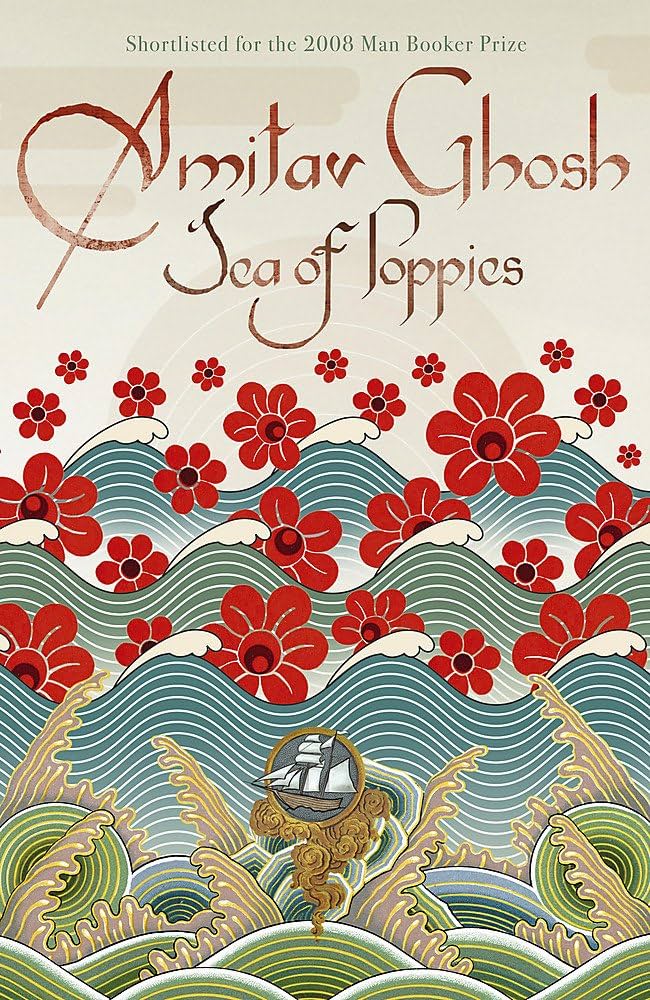
In the vast ocean of ancient novels,amitav Ghosh’s Sea of Poppies emerges as a compelling vessel navigating the intertwined currents of history and identity.Set against the turbulent backdrop of the opium trade in 19th-century india, the novel charts a diverse ensemble of characters, each grappling with their pasts and the shifting tides of empire. This review delves into how Ghosh’s richly textured narrative unfolds the complexities of colonialism, displacement, and cultural convergence, inviting readers to explore not only the voyage of the ship Ibis but also the deeper journeys of human connection and self-finding.
Exploring the Historical Tapestry Woven Through Amitav Ghosh’s Sea of Poppies and Its Reflection on colonial India’s Complexity

Amitav Ghosh’s Sea of Poppies plunges readers into the intricate web of colonial India’s social, economic, and cultural upheavals, masterfully intertwining individual destinies with the broader historical canvas. Through the lives of a diverse cast – from Indian peasants and expatriates to colonial merchants and indentured laborers – the narrative reveals how the colonial enterprise was not a monolithic force but a complex mosaic shaped by competing interests and shifting identities. Ghosh doesn’t merely recount historical events; he breathes life into the multifaceted struggles that defined that era, illustrating how migration, trade, and colonial policies deeply impacted personal and collective histories.
key themes emerge that reflect the era’s turmoil and transformation:
Best-Selling Books in This Category
No products found.
- Hybridity of Identity: Characters navigate overlapping cultural spaces, shaping hybrid identities amid imperial imposition.
- Economic Exploitation: The opium trade serves as a powerful motif, symbolizing colonial greed and its ripple effects on societies.
- Resistance and Resilience: Acts of defiance, whether subtle or overt, emphasize human agency within oppressive systems.
| Aspect | Representation in Sea of Poppies | Historical Context |
|---|---|---|
| Opium Trade | Vivid depiction through trade routes and characters’ involvement | Central to British colonial economy and Sino-Indian relations |
| Indentured Labor | Personal stories bring human dimensions to mass migration | Post-abolition labor replacement on plantations |
| Cross-cultural Encounters | Interactions reflecting linguistic and religious diversity | Colonial India’s complex social fabric |
Unveiling the Depths of Identity and Displacement in Sea of Poppies: Characters Caught Between Worlds and Loyalties

Amitav Ghosh masterfully crafts a mosaic of interwoven lives, each character navigating the turbulent waters of colonial India’s socio-political upheaval. These individuals, from different castes, classes, and cultures, find themselves suspended in liminal spaces-caught between the old world and the new, tradition and transformation. Their identities are not fixed but fluid, shaped and reshaped by personal histories and the larger forces of empire and migration. For instance, the enigmatic ship Rajasthan becomes a microcosm where loyalties blur and alliances shift, reflecting a broader sense of displacement that challenges conventional notions of belonging.
The novel’s characters embody the fragmented reality of colonial subjects, their stories unfolding through a lens that highlights cultural hybridity and inner conflict. Consider this thematic breakdown of key character experiences:
- Deeti: A widow whose journey symbolizes resistance and reinvention amid tragedy.
- Neel Rattan: an aristocrat wrestling with personal loss and shifting political identities.
- Zachary Reid: An American sailor caught between duty and empathy.
| Character | World They Belong To | Source of Inner Conflict |
|---|---|---|
| Deeti | Conventional Hindu society | Escaping oppressive customs |
| Neel Rattan | Feudal aristocracy | Colonial rule’s impact on status |
| Zachary Reid | Foreign mercantile class | clash of personal ethics & duty |
Through such complex depictions, Sea of Poppies invites readers to explore how displacement is not merely physical but also emotional and ideological-shaping identities torn between multiple worlds. The novel becomes a profound meditation on the costs and resilience embedded in the quest for agency amidst chaos.
The Role of the Sea as a Metaphor in Ghosh’s Narrative: Journey, Separation, and the Fluidity of cultural Boundaries

Amitav Ghosh masterfully wields the sea as a symbol that transcends mere geography, transforming it into a powerful narrative device that encapsulates the themes of journey, separation, and cultural permeability. The waves serve as an ever-shifting canvas upon which personal and collective histories unfold, illustrating not just physical voyages but deeper, emotional and spiritual crossings. For the characters aboard the Ibis, the sea becomes a realm where identities blur and borders dissolve, challenging rigid distinctions between origin and destination, self and othre. This fluidity resonates with the broader colonial and postcolonial contexts, where migration, displacement, and cultural collision redefine notions of belonging.
In this dynamic space,the sea acts as both bridge and barrier-a paradoxical force that connects individuals while also emphasizing their displacement. Ghosh’s narrative highlights the complex interplay between movement and stasis, where separation is simultaneously a process of painful loss and fertile transformation. Elements such as transoceanic encounters, intercultural exchanges, and hybrid identities emerge vividly within this maritime metaphor, inviting readers to reconsider the fixed margins of history and culture. The following table outlines key thematic dimensions associated with the sea in the novel:
| Theme | Metaphoric Aspect | Impact on Narrative |
|---|---|---|
| Journey | Passage through uncertainty and transformation | Character growth and historical revelation |
| Separation | Emotional and cultural distance | Exploration of exile and longing |
| Fluidity | Blurring of cultural and identity boundaries | Challenge to colonial binaries |
A Close Look at Ghosh’s Use of Language and Dialogue to Capture Diverse Voices and Social Strata in 19th Century India

Amitav Ghosh’s prose in Sea of Poppies is a vibrant tapestry woven from the richly variegated voices of 19th century India. His mastery lies in how each character’s dialogue not only reveals their distinct social background but also breathes life into the complex cultural mosaic of the time. From the uneducated coolie speaking in regional idioms to the British colonial officers with their clipped English, Ghosh captures a spectrum of linguistic rhythms. This polyphony challenges the monolithic portrayal of colonial India,illustrating how colonial subjects navigated identity through language.The often-laconic speech of the lower classes, interspersed with Hindi, Bengali, Bhojpuri, and pidginized English, exemplifies the intersection of survival, resistance, and hybridity.
Key linguistic features that stand out include:
- Code-switching that reflects cultural negotiation and pragmatic necessity.
- Phonetic spellings which anchor characters firmly in their linguistic and geographic milieu.
- Rhythmic cadences reminiscent of oral storytelling traditions, heightening authenticity.
| Social Stratum | Language Characteristics | Example |
|---|---|---|
| Coolies and Peasantry | Mixture of Bhojpuri and broken English, use of colloquial idioms | “He no can do, sahib.work hard, but belly empty.” |
| Merchant Class | Fluent English with regional accent, business jargon | “The trade must go on, no matter the storm.” |
| British Officers | Standard British English, formal and hierarchical tone | “The indigo crops are not yielding as expected.” |
how Sea of Poppies Portrays the Opium Trade’s Impact on Lives and Societies with Detailed Historical Authenticity

Amitav Ghosh’s narrative unfolds the sprawling consequences of the opium trade with an unflinching lens,revealing how this single commodity wove itself into the very fabric of 19th-century lives and societies. The novel dramatizes the opium economy not merely as a backdrop but as a catalyst for displacement, addiction, and socio-political upheaval.From impoverished peasants in Bengal forced into cultivation to the international corridors of power where trade policies were concocted, Sea of Poppies captures the human anguish and ambition swirling around this intoxicating crop. The meticulous attention to historically accurate details-from ship manifests to the socio-economic hierarchies aboard the Ibis-brings an immersive authenticity that underscores how intertwined personal destinies were with the opium trade’s volatile tides.
Ghosh’s portrayal also highlights the paradox of the opium trade as both a destructive force and an economic lifeline, illustrating its dual role in colonial India’s complex social dynamics. The ripple effects are vividly outlined through the characters’ diverse experiences, showing how opium’s impact transcended regions and classes. Consider the following snapshot of key social consequences depicted in the novel:
| Aspect | Impact | Example from the novel |
|---|---|---|
| Agricultural Displacement | Transition of land toward poppy cultivation,displacing food crops | Peasant families losing traditional livelihoods |
| Labor Migration | Indentured laborers recruited for plantations and shipping | characters boarding the Ibis to escape socio-economic constraints |
| Political Corruption | Manipulation of trade policies favoring colonial powers | Officials prioritizing profit over local welfare |
| Social Fragmentation | Rise in addiction and familial breakdowns | Personal tragedies linked to opium dependency |
Through a delicate weaving of factual history and rich character study,the narrative presents opium not just as a commodity but as a symbol of colonial exploitation and cultural transformation. Its impact permeates every layer of society-from the docks of Calcutta to remote village fields-making the reader keenly aware of how historical authenticity can deepen our understanding of a complex era and the enduring legacy of the opium trade worldwide.
Navigating Themes of Resistance and Survival: Personal Stories Amidst the Larger sweep of Colonial Exploitation
In the sprawling tapestry of Sea of Poppies, Ghosh weaves intimate portraits of individuals who embody resilience against the vast, relentless machinery of colonial oppression. These characters-ranging from disenfranchised peasants to embattled sailors-illuminate the human cost of exploitation, transforming historical events into living, breathing struggles. Their personal narratives do not merely exist against the backdrop of empire; rather, they actively contest and redefine identity within it. Through nuanced storytelling, the novel reveals how acts of defiance, survival, and solidarity manifest in the most unexpected quarters, challenging monolithic portrayals of colonized subjects.
Consider the diversity of survival strategies employed by the book’s cast, represented succinctly in the following table:
| Character | Background | Mode of Resistance |
|---|---|---|
| Deeti | Village woman, widow | Spiritual resilience, reclaiming agency |
| Kalua | Lower-caste bonded laborer | Flight and solidarity with fellow laborers |
| Zachary Reid | American sailor, outsider | Cross-cultural empathy, questioning imperialism |
These personal acts, often subtle and embedded in daily life, disrupt the grand historical narrative of colonialism, revealing how survival was simultaneously an act of rebellion. The interconnected stories remind us that history is not a monolith of rulers and ruled, but a mosaic of lived experiences, fraught with complexity, pain, and hope. Ghosh’s rich characterizations invite readers to reflect on how marginalized voices endure, adapt, and resist within systems designed to suppress them.
The Interplay Between Landscape and Memory in Sea of Poppies: How Place Shapes Identity and Collective History
In Sea of Poppies, the landscape transcends its role as a mere backdrop, evolving into a dynamic character that shapes the very essence of identity for each individual aboard the Ibis. The lush, sprawling fields of the Ganges delta and the bustling port towns weave a tapestry of histories and cultural exchanges, reflecting the tumultuous era of colonial India. This habitat acts as a crucible where personal memories and collective histories merge, highlighting how geography anchors human experience and memory. As the river’s currents carry the migrants to uncertain destinies, the landscape becomes a repository of stories-both remembered and forgotten-triggering transformations in the characters’ sense of self.
Key elements where place intertwines with identity include:
- Migration Routes: The movement along rivers and seas echoes the flow of cultural and personal identities, constantly evolving yet deeply rooted in tradition.
- Colonial Encounters: Geography as a site of contestation, where imperial ambitions impact indigenous landscapes and histories.
- Natural Landmarks: Serving as mnemonic devices, these places evoke memories that define communal legacies and individual reminiscences.
| Landscape Feature | Associated Memory | Identity Impact |
|---|---|---|
| Ganges River | Journey, displacement, hope | Symbol of transition and fluid identity |
| opium Plantations | Exploitation, colonial influence | Emblem of resistance and subjugation |
| Sailboat Ibis | collective journey, multicultural coexistence | Microcosm of hybrid identities |
A Critical Assessment of Ghosh’s Narrative Style and Storytelling Techniques That Engage and Educate Readers
Amitav Ghosh’s narrative prowess lies in his ability to weave sprawling historical landscapes with deeply personal human experiences, making the past vividly accessible. His *polyphonic* storytelling draws from a diverse cast of characters, each offering unique perspectives that challenge singular historical narratives. Rather of linear progression,Ghosh employs a tapestry-like structure,where multiple storylines interlace to build a richer,more immersive world. This approach not only engages readers through varied voices but also educates by showcasing the complexities of colonial history, migration, and cultural identity without reducing them to mere footnotes.
Ghosh’s mastery extends to his linguistic choices and descriptive detail, which create both authenticity and immediacy.His meticulous attention to cultural specifics – from maritime jargon to indigenous customs – serves as an educational tool, inviting readers to inhabit unfamiliar contexts. Below is a brief overview of key storytelling techniques that underline his style:
- Multivocal narration: Multiplicity of viewpoints to reflect historical diversity.
- Rich, sensory descriptions: Immerses the reader in time and place.
- Intertwining plotlines: Mimics the interconnected realities of colonized societies.
- Hybrid language style: Incorporation of pidgin,dialects,and formal English for authenticity.
| Technique | Effect on Reader |
|---|---|
| Polyphonic Voices | Broadens understanding of historical experiences |
| Detailed Cultural Depiction | Enhances authenticity and encourages empathy |
| Nonlinear Structuring | Engages curiosity and active participation |
| Linguistic Hybridity | reflects cultural intersections and colonial impact |
Recommendations for Readers Interested in Historical Fiction Rich with Cultural Insight and Postcolonial Perspectives
For those drawn to narratives that intertwine history with rich cultural tapestries, Amitav Ghosh’s Sea of Poppies offers a profound journey through the layered complexities of identity and colonial legacies. Readers will appreciate the way Ghosh breathes life into the 19th-century Indian Ocean world, capturing variegated voices and perspectives that challenge dominant historical narratives. This novel not only immerses you in vivid settings – from plantations to sprawling ships – but also invites reflection on the interlocking systems of empire, migration, and resistance.
If you crave stories that do more than recount past events, but instead illuminate the enduring echoes of colonialism and the resilience of cultures, this book is a valuable compass. Consider pairing your reading experience with other works that explore postcolonial identities and cultural intersections:
- Midnight’s Children by Salman Rushdie – A magical realist portrayal of post-independence India
- Things Fall Apart by Chinua Achebe – A pivotal exploration of african colonization and cultural clash
- The God of Small Things by Arundhati Roy – A deeply personal yet political narrative woven through Kerala’s complex social fabric
- homegoing by Yaa Gyasi – A multigenerational saga tracing the legacies of the African slave trade
| Theme | Recommended Title | Why Read? |
|---|---|---|
| Migration & Diaspora | Displaced by Viet Thanh nguyen | A poignant insight into war,exile,and identity formation |
| Colonial resistance | The Shadow Lines by Amitav Ghosh | Blurs borders to highlight human connections beyond nationalism |
| Cultural Memory | Season of Migration to the North by Tayeb Salih | Examines the psychological aftermath of colonialism in Sudanese society |
Why Sea of Poppies Remains Relevant for Contemporary Readers Reflecting on Migration,Identity,and Global History
amitav Ghosh’s Sea of Poppies captures the intricate web of migration long before it became a focal point of global discourse. The novel’s vivid portrayal of diverse characters-each grappling with displacement, cultural assimilation, and the search for belonging-mirrors many contemporary migration experiences.Through its historical lens, the story dismantles simplistic notions of identity and belonging, showing how these are fluid and intertwined with personal histories and broader economic and political forces. In a world where migration frequently enough sparks polarized debates, Ghosh offers a nuanced outlook that highlights the human stories behind the statistics.
Moreover, the book’s exploration of colonial history invites readers to reconsider global power dynamics and their enduring impacts. The opium trade, the forced movements of laborers, and the cultural syncretism that emerges on the Ibis serve as powerful reminders that today’s globalized identities are rooted in complex histories of exchange and exploitation. This historical consciousness is essential for contemporary readers seeking to understand the layered intersections of race, class, and nationality in shaping today’s world-a potent call to acknowledge and reflect on our shared pasts.
- Migration as Transformation: Characters redefine themselves through journeys across continents.
- Identity Beyond Borders: The novel challenges fixed notions of cultural and national identity.
- Historical Echoes: past economic and political forces shaping present global realities.
- Cross-Cultural Interactions: Diverse voices converge and clash, creating new cultural landscapes.
| Aspect | Contemporary Reflection |
|---|---|
| Migration Drivers | Economic necessity, colonialism → globalization, conflict |
| Identity Formation | Hybrid identities over static nationalism |
| Historical Awareness | Roots of inequality still resonate today |
| cultural Exchange | New narratives beyond dominant histories |
Suggested Further Reading and Viewing for Those Inspired by Ghosh’s Exploration of Colonialism and Cross-Cultural Encounters
For readers captivated by Amitav Ghosh’s vivid portrayal of colonialism and the rich tapestry of cross-cultural encounters in Sea of Poppies, delving deeper into both history and narrative explorations can enrich understanding and perspective. Books like “In an Antique Land” by Amitav Ghosh himself offer a engaging blend of anthropology and storytelling,tracing the interwoven histories of Egypt and India. Simultaneously occurring, classics such as Things Fall Apart by Chinua Achebe and The Shadow Lines by Ghosh expand the dialogue on identity and the complexities wrought by imperial governance and cultural collisions.
on the visual front, documentaries and films provide a compelling glimpse into the era and themes that Ghosh adeptly navigates. The BBC’s The Story of india series beautifully charts the subcontinent’s vast history,while movies like Gandhi and Lagaan dramatize the personal and political struggles emerging from colonial rule. For a speedy reference, consider the table below showcasing essential further readings and viewings for an immersive continuation of this journey.
| Medium | Title | Focus Area |
|---|---|---|
| book | In an Antique Land | Cross-cultural history and anthropology |
| Book | Things Fall Apart | Colonial impact on African societies |
| Book | The Shadow Lines | Nationalism and memory |
| Documentary | The Story of India | Subcontinental history overview |
| Film | Gandhi | Colonial resistance and leadership |
| film | Lagaan | Social dynamics under colonial rule |
About Amitav Ghosh The Author’s Background, Literary Influences, and His Enduring Contribution to Historical Fiction
In journeying through Sea of Poppies, amitav Ghosh invites readers not merely to traverse the physical expanse of the Ibis but to navigate the tangled waters of history and identity that define its diverse passengers. The novel’s richly woven narrative offers a compelling exploration of displacement, colonialism, and humanity’s enduring search for belonging. As the final pages turn, one is left with a profound thankfulness for Ghosh’s ability to illuminate the past without losing sight of the complexities that continue to shape our present. Whether approached as a historical epic or a meditation on cultural convergence, Sea of Poppies stands as a resonant testament to the interconnectedness of stories that defy easy boundaries-an invitation to reflect on the ever-shifting tides of history and self.