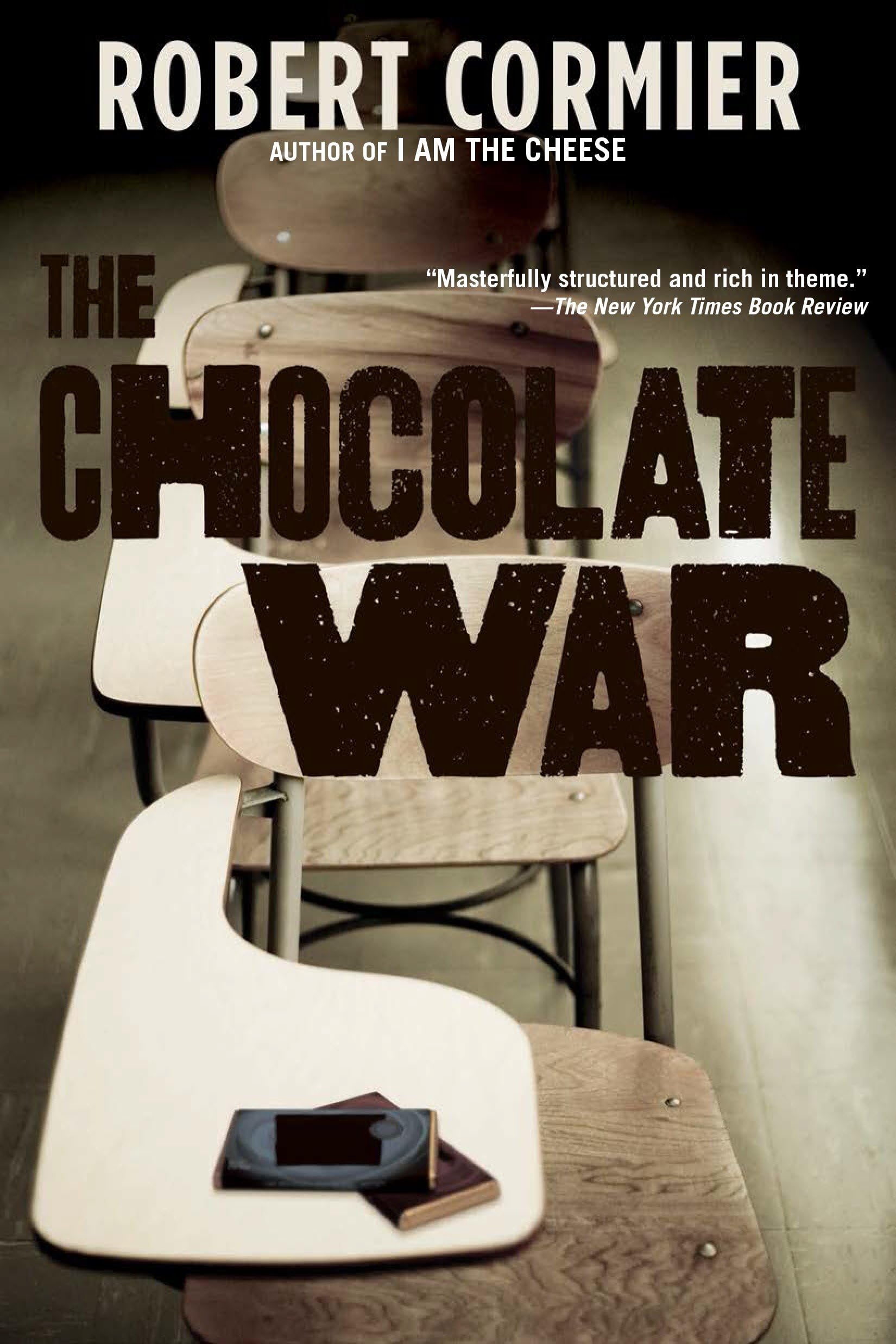
In the shadowed halls of Trinity High School, where conformity often outweighs courage, Robert cormier’s The Chocolate War unfolds as a gripping tale of authority and defiance. invites readers to peel back the layers of this classic novel to examine its complex portrayal of control, resistance, and the costs of standing apart. This review embarks on an exploration of how Cormier’s narrative challenges the boundaries of adolescent loyalty and power structures, illuminating the turbulent dynamics that continue to resonate beyond the pages.
Unveiling the Dark Corridors of Authority in The Chocolate War and Its Impact on Young adult Fiction

Robert cormier’s classic narrative ventures boldly into the shadowy dynamics of authority, peeling back layers of manipulation and control within an all-boys Catholic school. The novel’s portrayal of institutional power transcends typical young adult themes by exposing the often sinister mechanisms at play-how conformity is enforced not just through rules, but through fear, coercion, and psychological intimidation. This multifaceted depiction challenges readers to scrutinize the legitimacy and morality behind those who hold power, especially when it veers toward oppression rather then protection.
Such raw honesty shifted the landscape of young adult fiction, inspiring a wave of stories where protagonists grapple with oppressive forces beyond mere adolescent angst.Cormier’s emphasis on rebellion isn’t just about defying authority for the sake of independence-it’s a nuanced examination of courage, sacrifice, and the high costs of standing against deeply entrenched systems. through characters like Jerry Renault, readers are invited to explore themes such as:
Best-Selling Books in This Category



- The fragility of individual moral integrity in the face of collective pressure
- The blurred lines between heroism and victimhood
- The consequences of challenging institutional norms
| Element | Impact on YA Fiction |
|---|---|
| Power Structures | Exposed realistic, flawed hierarchies rather than idealized authority figures |
| Anti-Hero Protagonists | Encouraged characters with complex, morally ambiguous motivations |
| Moral Ambiguity | Inspired stories that avoid clear-cut good vs. evil dichotomies |
Exploring the Complex Characters Who Challenge Conventional Morality and Authority in Robert Cormier’s Novel
Robert Cormier masterfully crafts characters who defy simplistic moral labels, immersing readers in a world where power and rebellion intertwine with unsettling complexity. At the heart of this narrative stands Jerry Renault, a seemingly ordinary student whose quiet refusal to conform soon spirals into a brave yet isolating stand against the oppressive forces within his school. Cormier doesn’t just pit good against evil; instead, he exposes the murky gray areas where manipulation, fear, and loyalty collide. These characters are not mere archetypes but troubled individuals wrestling with personal demons and societal pressures, each reflecting the volatile dance between submission and defiance.
This delicate intertwining is reflected in characters like Archie Costello, whose cunning leadership masks a sinister hunger for control, and Emile Janza, whose façade of toughness reveals vulnerability beneath. Their interactions create a shared landscape where authority is both respected and undermined, inviting readers to question who truly wields power-and at what cost.
- Jerry Renault: The reluctant rebel whose moral resolve challenges the status quo.
- Archie Costello: The mastermind whose commanding presence fuels the system’s cruelty.
- Emile Janza: The enforcer whose loyalty teeters between fear and self-preservation.
| Character | Role in Power Dynamic | Moral Complexity |
|---|---|---|
| Jerry Renault | Symbol of resistance | Empathetic but stubborn |
| Archie Costello | Orchestrator of control | Calculating and ruthless |
| Emile Janza | Enforcer of dominance | Intimidating yet insecure |
The symbolism of the Chocolate Sale and Its Role as a Catalyst for Rebellion and Conformity in the Story
At the heart of the narrative lies more than just a simple fundraising event; the chocolate sale functions as a powerful metaphor for institutional control and the struggle for individual autonomy. By framing the sale as a mandatory task enforced by the school’s secretive and oppressive hierarchy, the story exposes the tension between authority and resistance. For the students, chocolates become symbols not of sweetness, but of submission-a tangible product of conformity that demands obedience through peer pressure and fear. The act of selling chocolates transcends mere commerce, becoming a tool used to tighten the grip of the school’s power structure, ultimately revealing how rebellion and compliance intertwine within societal systems.
The chocolate sale ignites a chain reaction of choices that reflect deeper psychological and social dynamics. Some characters accept the task and thrive within the established order, illustrating how conformity can be a survival mechanism with perceived benefits. Others, notably the protagonist, challenge the sale and in doing so, embody rebellion that shakes the foundations of the school’s dominance.This dynamic can be visualized in the chart below, which contrasts the roles chocolate sales play in shaping student behavior:
| Role of chocolate Sale | Effect on Students | Symbolic Meaning |
|---|---|---|
| Enforcement of Duties | Pressure to conform | Mechanism of Control |
| Possibility for Rebellion | Act of defiance | Assertion of Individuality |
| Social Hierarchy Maintenance | Division and competition | Power Dynamics |
- Conformity is rewarded by safety but costs personal freedom.
- Rebellion threatens status quo but risks isolation and punishment.
- The chocolates symbolize the alluring yet restrictive façade of institutional power.
Analyzing the Psychological Struggles of Jerry Renault as a Portrait of Resistance and isolation

Jerry renault emerges as a compelling figure whose internal battles illuminate the broader themes of resistance and isolation within a rigid system. His refusal to conform to the ominous ”Chocolate War” epitomizes not just youthful rebellion but a profound psychological resistance against oppressive forces. The turmoil he endures is not merely external but deeply rooted in his psyche, where conflicting desires to belong clash with the impulse to maintain personal integrity. This tension manifests in his isolation, as peers and authority figures alike see him as an outcast, intensifying his alienation.
What distinguishes Jerry’s journey is the raw vulnerability beneath his defiant exterior. His struggle is marked by:
- Emotional resilience challenged by everyday intimidation and systemic cruelty
- Identity fragmentation as he attempts to carve an autonomous self in a conformist habitat
- The psychological cost of standing firm in the face of overwhelming social pressure
Within the oppressive walls of his high school, Jerry’s psychological landscape becomes a battlefield that transcends simple notions of good versus evil. The loneliness he experiences is both a result and a weapon-a form of silent rebellion that speaks volumes without uttering a word. His mental state can be analyzed through a psychological framework that highlights the complexity of adolescent resistance:
| Psychological Aspect | Impact on Jerry | Illustrative Behavior |
|---|---|---|
| Identity Crisis | Heightened self-awareness and internal conflict | Refusal to sell chocolates despite consequences |
| Social Alienation | Emotional isolation and mistrust | Being targeted by both peers and authority figures |
| Resilience | Endurance amid psychological duress | Continuing the strike despite intimidation |
Themes of Power, Corruption, and Manipulation Woven Through the Narrative and Their Real-World Parallels

Robert Cormier’s narrative delves deep into the shadows cast by authority, revealing how power can become a double-edged sword that corrupts even the most seemingly righteous institutions.At Trinity high School, the hierarchy isn’t just about rules and tradition-it’s a microcosm where domination thrives through subtle manipulation and overt intimidation. The vigils and the characters who enforce them illustrate how systems designed to maintain order often spiral into mechanisms of control and fear. this portrayal mirrors real-world scenarios where those in power exploit their positions, bending ethical boundaries for personal gain or to suppress dissent, echoing timeless lessons about the fragility of justice when cloaked in authority.
within the layers of the story, manipulation emerges as an insidious force, weaving through interpersonal interactions and institutional practices alike. Characters like Brother Leon embody this duality, blending charismatic leadership with coercive tactics that blur the lines between persuasion and oppression. This dynamic resonates beyond fiction, reflecting societal patterns where influence is wielded to sway public opinion, silence opposition, or maintain the status quo. The tension between rebellion and conformity depicted in the novel serves as a poignant reminder of the ongoing struggle individuals face when confronting entrenched systems – a narrative as relevant in the classroom as it is indeed in boardrooms and political arenas worldwide.
| Theme | Fictional Manifestation | Real-World Parallel |
|---|---|---|
| Power | brother Leon’s control over the school | Authority figures in institutions |
| Corruption | The exploitation of the Vigils’ influence | manipulation of public systems for personal gain |
| Manipulation | Obligatory participation and peer pressure | Media and political spin tactics |
The Role of Peer Pressure and Group Dynamics in Shaping the Course of Events at Trinity High School
In The Chocolate War, the invisible chains of peer pressure and the intricate web of group dynamics operate as powerful forces driving the characters toward choices they might not otherwise make. The hierarchical structure at Trinity High School is a crucible where loyalty is tested relentlessly, and conformity frequently enough outweighs individual conviction.Through the manipulative ‘The Vigils’-an exclusive secret society-cormier illustrates how group allegiance can suffocate personal rebellion, creating an environment where dissent is not only discouraged but actively punished. The subtle push-and-pull between desire for acceptance and fear of ostracism encapsulates the fragility of adolescent identity under social scrutiny.
Key social pressures manifest through:
- Conformity: Students are expected to abide by unwritten rules, resisting this often leads to isolation.
- Intimidation: Physical and psychological tactics enforce adherence to group norms.
- Manipulation: Leaders like Archie harness influence to maintain control and suppress challenges.
| Group Role | Behavior Influence | Effect on Jerry |
|---|---|---|
| The Vigils | Impose secretive control and pressure | Isolation and coercion |
| School peers | Enforce social norms through peer pressure | Struggles with identity and rebellion |
| Authority Figures | Implicitly support conformity | Complicate resistance efforts |
Within this landscape, Jerry Renault’s defiance is an act steeped in both courage and tragedy, illustrating how the mechanics of peer pressure and group dynamics at Trinity not only shape individual destinies but also mirror broader social struggles.Cormier deftly captures the tension where adolescent rebellion clashes with the formidable weight of collective expectation-a reminder that the power wielded by groups can be as oppressive as it is compelling.
How Cormier’s Narrative Style Enhances Tension and immersion in This Gritty Coming-of-Age Tale
Cormier’s narrative approach masterfully tightens the grip of tension through his use of shifting perspectives and internal monologues. By peeling back layers of his characters’ thoughts, he invites readers into their psychological battles, making every decision and confrontation pulse with heightened stakes. This technique isn’t just a stylistic choice; it deepens immersion by allowing audiences to feel the raw vulnerability beneath the rebellious exterior. In moments where silence coudl dominate, Cormier’s prose crackles with unspoken conflict, creating a cinematic intensity that lingers well beyond the page.
Moreover, Cormier’s sparse yet impactful prose complements the gritty atmosphere, enhancing the sense of foreboding that envelops the narrative. His refusal to sugarcoat events mirrors the harsh realities his characters face, reinforcing the palpable sense of danger and isolation.This tension is amplified by a carefully structured timeline, where escalating threats and moral dilemmas unfold with relentless momentum:
| Chapter | Key Event | Impact on Tension |
|---|---|---|
| 3 | Jerry refuses to sell chocolates | Initial breach of conformity |
| 7 | The Vigils plan retaliation | Shadow of impending violence |
| 12 | Unexpected betrayal occurs | Betrayal deepens mistrust |
| 15 | Climactic confrontation | Peak emotional and physical tension |
- Dynamic viewpoints: Intensify empathy and uncertainty.
- Minimalist dialog: Amplifies unsaid threats.
- Pacing: Carefully calibrated, pushing readers forward.
Recommendations for Educators on Integrating The Chocolate War into Discussions about Ethics and Authority
When guiding students through The Chocolate War, it’s essential to create a safe space where they feel encouraged to question authority without fear of judgment. Teachers can stimulate critical thinking by posing open-ended questions that explore the motivations behind the characters’ choices-particularly focusing on Jerry Renault’s defiance and the mechanisms of control exercised by the Vigils. Integrating group debates or role-playing scenarios allows learners to immerse themselves in the dynamics of power, highlighting how conformity and rebellion intersect in real-life contexts.
To further enrich discussion,consider using the following strategies that balance textual analysis with ethical exploration:
- Case Studies: Draw parallels between the novel’s themes and real-world examples of authority in schools or communities.
- Reflective Journaling: Encourage students to document moments when they faced pressure to conform and how they responded.
- ethics Table Exploration: Use a simple table to map out decisions characters make versus their consequences, fostering deeper comprehension.
| Character | Choice | Ethical Dilemma | Result |
|---|---|---|---|
| Jerry Renault | refuses to sell chocolates | Standing up to authority vs. self-preservation | Isolation and conflict |
| Archie Costello | Manipulates the vigils | Power abuse vs. control maintenance | Instills fear, loses empathy |
| Obie | Writes exposé on corruption | Truth-telling vs. risking relationships | Morally complex, mixed reactions |
The Enduring Influence of The Chocolate War on Contemporary Literature and Its Message for New Readers
Robert cormier’s groundbreaking narrative continues to resonate deeply within contemporary literature, setting a benchmark for exploring complex themes of authority, conformity, and individual defiance. His unflinching portrayal of teenage rebellion against oppressive systems has inspired countless authors to delve into the intricate dynamics of power and morality. Modern writers often echo Cormier’s boldness in tackling uncomfortable truths, crafting stories that challenge readers to question societal structures and their own complicity. This enduring influence reflects a literary legacy that prioritizes emotional realism and ethical ambiguity, encouraging new voices to push boundaries and dissect the nuances of control and resistance.
For new readers,the novel’s message remains strikingly relevant: the courage to stand against injustice,even amid overwhelming odds,is a timeless act of bravery. The Chocolate War does not offer easy answers or neat resolutions, but rather invites readers into a space of critical reflection.Its themes manifest in today’s cultural landscape through diverse mediums and genres, serving as a roadmap for understanding power’s pervasive reach and the personal cost of rebellion. Below is a brief comparison of the novel’s core themes with their contemporary counterparts, illustrating its lasting cultural footprint.
| Thematic Element | Original Impact | Contemporary Reflection |
|---|---|---|
| Authority | Rigid school hierarchy enforcing conformity | Broader societal institutions scrutinized |
| Rebellion | Individual defiance in a controlled environment | Collective movements challenging systemic oppression |
| Moral Ambiguity | Characters’ ethical conflicts mirror real life | exploration of blurred lines in justice and truth |
- Power Dynamics: A lens to understand social manipulation then and now
- Psychological Realism: Inspiring character-driven narratives in contemporary drama
- Critical Engagement: Encouraging readers to confront uncomfortable realities without easy answers
A Closer look at Robert Cormier’s Life and Literary career Illuminating His Unique Voice and Persistent Themes
Robert Cormier’s journey as a writer is deeply intertwined with the gritty realities of his upbringing in Leominster, Massachusetts. His intimate knowledge of small-town dynamics and the turbulent emotions of adolescence carved the foundation for his distinctive narrative voice. Cormier’s works stand out for their unflinching, frequently enough dark portrayal of power struggles, betrayal, and moral ambiguity in youth culture.These elements coalesce into a literary signature that challenges readers to confront uncomfortable truths rather than offering reassuring resolutions. His persistent themes of authority, conformity, and rebellion are not just plot devices but reflections of his belief in literature as a mirror to society’s complexities.
Beyond just storytelling, Cormier’s literary career is marked by a commitment to amplify the voices of conflicted, often misunderstood adolescents. His characters wrestle with choices that blur the lines between right and wrong, embodying the chaotic process of self-finding. This thematic consistency can be summarized as follows:
- Alienation: Protagonists are frequently isolated within their communities.
- Rebellion: Acts of defiance serve as a response to oppressive systems.
- Corruption of Power: Authority figures often exploit or manipulate.
- Moral complexity: Right and wrong are intertwined, resisting neat categorization.
| Theme | Typical Portrayal |
|---|---|
| Power | Control exerted through social or institutional hierarchy |
| Rebellion | Youth standing against conformity and injustice |
| Isolation | Characters struggling alone with their inner conflicts |
In unraveling the layered tensions of The Chocolate War, Robert Cormier presents more than a tale of adolescent conflict-he offers a piercing exploration of power, conformity, and defiance within the microcosm of a high school. This review has peeled back the novel’s dark veneer to reveal the complexities behind each rebellious act and the consequences that ripple through Jerry’s world. whether seen as a cautionary fable or a raw depiction of youthful resistance, The Chocolate War remains a compelling invitation to question authority and examine the costs of standing apart. As the final page turns, readers are left not with neat answers, but with the unsettling weight of power’s many faces-wrapped tightly within cormier’s unforgettable narrative.